AI-generated image
Watchman Goby
BeginnerValenciennea longipinnis
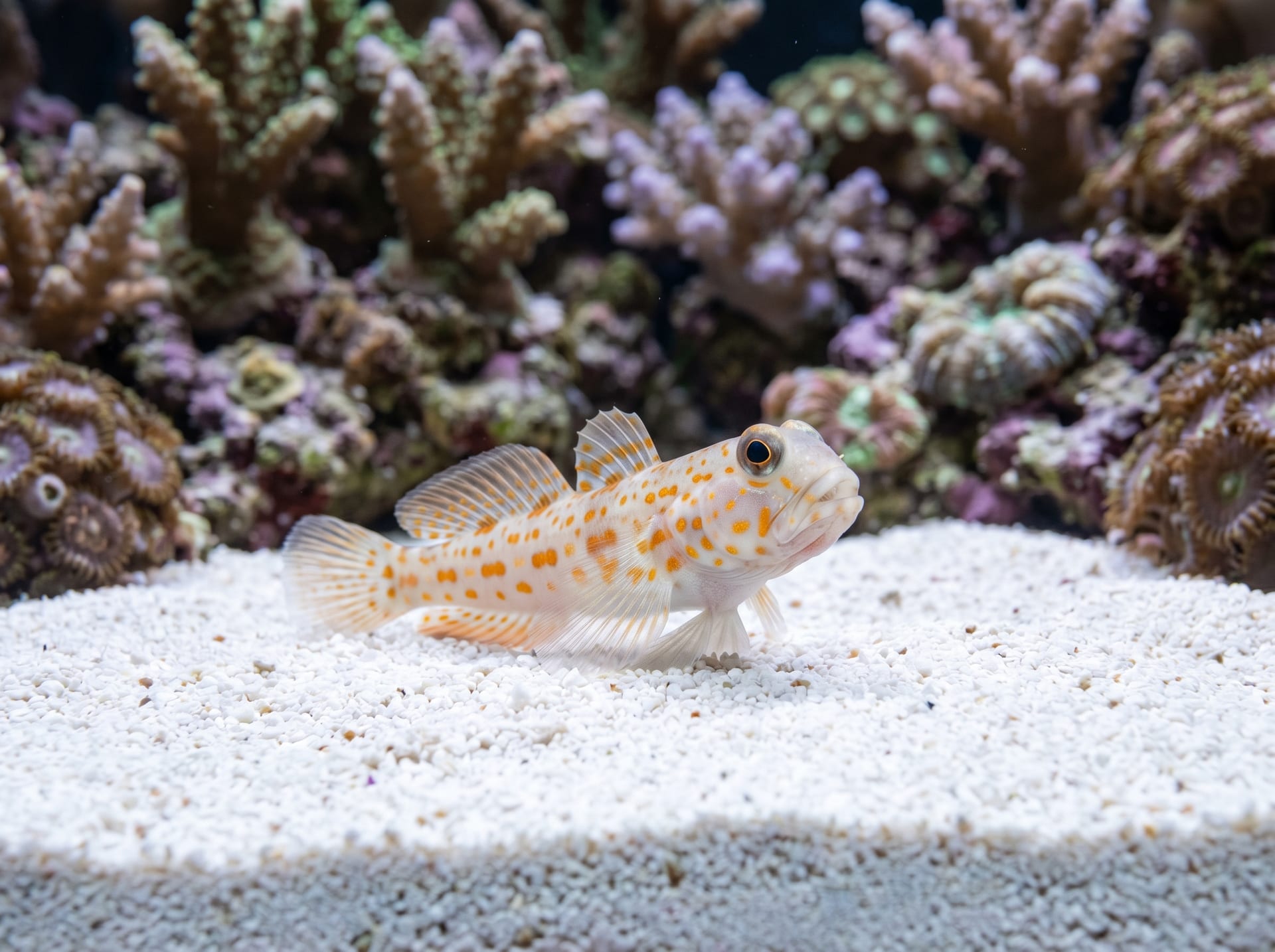
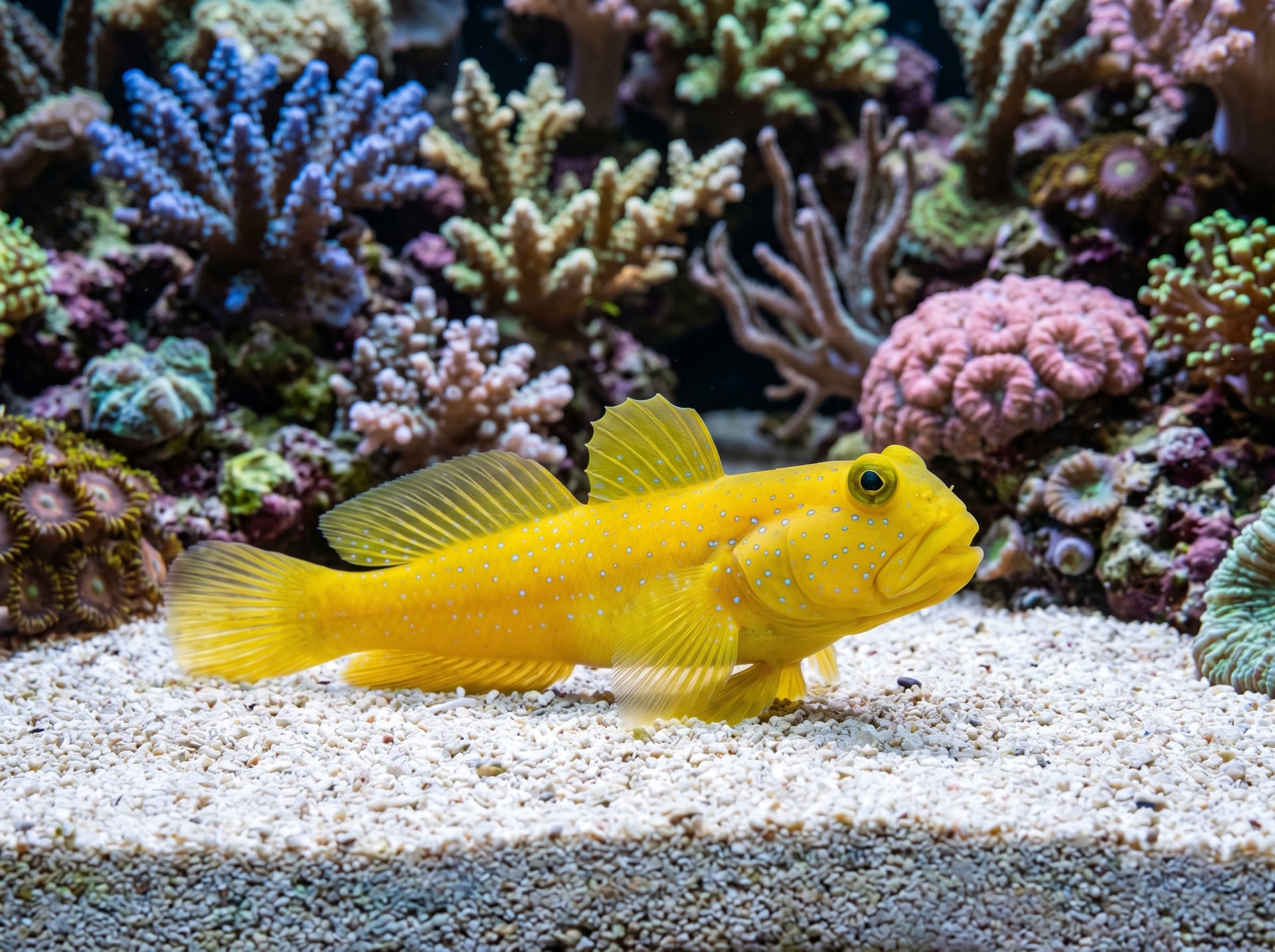
Small goby with cute yellow body and blue dot pattern. Famous for symbiosis with pistol shrimp, where shrimp digs burrow and goby stands watch. Hardy and easy to keep.
Difficulty
Beginner
Temperature
24〜27℃
Lifespan
3-5 years
Size
8-10cm
Diet
Pellets, frozen foods
About
The watchman goby (Cryptocentrus cinctus and related species) is a sand- and mud-dwelling gobiid fish native to the Indian and Pacific Oceans. Its vivid yellow body scattered with electric blue spots gives it striking ornamental appeal. It is best known for its mutualistic partnership with pistol shrimp (genus Alpheus): the shrimp excavates and maintains a burrow in the sandy substrate, while the goby stands sentinel at the entrance, warning its nearly blind partner of approaching danger through fin movements. This perfectly complementary division of labor is one of the most compelling behavioral partnerships observable in the home aquarium. A deep, fine sand substrate (minimum 5 cm) is mandatory; introducing the goby and shrimp together maximizes the likelihood of bonding. Peaceful and manageable in 60–100 litre tanks.
Lifespan of the Watchman Goby
The Watchman Goby lives 3-5 years.
Size of the Watchman Goby
The Watchman Goby grows to 8-10cm.
Temperature & humidity for the Watchman Goby
The ideal temperature for the Watchman Goby is 24〜27℃.
Basic Info
Origin
Sandy and muddy substrates of the Indian and Pacific Oceans
Lifespan
3-5 years
Size
8-10cm
References & Sources
Taxonomy & Authority
Watchman Goby Listings
Loading latest listingsFind listings for this species