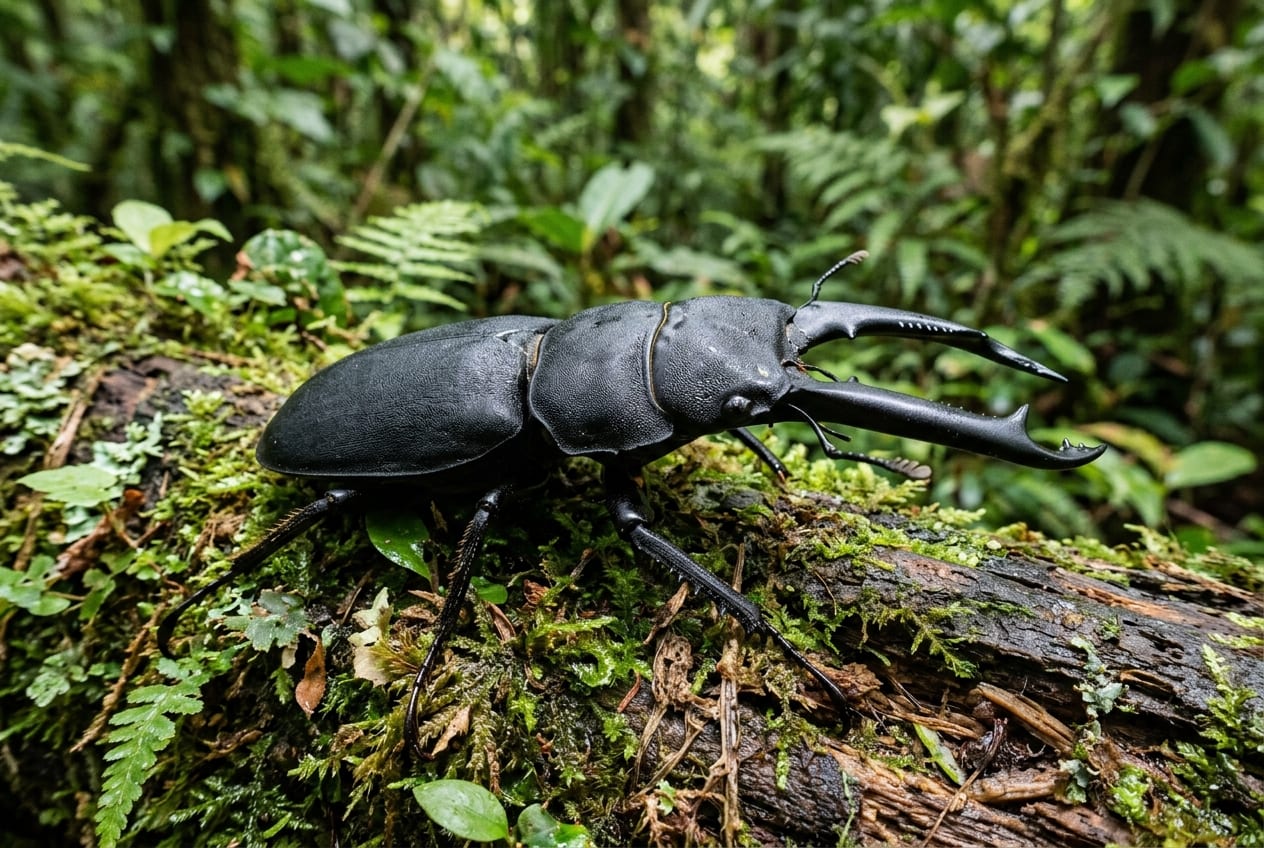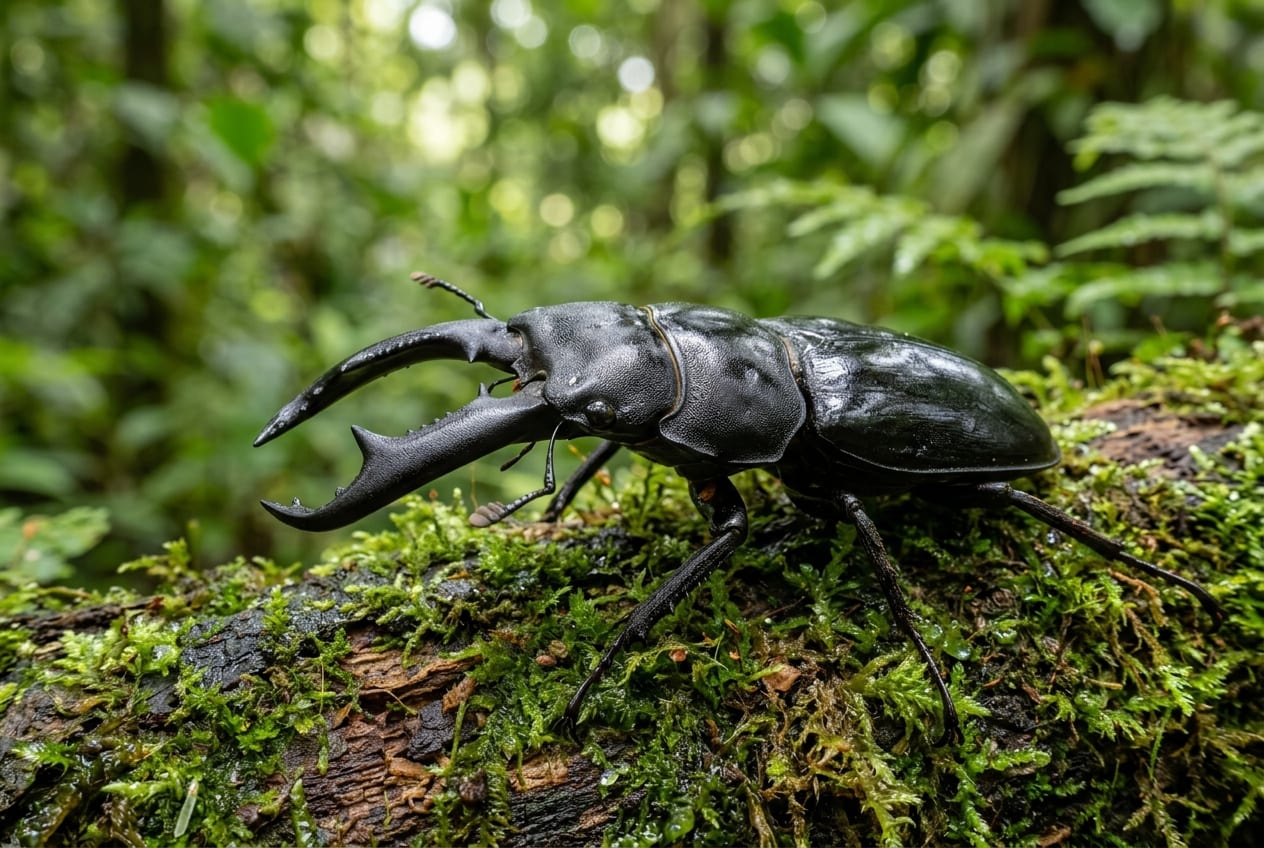
AI-generated image
Philippine Flat Stag Beetle
BeginnerDorcus titanus imperialis
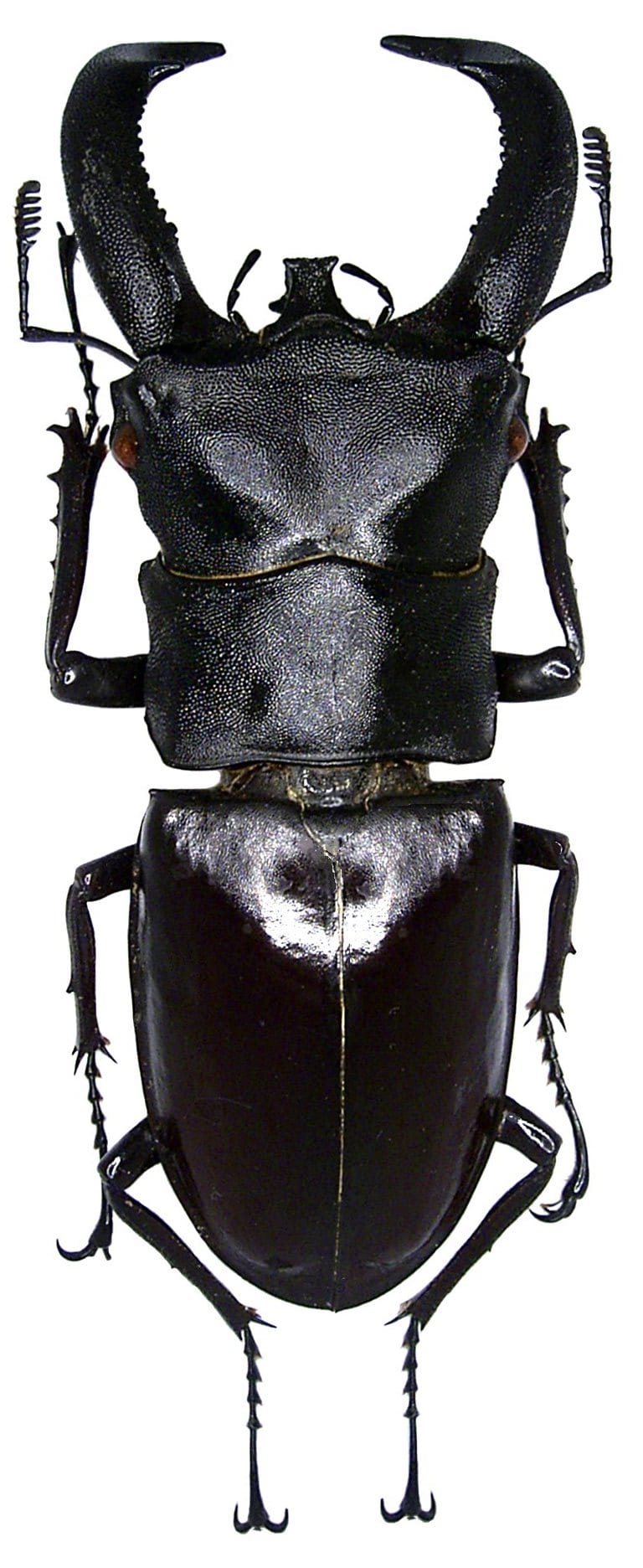
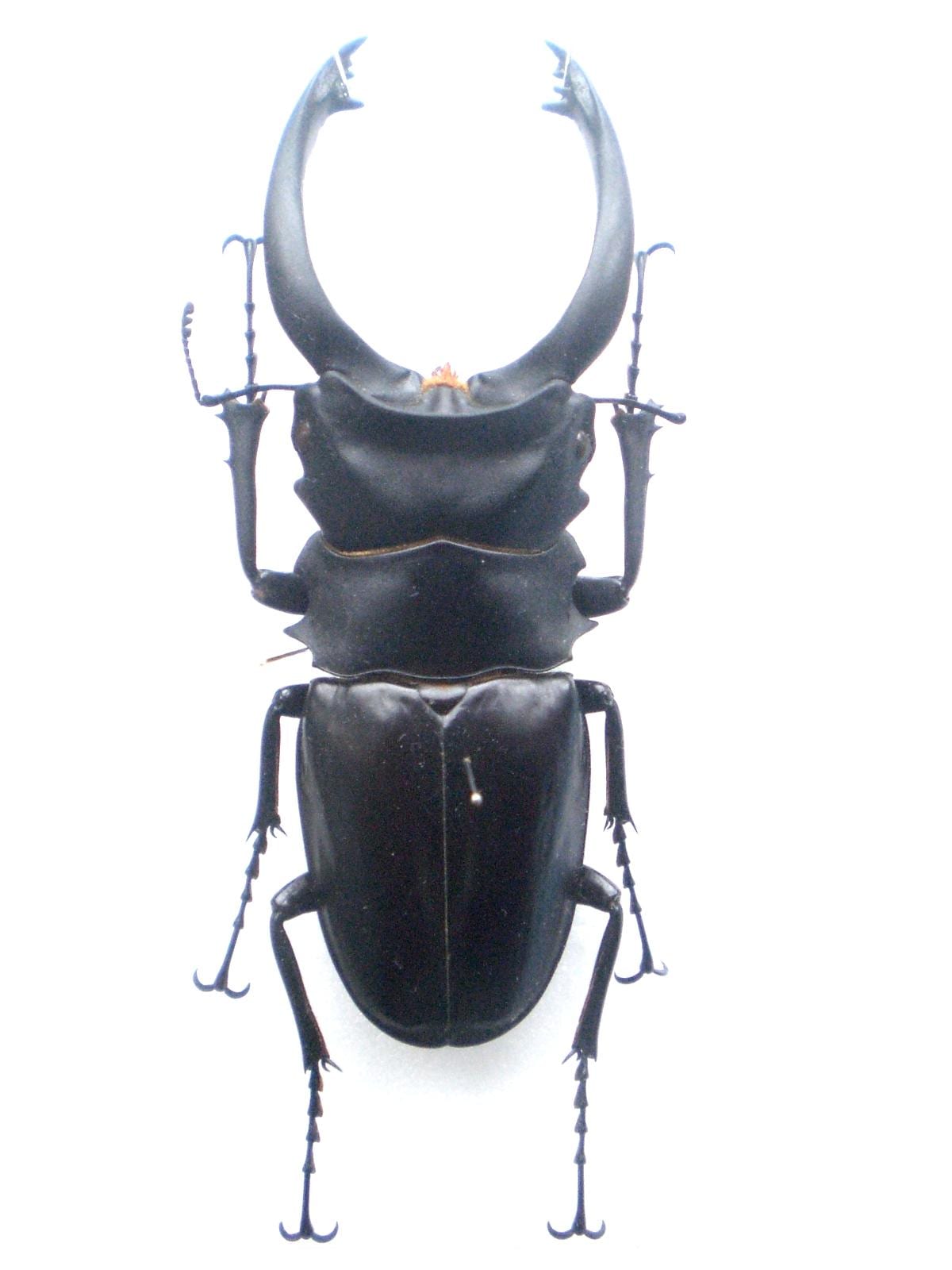
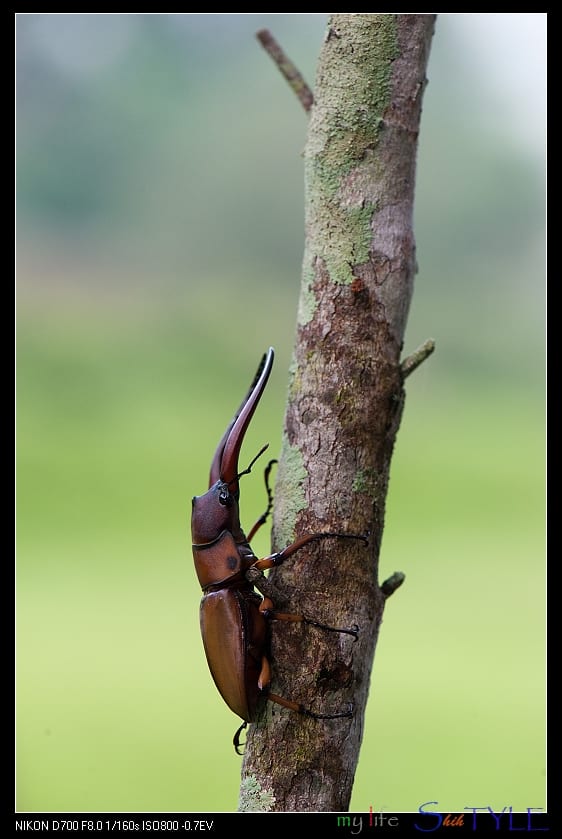
A large Philippine flat stag. Prized for its shapely mandibles, whose inner tooth sits above the midpoint, and for its thick body, it is among the most aggressive of the giant flat stags, yet hardy, tolerant of missed feedings and easy to keep.
Difficulty
Beginner
Temperature
20〜26℃
Lifespan
Adults 2-4 years
Size
Males 60-110 mm / females 30-40 mm (another source gives males 31-105 mm)
Humidity
60〜80%
Diet
Tree sap, beetle jelly
About
The imperial giant flat stag is a large Dorcus titanus from eastern and southern Luzon and Catanduanes in the Philippines, prized above other giant flat stags for its shapely mandibles, whose inner tooth sits slightly above the midpoint, and for its thick body. Males measure 60-110 mm and females 30-40 mm, while another source gives males 31-105 mm. It ranks behind the Palawan form in length and the Sumatran form in width, with the largest individuals approaching 110 mm. It is a hardy subspecies: adults live two to four years, tolerate missed feedings well and lay readily when conditions suit. For egg-laying use thick, fairly soft logs together with well-fermented, blackened fine-particle substrate. Larvae prefer fairly moist substrate and grow in either fermented substrate or fungus bottles. Even among the giant subspecies it stands out for aggression, so separate the female after a few days of pairing and let her lay alone.
Source: Wikipedia (CC BY-SA 4.0)
Lifespan of the Philippine Flat Stag Beetle
The Philippine Flat Stag Beetle lives Adults 2-4 years.
Size of the Philippine Flat Stag Beetle
The Philippine Flat Stag Beetle grows to Males 60-110 mm / females 30-40 mm (another source gives males 31-105 mm).
Temperature & humidity for the Philippine Flat Stag Beetle
The ideal temperature for the Philippine Flat Stag Beetle is 20〜26℃.
Basic Info
Origin
The Philippines (eastern and southern Luzon, Catanduanes). Sources that apply the name imperialis instead give northern Luzon, Marinduque, Sibuyan, Samar and Leyte
Care Specifications
AggressiveSolitaryBreeding: Easy
Sources: Mushinavi - Imperial giant flat stag (JA; difficulty 2/5, size, lifespan, egg-laying) / beetlebreeding.ch - The Breeding/Rearing of Dorcus titanus palawanicus by Kay (species-level guidance for D. titanus) / Dorcus titanus - Wikipedia (JA; subspecies ranges and sizes)
Breeding Records & Localities
Captive record (♂)
109 mm
Wild record (♂)
105 mm
Record source: BE-KUWA 2025 edition (Philippine flat stag, captive 109.0 mm, 竹ヶ原隆一 2019 / wild 105.0 mm; projected maximum 116 mm). BE-KUWA registers it by locality as "Hirata (Philippines)"
Notable localities
Luzon (Philippines)Catanduanes (Philippines)
Regional subspecies
- Dorcus titanus imperialis — Northern Philippines (Luzon, Marinduque, Sibuyan, Samar, Leyte); males 60-106 mm, females 30-40 mm, with weak surface gloss
- Dorcus titanus typhon — The Philippines (eastern and southern Luzon, Catanduanes); males 60-110 mm, females 30-40 mm; the population the trade name Teiou hirata refers to
- Dorcus titanus mindanaoensis — Southern Philippines (Mindanao, Basilan, Dinagat, Tawi-Tawi); males 60-103 mm, females 30-40 mm
The large Philippine flat stags are split into subspecies by locality, and sources disagree on how trade names map to scientific names.
Generation codes
- WD
- Wild-caught
- WF1
- Offspring of a wild-caught female
References & Sources
Edited & verified by: BreederDirect editorial team
The taxonomic, regulatory, and husbandry data on this page are compiled and verified against the authoritative primary sources below.
Primary sources
- Wikipedia
- Ministry of the Environment, Invasive Species Act: "Guidance for Those Importing Live Insects in Scarabaeoidea"
- CITES Appendix (checklist.cites.org)
- Mushinavi - Imperial giant flat stag (JA; difficulty 2/5, size, lifespan, egg-laying)
- beetlebreeding.ch - The Breeding/Rearing of Dorcus titanus palawanicus by Kay (species-level guidance for D. titanus)
- BE-KUWA Certified Breeding Records (Mushi-sha, FY2025 edition PDF, JA)
- GBIF
Taxonomy & Authority
Accepted name: Dorcus titanus imperialis Fujita, 2010
Synonyms: Serrognathus titanus imperialis, Dorcus (Serrognathus) titanus imperialis
Authority databases: GBIF
Nomenclature follows global taxonomic authority databases.
Regulations & Conservation Status
Not CITES-listed
Plant Protection Act: When importing live specimens of Scarabaeoidea (including rhinoceros beetles, stag beetles, flower beetles, etc.), a species identification certificate issued by the exporting country government agency or equivalent must be attached in accordance with the Invasive Species Act (import ports are limited to Narita, Chubu, Kansai, Fukuoka, and Kagoshima airports). This species itself is not a designated invasive species, and import is possible upon submission of the certificate.
Sources: Ministry of the Environment, Invasive Species Act: "Guidance for Those Importing Live Insects in Scarabaeoidea" / CITES Appendix (checklist.cites.org)
Regulations may change. Always verify the latest information with the relevant authorities.
Philippine Flat Stag Beetle Listings
Loading latest listingsFind listings for this species