Source: Wikimedia Commons
Rhinoceros Stag Beetle
IntermediateHexarthrius rhinoceros
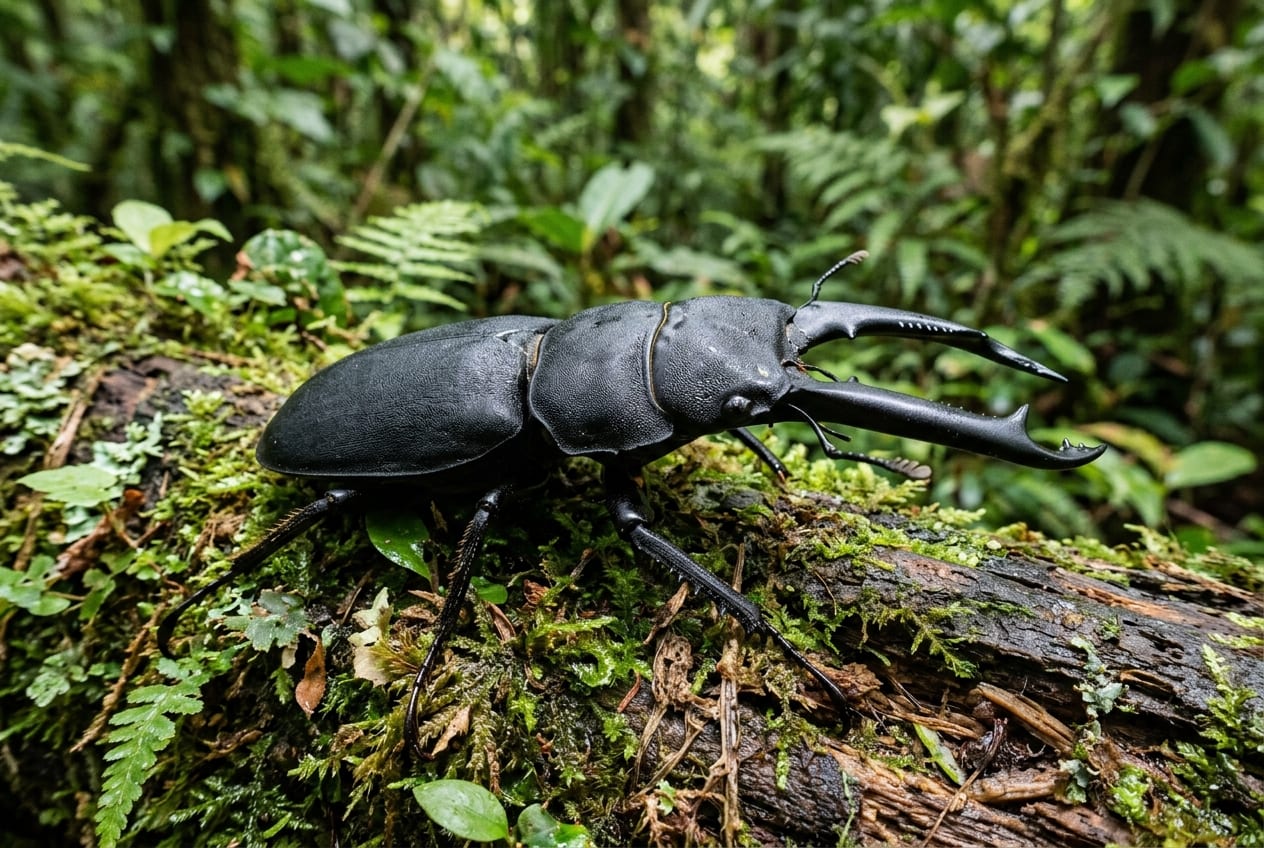
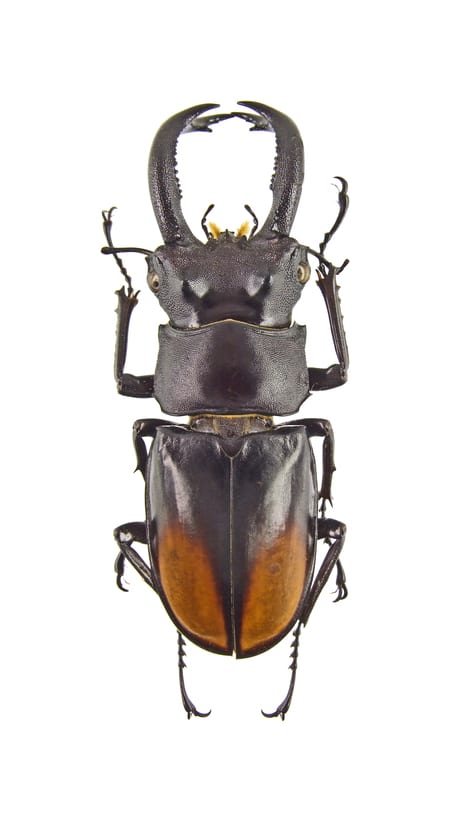
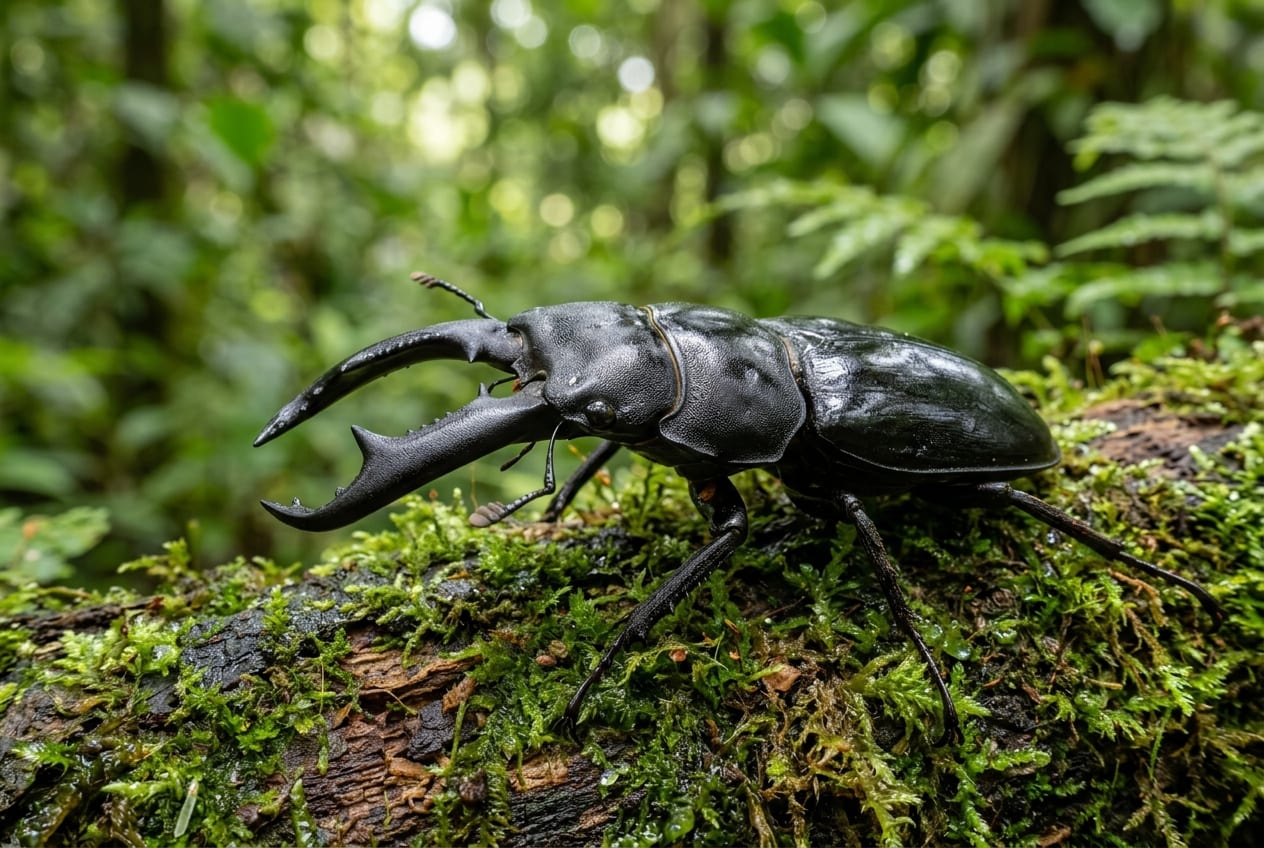
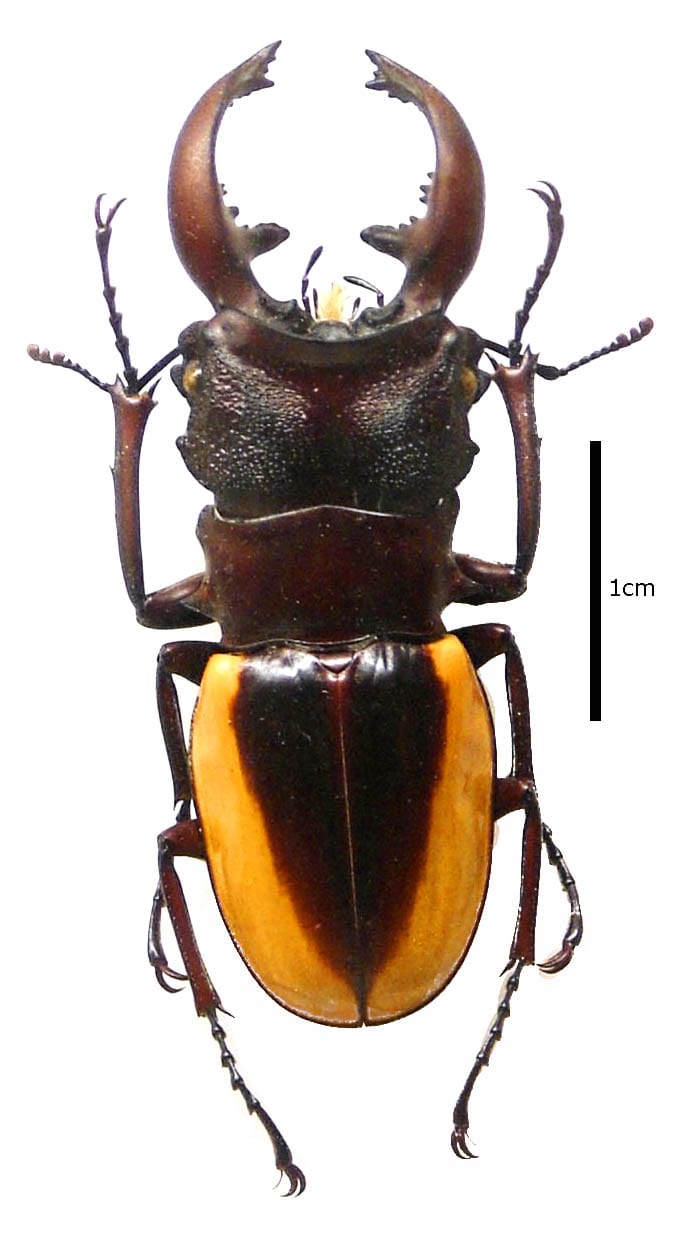
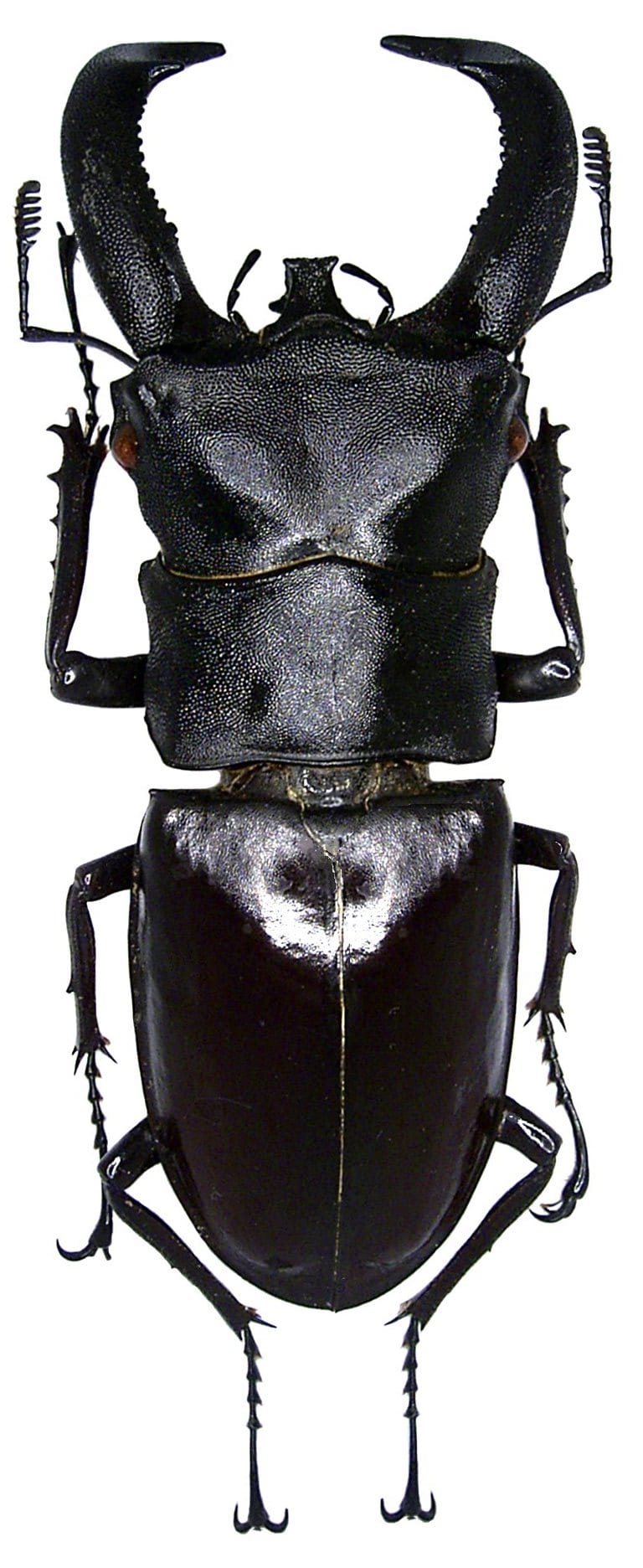
A large Indonesian species, second in size within Hexarthrius. The clypeus rises like a rhinoceros horn and the curved mandibles fork at the tip. The Sumatran subspecies exceeds 100mm in captivity and rivals H. mandibularis in presence.
Difficulty
Intermediate
Temperature
23〜25℃
Lifespan
Adults 4-7 months
Size
Males 65-90mm (wild max 109mm), females 35-45mm
Humidity
60〜80%
Diet
Beetle jelly (adults); kinshi bottles or fermented substrate (larvae)
About
The rhinoceros stag beetle (Hexarthrius rhinoceros) is a large fork-horned stag from Sumatra, Java and the Mentawai Islands, second in size only to H. mandibularis. The epithet means rhinoceros, and its strongly developed clypeal projection gives it the Japanese alias Hanadaka-futamata. The mandibles curve more than in mandibularis and the largest inner tooth sits nearer the tip, though shapes range from strongly curved to nearly straight. The nominate form is Javan, chaudoiri Sumatran and sadaoi from Pagai; Japanese trade is mostly Sumatran stock. Males measure 65-90mm, reaching 109mm in the wild, and the BE-KUWA 2025 captive record is 103.0mm from Sumatra (2012). Because H. mandibularis and H. parryi share Sumatra and their females look almost identical, wild stock is sometimes suspected of hybridisation or misidentification. Keep adults at 23-25C, lay Quercus logs on the substrate surface and let the female lay at around 25C. The species is aggressive and tying the male's mandibles for pairing is essential.
Source: Wikipedia (CC BY-SA 4.0)
Lifespan of the Rhinoceros Stag Beetle
The Rhinoceros Stag Beetle lives Adults 4-7 months.
Size of the Rhinoceros Stag Beetle
The Rhinoceros Stag Beetle grows to Males 65-90mm (wild max 109mm), females 35-45mm.
Temperature & humidity for the Rhinoceros Stag Beetle
The ideal temperature for the Rhinoceros Stag Beetle is 23〜25℃.
Basic Info
Origin
Indonesia (Sumatra, Java, Mentawai Islands)
Care Specifications
AggressiveSolitaryBreeding: Moderate
Sources: Hakurai Rokkyakudo: rearing Hexarthrius rhinoceros / Dorcus Danke: Sumatran H. rhinoceros care notes / COLORS fork-horned stag beetle catalogue / Wikipedia (ja): Hexarthrius
Breeding Records & Localities
Captive record (♂)
103 mm
Record source: BE-KUWA 2025 edition (Rhinoceros stag, Sumatra: captive 103.0mm, Yasuhiko Kikawa, 2012; wild record 108.8mm)
Notable localities
Sumatra (Bengkulu)JavaMentawai Islands (Pagai)
Regional subspecies
- Hexarthrius rhinoceros rhinoceros(nominate subspecies) — Java
- Hexarthrius rhinoceros chaudoiri — Sumatra
- Hexarthrius rhinoceros sadaoi — Pagai, Mentawai Islands
BE-KUWA lists the nominate Javan form separately at 84.3mm (2024; wild 92.0mm). The female record is 47.8mm (2012).
Generation codes
- WD
- Wild-caught
- WF1
- Offspring of a wild-caught female
- F1〜
- Captive generations (same locality)
- CBF1
- Cross-locality captive-bred (reset)
Sources: BE-KUWA certified breeding records (Mushi-sha, 2025 edition)
References & Sources
Edited & verified by: BreederDirect editorial team
The taxonomic, regulatory, and husbandry data on this page are compiled and verified against the authoritative primary sources below.
Primary sources
- Wikipedia
- Ministry of the Environment (Japan): Importing live Scarabaeoidea beetles
- CITES Appendices (species not listed)
- Hakurai Rokkyakudo: rearing Hexarthrius rhinoceros
- Dorcus Danke: Sumatran H. rhinoceros care notes
- COLORS fork-horned stag beetle catalogue
- BE-KUWA certified breeding records (Mushi-sha, 2025 edition)
- GBIF
Taxonomy & Authority
Accepted name: Hexarthrius rhinoceros (Olivier, 1789)
Authority databases: GBIF
Nomenclature follows global taxonomic authority databases.
Regulations & Conservation Status
Not CITES-listed
Plant Protection Act: Live Scarabaeoidea beetles (rhinoceros, stag and flower beetles) may be imported into Japan only with a species-name certificate issued by the exporting government under the Invasive Alien Species Act, and only through Narita, Chubu, Kansai, Fukuoka or Kagoshima airports. This species is not a designated invasive alien species and can be imported with the certificate.
Sources: Ministry of the Environment (Japan): Importing live Scarabaeoidea beetles / CITES Appendices (species not listed)
Regulations may change. Always verify the latest information with the relevant authorities.
Rhinoceros Stag Beetle Listings
Loading latest listingsFind listings for this species