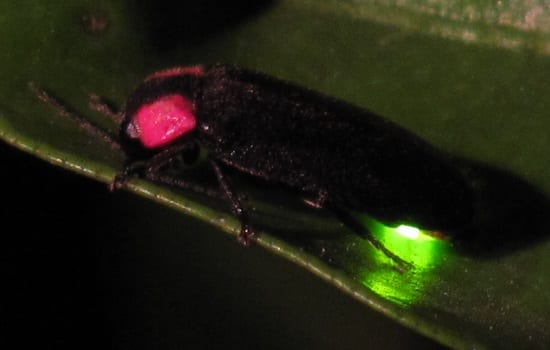
Source: Wikimedia Commons
Heike Firefly
IntermediateAquatica lateralis
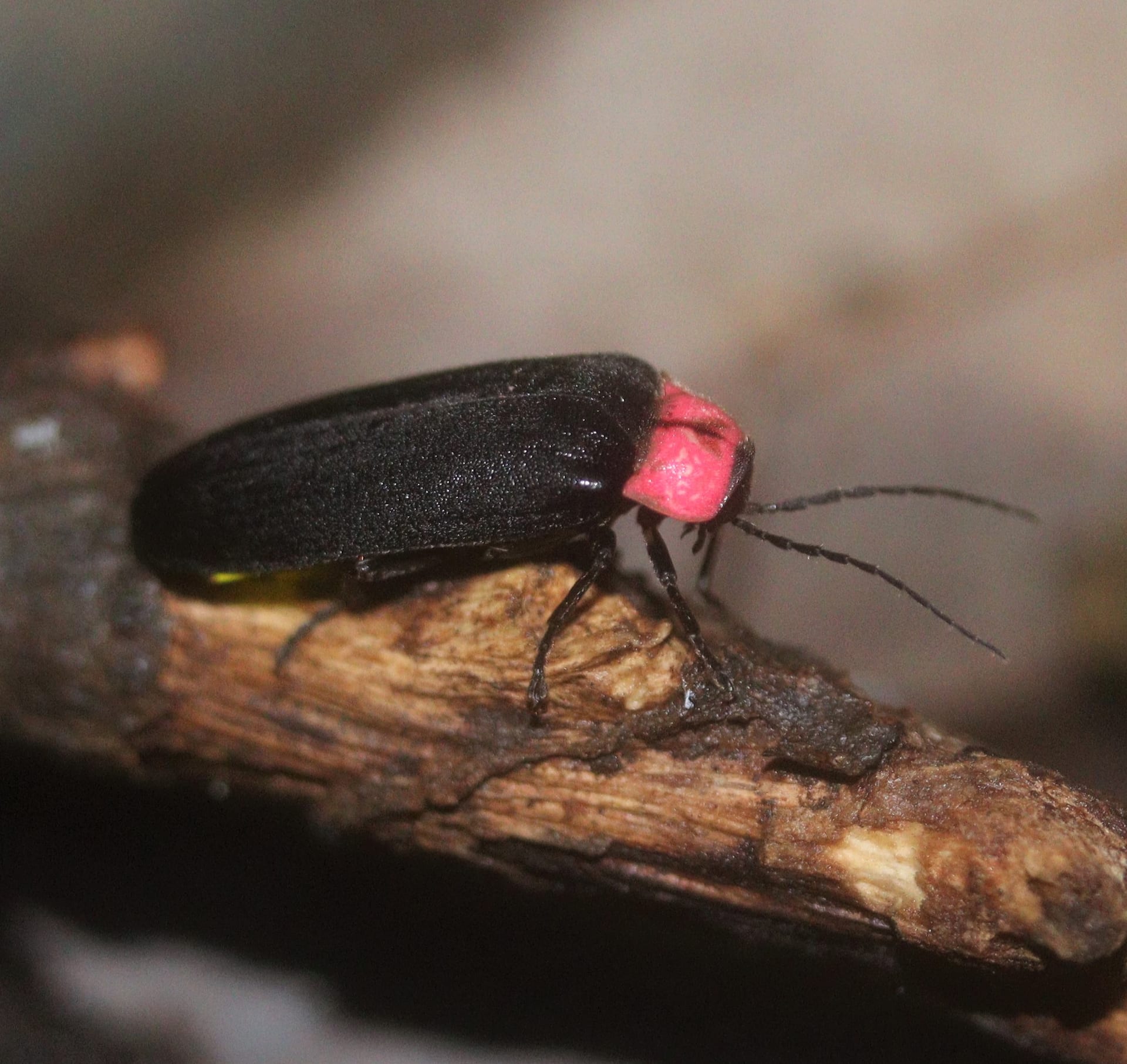
An aquatic firefly smaller than the genji firefly, breeding mainly in still water such as rice paddies and marshes. The male's flashes are distinctly faster and twinkle like a star.
Difficulty
Intermediate
Temperature
20〜28℃
Lifespan
Adults about 1 month
Size
Males 6.5-9.5mm, females 7.5-10.5mm
Humidity
60〜80%
Diet
Larvae eat pond snails such as Radix; adults take only water
About
Aquatica lateralis is the smallest of the three aquatic fireflies found in Japan; males measure 6.5-9.5 mm and females 7.5-10.5 mm. The pronotum is reddish pink or yellowish with a central brown band and the elytra are dark brown. Unlike the genji firefly, which is endemic to Japan, this species also occurs in eastern Siberia, the Kuril Islands and Korea. It breeds mainly in still water such as rice paddies and marshes rather than in streams, and the larvae feed on pond snails. Third and fourth instar larvae overwinter in soil and stubble, and in Hokkaido and Korea many individuals take more than a year to mature. Male flashes come faster than in the genji firefly: more than a second apart in Hokkaido but about half a second elsewhere in Japan and in Korea. Pesticide use in paddies and changes around them have narrowed its habitat.
Source: Wikipedia (CC BY-SA 4.0)
Lifespan of the Heike Firefly
The Heike Firefly lives Adults about 1 month.
Size of the Heike Firefly
The Heike Firefly grows to Males 6.5-9.5mm, females 7.5-10.5mm.
Basic Info
Origin
Japan (Hokkaido, Honshu, Shikoku, Kyushu, Tsushima), eastern Siberia, the Kuril Islands and Korea
Lifespan
Adults about 1 month
Size
Males 6.5-9.5mm, females 7.5-10.5mm
Temperature
Care Specifications
GroupBreeding: Moderate
Sources: Aquatica lateralis - Wikipedia (JA; breeding in still water, larval food, faster flashing, genus change) / Aquatica lateralis - Wikipedia (EN; males 6.5-9.5 mm, females 7.5-10.5 mm, range, overwintering larvae, regional flash intervals) / GBIF species page for Aquatica lateralis (Motschulsky, 1860)
References & Sources
Edited & verified by: BreederDirect editorial team
The taxonomic, regulatory, and husbandry data on this page are compiled and verified against the authoritative primary sources below.
Taxonomy & Authority
Accepted name: Aquatica lateralis (Motschulsky, 1860)
Synonyms: Luciola lateralis Motschulsky, 1860
Authority databases: GBIF
Nomenclature follows global taxonomic authority databases.
Regulations & Conservation Status
Not CITES-listed
Sources: CITES Appendices (species not listed)
Regulations may change. Always verify the latest information with the relevant authorities.
Heike Firefly Listings
Loading latest listingsFind listings for this species