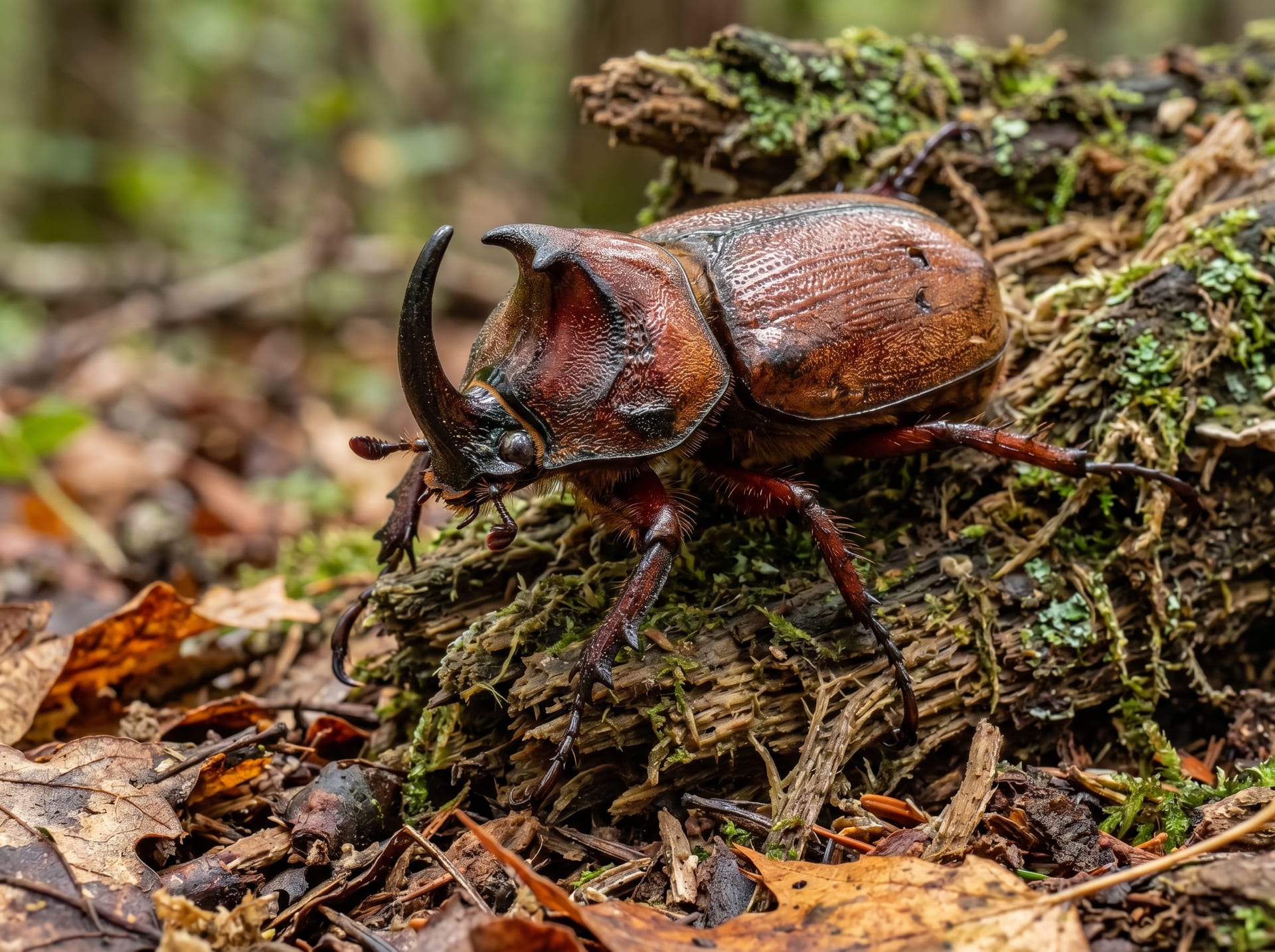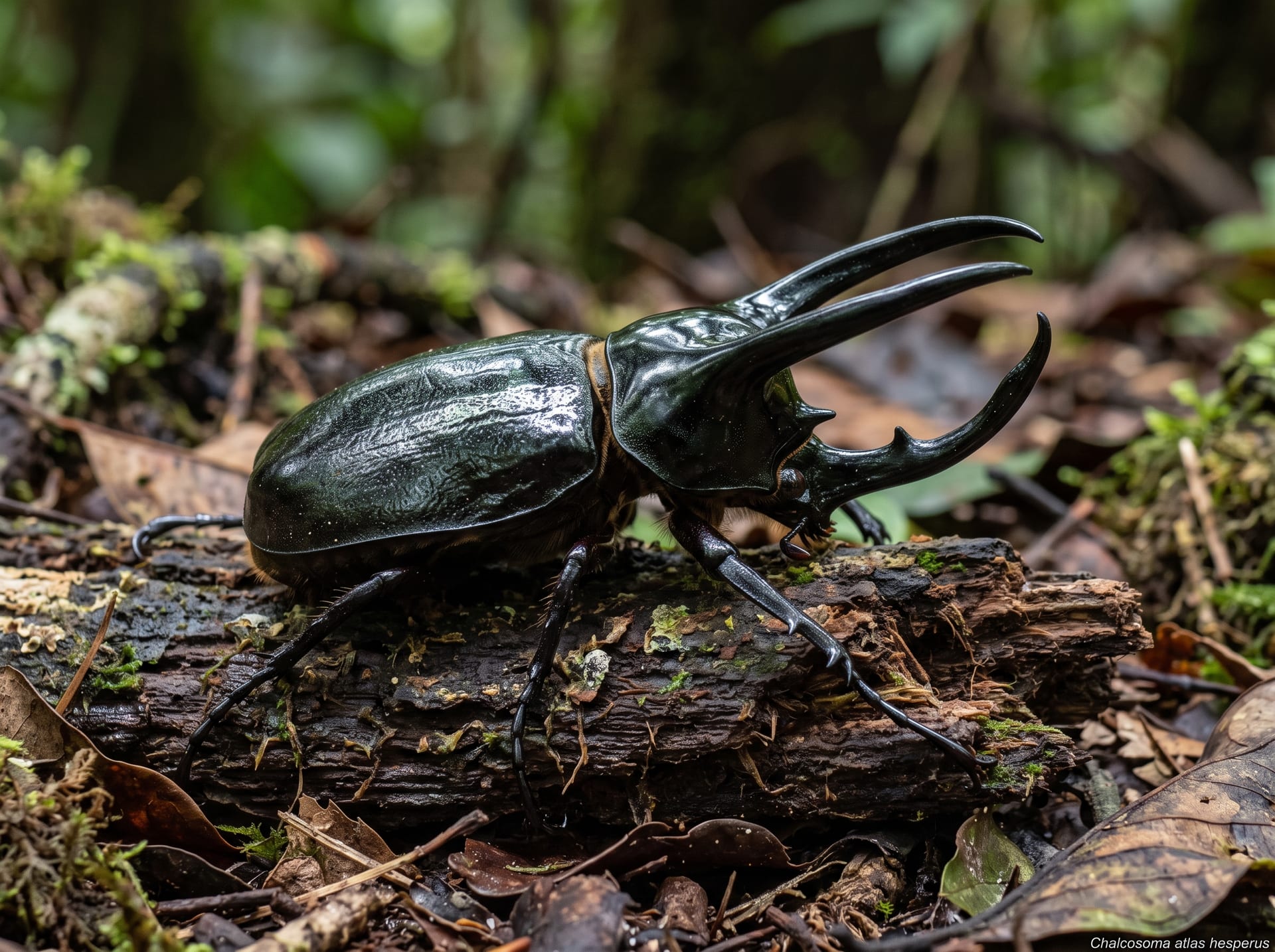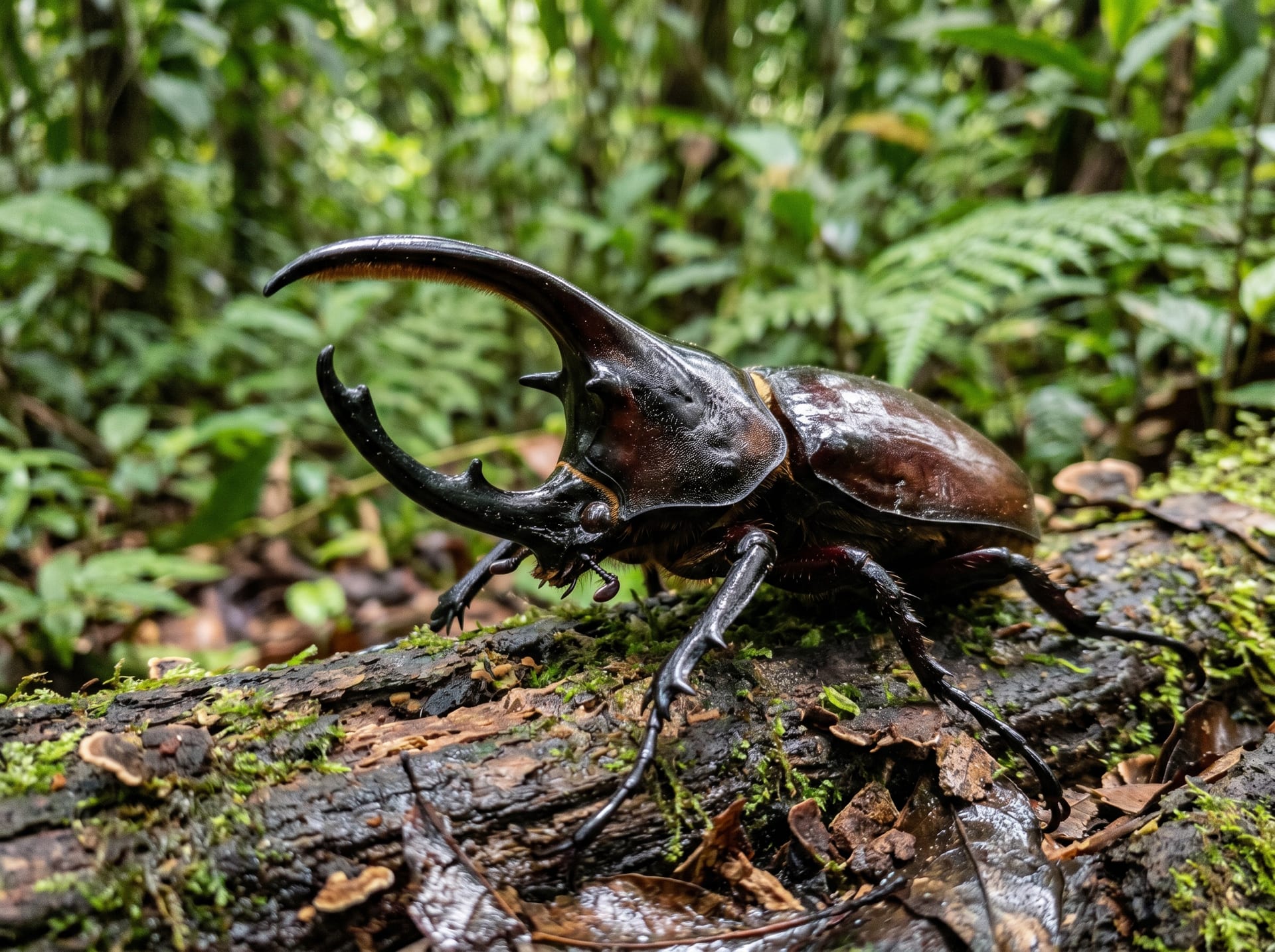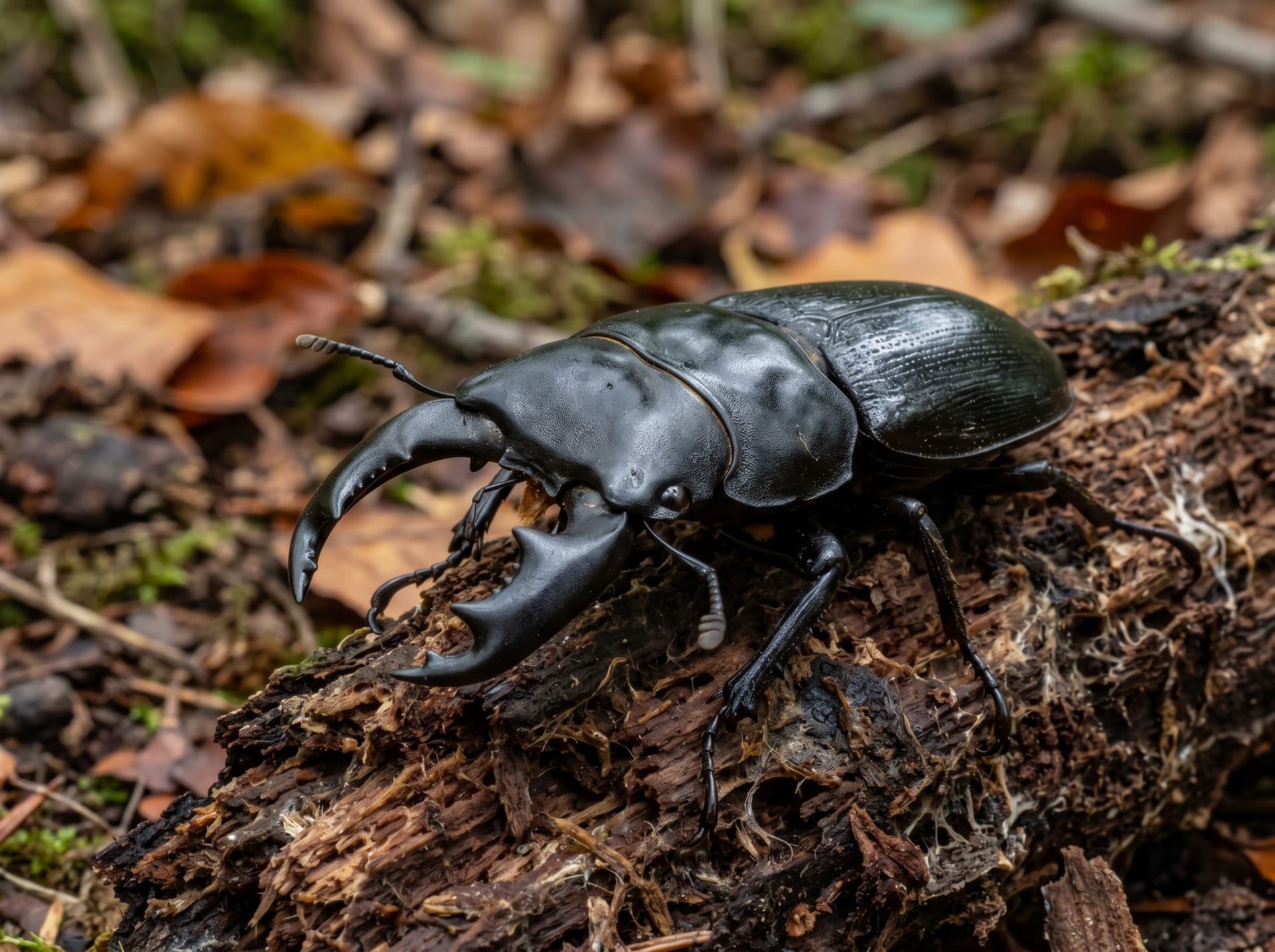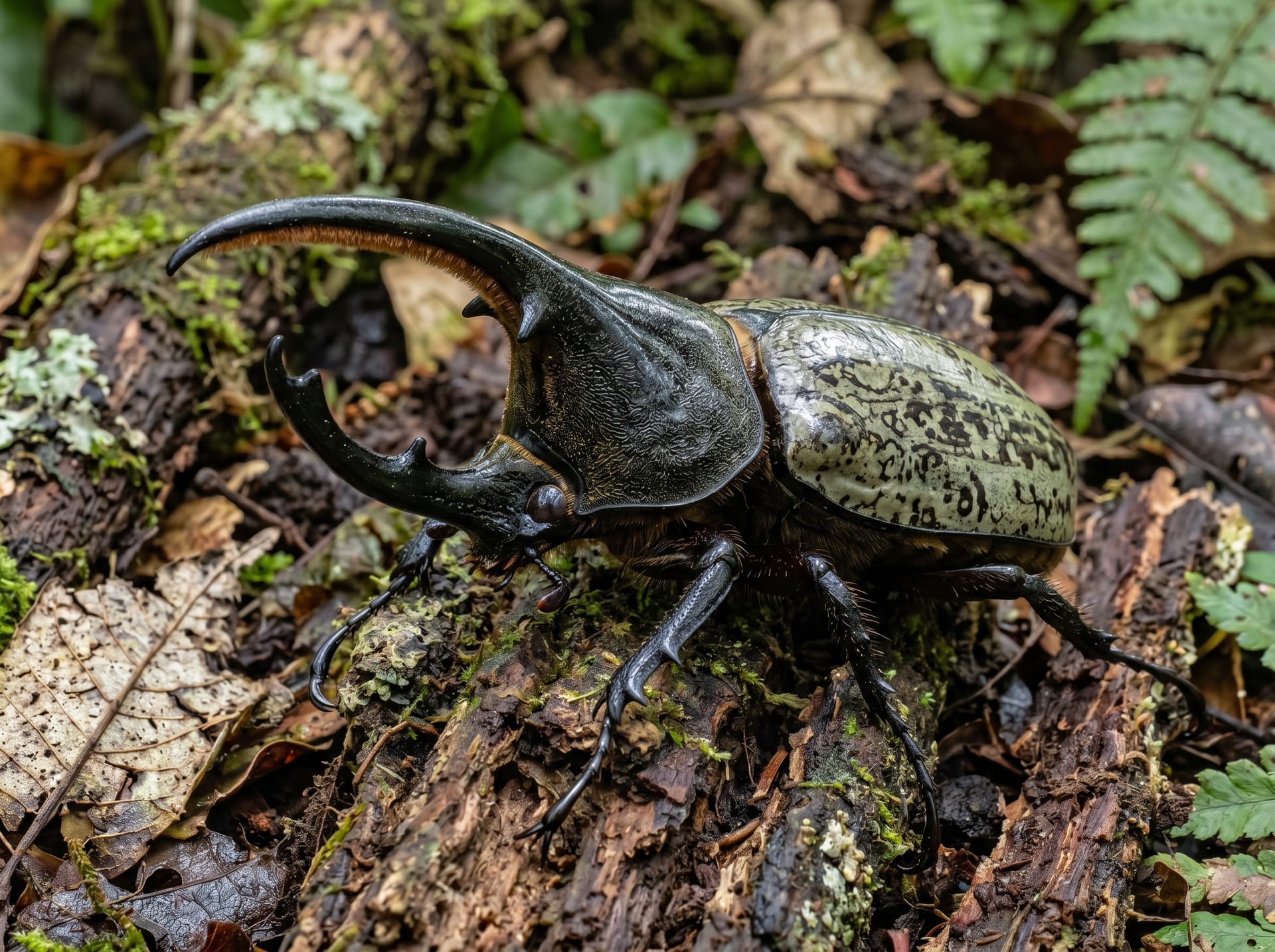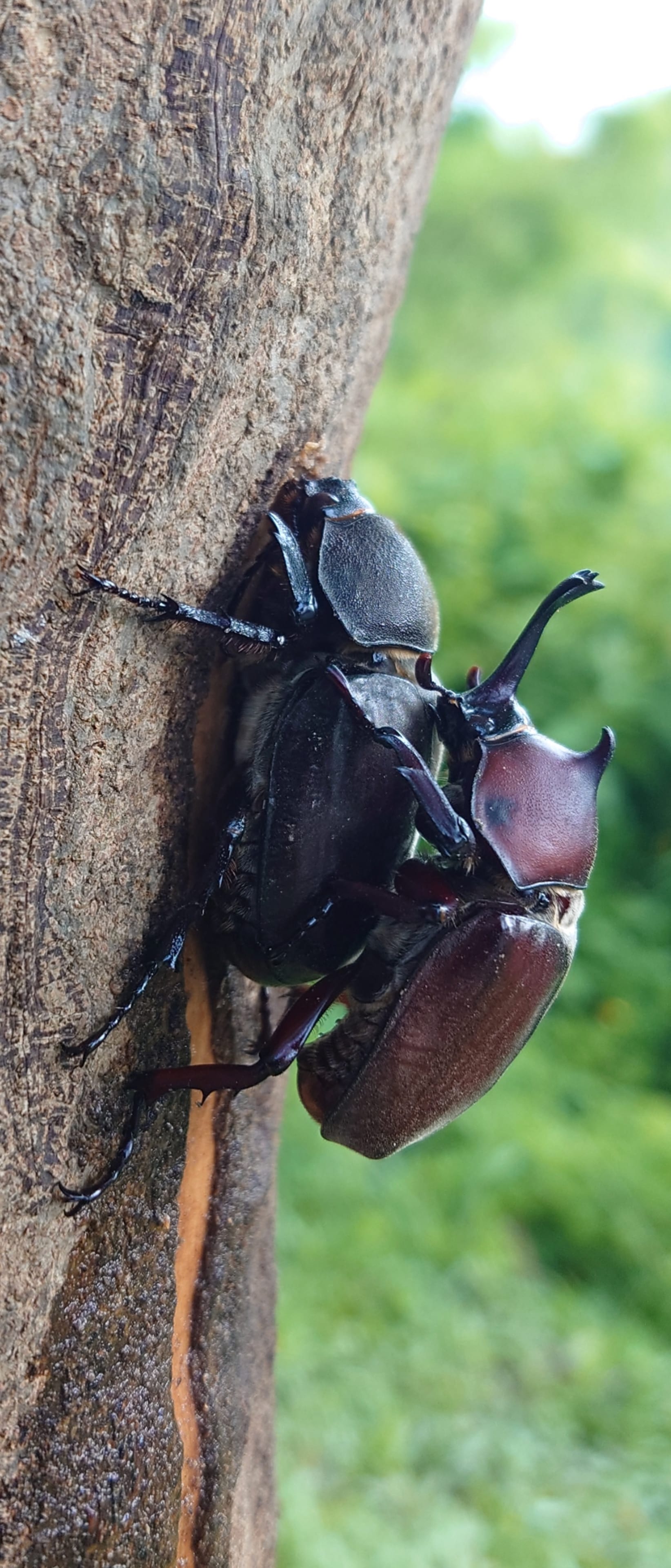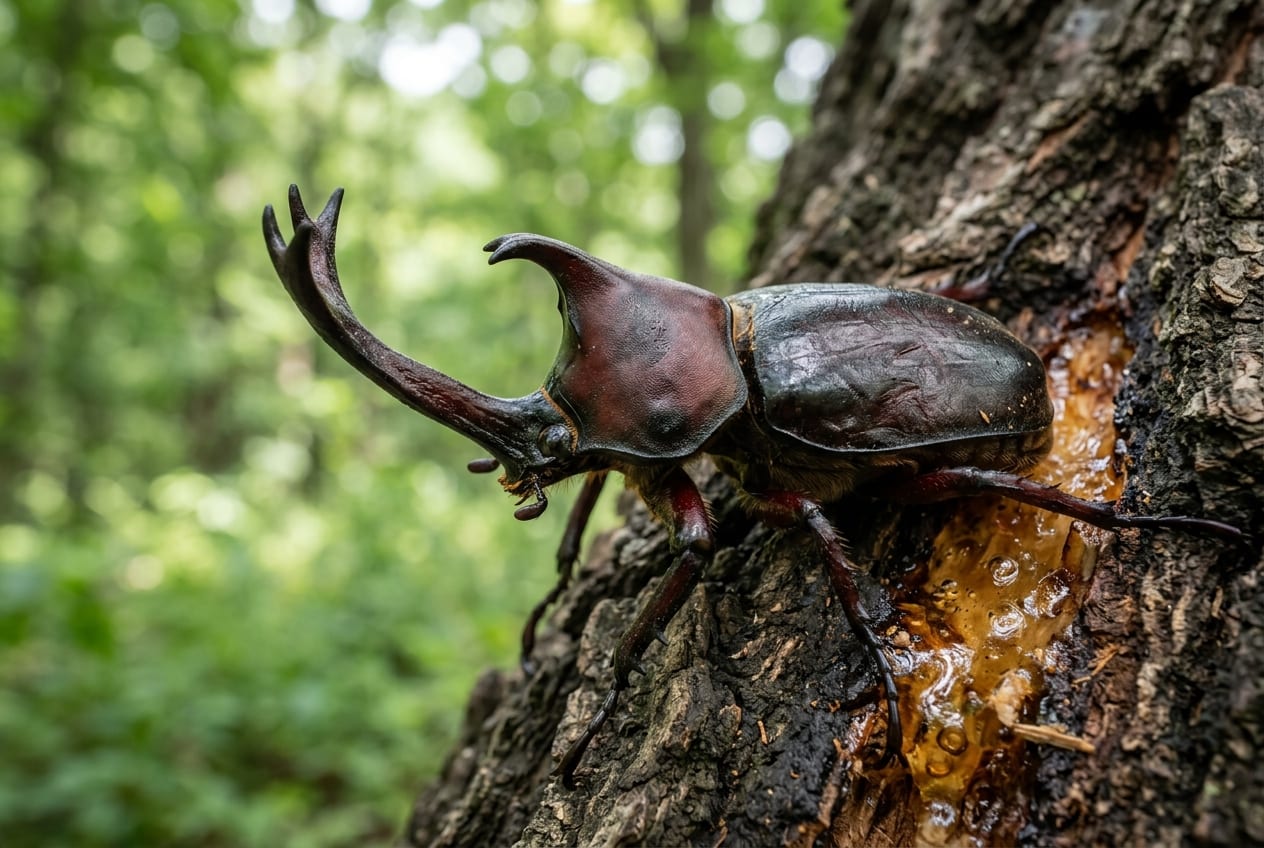
AI-generated image
Chinese Rhinoceros Beetle
IntermediateTrypoxylus dichotomus dichotomus
The nominate subspecies of the Japanese rhinoceros beetle, found on the Chinese mainland. It is slightly less glossy than the congeneric politus of the same region, and northern populations tend to be slimmer and smaller. It grades continuously into the Japanese subspecies.
Difficulty
Intermediate
Temperature
20〜28℃
Lifespan
1-3 months as an adult
Size
Males 36.5-53.5mm, females 40.1-47.2mm
Humidity
60〜80%
Diet
Adults take sap of broadleaf trees and beetle jelly; larvae feed on leaf mould
About
Trypoxylus dichotomus dichotomus is the nominate subspecies of the Japanese rhinoceros beetle and occupies almost all of China apart from the north and west, including eastern Tibet and Hainan. Males measure 36.5-53.5 mm and females 40.1-47.2 mm; the beetle is slightly less glossy than the subspecies politus of the same region, and northern populations tend to be slimmer and smaller. Populations in southern China, those from northeastern India through Indochina, and the Japanese subspecies grade into one another, so the boundaries between subspecies are vague and southern Chinese beetles are hard to separate from Indochinese ones. The type locality is given in the original description as Habitat in Indiis, but whether that specimen came from India is unknown, and the nominate form has been argued to come from China instead. The genus was long called Allomyrina but is now Trypoxylus.
Source: Wikipedia (CC BY-SA 4.0)
Lifespan of the Chinese Rhinoceros Beetle
The Chinese Rhinoceros Beetle lives 1-3 months as an adult.
Size of the Chinese Rhinoceros Beetle
The Chinese Rhinoceros Beetle grows to Males 36.5-53.5mm, females 40.1-47.2mm.
Basic Info
Origin
China (almost the whole country apart from the north and west, including eastern Tibet and Hainan)
Lifespan
1-3 months as an adult
Size
Males 36.5-53.5mm, females 40.1-47.2mm
Care Specifications
Breeding Records & Localities
Notable localities
Central ChinaSouthern ChinaHainanEastern Tibet
Regional subspecies
- Trypoxylus dichotomus dichotomus(This entry) — Central and southern China
- Trypoxylus dichotomus septentrionalis — Mainland Japan, Korea, northern China
- Trypoxylus dichotomus takarai — Okinawa Islands
- Trypoxylus dichotomus inchachina — Kumejima
- Trypoxylus dichotomus tsuchiyai — Kuchinoerabujima
- Trypoxylus dichotomus shizuae — Yakushima, Tanegashima
- Trypoxylus dichotomus tsunobosonis — Taiwan
- Trypoxylus dichotomus politus — Northeastern India, Myanmar, Thailand, Laos, Vietnam, Yunnan
- Trypoxylus dichotomus shennongjii — Hubei, China
- Trypoxylus dichotomus xizangensis — Tibet Autonomous Region
- Trypoxylus dichotomus corniculatus — West Bengal, India
The 2025 edition of BE-KUWA lists no record for this subspecies, so neither a captive nor a wild figure is given.
References & Sources
Edited & verified by: BreederDirect editorial team
The taxonomic, regulatory, and husbandry data on this page are compiled and verified against the authoritative primary sources below.
Taxonomy & Authority
Accepted name: Trypoxylus dichotomus dichotomus (Linnaeus, 1771)
Synonyms: Allomyrina dichotoma dichotoma, Scarabaeus dichotomus Linnaeus, 1771
Authority databases: GBIF
Nomenclature follows global taxonomic authority databases.
Regulations & Conservation Status
Not CITES-listed
Plant Protection Act: When importing live specimens of Scarabaeoidea (including rhinoceros beetles, stag beetles, flower beetles, etc.), a species identification certificate issued by the exporting country government agency or equivalent must be attached in accordance with the Invasive Species Act (import ports are limited to Narita, Chubu, Kansai, Fukuoka, and Kagoshima airports). This species itself is not a designated invasive species, and import is possible upon submission of the certificate.
Sources: Ministry of the Environment, Invasive Species Act: "Guidance for Those Importing Live Insects in Scarabaeoidea" / CITES Appendix (checklist.cites.org)
Regulations may change. Always verify the latest information with the relevant authorities.
Chinese Rhinoceros Beetle Listings
Loading latest listingsFind listings for this species