Source: Wikimedia Commons
Taiwanese Rhinoceros Beetle
IntermediateTrypoxylus dichotomus tsunobosonis
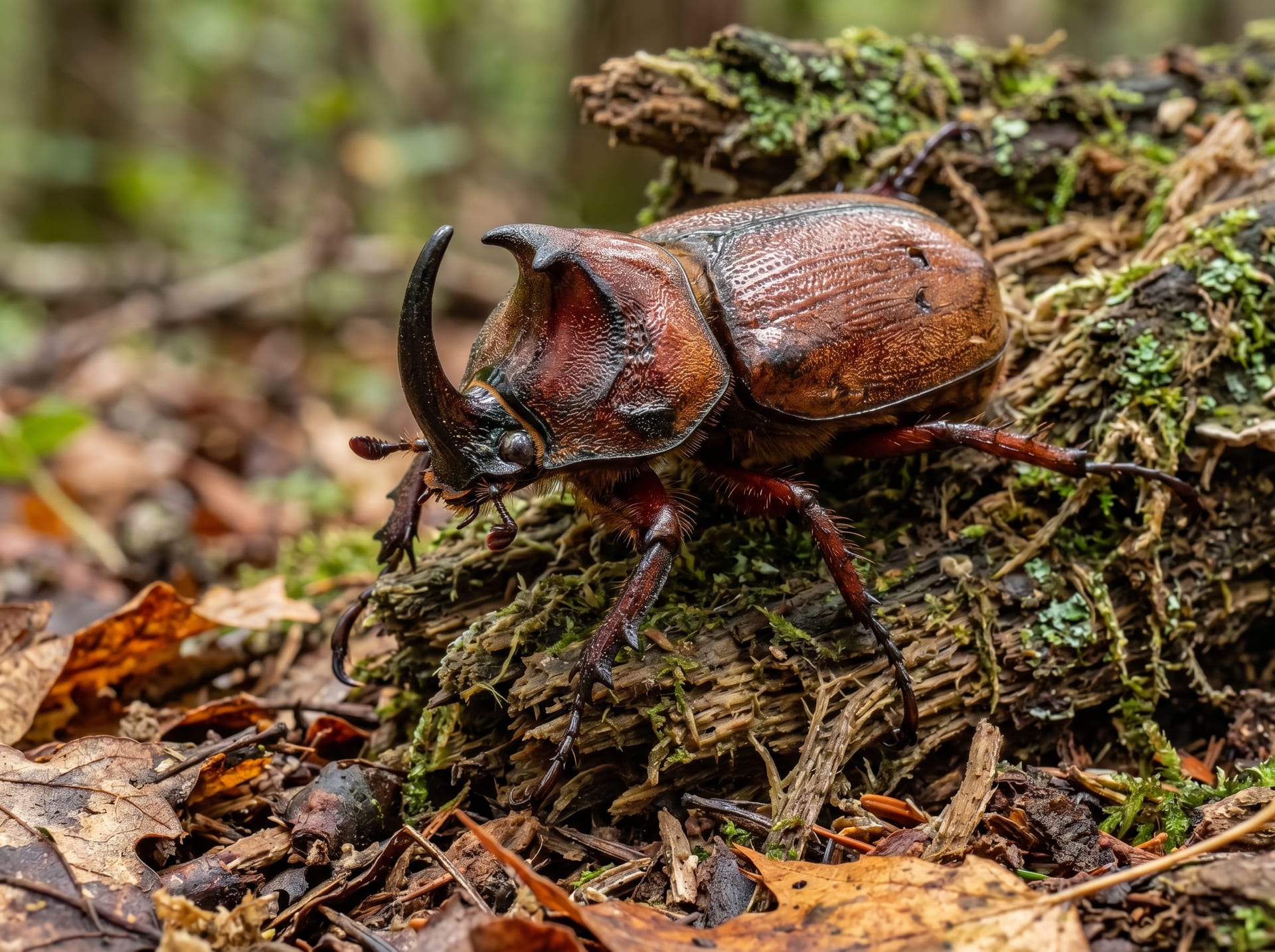
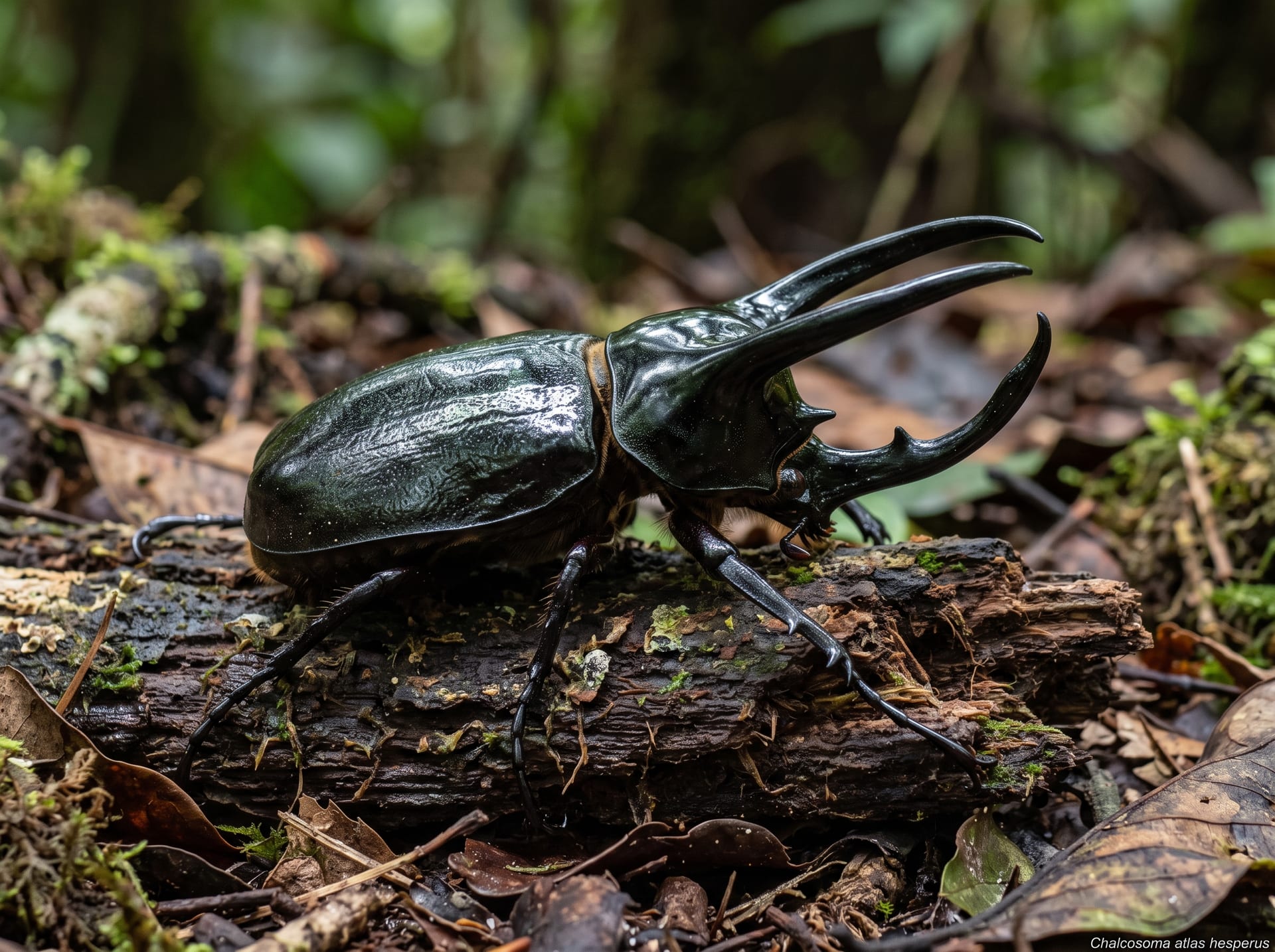
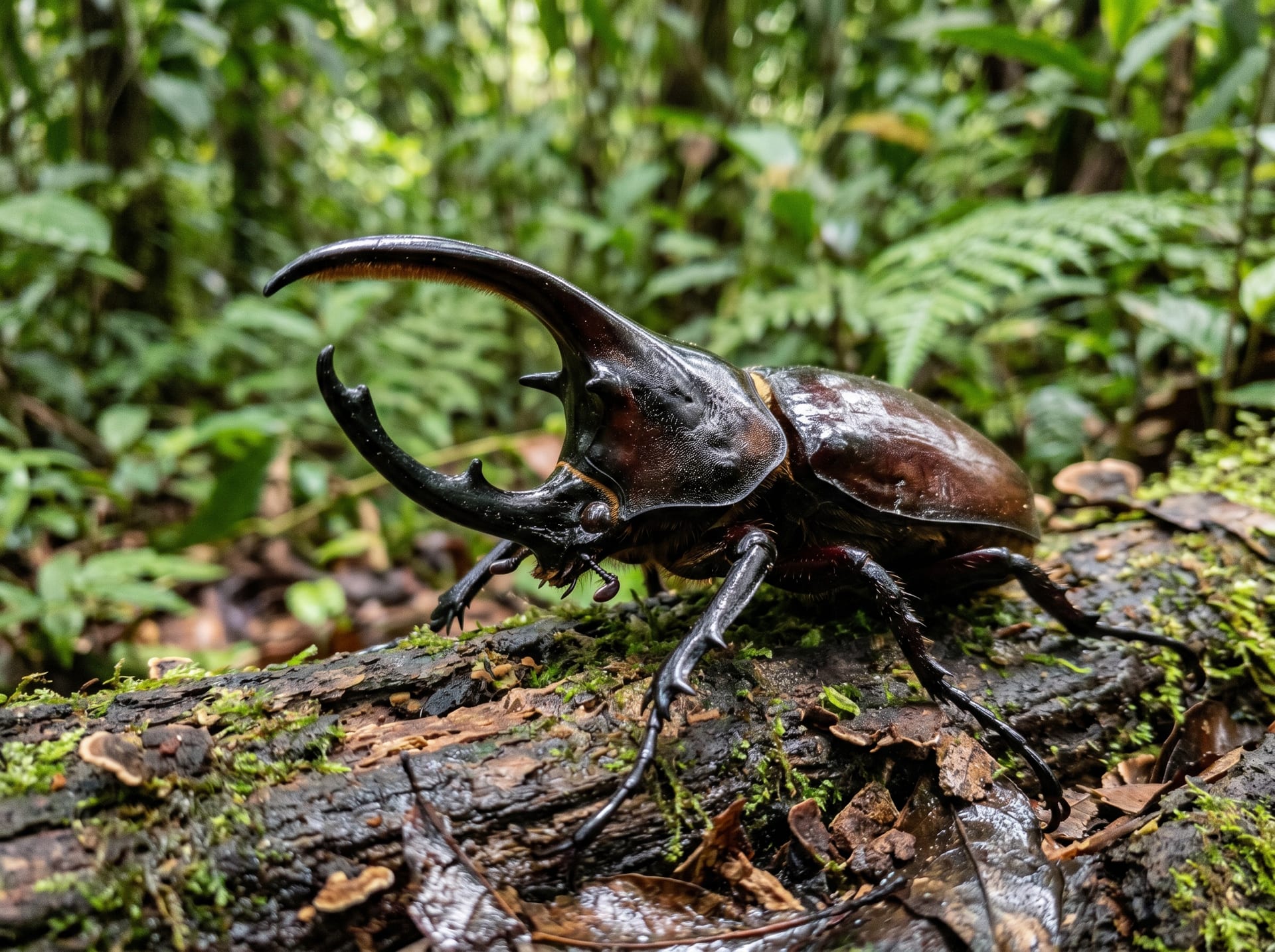
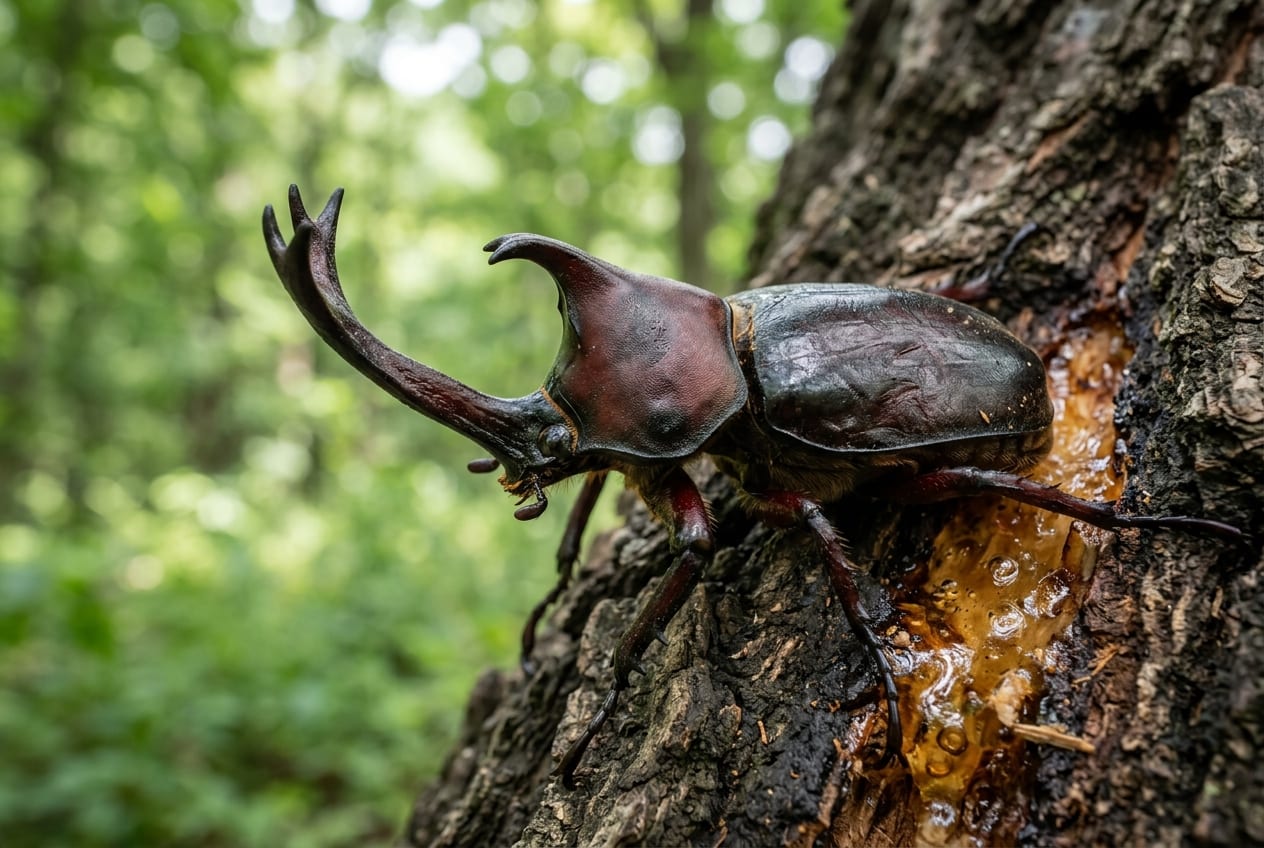
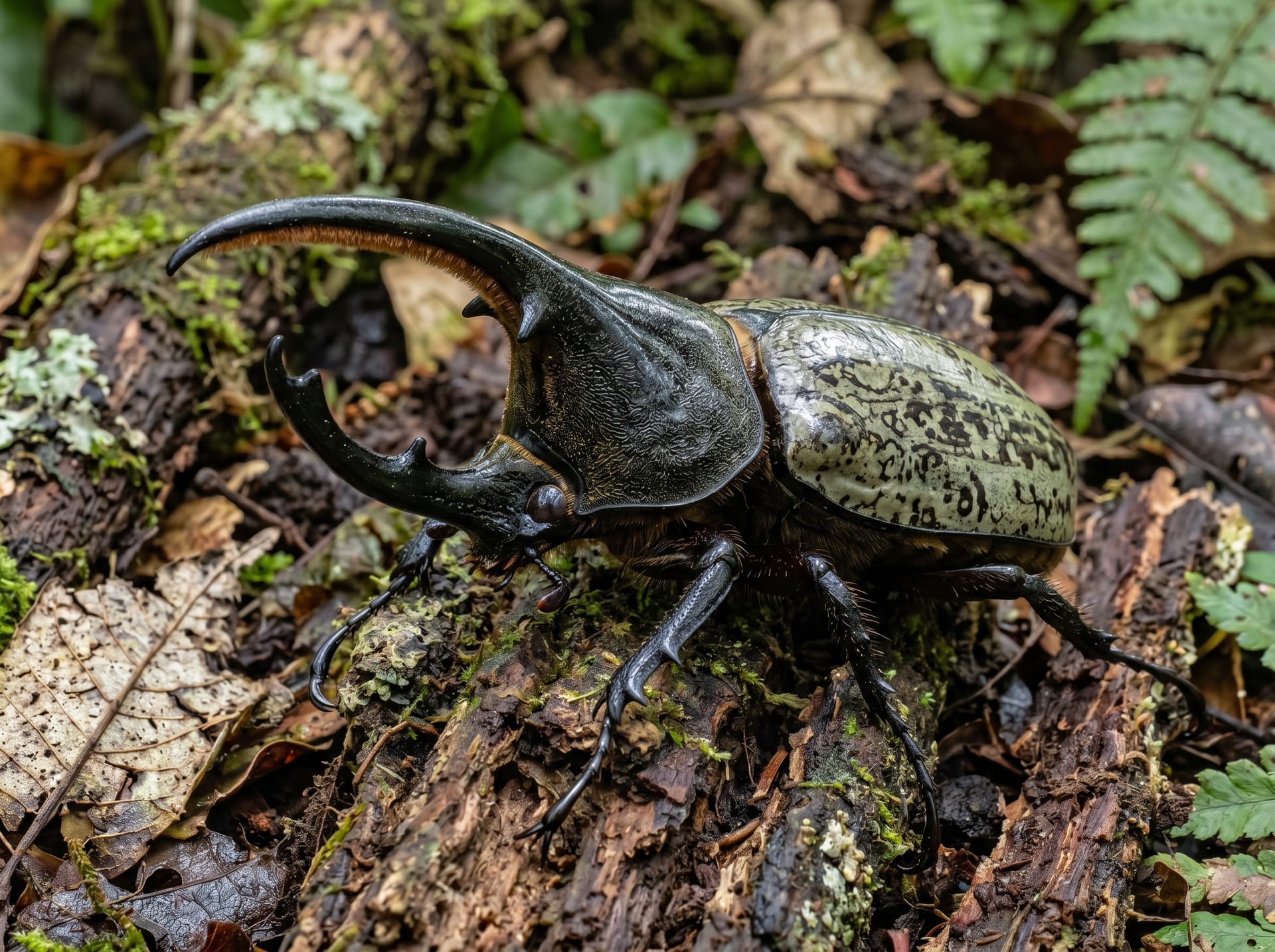
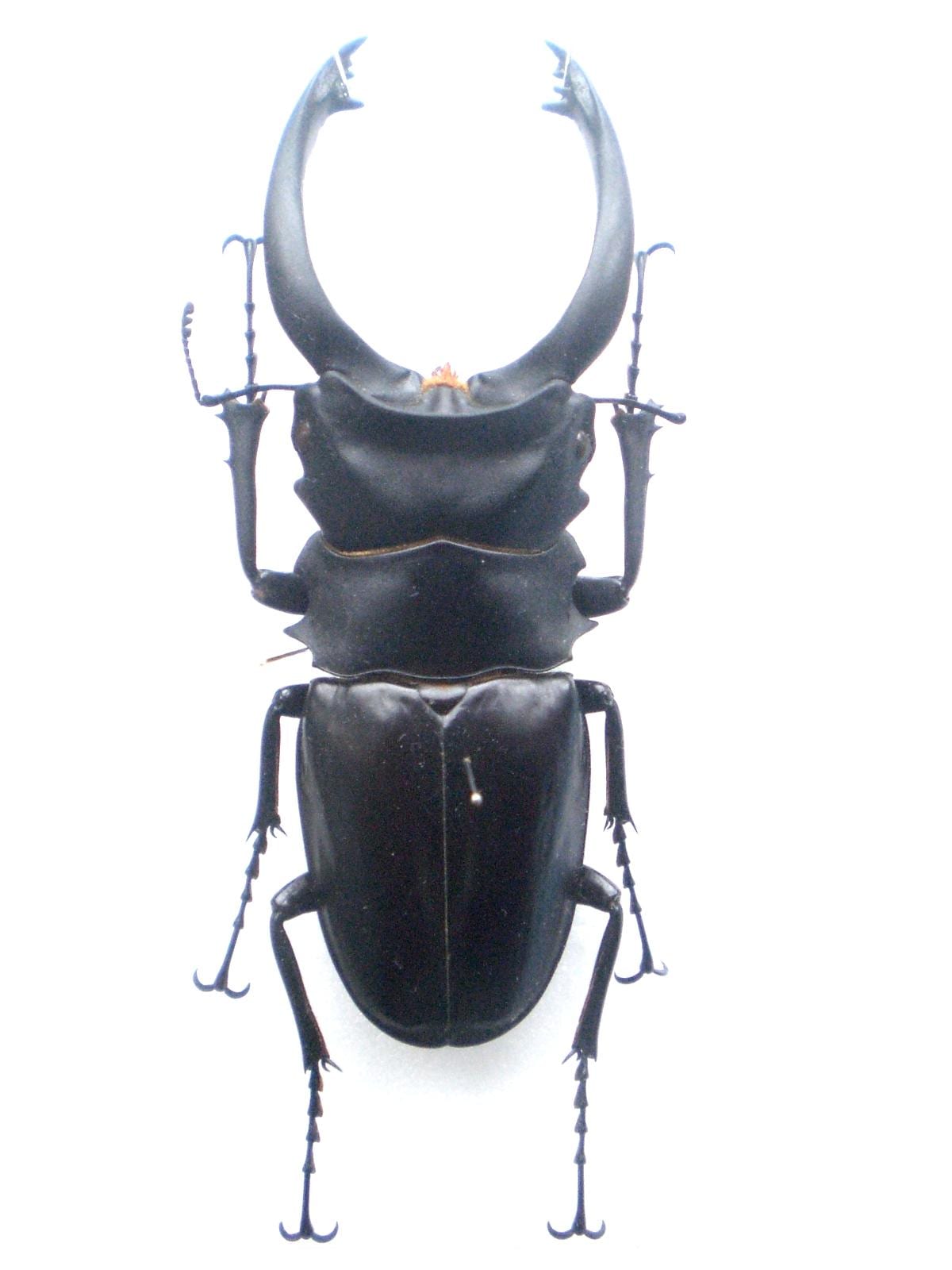
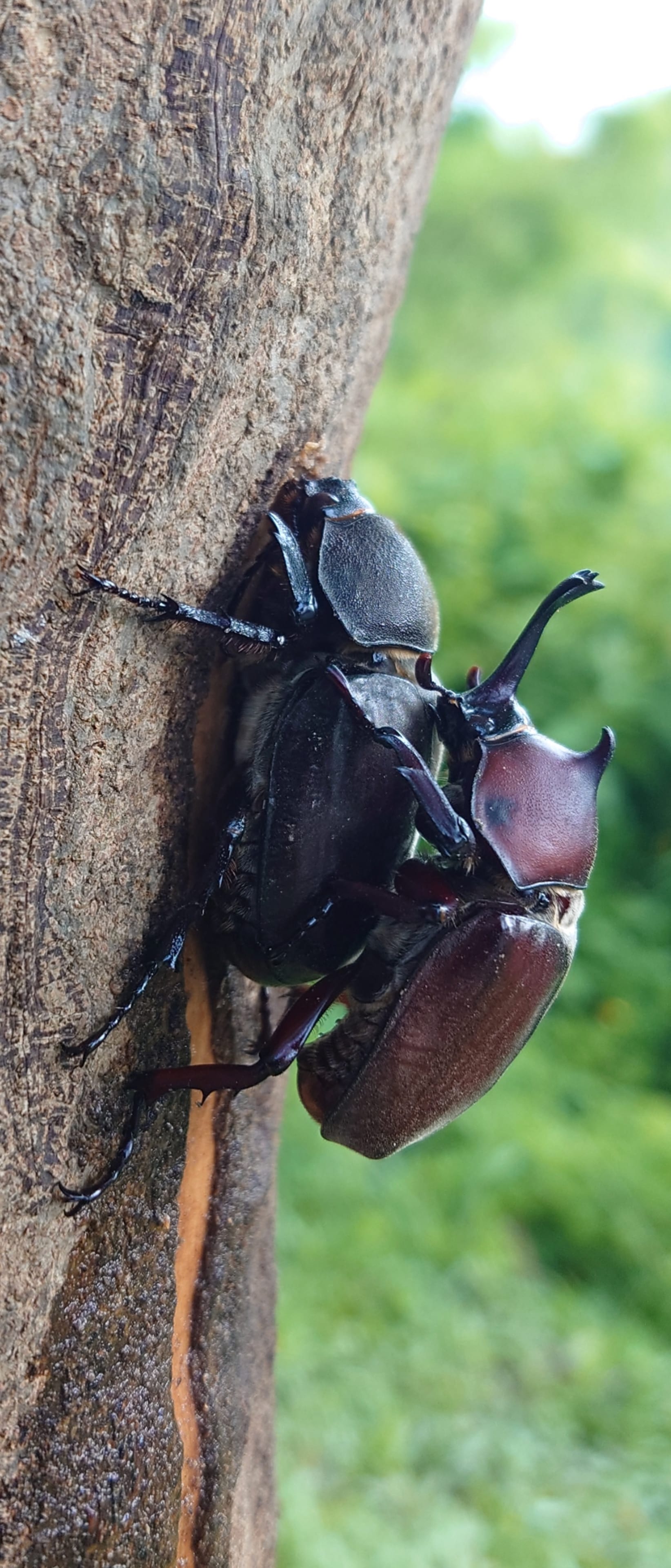
The Taiwanese subspecies of the Japanese rhinoceros beetle. The male's thoracic horn is longer and more slender than in the mainland Japanese form, which is what both the Japanese name and the subspecific name refer to. It is common throughout Taiwan except at high elevation and comes readily to lights at night.
Difficulty
Intermediate
Temperature
20〜28℃
Lifespan
1-3 months as an adult
Size
Males 35.0-56.6mm, females 38.7-51.9mm
Humidity
60〜80%
Diet
Adults take sap of various broadleaf trees and beetle jelly; larvae feed on leaf mould
About
Trypoxylus dichotomus tsunobosonis is the Taiwanese subspecies of the Japanese rhinoceros beetle. Hiromichi Kono described it as a separate species in 1931 and it was later reduced to a subspecies. Its length is given as 41-47 mm, while Nagai measured males at 35.0-56.6 mm and females at 38.7-51.9 mm. The male's thoracic horn is longer and more slender than in the mainland Japanese form, which is the source of both the Japanese name and the subspecific name. Females are more elongate-oval than in other subspecies, with the depression and low ridges of the pronotum less pronounced. The beetle is common throughout Taiwan except at high elevation, gathers at the sap of various broadleaf trees and comes readily to lights at night. It has also been reported resting in the canopy by day, and, like the mainland Japanese form, it has been seen gouging bark on ash trees to make its own sap flow.
Source: Wikipedia (CC BY-SA 4.0)
Lifespan of the Taiwanese Rhinoceros Beetle
The Taiwanese Rhinoceros Beetle lives 1-3 months as an adult.
Size of the Taiwanese Rhinoceros Beetle
The Taiwanese Rhinoceros Beetle grows to Males 35.0-56.6mm, females 38.7-51.9mm.
Basic Info
Origin
Taiwan (throughout the island except at high elevation)
Lifespan
1-3 months as an adult
Size
Males 35.0-56.6mm, females 38.7-51.9mm
Care Specifications
Breeding Records & Localities
Notable localities
Taiwan
Regional subspecies
- Trypoxylus dichotomus dichotomus — Central and southern China
- Trypoxylus dichotomus septentrionalis — Mainland Japan, Korea, northern China
- Trypoxylus dichotomus takarai — Okinawa Islands
- Trypoxylus dichotomus inchachina — Kumejima
- Trypoxylus dichotomus tsuchiyai — Kuchinoerabujima
- Trypoxylus dichotomus shizuae — Yakushima, Tanegashima
- Trypoxylus dichotomus tsunobosonis(This entry) — Taiwan
- Trypoxylus dichotomus politus — Northeastern India, Myanmar, Thailand, Laos, Vietnam, Yunnan
- Trypoxylus dichotomus shennongjii — Hubei, China
- Trypoxylus dichotomus xizangensis — Tibet Autonomous Region
- Trypoxylus dichotomus corniculatus — West Bengal, India
The 2025 edition of BE-KUWA lists no record for this subspecies, so neither a captive nor a wild figure is given.
Generation codes
- WD
- Wild-caught
References & Sources
Edited & verified by: BreederDirect editorial team
The taxonomic, regulatory, and husbandry data on this page are compiled and verified against the authoritative primary sources below.
Primary sources
Taxonomy & Authority
Accepted name: Trypoxylus dichotomus tsunobosonis Kôno, 1931
Synonyms: Trypoxylus tsunobosonis Kôno, 1931, Allomyrina dichotoma tsunobosonis
Authority databases: GBIF
Nomenclature follows global taxonomic authority databases.
Regulations & Conservation Status
Not CITES-listed
Plant Protection Act: When importing live specimens of Scarabaeoidea (including rhinoceros beetles, stag beetles, flower beetles, etc.), a species identification certificate issued by the exporting country government agency or equivalent must be attached in accordance with the Invasive Species Act (import ports are limited to Narita, Chubu, Kansai, Fukuoka, and Kagoshima airports). This species itself is not a designated invasive species, and import is possible upon submission of the certificate.
Sources: Ministry of the Environment, Invasive Species Act: "Guidance for Those Importing Live Insects in Scarabaeoidea" / CITES Appendix (checklist.cites.org)
Regulations may change. Always verify the latest information with the relevant authorities.
Taiwanese Rhinoceros Beetle Listings
Loading latest listingsFind listings for this species