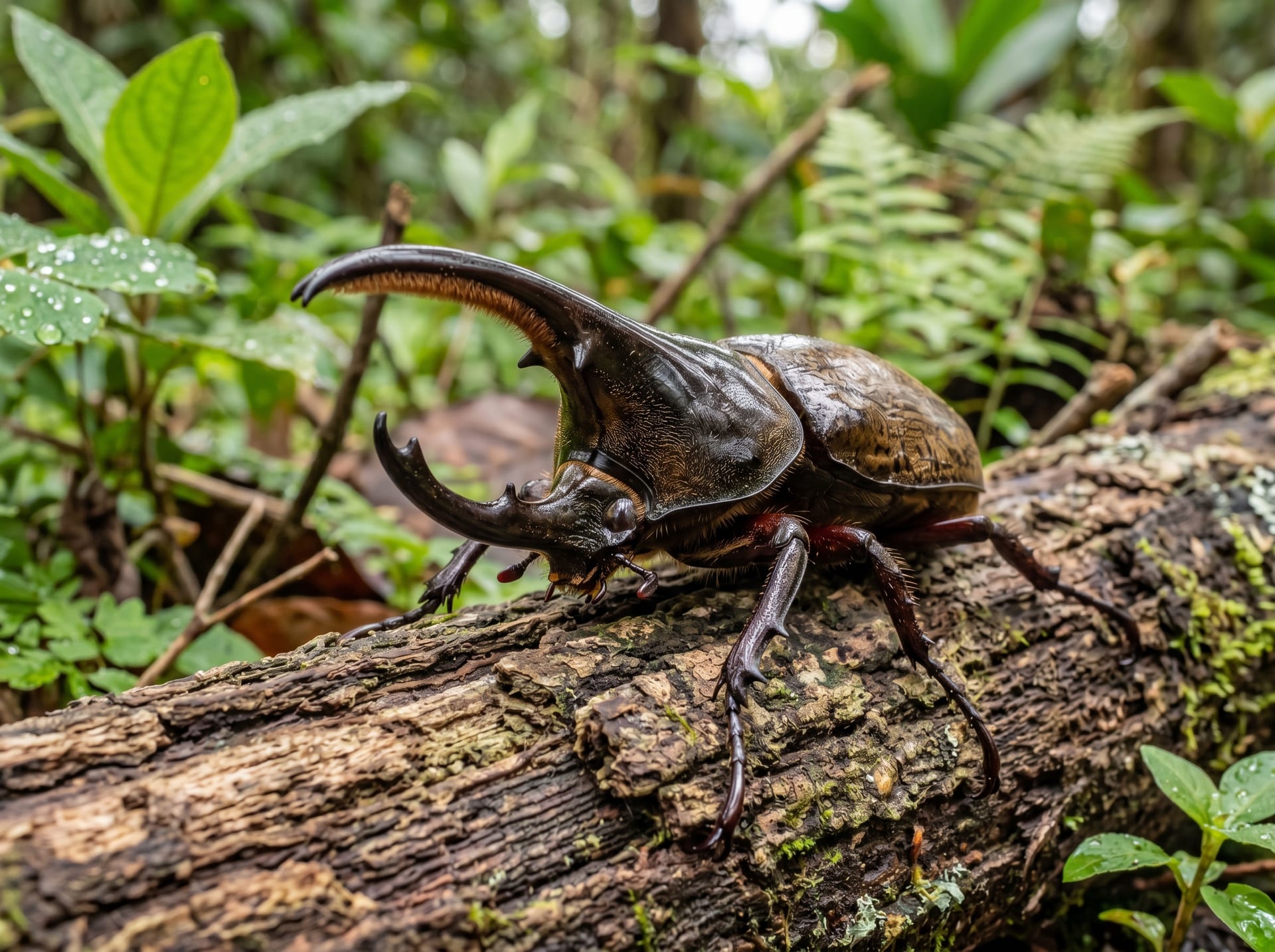
Temperature management is the area where accidents most often occur in rhinoceros beetle keeping. Since insects are ectothermic animals, ambient temperature directly affects their health. In recent years especially, indoor temperatures in Japan frequently exceed 35°C in summer, and the misconception that "Japanese species must be heat-resistant because they're native" often leads to shortened lifespans.
This article focuses on rhinoceros beetles (both Japanese and exotic species) to clarify the ideal temperatures for both adults and larvae, summer heat countermeasures, and winter care. Stag beetles have quite different requirements depending on species, so please refer to our Stag Beetle Temperature Management Guide.
Rhinoceros Beetle Ideal Temperature Range | Treating Adults and Larvae Separately
Many temperature management problems stem from treating adults and larvae as if they need the same conditions. Their environmental requirements differ significantly.
Adult Ideal Temperature
| Species | Ideal Temperature | Notes |
|---|
| Japanese rhinoceros beetle | 20–28°C | Lifespan visibly shortens if exposed to 30°C or higher |
| Hercules beetle | 20–25°C | Sensitive to heat; avoid temperatures exceeding 28°C |
| Caucasus beetle | 22–28°C | Somewhat heat-tolerant but sensitive to humidity |
| Atlas beetle | 23–28°C | Sensitive to cold; requires heating in winter |
| Satan beetle | 18–22°C | High-altitude species; room temperature keeping is difficult |
| Elephant beetles | 22–26°C | Sensitive to sudden temperature changes |
Exotic rhinoceros beetles are often mistaken as "tropical insects that tolerate heat well," but species like Hercules and Satan that inhabit high-altitude regions actually find Japanese summers harsher. Checking the species' native region and elevation before purchase helps determine what equipment you'll need.
Larvae Ideal Temperature
Larvae tend to grow larger when kept at temperatures slightly lower than those for adults, developing slowly. Japanese rhinoceros beetle larvae thrive around 20–25°C; exceeding this range speeds up growth but often produces smaller adults after emergence. Keeping temperatures from rising too high is key if you're aiming for larger individuals.
Detailed larval care is covered in our Complete Guide to Rhinoceros Beetle Larval Rearing, and tips for raising larger specimens can be found in Tips for Growing Larger Rhinoceros Beetles.
Summer Heat Protection | Start by Lowering Room Temperature
Summer heat is the greatest risk for rhinoceros beetles. In particular, adult beetles experience accelerated depletion when exposed to temperatures exceeding 30°C for prolonged periods, significantly shortening their natural 2–3 month lifespan.
Cost-Effective Measures
- Change the location: Entryways or north-facing closets can be 2–3°C cooler than the rest of the room. This is the first measure to try.
- Insulate with foam board: Wrapping the enclosure in styrofoam reduces external temperature fluctuations and cushions sudden temperature spikes.
- Use ice packs: Placing them around the enclosure helps; however, effectiveness lasts only a few hours, so consider this an emergency measure.
- Circulate air: Use a fan to move air in the keeping room. Avoid directing air straight at the enclosure, as it will dry out the substrate.
For more detailed information on summer care without air conditioning, see Heat Protection for Rhinoceros Beetles and Stag Beetles.
When Installing Equipment
If you plan to breed or keep heat-sensitive exotic high-altitude species, investing in stable temperature-control equipment often proves more cost-effective in the long run. Detailed setups using wine coolers and temperature controllers are explained in Temperature Management Techniques for Insect Keeping.
Winter Care | Japanese Rhinoceros Beetle Adults Do Not Overwinter
This is the biggest difference between rhinoceros beetles and stag beetles.
Unlike Japanese stag beetles that can overwinter for years as adults, Japanese rhinoceros beetle adults do not overwinter. It is natural for them to reach the end of their lives from summer into early autumn; attempting to keep them alive through winter with heating is unrealistic. The idea that warming a sluggish adult beetle in fall will save its life is mistaken.
The larvae, however, are what overwinter. Japanese rhinoceros beetle larvae survive the cold underground and resume active feeding in spring, emerging as adults in early summer.
When Managing Larvae in Winter
- Avoid excessive heating: Room temperature (even dropping to around 10°C) is fine. Heating disrupts the seasonal rhythm, potentially causing early emergence or smaller size.
- Prevent desiccation: In cold periods, substrate drying goes unnoticed. If the surface becomes dry, lightly mist it.
- Check monthly: Observe feeding traces, check for mold or odors, and avoid frequent excavation.
Tropical and subtropical exotic species differ; activity drops significantly below 15°C, risking decline. Cold-sensitive species like Atlas and Caucasus beetles require heat panels or room heating to maintain minimum temperatures. For information on species-specific overwintering and hibernation care, see our Insect Overwintering and Hibernation Management Guide.
Build a Habit of Recording Temperature
Always place a thermometer near your enclosure. A digital thermometer that records maximum and minimum temperatures is ideal. Without a record, you won't know how high temperatures climbed while you were away during the day.
- Check twice daily—morning and night: This alone prevents most accidents.
- Alert threshold: Any deviation of 3°C or more from ideal temperature warrants attention.
- Simple note-taking is enough: Consistency is what matters.
A smart-home compatible temperature and humidity sensor lets you monitor conditions remotely and receive alerts when thresholds are exceeded.
The Safety Standards of BreederDirect
If you want to bring home a healthy individual raised under proper temperature management, purchasing directly from breeders through BreederDirect is your best option.
Breeders listing on BreederDirect are primarily professionals and experienced keepers who take daily temperature management seriously. You can message them directly before purchase to ask, "What temperature range were they kept in?" and "What temperature did you use for the larvae?"—making it easier to replicate the same environment at home. Especially with exotic beetles sensitive to temperature fluctuations, this information can make a major difference in your success.
Shipping also includes seasonal temperature protection—cooling or heating as needed—so transactions remain safe even during extreme heat or cold. With a solid grasp of temperature management basics, start exploring BreederDirect to find your perfect beetle.