Source: Wikimedia Commons
Satan Beetle
AdvancedDynastes satanas
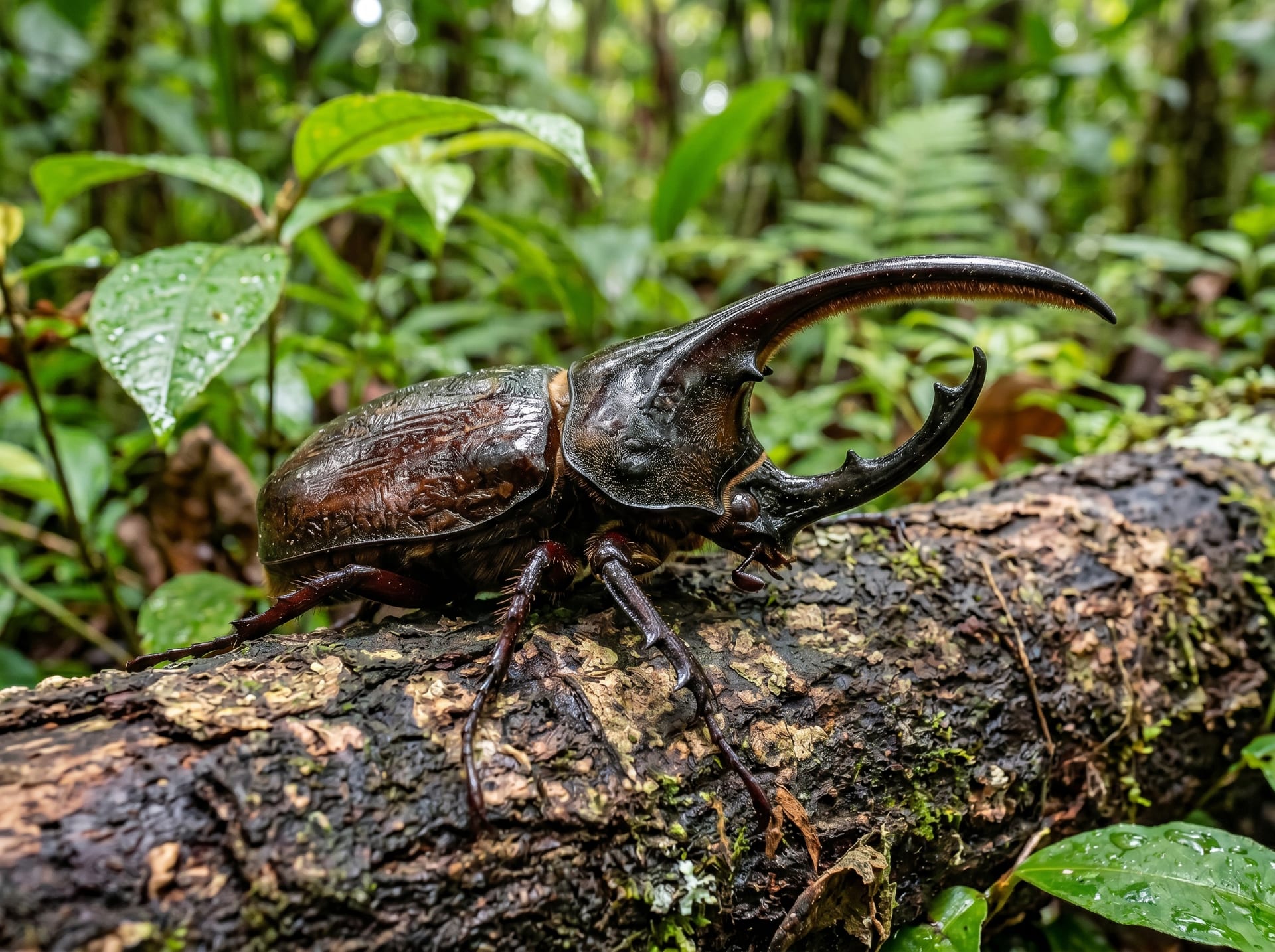
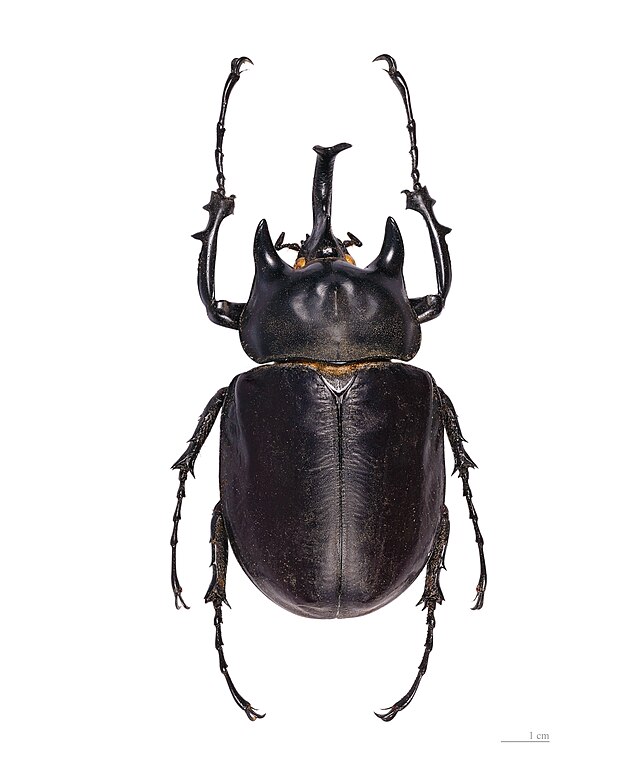
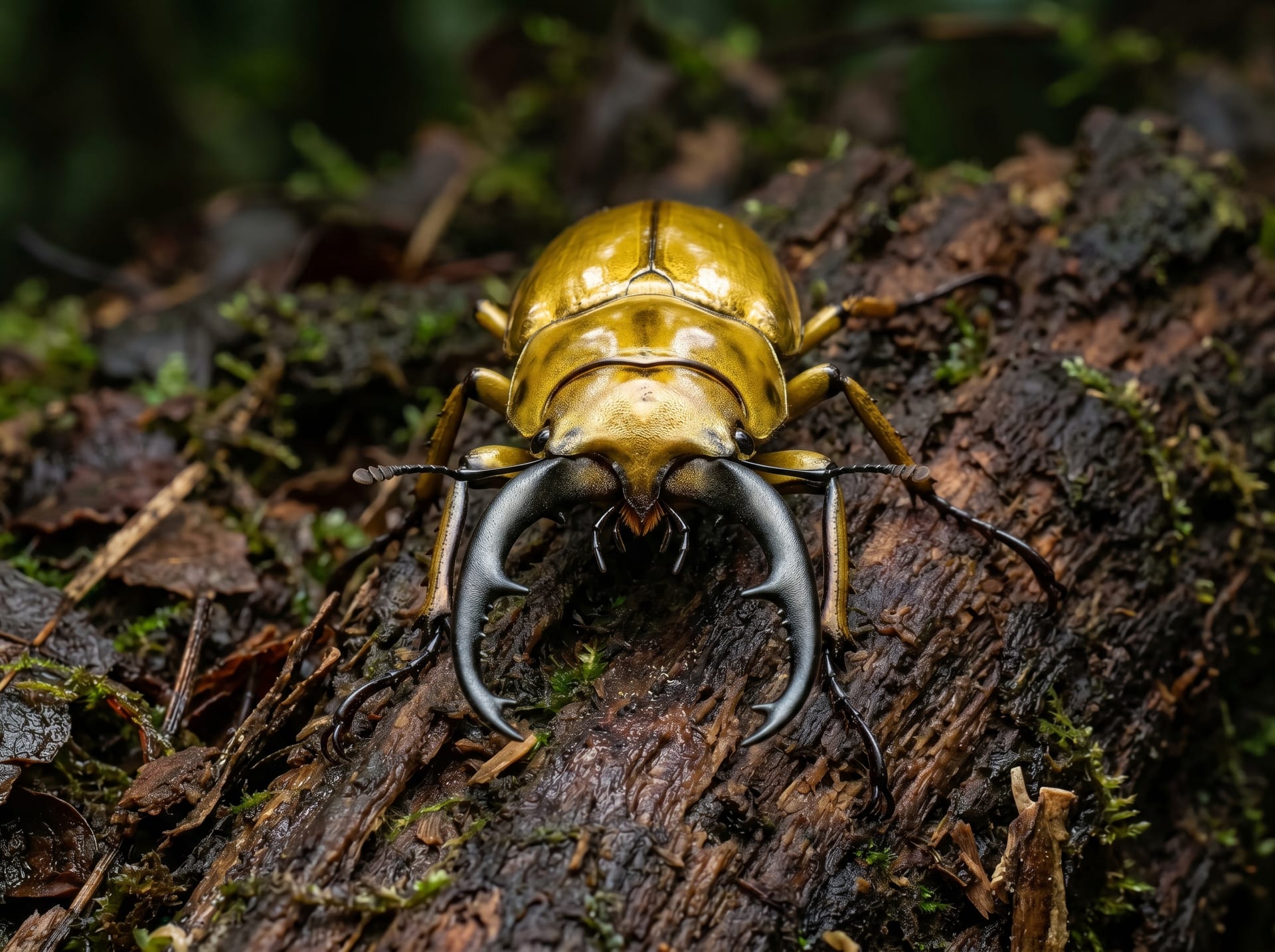
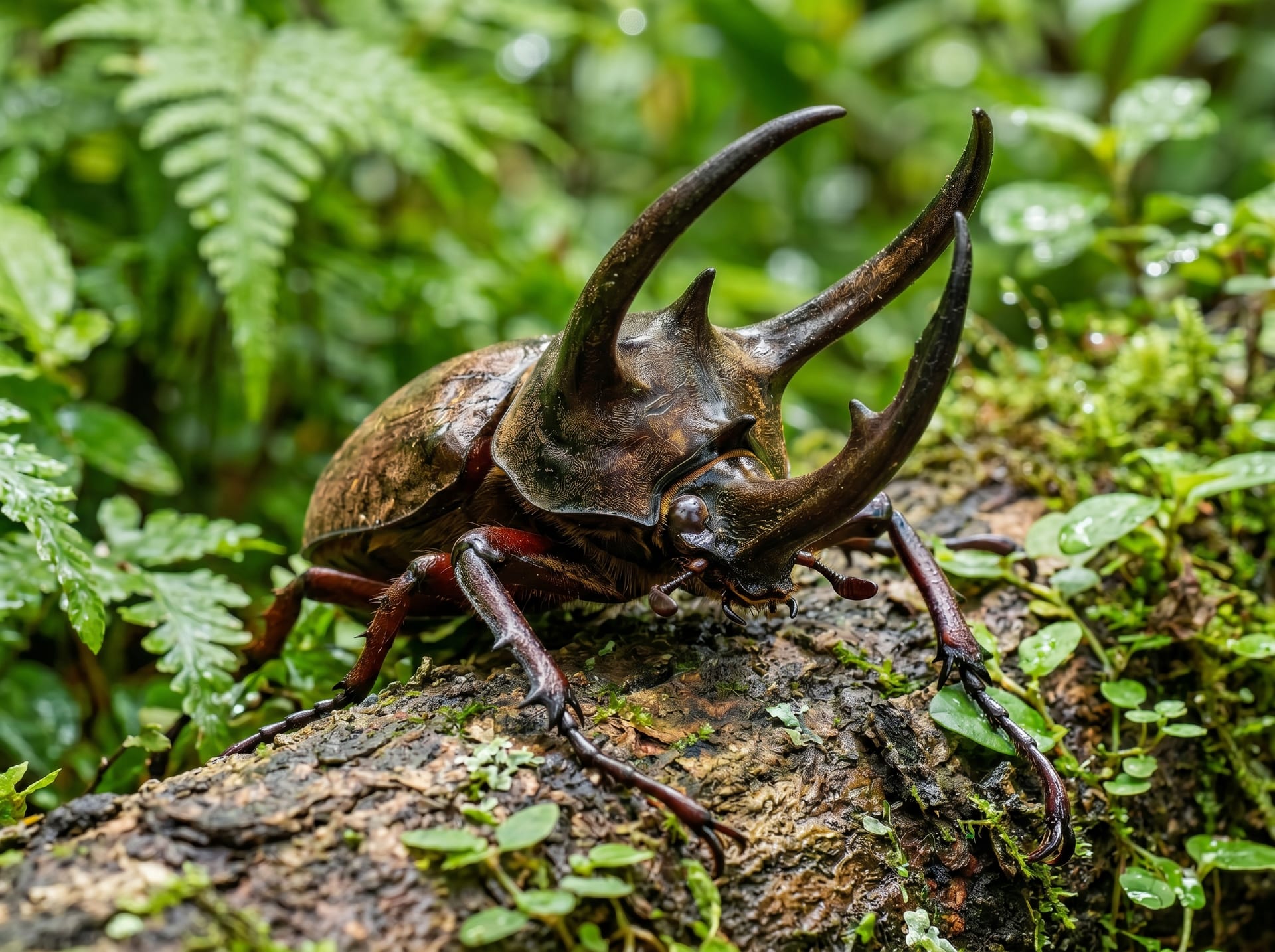
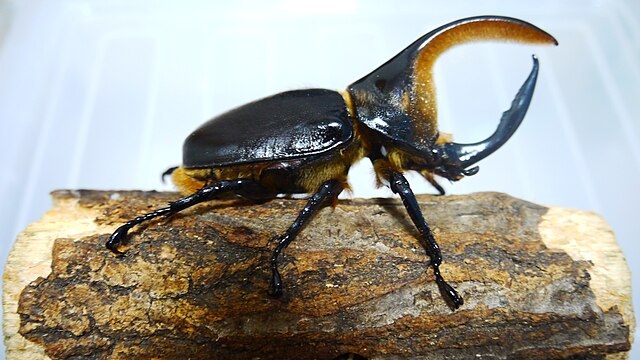
A jet-black beetle from Bolivian highlands. A rare and mystical species bearing the devil's name.
Difficulty
Advanced
Temperature
20〜28℃
Lifespan
Adult 3-8 months
Size
50-110mm
Humidity
60〜80%
Diet
Insect jelly
About
Dynastes satanas, the Satan beetle, inhabits high-altitude Andean cloud forests of Bolivia at elevations of approximately 1,500–2,500 meters. Its common name reflects its striking all-over jet-black coloration—unique among the typically two-toned Dynastes genus—which lends it a mysterious, dramatic appearance. Males bear both thoracic and cephalic horns, reaching 50–110 mm in total length. The larval period spans 2–3 years, requiring large volumes of high-quality fermented substrate and attentive husbandry. Egg-laying occurs in fermented substrate. Adults eat beetle jelly or banana and live approximately 3–8 months. Limited availability and elevated price in the trade mean that successfully rearing this species to adulthood is a highly rewarding achievement, and D. satanas is regarded as one of the most prestigious rhinoceros beetles in the collecting world.
Lifespan of the Satan Beetle
The Satan Beetle lives Adult 3-8 months.
Size of the Satan Beetle
The Satan Beetle grows to 50-110mm.
Temperature & humidity for the Satan Beetle
As a highland species, strict low-temperature management at 18–22°C is essential; higher temperatures are harmful to both adults and larvae.
Basic Info
Origin
high-altitude Andean cloud forests of Bolivia
Lifespan
Adult 3-8 months
Size
Breeding Records & Localities
Captive record (♂)
114.3 mm
Record source: BE-KUWA 2025 edition (Satan Beetle, captive 114.3mm, Kojima Yoshihiro 2010, total length including horns)
Notable localities
Bolivia
Endemic to the Bolivian highlands, this black large rhinoceros beetle is rare. Records include total length including horns. Captive breeding records are updated annually in BE-KUWA (Mushi-sha) contests. Individual value varies significantly based on locality, generation (CBF/WF/WD), and size.
Generation codes
- WD
- Wild-caught
- WF1
- Offspring of a wild-caught female
- F1〜
- Captive generations (same locality)
- CBF1
- Cross-locality captive-bred (reset)
Sources: BE-KUWA Certified Breeding Records (Mushi-sha, FY2025 edition, JA)
References & Sources
Edited & verified by: BreederDirect editorial team
The taxonomic, regulatory, and husbandry data on this page are compiled and verified against the authoritative primary sources below.
Taxonomy & Authority
Accepted name: Dynastes satanas Moser, 1909
Authority databases: GBIF
Nomenclature follows global taxonomic authority databases.
Regulations & Conservation Status
CITES Appendix II
Plant Protection Act: When importing live specimens of Scarabaeoidea (including rhinoceros beetles, stag beetles, flower beetles, etc.), a species identification certificate issued by the exporting country government agency or equivalent must be attached in accordance with the Invasive Species Act (import ports are limited to Narita, Chubu, Kansai, Fukuoka, and Kagoshima airports). This species itself is not a designated invasive species, and import is possible upon submission of the certificate.
Bolivia endemic species. CITES Appendix II (listed by Bolivia's proposal at the 15th Conference of the Parties, CoP15). Export/import requires CITES permits. Live animal imports also require species identification certificates for Scarabaeoidea.
Sources: TRAFFIC: Bolivian beetle gets UN protection (CITES App II) / Ministry of the Environment, Invasive Species Act: "Guidance for Those Importing Live Insects in Scarabaeoidea"
Regulations may change. Always verify the latest information with the relevant authorities.
Satan Beetle Listings
Loading latest listingsFind listings for this species