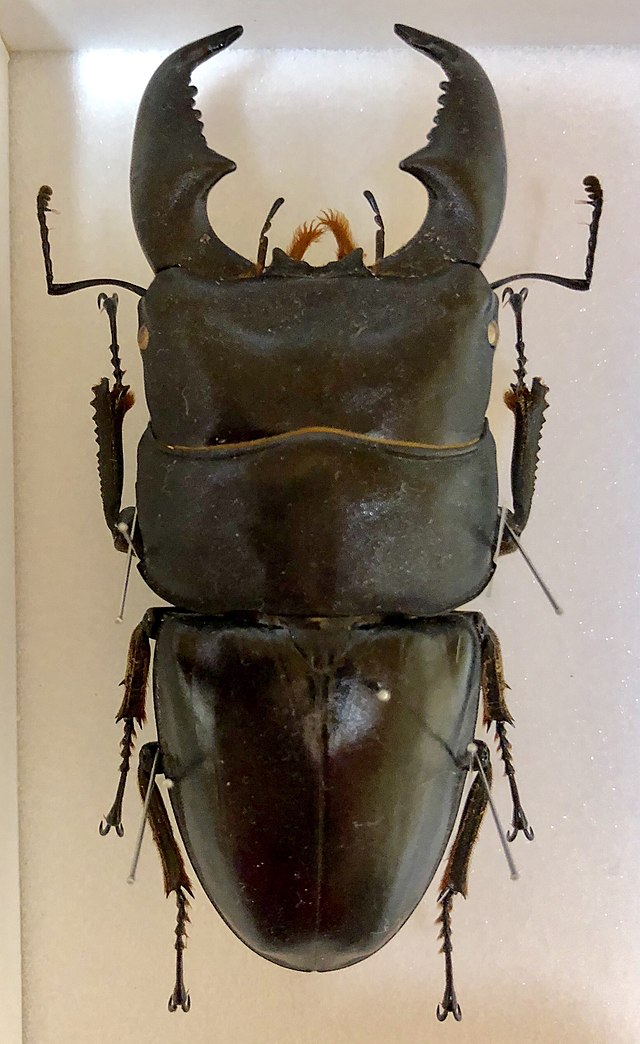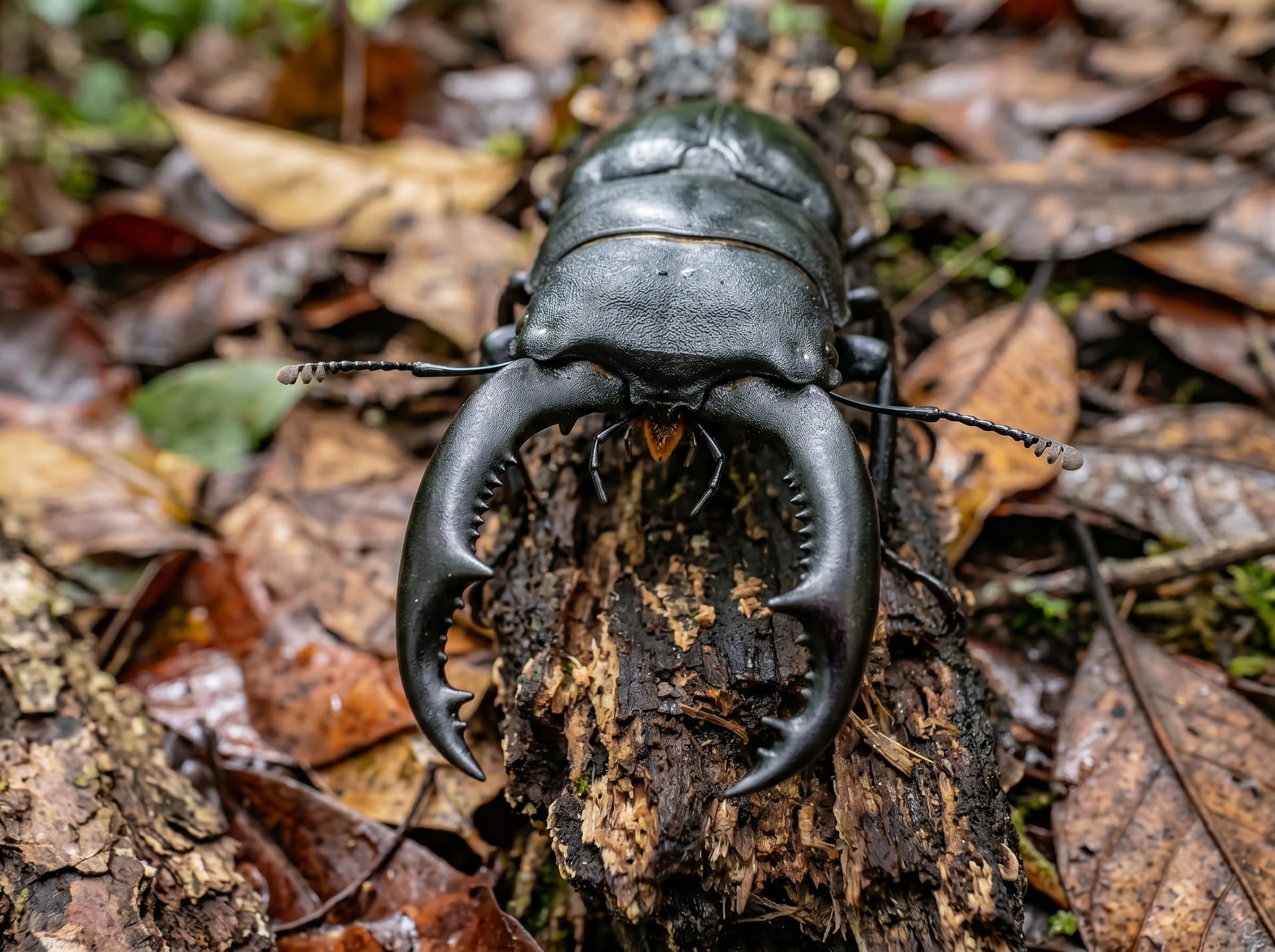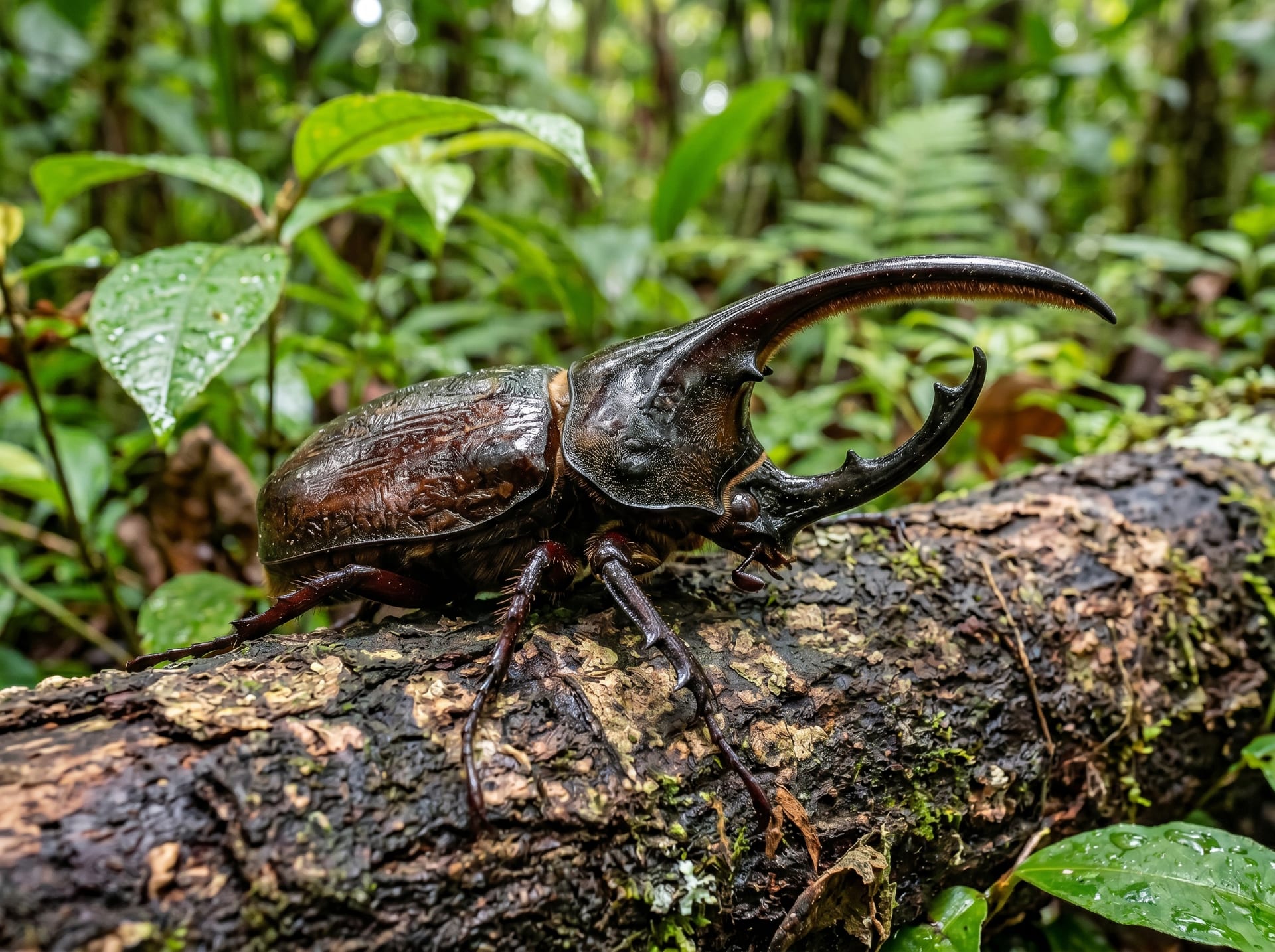
AI-generated image
Neptune Beetle
AdvancedDynastes neptunus
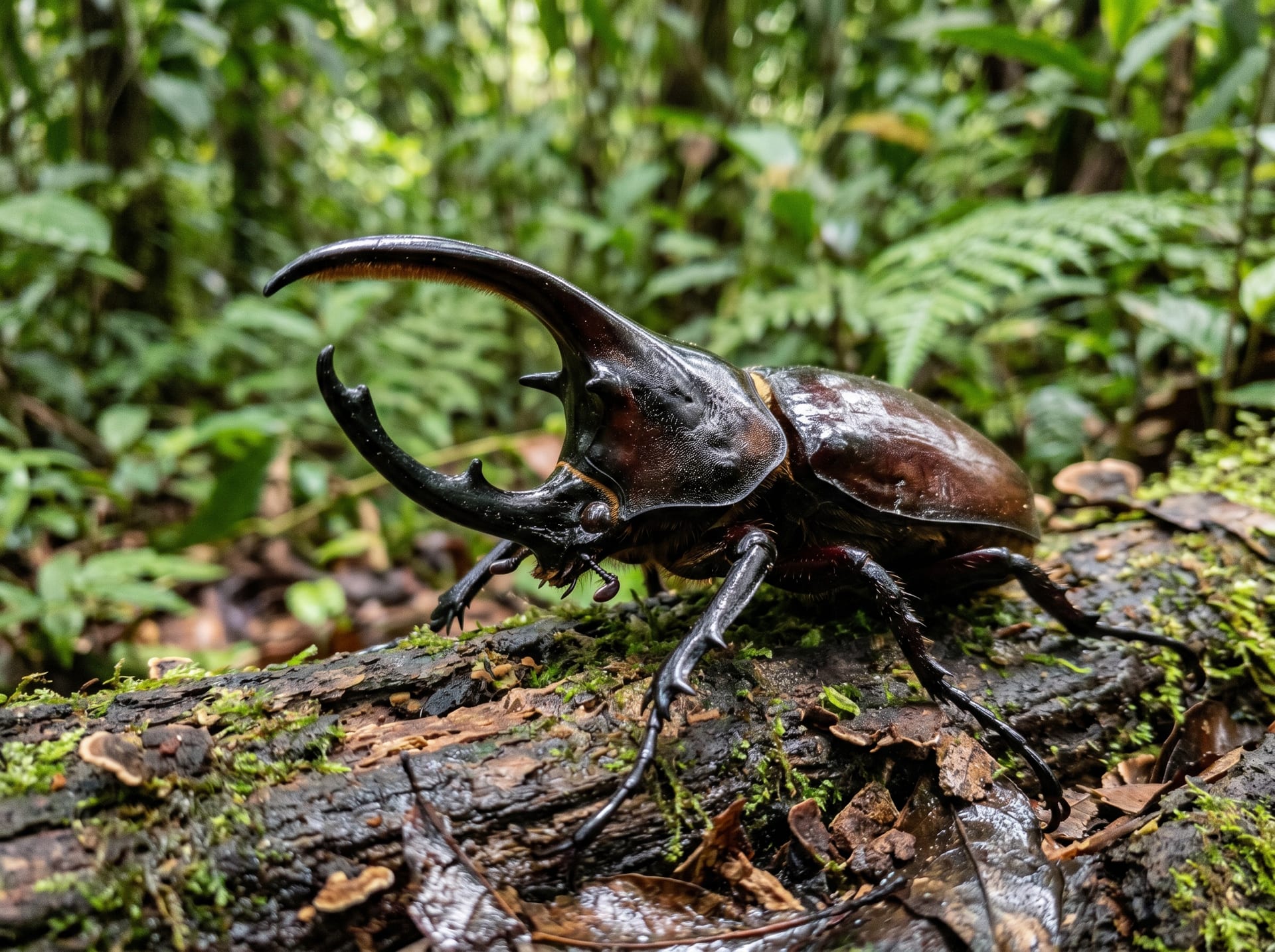
Rare large beetle from South American highlands. Second largest after Hercules. Jet-black body with long horn is stunning.
Difficulty
Advanced
Temperature
20〜28℃
Lifespan
Adult 6-12 months, larva 2-3 years
Size
Up to 150mm
Humidity
60〜80%
Diet
Beetle jelly (adult), fermented substrate (larva)
About
Dynastes neptunus, the Neptune beetle, inhabits high-altitude cloud forests of the Andes in Colombia, Ecuador, and Peru, at elevations roughly between 1,000 and 2,500 meters. It is one of the largest rhinoceros beetles, with males reaching total lengths of 80–150 mm, ranking second only to the Hercules beetle in maximum size. Males bear a long thoracic horn and shorter cephalic horn, with a striking glossy jet-black body coloration. The larval stage spans 2–3 years—exceptionally long for a rhinoceros beetle—and demands large quantities of high-quality fermented substrate. Females lay eggs in fermented substrate, and breeding is moderately challenging. Adults live 6–12 months. While requiring experienced husbandry, the Neptune beetle's jet-black form and impressive proportions make it one of the most revered species in the collecting world.
Lifespan of the Neptune Beetle
The Neptune Beetle lives Adult 6-12 months, larva 2-3 years.
Size of the Neptune Beetle
The Neptune Beetle grows to Up to 150mm.
Temperature & humidity for the Neptune Beetle
As a highland species, it requires strict low-temperature management at 17–22°C; warmer conditions are detrimental to both adults and larvae.
Basic Info
Origin
high-altitude Andean cloud forests of Colombia, Ecuador, and Peru
Lifespan
Adult 6-12 months, larva 2-3 years
Size
Breeding Records & Localities
Captive record (♂)
157.3 mm
Record source: BE-KUWA 2025 edition (Neptune - Captive 157.3mm Motomi Takizawa 2018, total length = including horns)
Notable localities
ColombiaEcuadorPeruVenezuela
An Andes-origin large rhinoceros beetle with slender, elongated thoracic and head horns. Records include total length with horns. Captive breeding records are updated annually through BE-KUWA (Mushi-sha) competitions. Individual value varies significantly depending on locality, generation (CBF/WF/WD), and size.
Generation codes
- WD
- Wild-caught
- WF1
- Offspring of a wild-caught female
- F1〜
- Captive generations (same locality)
- CBF1
- Cross-locality captive-bred (reset)
Sources: BE-KUWA Certified Breeding Records (Mushi-sha, FY2025 edition, JA)
References & Sources
Edited & verified by: BreederDirect editorial team
The taxonomic, regulatory, and husbandry data on this page are compiled and verified against the authoritative primary sources below.
Taxonomy & Authority
Accepted name: Dynastes neptunus (Quensel, 1805)
Synonyms: Dynastes neptunus rouchei Nagai, 2005, Geotrupes neptunus Quensel, 1805, Scarabaeus jupiter Buquet, 1840
Authority databases: GBIF
Nomenclature follows global taxonomic authority databases.
Regulations & Conservation Status
Not CITES-listed
Plant Protection Act: When importing live specimens of Scarabaeoidea (including rhinoceros beetles, stag beetles, flower beetles, etc.), a species identification certificate issued by the exporting country government agency or equivalent must be attached in accordance with the Invasive Species Act (import ports are limited to Narita, Chubu, Kansai, Fukuoka, and Kagoshima airports). This species itself is not a designated invasive species, and import is possible upon submission of the certificate.
Sources: Ministry of the Environment, Invasive Species Act: "Guidance for Those Importing Live Insects in Scarabaeoidea" / CITES Appendix (checklist.cites.org)
Regulations may change. Always verify the latest information with the relevant authorities.
Neptune Beetle Listings
Loading latest listingsFind listings for this species