Source: Wikimedia Commons
Zebra Danio
BeginnerDanio rerio
A hardy small fish with beautiful stripes that adds energy to the aquarium.
Difficulty
Beginner
Temperature
22〜28℃
Lifespan
3-5 years
Size
4-6cm
Diet
Flakes, frozen foods
About
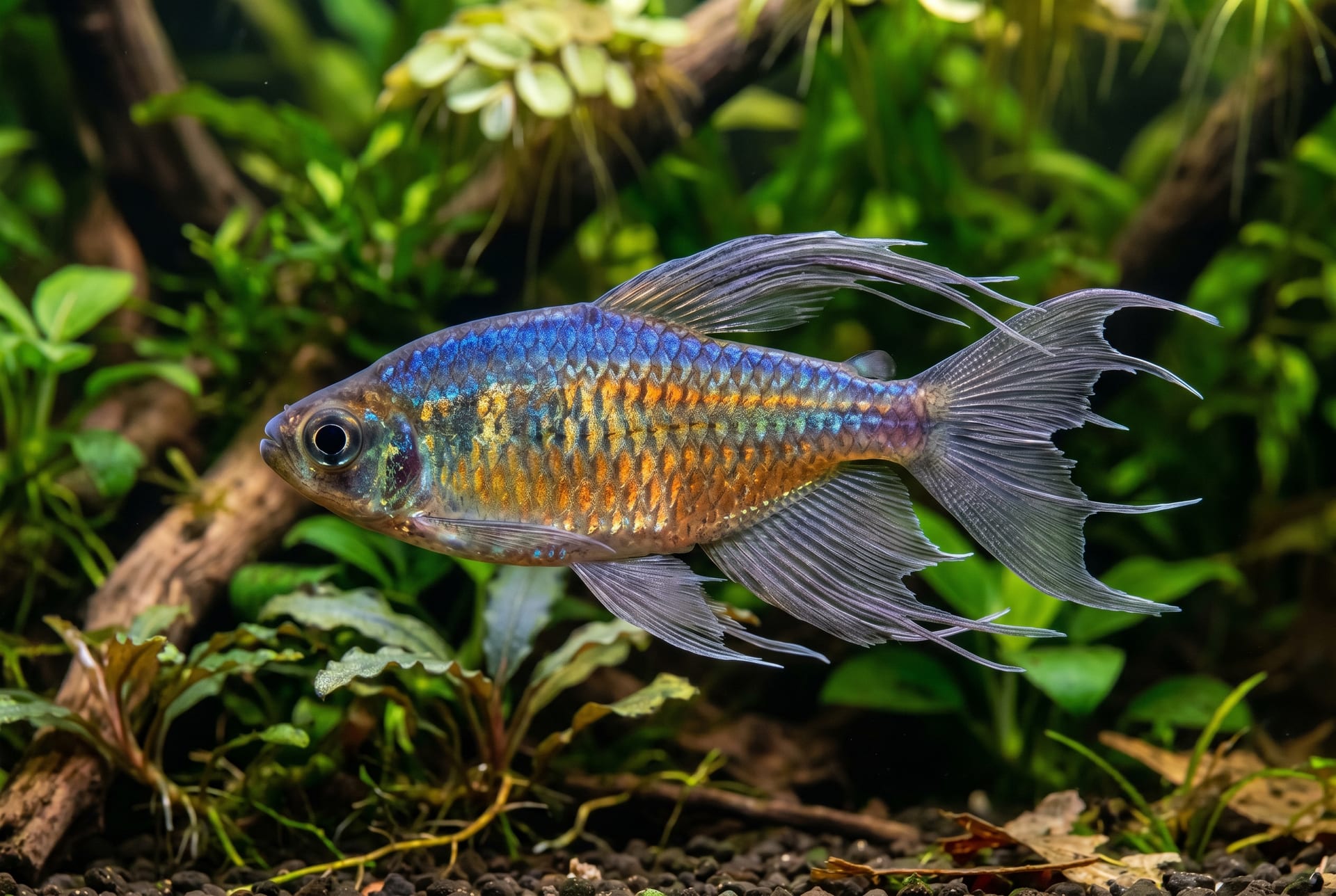
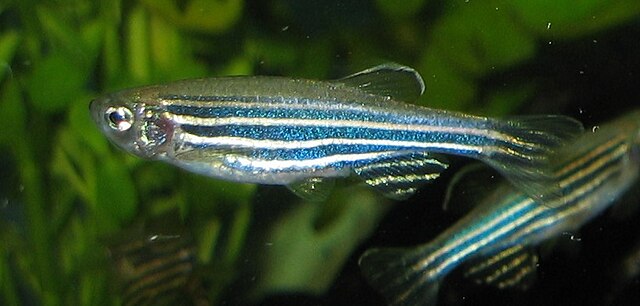
The zebrafish (Danio rerio) is a small danionid native to rivers, ponds, and rice paddies of South Asia including India, Pakistan, and Nepal. At 4–5 cm, it is characterized by horizontal dark blue stripes running the length of the body — reminiscent of a zebra's pattern. Aquarium variants include long-fin, golden, and leopard forms; the genetically modified 'GloFish' line carrying fluorescent protein genes is also derived from this species. Among the hardiest of all freshwater fish, zebrafish tolerate a wide temperature range (18–28°C) and are forgiving of water quality variation, making them one of the top recommendations for beginners. Active, curious, and fast-swimming, they form lively schools and accept virtually all aquarium foods. Breeding is straightforward — egg-scattering over fine substrate — but parents consume eggs, requiring removal for successful fry rearing. Beyond the aquarium, Danio rerio is one of the world's most important vertebrate model organisms: its transparency in early development, rapid generation time, and completely sequenced genome have made it indispensable in developmental biology, genetics, and neuroscience research globally.
Source: Wikipedia (CC BY-SA 4.0)
Lifespan of the Zebra Danio
The Zebra Danio lives 3-5 years.
Size of the Zebra Danio
The Zebra Danio grows to 4-6cm.
Basic Info
Origin
South Asia, it is a popular, hardy aquarium fish
Lifespan
3-5 years
Size
4-6cm
Care Specifications
- pH
- 6–8
- Hardness (GH)
- 5–19 dGH
- Water Temp.
- 18–24℃
PeacefulGroupBreeding: Easy
Sources: FishBase / Seriously Fish
Captive Breeding
Egg-laying
- Clutch size
- 200〜300
- Incubation temp.
- 26〜28.5℃
- Incubation days
- 3 days
- Sexual maturity
- 3 mo
Breeding season: Year-round in captivity with no distinct season; spawning is typically triggered at the onset of the light phase, and photoperiod management influences spawning timing.
Breeding notes
Spawns readily in slightly acidic to neutral water (pH 6.0–7.5) at around 26–28 °C. Spawning is concentrated shortly after the onset of the light phase; adding small amounts of cooler water may also help initiate spawning. Eggs are non-adhesive and sink; a spawning grid or mesh partition is recommended to prevent parental predation of eggs.
Breeding requires planning, proper husbandry, and responsibility. These figures are general guidelines.
Sources: Wikipedia – Zebrafish / PMC3916945 – Regular Care and Maintenance of a Zebrafish Laboratory (Aleström et al., 2019) / PMC11889207 – Dataset on Temperature Dependency of Zebrafish Early Development (2024)
References & Sources
Edited & verified by: BreederDirect editorial team
The taxonomic, regulatory, and husbandry data on this page are compiled and verified against the authoritative primary sources below.
Taxonomy & Authority
Accepted name: Danio rerio (Hamilton, 1822)
Synonyms: Barilius rerio (Hamilton, 1822), Brachydanio frankei Meinken, 1963, Brachydanio rerio (Hamilton, 1822), Cyprinus chapalio Hamilton, 1822, Cyprinus rerio Hamilton, 1822, Danio frankei (Meinken, 1963)
Authority databases: FishBase · GBIF
Nomenclature follows global taxonomic authority databases.
Regulations & Conservation Status
Not CITES-listedIUCN LC · Least Concern
FishBase: CITES Not Evaluated / IUCN Least Concern.
Sources: FishBase / Seriously Fish / CITES Appendices (Checklist)
Regulations may change. Always verify the latest information with the relevant authorities.
Zebra Danio Listings
Loading latest listingsFind listings for this species