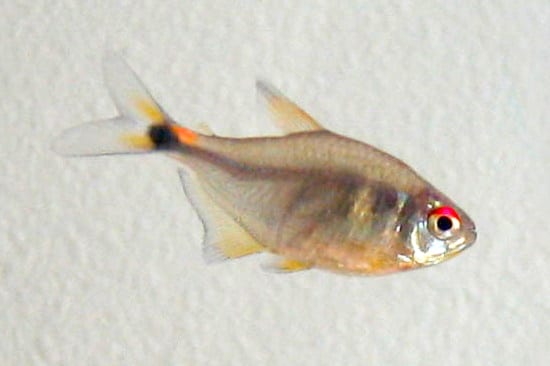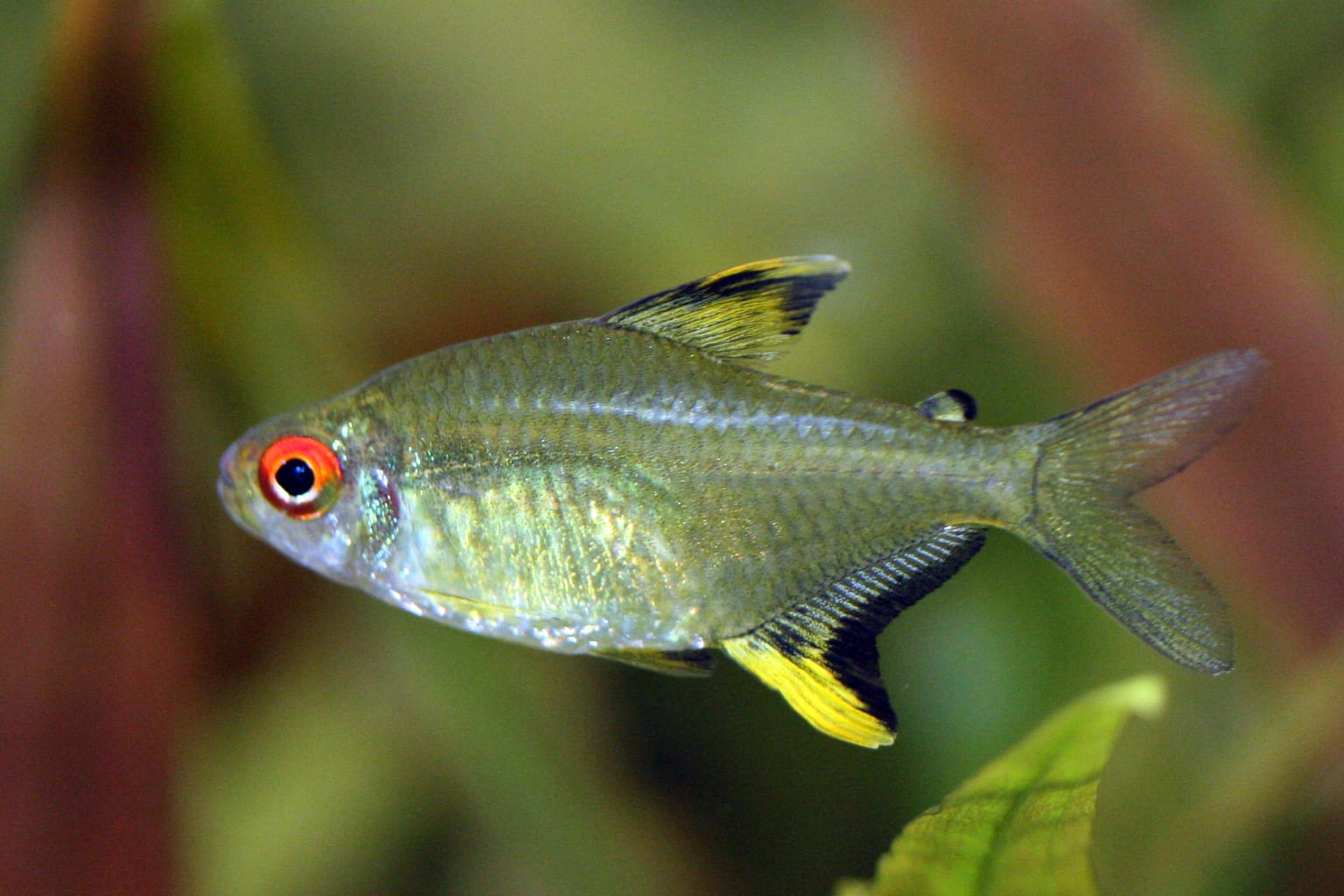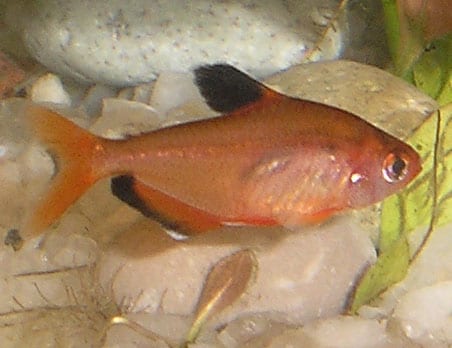
Source: Wikimedia Commons
Serpae Tetra
BeginnerMegalamphodus eques
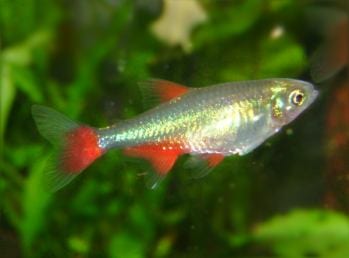
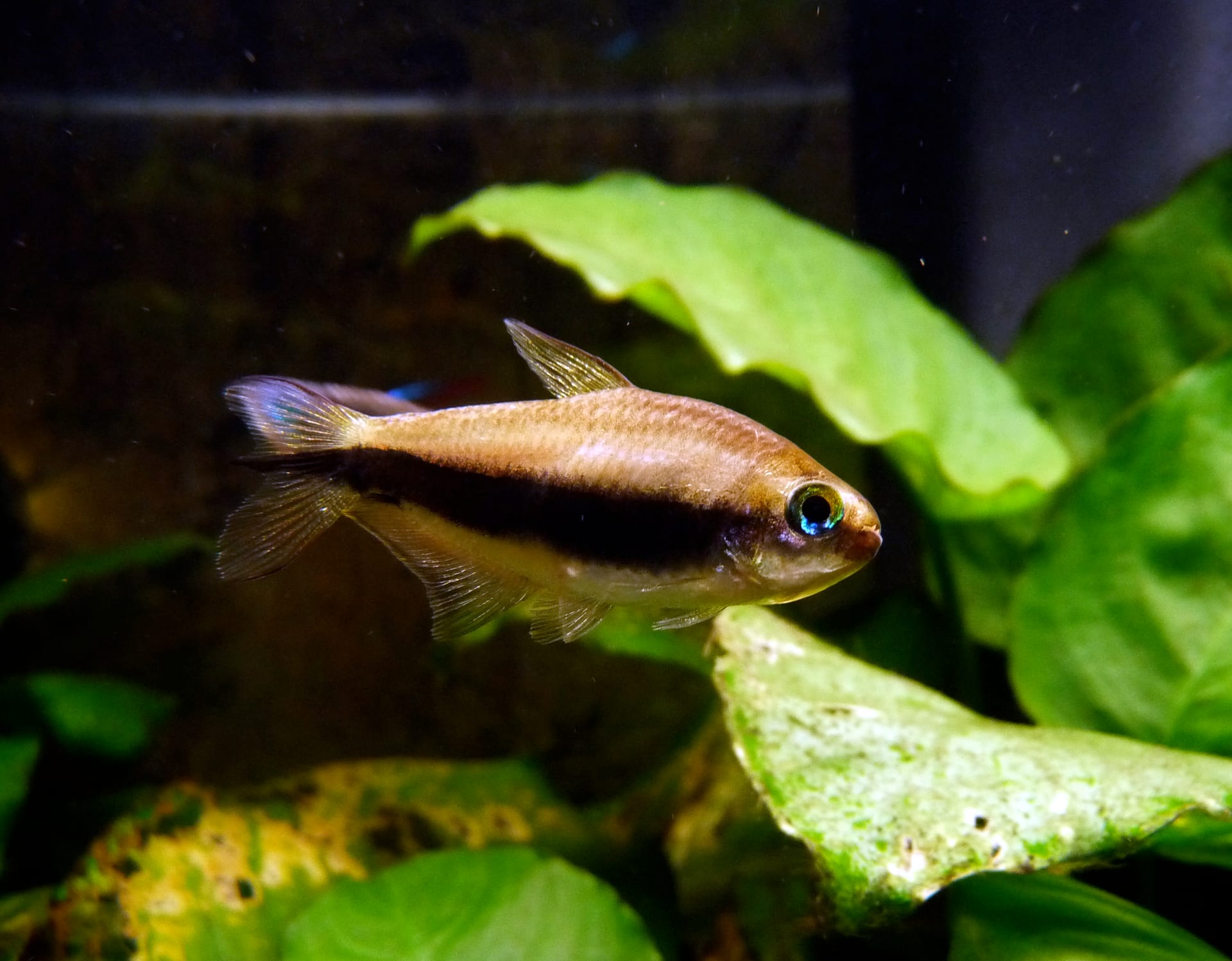
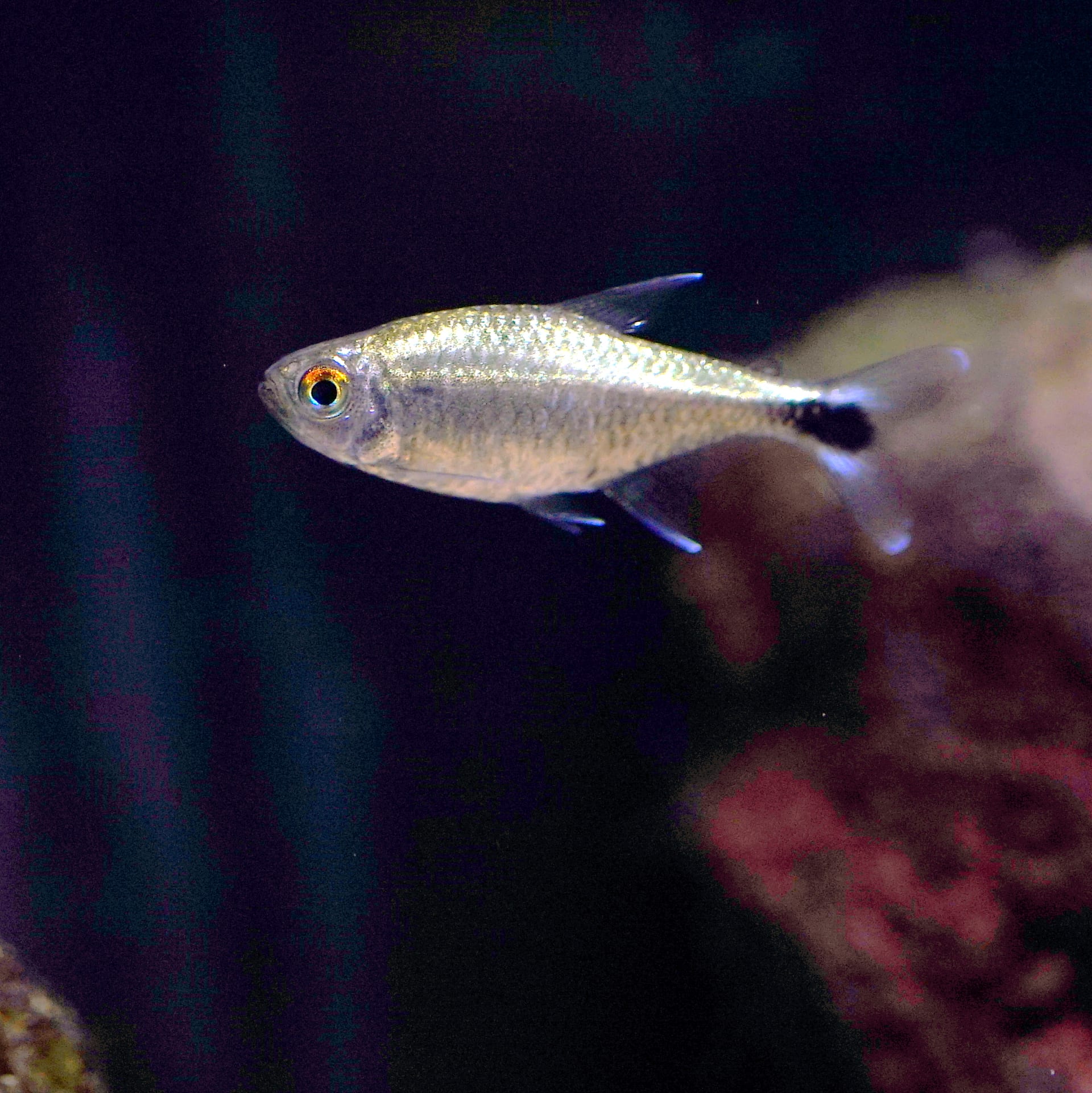
A small characin with a blood-red to orange body, a black humeral blotch and a black dorsal fin. Hardy and inexpensive, but a determined fin-nipper, so tank mates and group size are the key decisions.
Difficulty
Beginner
Temperature
20〜28℃
Lifespan
3-5 years
Size
About 4cm SL
Diet
Dried foods, frozen bloodworm, Daphnia
About
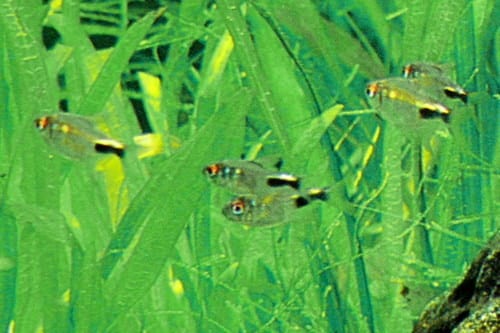
Megalamphodus eques is a small characin from the Amazon, Guapore and Paraguay River basins. FishBase gives 4.0cm SL, pH 5.0-7.8, 10-25 dH and 22-26C, and describes it shoaling among emergent plant stems in still water. Seriously Fish gives 20-28C, pH 5.0-7.5, 1-15 dGH and a base of at least 80 by 30cm, about 72 litres, and rates it territorial. It is notorious for nipping fins, which is worst when too few are kept or space is tight, so a group of at least twelve is the usual answer, keeping the aggression inside the shoal. It belongs to a complex of blood-red tetras and hybrids are also traded.
Source: Wikipedia (CC BY-SA 4.0)
Lifespan of the Serpae Tetra
The Serpae Tetra lives 3-5 years.
Size of the Serpae Tetra
The Serpae Tetra grows to About 4cm SL.
Temperature & humidity for the Serpae Tetra
The ideal temperature for the Serpae Tetra is 20〜28℃.
Basic Info
Origin
South America (Amazon, Guapore and Paraguay River basins)
Lifespan
3-5 years
Size
About 4cm SL
Temperature
Care Specifications
- pH
- 5–7.5
- Hardness (GH)
- 1–15 dGH
- Water Temp.
- 20–28℃
- Min. Tank
- 72 L
Semi-aggressiveGroupBreeding: Moderate
Sources: Seriously Fish / FishBase
References & Sources
Edited & verified by: BreederDirect editorial team
The taxonomic, regulatory, and husbandry data on this page are compiled and verified against the authoritative primary sources below.
Taxonomy & Authority
Accepted name: Megalamphodus eques (Steindachner, 1882)
Synonyms: Hyphessobrycon eques
Authority databases: FishBase
Nomenclature follows global taxonomic authority databases.
Regulations & Conservation Status
Not CITES-listedIUCN LC · Least Concern
Sources: CITES Appendices (species not listed) / IUCN Red List
Regulations may change. Always verify the latest information with the relevant authorities.
Serpae Tetra Listings
Loading latest listingsFind listings for this species