Source: Wikimedia Commons
Scissortail Rasbora
BeginnerRasbora trilineata
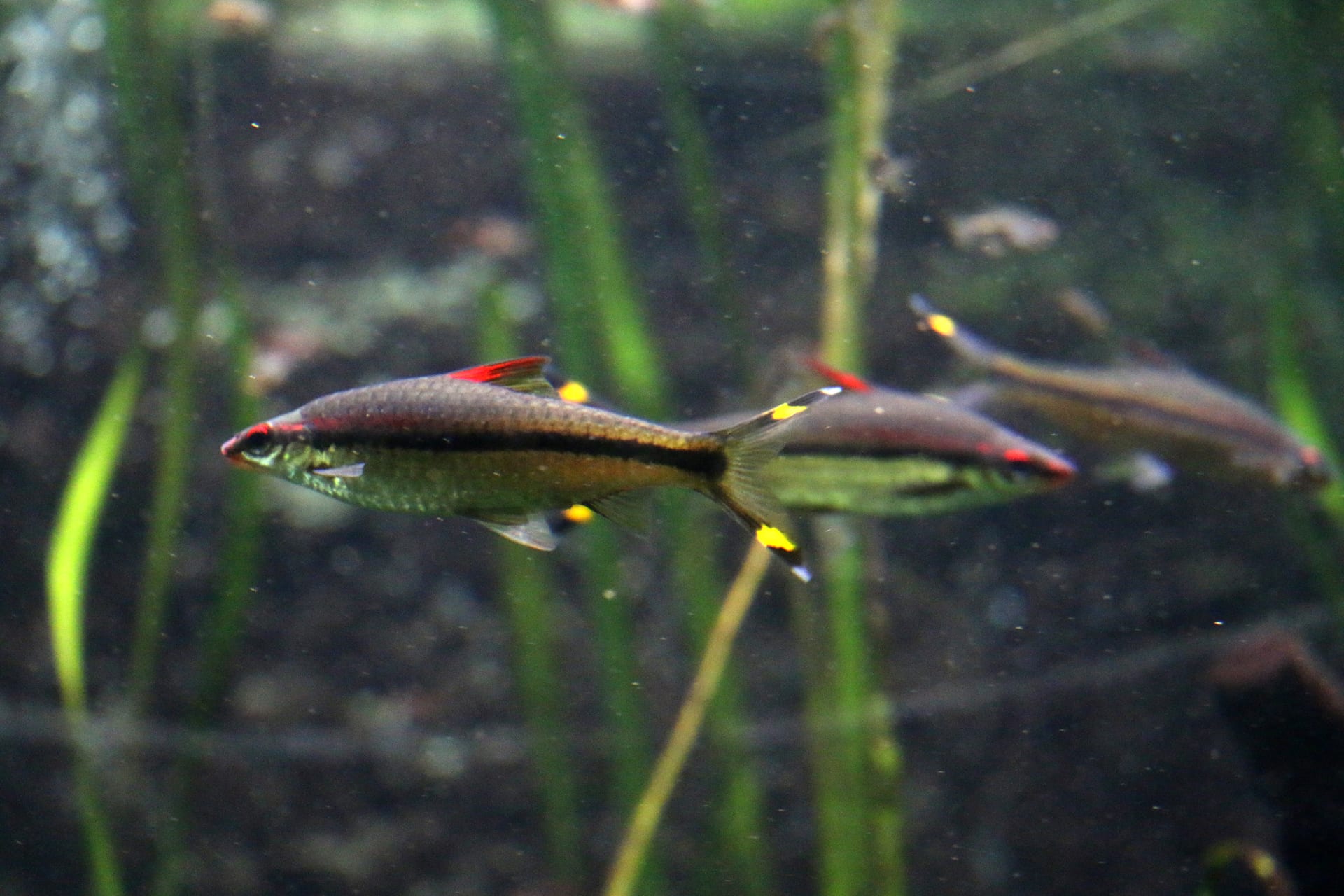
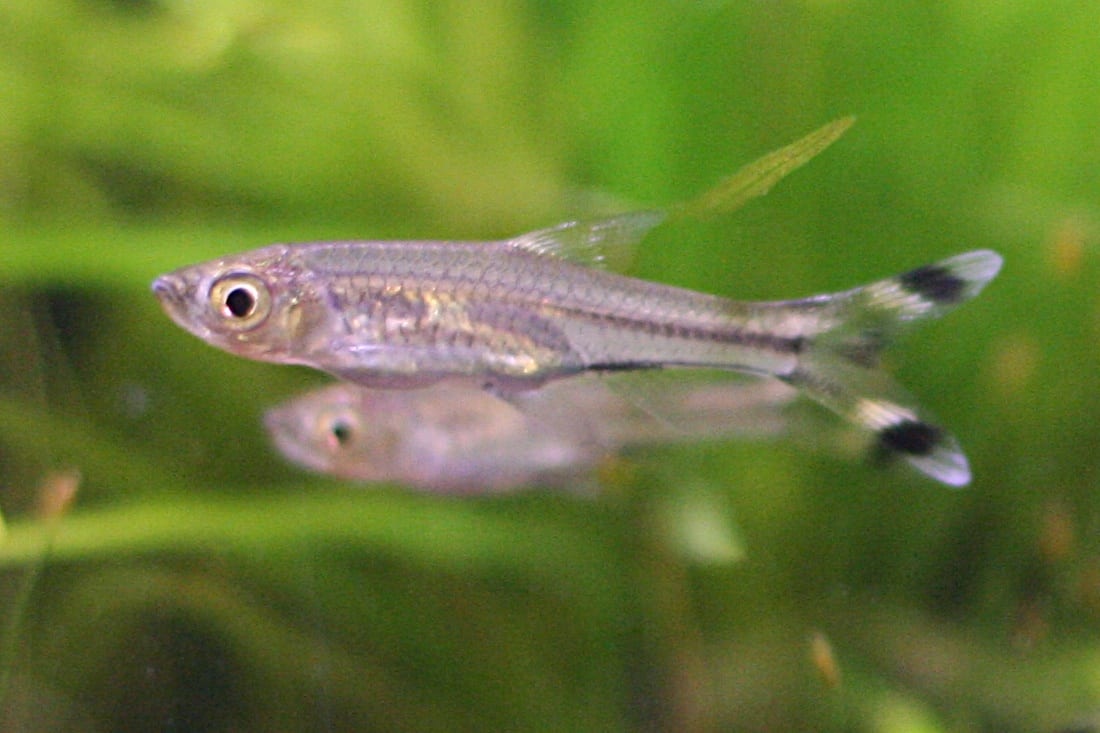
A medium-sized rasbora, silver with black and white bands on both lobes of the tail. The scissor-like twitching of the caudal fin at rest gives it its English name. Hardy and peaceful, it is an easy shoaling fish for a large community tank.
Difficulty
Beginner
Temperature
22〜25℃
Lifespan
5-7 years
Size
Up to 13cm TL
Diet
Dried, frozen and live foods
About
Rasbora trilineata ranges from the Mekong and Chao Phraya basins through the Malay Peninsula, Sumatra and Borneo. FishBase records a maximum of 13cm TL, pH 6.0-8.0, 5-12 dH and 23-25C, and notes that the aquarium trade has spread it around the world. A short blackish line along each side of the anal fin base unites behind that fin and runs to the caudal base along the lower edge of the peduncle, which identifies the species. Seriously Fish gives 15cm SL, 22-25C, 2-12 dGH and a 120 x 45cm base, listing pH as not recorded. Very peaceful and undemanding about chemistry, it mixes with characins, livebearers, rainbowfish, anabantoids, catfishes and loaches. It is one of the easier members of the genus to breed, being an egg-scattering continuous spawner. The IUCN rates it Least Concern and it is not covered by CITES.
Source: Wikipedia (CC BY-SA 4.0)
Lifespan of the Scissortail Rasbora
The Scissortail Rasbora lives 5-7 years.
Size of the Scissortail Rasbora
The Scissortail Rasbora grows to Up to 13cm TL.
Temperature & humidity for the Scissortail Rasbora
The ideal temperature for the Scissortail Rasbora is 22〜25℃.
Basic Info
Origin
Southeast Asia (Mekong and Chao Phraya basins, Malay Peninsula, Sumatra and Borneo)
Lifespan
5-7 years
Care Specifications
- pH
- 6–8
- Hardness (GH)
- 2–12 dGH
- Water Temp.
- 22–25℃
PeacefulGroupBreeding: Moderate
Sources: FishBase / Seriously Fish
References & Sources
Edited & verified by: BreederDirect editorial team
The taxonomic, regulatory, and husbandry data on this page are compiled and verified against the authoritative primary sources below.
Taxonomy & Authority
Accepted name: Rasbora trilineata Steindachner, 1870
Authority databases: FishBase
Nomenclature follows global taxonomic authority databases.
Regulations & Conservation Status
Not CITES-listedIUCN LC · Least Concern
Sources: CITES Appendices (species not listed) / IUCN Red List
Regulations may change. Always verify the latest information with the relevant authorities.
Scissortail Rasbora Listings
Loading latest listingsFind listings for this species