Source: Wikimedia Commons
Red-tailed Black Shark
IntermediateEpalzeorhynchos bicolor
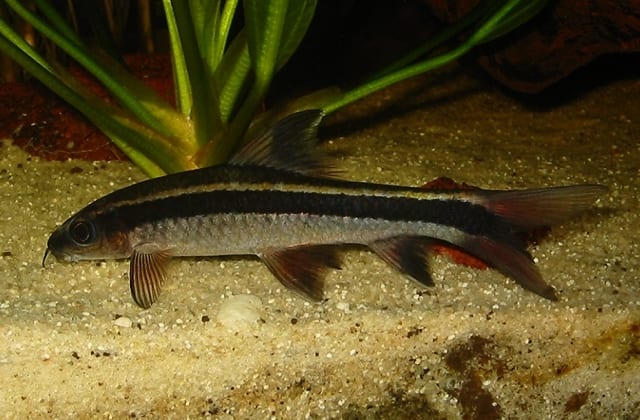
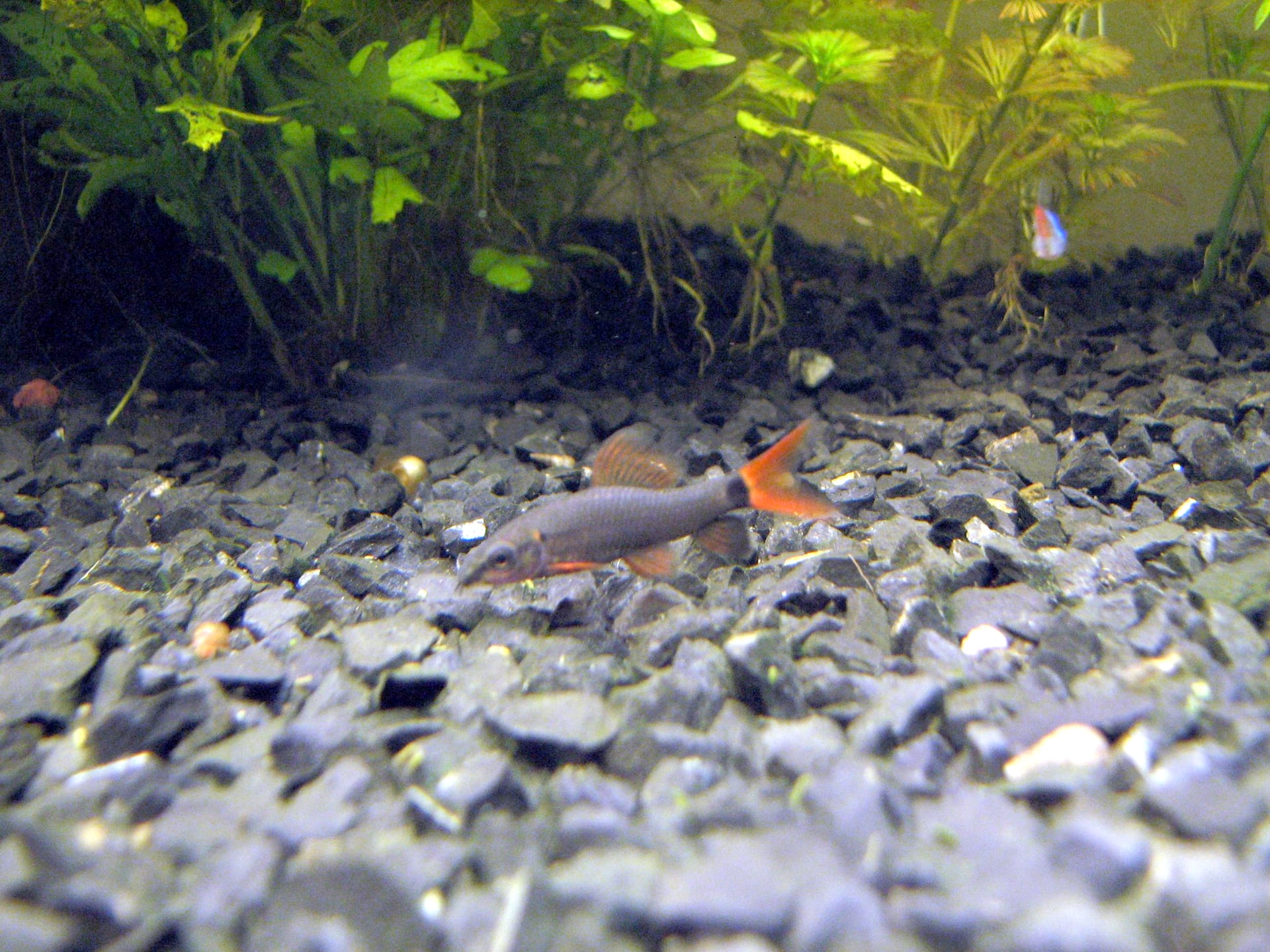
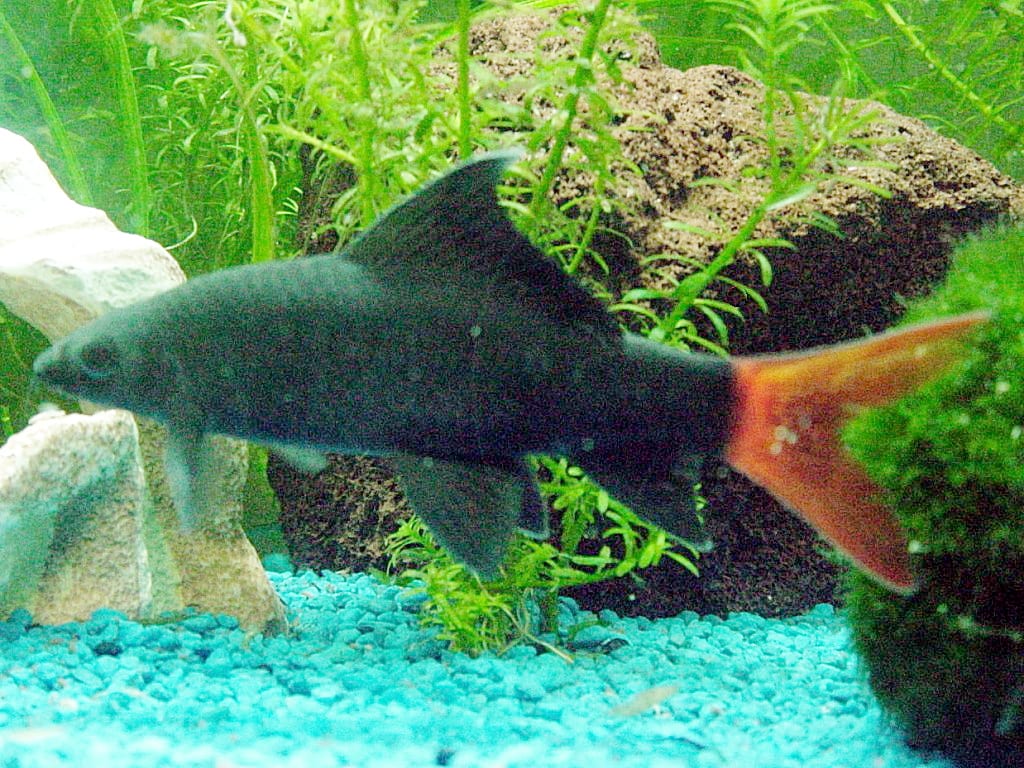
A bottom-dwelling cyprinid, jet black with a scarlet tail. It grows increasingly territorial and is especially hard on fish of similar shape, so it is kept singly and its tank mates chosen with care.
Difficulty
Intermediate
Temperature
20〜26℃
Lifespan
Over 15 years
Size
Up to 13cm TL
Diet
Sinking dried foods, frozen foods and vegetable matter
About
Epalzeorhynchos bicolor comes from the Chao Phraya basin in Thailand. FishBase records a maximum of 13cm TL, pH 6.5-7.5, up to 15 dH and 22-26C, describing an omnivore of main rivers and floodplains that should be kept singly because adults are strongly territorial. Seriously Fish gives 125mm SL, 20-26C, pH 6.0-8.0, 2-15 dGH and a 120 x 45cm base of about 243 litres, and notes a potential age in excess of fifteen years. The jet black body and scarlet tail make it a striking fish. It is sometimes sold as an algae eater, but it does not graze as effectively as Crossocheilus species. Tens of thousands are exported from Thailand each year, now all captive bred, while wild populations have declined and the IUCN rates the species Critically Endangered. It is not listed by CITES.
Source: Wikipedia (CC BY-SA 4.0)
Lifespan of the Red-tailed Black Shark
The Red-tailed Black Shark lives Over 15 years.
Size of the Red-tailed Black Shark
The Red-tailed Black Shark grows to Up to 13cm TL.
Temperature & humidity for the Red-tailed Black Shark
The ideal temperature for the Red-tailed Black Shark is 20〜26℃.
Basic Info
Origin
Thailand (Chao Phraya basin)
Lifespan
Over 15 years
Size
Care Specifications
- pH
- 6–8
- Hardness (GH)
- 2–15 dGH
- Water Temp.
- 20–26℃
- Min. Tank
- 243 L
AggressiveSolitaryBreeding: Very hard
Sources: FishBase / Seriously Fish
References & Sources
Edited & verified by: BreederDirect editorial team
The taxonomic, regulatory, and husbandry data on this page are compiled and verified against the authoritative primary sources below.
Taxonomy & Authority
Regulations & Conservation Status
Not CITES-listedIUCN CR · Critically Endangered
Sources: CITES Appendices (species not listed) / IUCN Red List
Regulations may change. Always verify the latest information with the relevant authorities.
Red-tailed Black Shark Listings
Loading latest listingsFind listings for this species