Source: Wikimedia Commons
Rainbow Shark
IntermediateEpalzeorhynchos frenatum
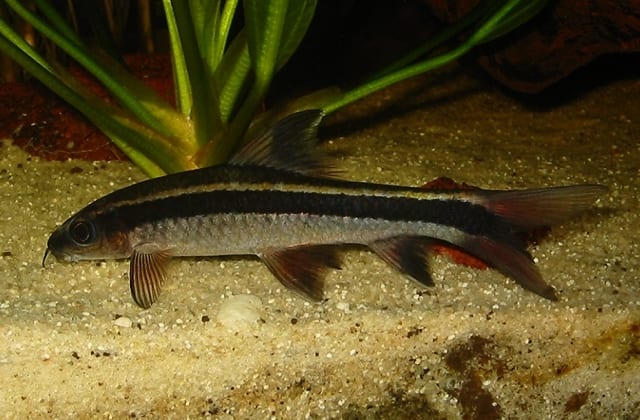
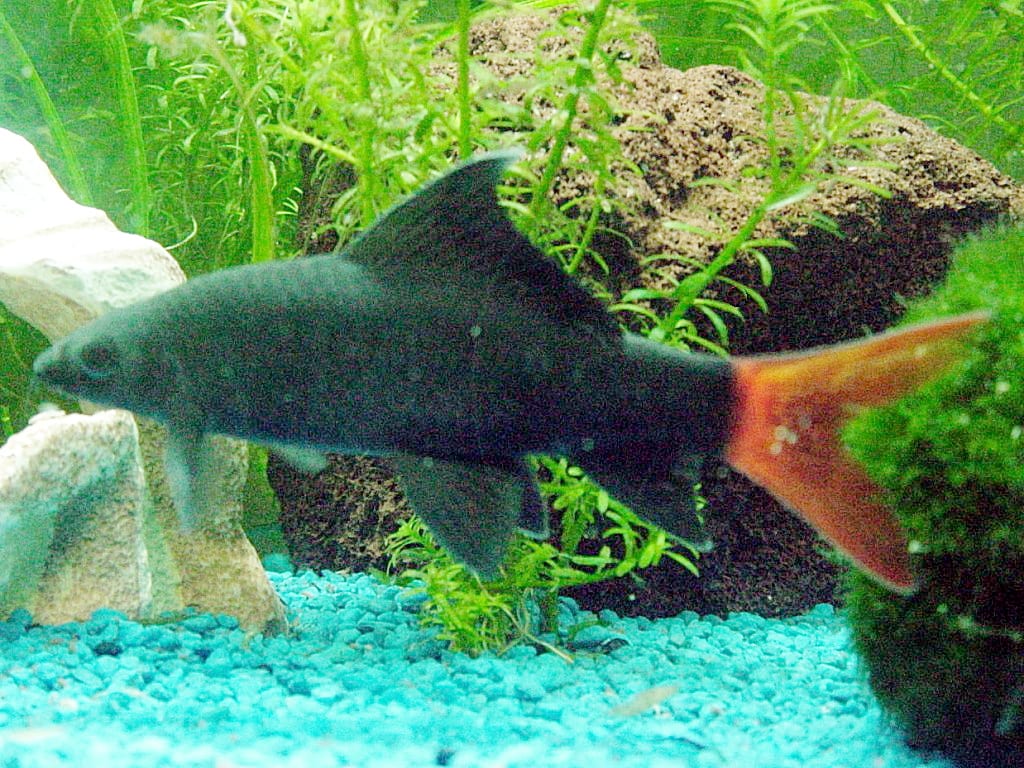
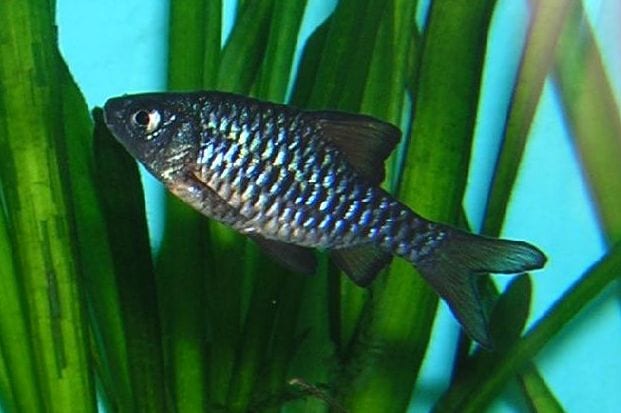
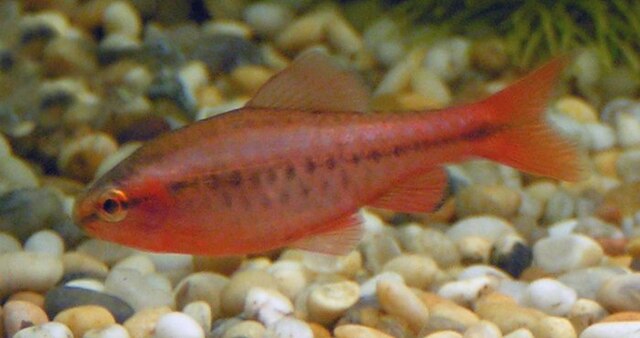
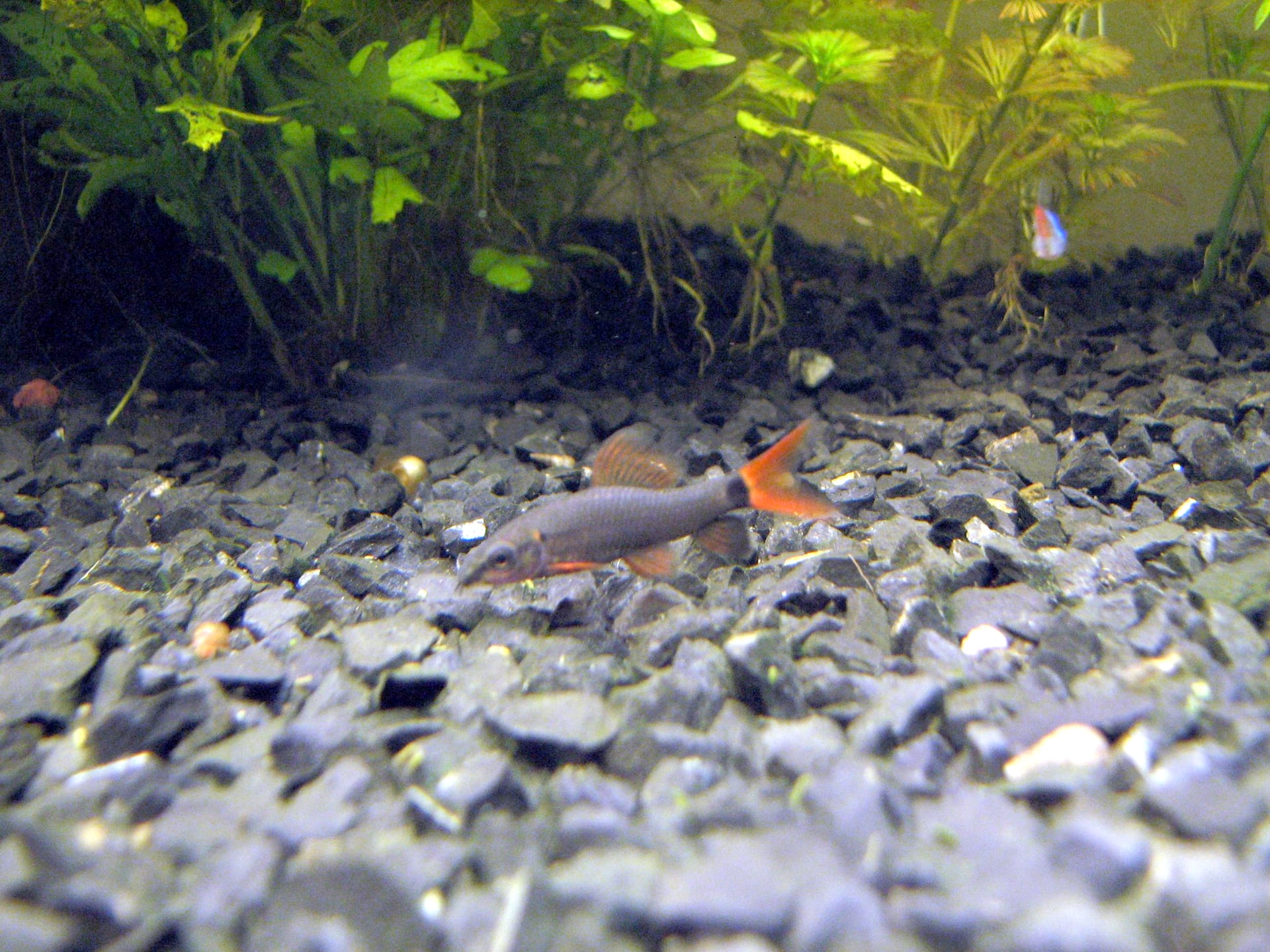
A bottom-dwelling cyprinid, grey-green to dark brown with red fins. Easier in a community than its congener the red-tailed black shark, though it too becomes territorial with age.
Difficulty
Intermediate
Temperature
20〜26℃
Lifespan
Over 15 years
Size
Up to 15cm TL
Diet
Sinking dried foods, frozen foods and vegetable matter
About
Epalzeorhynchos frenatum occurs in the Mekong, Chao Phraya, Xe Bang Fai and Mae Klong basins. FishBase records a maximum of 15cm TL, pH 6.0-8.0, 5-12 dH and 24-27C, finding it at mid-water and bottom depths near any solid surface over sand, moving into seasonally flooded habitats and feeding on algae, periphyton and phytoplankton. Seriously Fish gives 150mm SL, 20-26C, pH 6.5-8.0, 2-15 dGH and a 120 x 45cm base of about 243 litres, with a potential age beyond fifteen years. The body is grey-green to dark brown with red fins, and more intensely coloured forms are traded. It is a better community fish than the red-tailed black shark, but aggression towards similarly shaped fish still grows with age. The IUCN rates it Least Concern and it is not listed by CITES.
Source: Wikipedia (CC BY-SA 4.0)
Lifespan of the Rainbow Shark
The Rainbow Shark lives Over 15 years.
Size of the Rainbow Shark
The Rainbow Shark grows to Up to 15cm TL.
Temperature & humidity for the Rainbow Shark
The ideal temperature for the Rainbow Shark is 20〜26℃.
Basic Info
Origin
Southeast Asia (Mekong, Chao Phraya and Mae Klong basins)
Lifespan
Over 15 years
Size
Care Specifications
- pH
- 6.5–8
- Hardness (GH)
- 2–15 dGH
- Water Temp.
- 20–26℃
- Min. Tank
- 243 L
Semi-aggressiveSolitaryBreeding: Very hard
Sources: FishBase / Seriously Fish
References & Sources
Edited & verified by: BreederDirect editorial team
The taxonomic, regulatory, and husbandry data on this page are compiled and verified against the authoritative primary sources below.
Taxonomy & Authority
Regulations & Conservation Status
Not CITES-listedIUCN LC · Least Concern
Sources: CITES Appendices (species not listed) / IUCN Red List
Regulations may change. Always verify the latest information with the relevant authorities.
Rainbow Shark Listings
Loading latest listingsFind listings for this species