Source: Wikimedia Commons
Black Ruby Barb
BeginnerPethia nigrofasciata
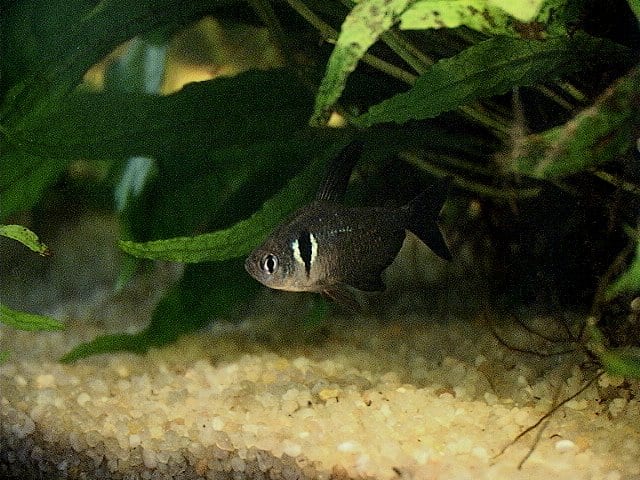
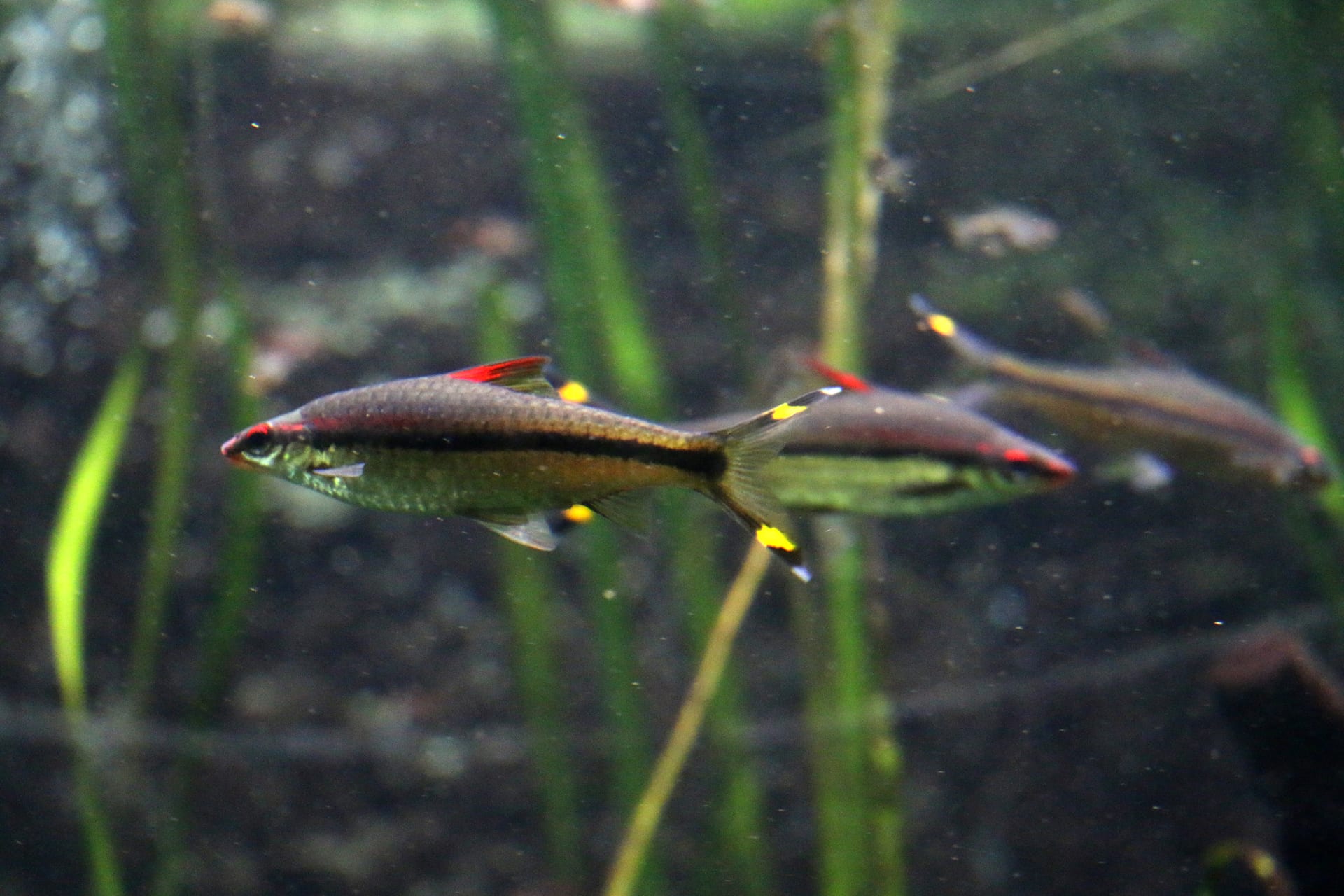
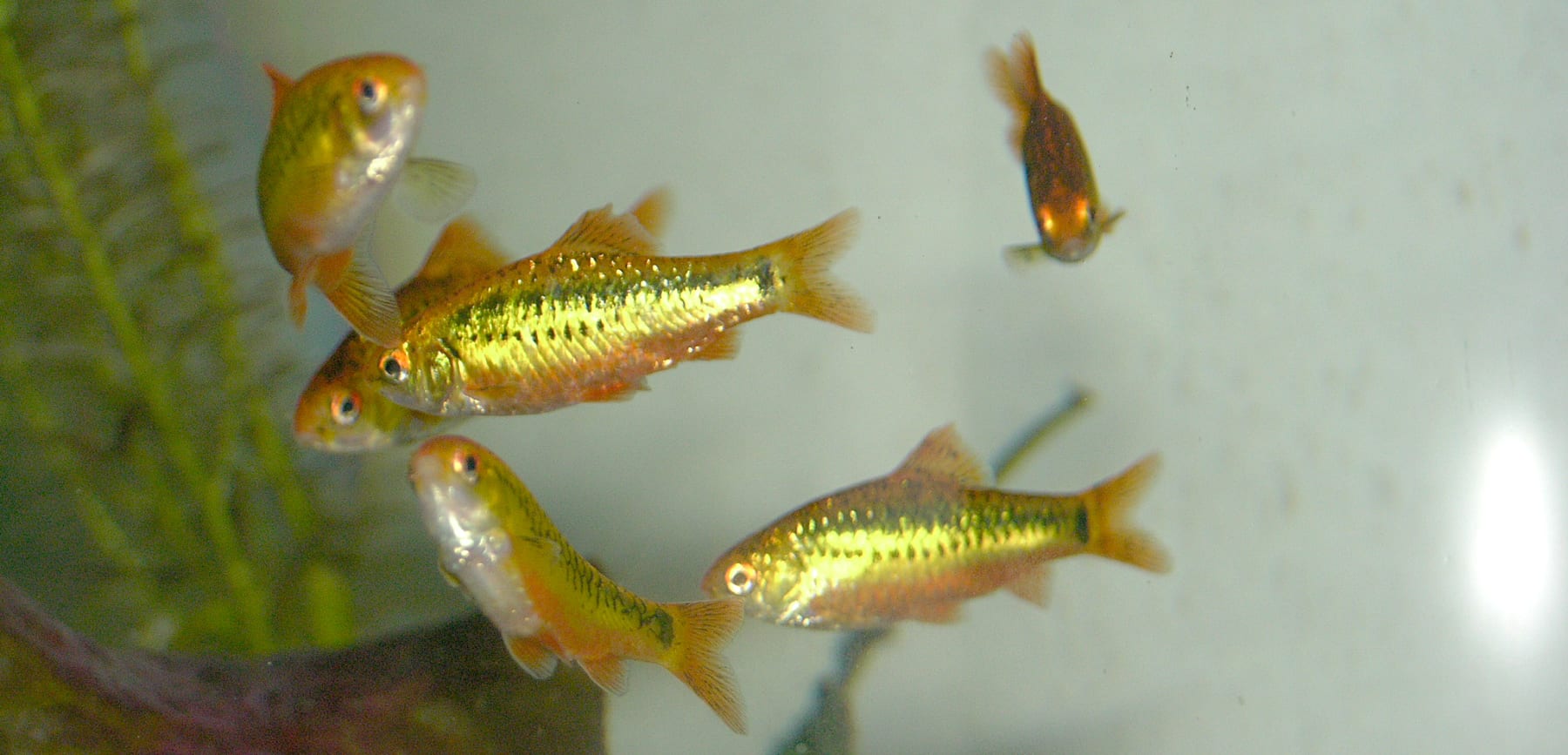
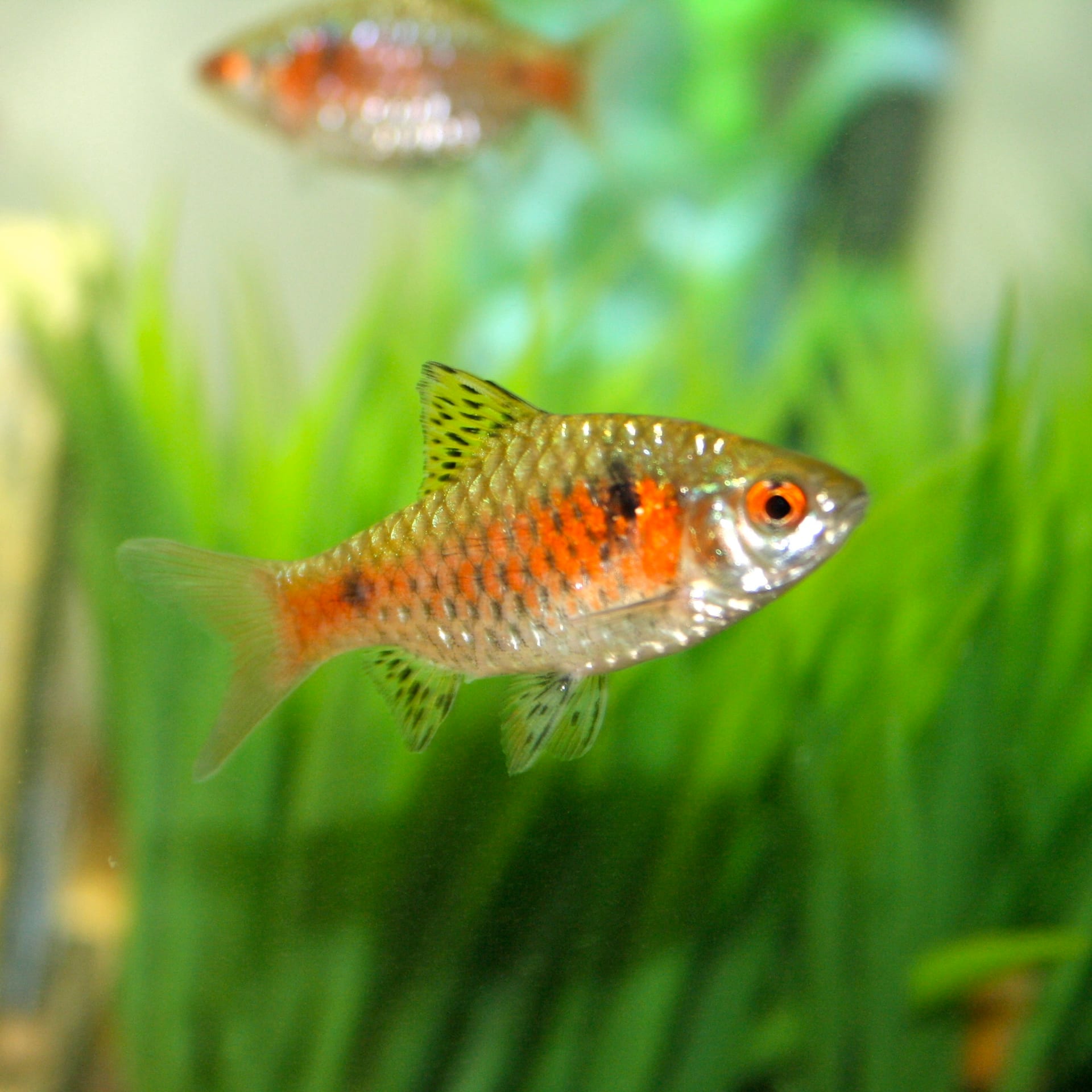
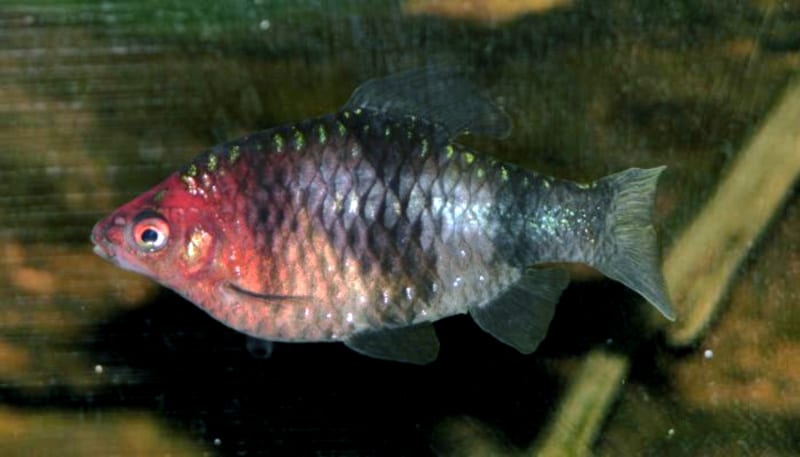
A small barb whose breeding males turn purple-red on the head and black behind, and which is pale yellow with dark bars at rest. Endemic to Sri Lankan forest streams and rated Vulnerable by the IUCN.
Difficulty
Beginner
Temperature
20〜27℃
Lifespan
3-5 years
Size
Up to 6.7cm TL
Diet
Dried, frozen and plant-based foods
About
Pethia nigrofasciata is endemic to forest streams between the Kelani and Nilwala basins of Sri Lanka. FishBase records 6.0cm TL for males and 6.7cm for females, pH 6.0-6.5, 5-12 dH and 22-26C, and places it in cool shaded clear streams over gravel or sand, and in quiet marginal pools, feeding mainly on filamentous algae and detritus. Seriously Fish gives 55mm SL, 20-27C, pH 5.5-7.5, 2-15 dGH and an 80 x 30cm base of about 72 litres, noting that farmed fish are adaptable. Breeding males turn purple-red on the head and black behind. Spawning takes place in shallow water among marginal weeds, where more than a hundred eggs hatch in one or two days and the fry swim free after about a day. Its restricted range has led the IUCN to rate it Vulnerable. It is not listed by CITES.
Source: Wikipedia (CC BY-SA 4.0)
Lifespan of the Black Ruby Barb
The Black Ruby Barb lives 3-5 years.
Size of the Black Ruby Barb
The Black Ruby Barb grows to Up to 6.7cm TL.
Temperature & humidity for the Black Ruby Barb
The ideal temperature for the Black Ruby Barb is 20〜27℃.
Basic Info
Origin
Sri Lanka (Kelani to Nilwala basins)
Lifespan
3-5 years
Size
Care Specifications
- pH
- 5.5–7.5
- Hardness (GH)
- 2–15 dGH
- Water Temp.
- 20–27℃
- Min. Tank
- 72 L
PeacefulGroupBreeding: Moderate
Sources: FishBase / Seriously Fish
References & Sources
Edited & verified by: BreederDirect editorial team
The taxonomic, regulatory, and husbandry data on this page are compiled and verified against the authoritative primary sources below.
Taxonomy & Authority
Regulations & Conservation Status
Not CITES-listedIUCN VU · Vulnerable
Sources: CITES Appendices (species not listed) / IUCN Red List
Regulations may change. Always verify the latest information with the relevant authorities.
Black Ruby Barb Listings
Loading latest listingsFind listings for this species