Source: Wikimedia Commons
Golden Barb
BeginnerBarbodes semifasciolatus
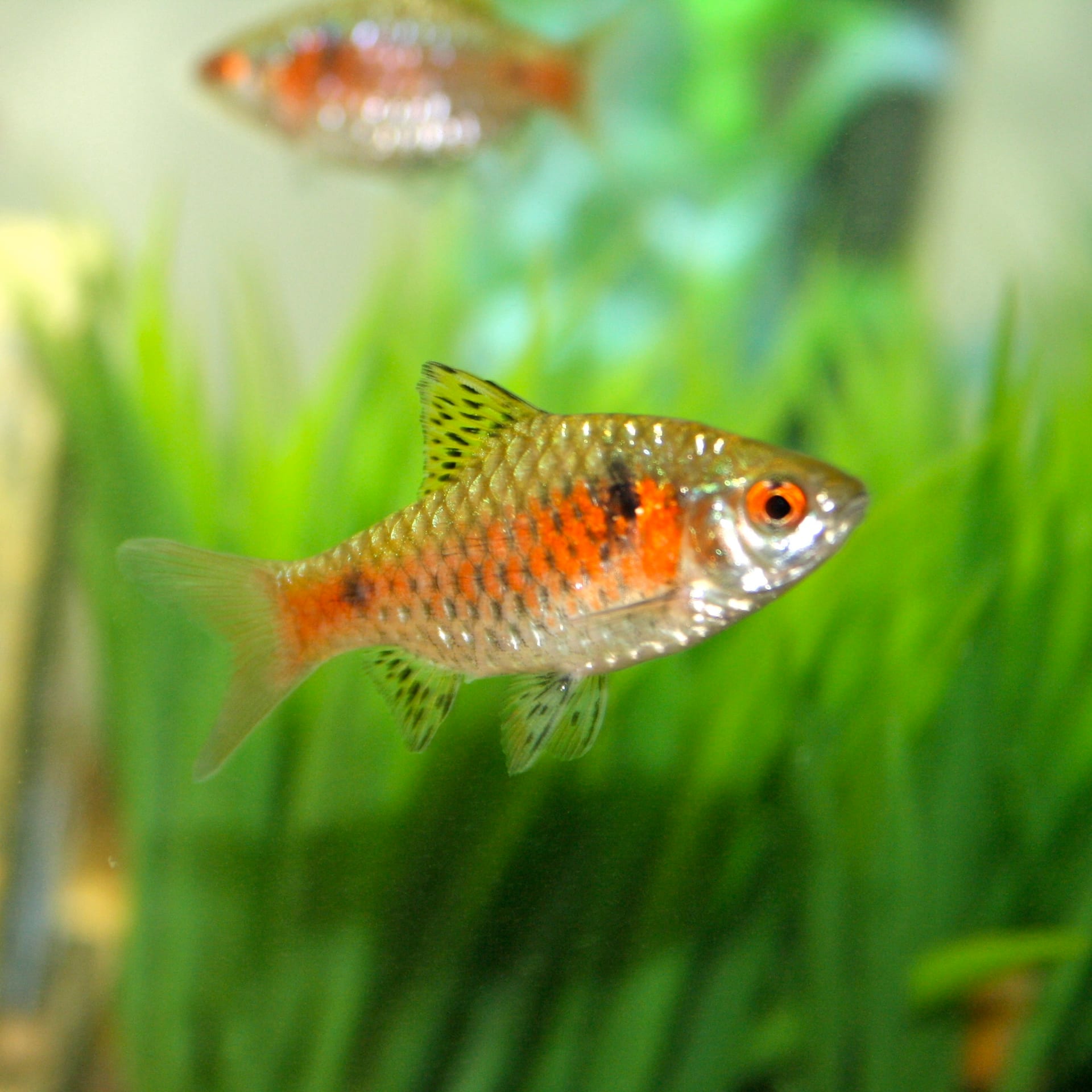
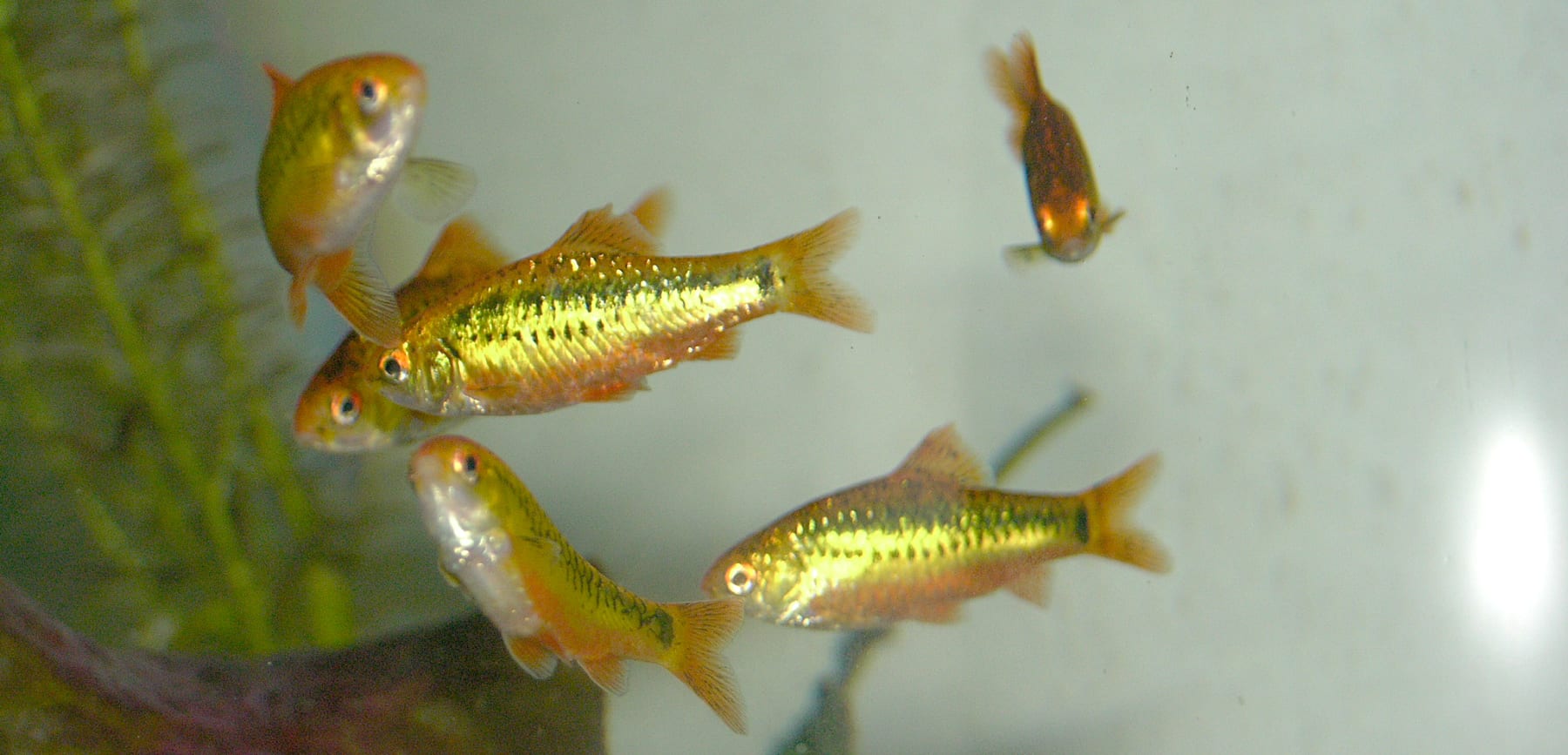
The wild form is green-brown, but the xanthic strain in the trade is golden all over, with a row of short black marks along the flank. A hardy barb that tolerates cool water and settles in groups of five or more.
Difficulty
Beginner
Temperature
16〜24℃
Lifespan
4-7 years
Size
Up to 7.6cm TL
Diet
Dried, frozen and live foods
About
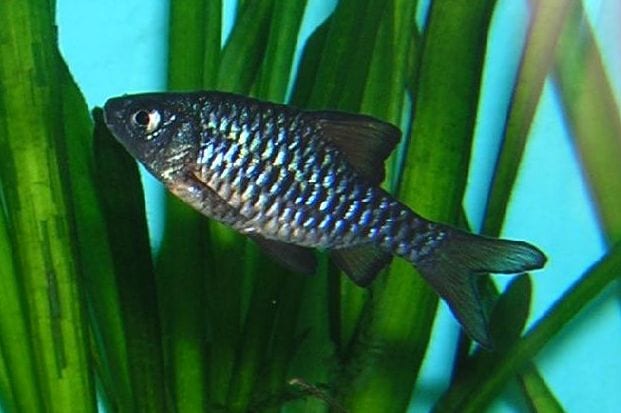
Barbodes semifasciolatus ranges from the Red River basin across southern China to Hainan. FishBase records a maximum of 7.6cm TL, a common length of 3.5cm, pH 6.0-8.0, 5-19 dH, 18-24C and depths of 5m or less, with a diet of worms, crustaceans, insects, plant matter and detritus. Seriously Fish gives 75mm SL, 16-24C, pH 6.0-8.0, 2-20 dGH and a 90 x 30cm base of about 81 litres. The wild fish is green-brown above with metallic green-yellow flanks, but the fish sold in the hobby is a xanthic captive strain that looks gold all over. Four to seven short black marks run along the flank, and breeding males flush yellow-green on the belly. Being subtropical it takes cooler water well and should not be kept warm year round. Spawning takes place in the early morning. The IUCN rates it Least Concern and it is not listed by CITES.
Source: Wikipedia (CC BY-SA 4.0)
Lifespan of the Golden Barb
The Golden Barb lives 4-7 years.
Size of the Golden Barb
The Golden Barb grows to Up to 7.6cm TL.
Temperature & humidity for the Golden Barb
The ideal temperature for the Golden Barb is 16〜24℃.
Basic Info
Origin
Asia (Red River basin, southern China and Hainan)
Lifespan
4-7 years
Size
Care Specifications
- pH
- 6–8
- Hardness (GH)
- 2–20 dGH
- Water Temp.
- 16–24℃
- Min. Tank
- 81 L
PeacefulGroupBreeding: Moderate
Sources: FishBase / Seriously Fish
References & Sources
Edited & verified by: BreederDirect editorial team
The taxonomic, regulatory, and husbandry data on this page are compiled and verified against the authoritative primary sources below.
Taxonomy & Authority
Regulations & Conservation Status
Not CITES-listedIUCN LC · Least Concern
Sources: CITES Appendices (species not listed) / IUCN Red List
Regulations may change. Always verify the latest information with the relevant authorities.
Golden Barb Listings
Loading latest listingsFind listings for this species