Source: Wikimedia Commons
German Blue Ram
IntermediateMikrogeophagus ramirezi
Jewel-like small cichlid with blue iridescence. Peaceful for community tanks but prefers warm water. Many variants.
Difficulty
Intermediate
Temperature
27〜30℃
Lifespan
2-4 years
Size
5-7cm
Diet
Frozen food, pellets
About
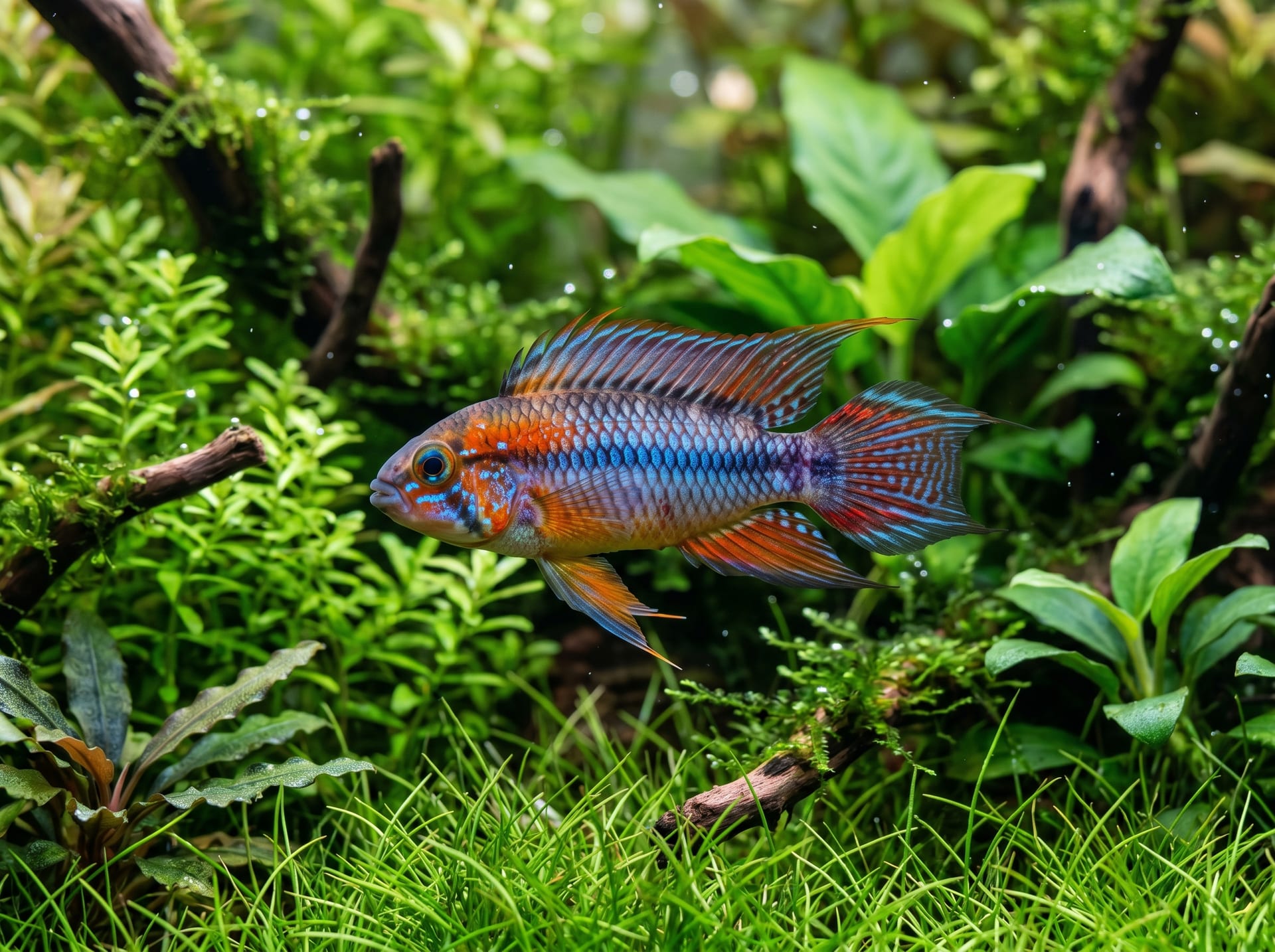
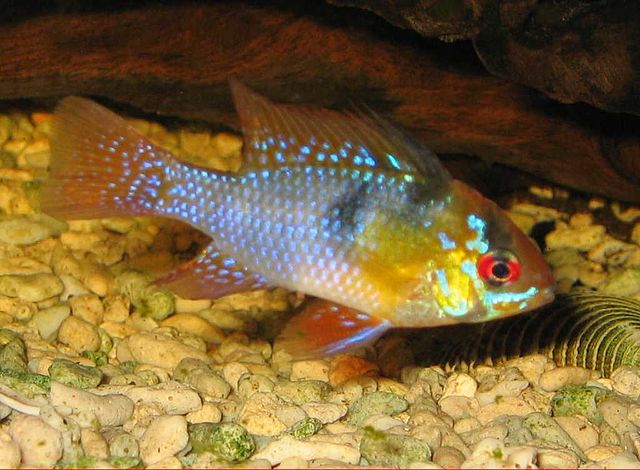
The ram cichlid (Mikrogeophagus ramirezi), also called the butterfly cichlid or German blue ram, is a small cichlid native to the lowland rivers of Venezuela and Colombia. Despite reaching only 5–7 cm, it displays some of the most jewel-like coloration of any freshwater fish: metallic blue iridescent scales scattered across the body, a black spot on the dorsal fin, and warm orange tones on the belly. Selective breeding has produced popular variants including the golden ram and electric blue ram. Soft, slightly acidic water (pH 6.0–7.0) is ideal. Despite generally peaceful behavior, breeding pairs become territorial, defending flat stones or substrate areas where eggs are laid. Both parents share responsibility for guarding eggs and herding fry.
Lifespan of the German Blue Ram
The German Blue Ram lives 2-4 years.
Water temperature is critical — 27–30°C is essential for health and longevity; they are sensitive to cooler temperatures and deteriorating water quality, making them more prone to disease than hardier species. With a lifespan of only 2–4 years, consistent water quality management is the key to keeping this beautiful but delicate species at its best.
Size of the German Blue Ram
The German Blue Ram grows to 5-7cm.
Temperature & humidity for the German Blue Ram
The ideal temperature for the German Blue Ram is 27〜30℃.
Basic Info
Origin
lowland rivers of Venezuela and Colombia
Lifespan
Care Specifications
- pH
- 5–6
- Hardness (GH)
- 5–12 dGH
- Water Temp.
- 27–30℃
PeacefulPairBreeding: Hard
Sources: FishBase / Seriously Fish
Captive Breeding
Egg-laying
- Clutch size
- 150〜300
- Incubation temp.
- 27〜30℃
- Incubation days
- 2〜3 days
Breeding season: Breeds year-round in captivity with no distinct season; clean, soft, slightly acidic water conditions promote spawning.
Breeding notes
Soft, slightly acidic water (pH 5.0–7.0) at 27–30 °C is preferred for spawning. Adhesive eggs are deposited on flat rocks, driftwood, broad plant leaves, or directly on the substrate. Both parents provide biparental brood care, but eggs readily develop fungus in hard or unclean water. Eggs hatch in approximately 40 hours at 29 °C; wrigglers remain motionless near the spawning site for about 5 more days before becoming free-swimming.
Breeding requires planning, proper husbandry, and responsibility. These figures are general guidelines.
Sources: Wikipedia – Ram cichlid / Seriously Fish – Mikrogeophagus ramirezi
References & Sources
Edited & verified by: BreederDirect editorial team
The taxonomic, regulatory, and husbandry data on this page are compiled and verified against the authoritative primary sources below.
Taxonomy & Authority
Accepted name: Mikrogeophagus ramirezi (Myers & Harry, 1948)
Synonyms: Apistogramma ramirezi Myers & Harry, 1948, Microgeophagus ramirezi (Myers & Harry, 1948), Papiliochromis ramirezi (Myers & Harry, 1948), Papilochromis ramirezi (Myers & Harry, 1948)
Authority databases: FishBase · GBIF
Nomenclature follows global taxonomic authority databases.
Regulations & Conservation Status
Not CITES-listed
Sources: FishBase / Seriously Fish / CITES Appendices (Checklist)
Regulations may change. Always verify the latest information with the relevant authorities.
German Blue Ram Listings
Loading latest listingsFind listings for this species