Source: Wikimedia Commons
Otocinclus
BeginnerSmall catfish that eats algae on glass and plants. Peaceful and essential for planted tanks. More secure in groups.
Difficulty
Beginner
Temperature
22〜28℃
Lifespan
3-5 years
Size
3-5cm
Diet
Algae, tablet food
About
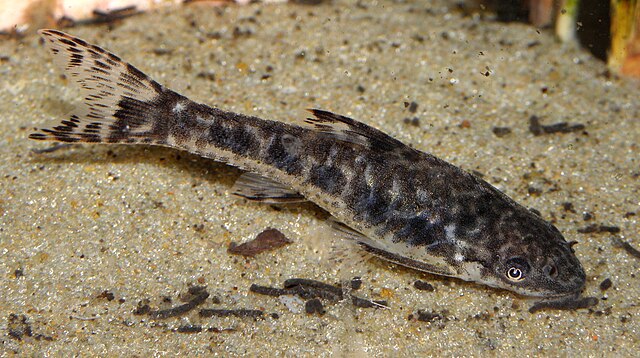
Otocinclus, commonly called 'otos' or dwarf suckers, are small loricariid catfish distributed across river systems from Venezuela to northern Argentina in South America. Reaching only 2–5 cm, they use their sucker-like mouths to graze on soft green algae, diatoms, and biofilm from glass surfaces, plant leaves, and driftwood — making them exceptional algae controllers in planted aquariums. Unlike some larger algae eaters, they do not damage delicate plants and can clean even the smallest leaf surfaces. Being shy and somewhat fragile, they should be kept in groups of three or more for confidence. When aquarium algae is insufficient, their diet must be supplemented with blanched zucchini or sinking algae wafers. Breeding in captivity is challenging — most available specimens are wild-caught — requiring excellent water quality and an abundance of plant-based nutrition. Newly imported specimens often have compromised digestive systems, requiring special care during acclimation.
Source: Wikipedia (CC BY-SA 4.0)
Lifespan of the Otocinclus
The Otocinclus lives 3-5 years.
Size of the Otocinclus
The Otocinclus grows to 3-5cm.
Temperature & humidity for the Otocinclus
The ideal water temperature for the Otocinclus is 20〜25℃.
They adapt well to water temperatures of 22–28°C and slightly acidic to neutral water (pH 6.5–7.5).
Basic Info
Origin
South America, commonly known as "dwarf suckers" or "otos"
Care Specifications
- pH
- 6–7.5
- Hardness (GH)
- 2–18 dGH
- Water Temp.
- 20–25℃
- Min. Tank
- 41 L
PeacefulGroup
Sources: FishBase / Seriously Fish
References & Sources
Edited & verified by: BreederDirect editorial team
The taxonomic, regulatory, and husbandry data on this page are compiled and verified against the authoritative primary sources below.
Primary sources
Regulations & Conservation Status
Not CITES-listed
"Otocinclus" is a genus-level collective term. No CITES-listed species within the genus Otocinclus.
Sources: FishBase / Seriously Fish / CITES Appendices (Checklist)
Regulations may change. Always verify the latest information with the relevant authorities.
Otocinclus Listings
Loading latest listingsFind listings for this species