Source: Wikimedia Commons
Peacock Gudgeon
BeginnerTateurndina ocellicauda
A small gudgeon with beautiful peacock-like blue dot pattern. Peaceful, breeding enjoyable.
Difficulty
Beginner
Temperature
24〜28℃
Lifespan
3-5 years
Size
5-7cm
Diet
Frozen food, Pellets
About
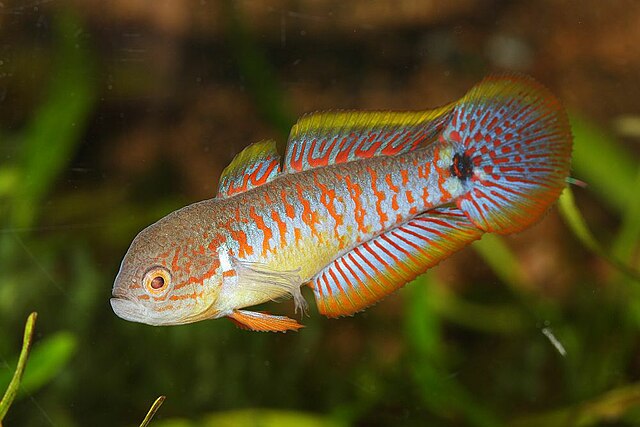
The peacock gudgeon (Tateurndina ocellicauda) is a small eleotrid fish native to clear streams and wetlands of eastern Papua New Guinea. Growing to 5–7 cm, it is one of the most beautiful gudgeons: a vivid blue-cyan body with red and orange vertical banding, a flag-like extended dorsal fin, and a prominent yellow-rimmed black eyespot at the tail base that mimics an eye to deter predators — collectively evoking the splendor of a peacock's plumage. Primarily bottom-oriented but also swimming in mid-water, peacock gudgeons are gentle enough for community tanks. Breeding pairs exhibit cave-spawning behavior, depositing eggs in hollow driftwood or tubes, with the male guarding eggs and early fry. Diet is predominantly carnivorous — frozen bloodworms, brine shrimp, and small live foods deliver the best coloration; they can be trained to accept quality prepared foods. Fine substrate and ample hiding places replicate their natural habitat.
Lifespan of the Peacock Gudgeon
The Peacock Gudgeon lives 3-5 years.
Size of the Peacock Gudgeon
The Peacock Gudgeon grows to 5-7cm.
Temperature & humidity for the Peacock Gudgeon
The ideal temperature for the Peacock Gudgeon is 24〜28℃.
Water conditions of pH 6.5–7.5 at 24–28°C are appropriate.
Basic Info
Origin
clear streams and wetlands of eastern Papua New Guinea
Lifespan
3-5 years
Care Specifications
- pH
- 6.5–7.5
- Hardness (GH)
- 5–10 dGH
- Water Temp.
- 24–28℃
- Min. Tank
- 40 L
PeacefulGroupBreeding: Easy
Sources: FishBase / Seriously Fish
References & Sources
Edited & verified by: BreederDirect editorial team
The taxonomic, regulatory, and husbandry data on this page are compiled and verified against the authoritative primary sources below.
Taxonomy & Authority
Regulations & Conservation Status
Not CITES-listed
Sources: FishBase / Seriously Fish / CITES Appendices (Checklist)
Regulations may change. Always verify the latest information with the relevant authorities.
Peacock Gudgeon Listings
Loading latest listingsFind listings for this species