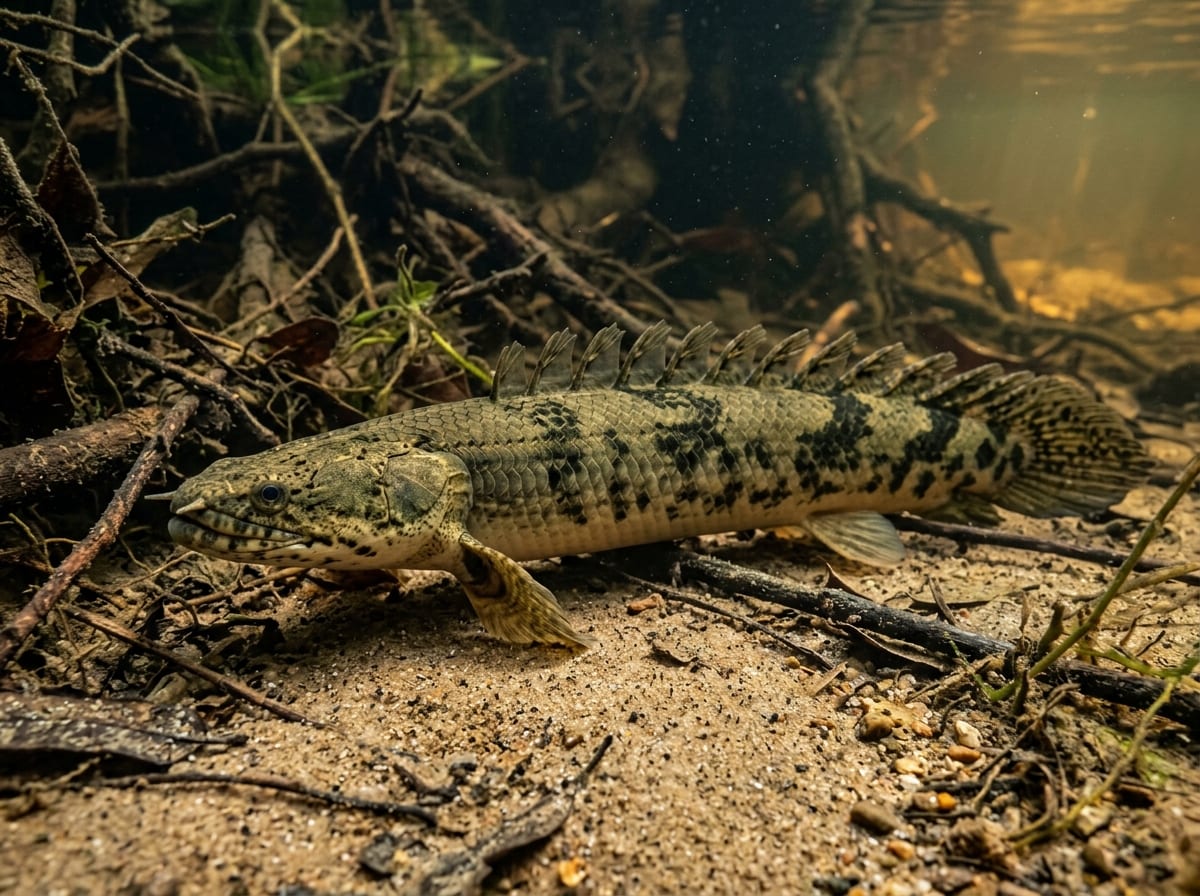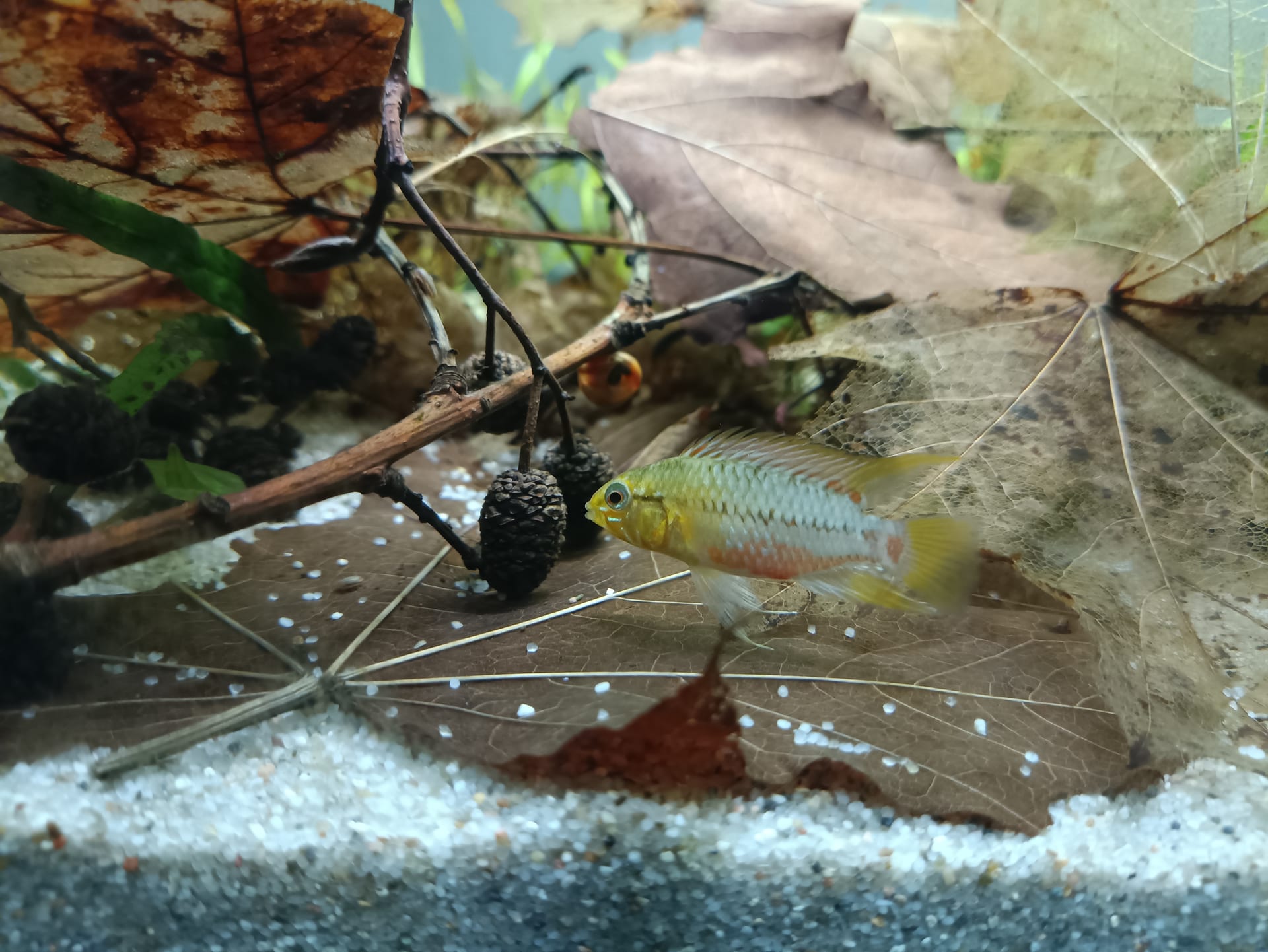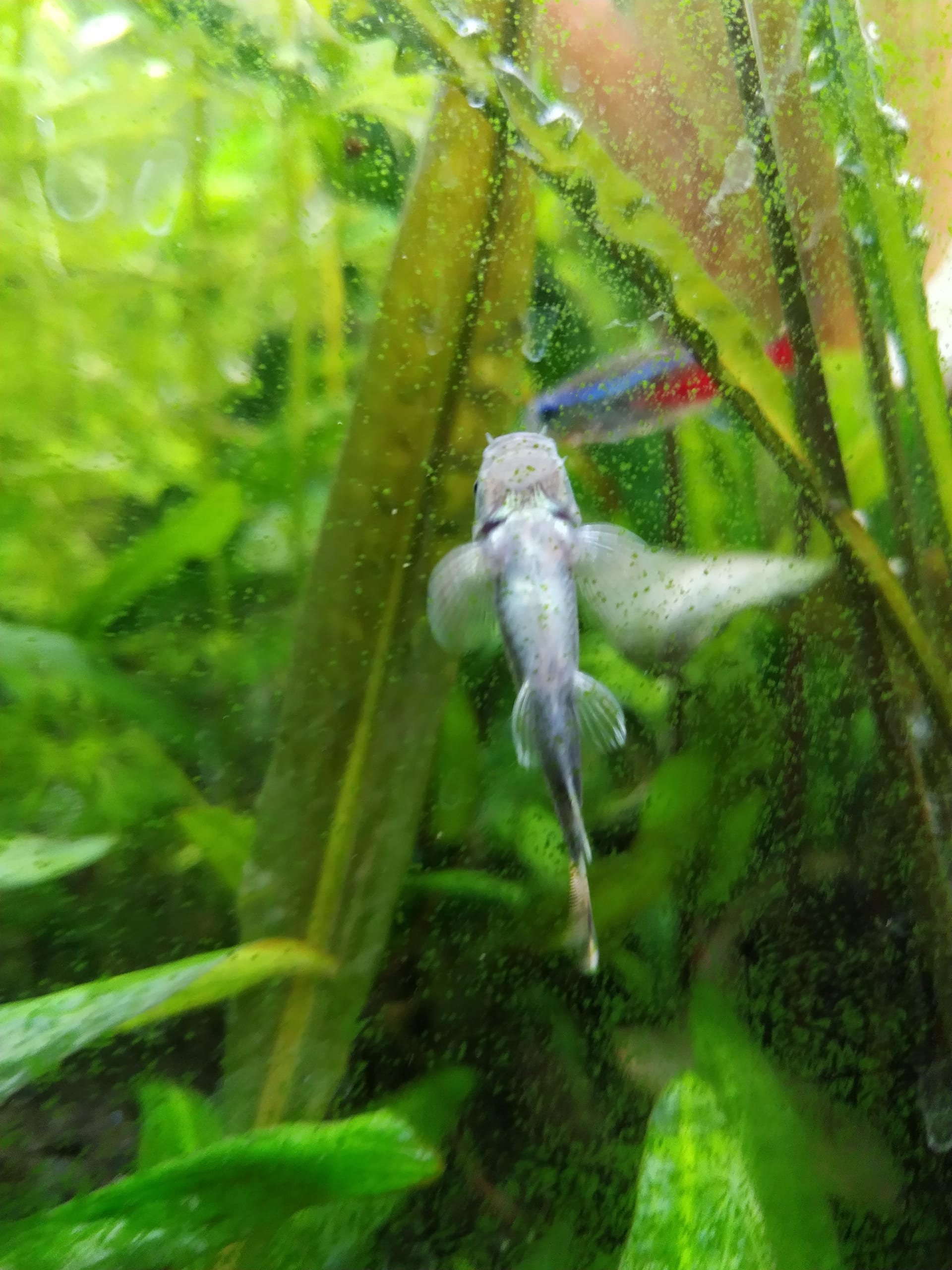
Source: Wikimedia Commons
Panda garra
IntermediateGarra flavatra
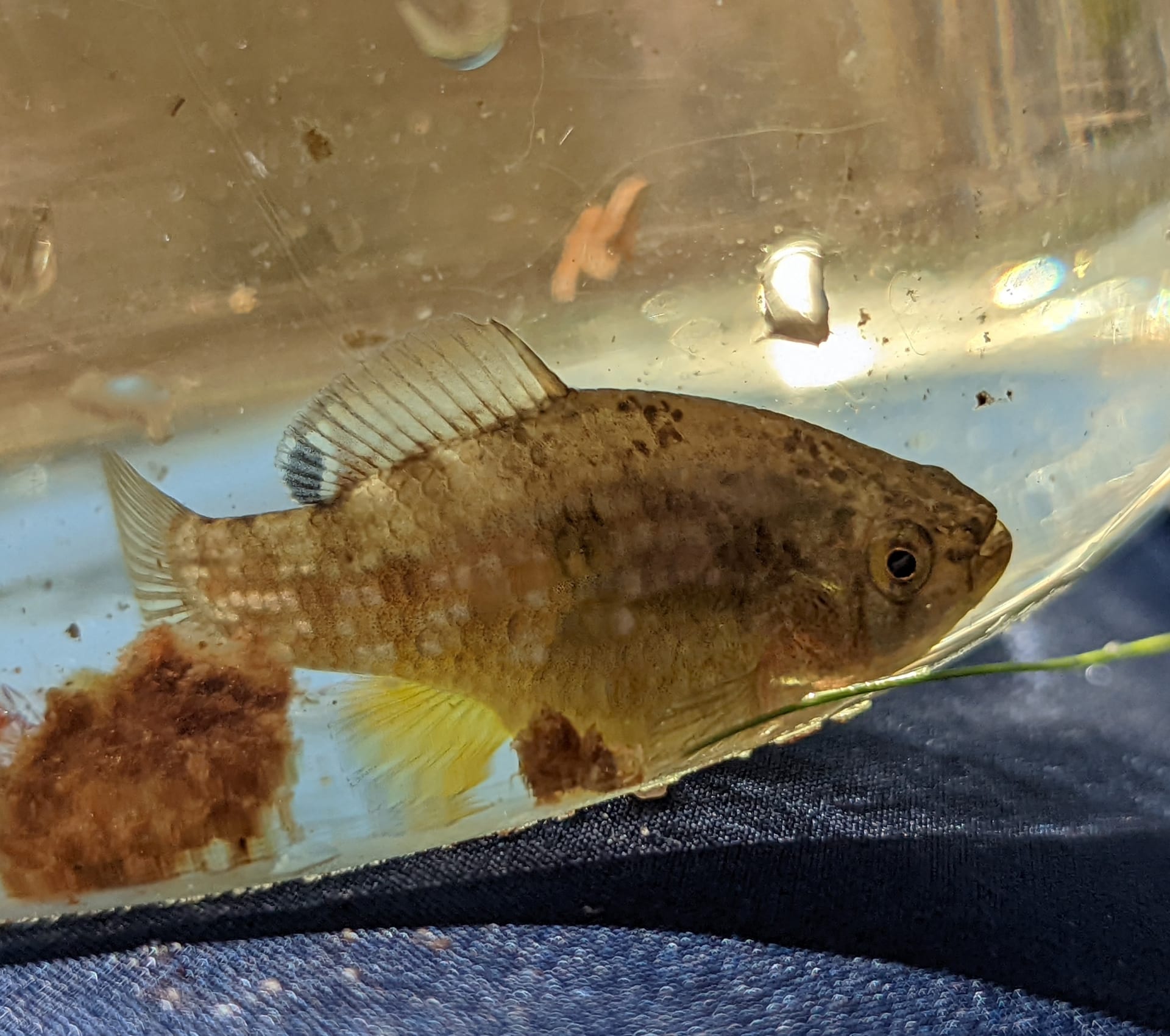
A Garra from mountain streams of western Myanmar, with bold yellow and black bands reminiscent of a panda. It grazes algae and biofilm with a sucker-like mouth but also eats meaty foods.
Difficulty
Intermediate
Temperature
22〜27℃
Lifespan
Few reliable data
Size
6.2 cm SL (FishBase) to 9 cm SL (Seriously Fish)
Diet
Omnivore (algae, sinking prepared foods, frozen foods)
About
The panda garra, Garra flavatra, was described in 2004 and is endemic to streams of the Rakhine Yoma (Arakan Mountains) in western Myanmar, found in shallow, clear rivers over gravel, pebbles and rocks (FishBase, Seriously Fish). FishBase gives 6.2 cm SL; Seriously Fish gives 9 cm. Its name means 'yellow and black', after its alternating bands. It scrapes algae and biofilm from stones with a sucker-like mouth but is not purely herbivorous. It can climb glass. Mature males develop tubercles on the head and caudal peduncle and are slimmer than females. It is listed as Vulnerable on the IUCN Red List. A Myanmar exporter has bred it commercially since 2008, and most fish in the trade are said to be captive-bred. It is distinct from the doctor fish (G. rufa) and is sold in Japan as an ornamental fish that also grazes algae.
Source: Wikipedia (CC BY-SA 4.0)
Size of the Panda garra
The Panda garra grows to 6.2 cm SL (FishBase) to 9 cm SL (Seriously Fish).
Temperature & humidity for the Panda garra
The ideal temperature for the Panda garra is 22〜27℃.
Basic Info
Origin
Southeast Asia (Rakhine Yoma streams, Rakhine State, western Myanmar)
Lifespan
Few reliable data
Size
6.2 cm SL (FishBase) to 9 cm SL (Seriously Fish)
Temperature
References & Sources
Edited & verified by: BreederDirect editorial team
The taxonomic, regulatory, and husbandry data on this page are compiled and verified against the authoritative primary sources below.
Primary sources
Taxonomy & Authority
Regulations & Conservation Status
Not CITES-listedIUCN VU · Vulnerable
Not listed in the CITES Appendices (checked on Species+). Assessed as Vulnerable (VU) on the IUCN Red List. Not regulated under Japan's Invasive Alien Species Act. Never release aquarium fish into the wild.
Sources: Species+ (CITES) / FishBase
Regulations may change. Always verify the latest information with the relevant authorities.
Panda garra Listings
Loading latest listingsFind listings for this species