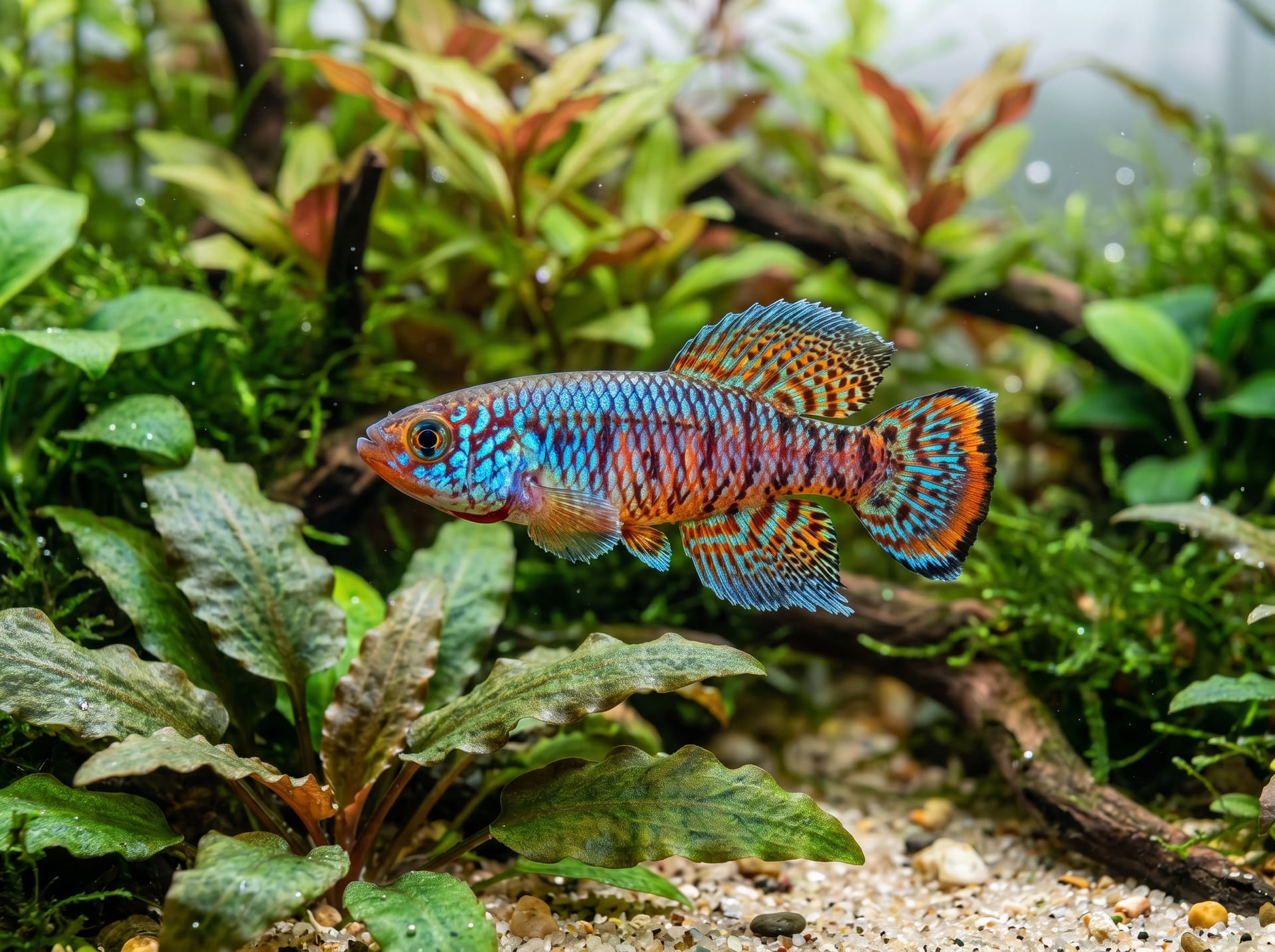
AI-generated image
Killifish
IntermediateSmall beautiful fish found worldwide. Males display incredibly vivid colors like gems. Over 1000 species, popular with enthusiasts.
Difficulty
Intermediate
Temperature
22〜28℃
Lifespan
1-5 years (varies)
Size
3-8cm
Diet
Frozen food, live food, pellets
About
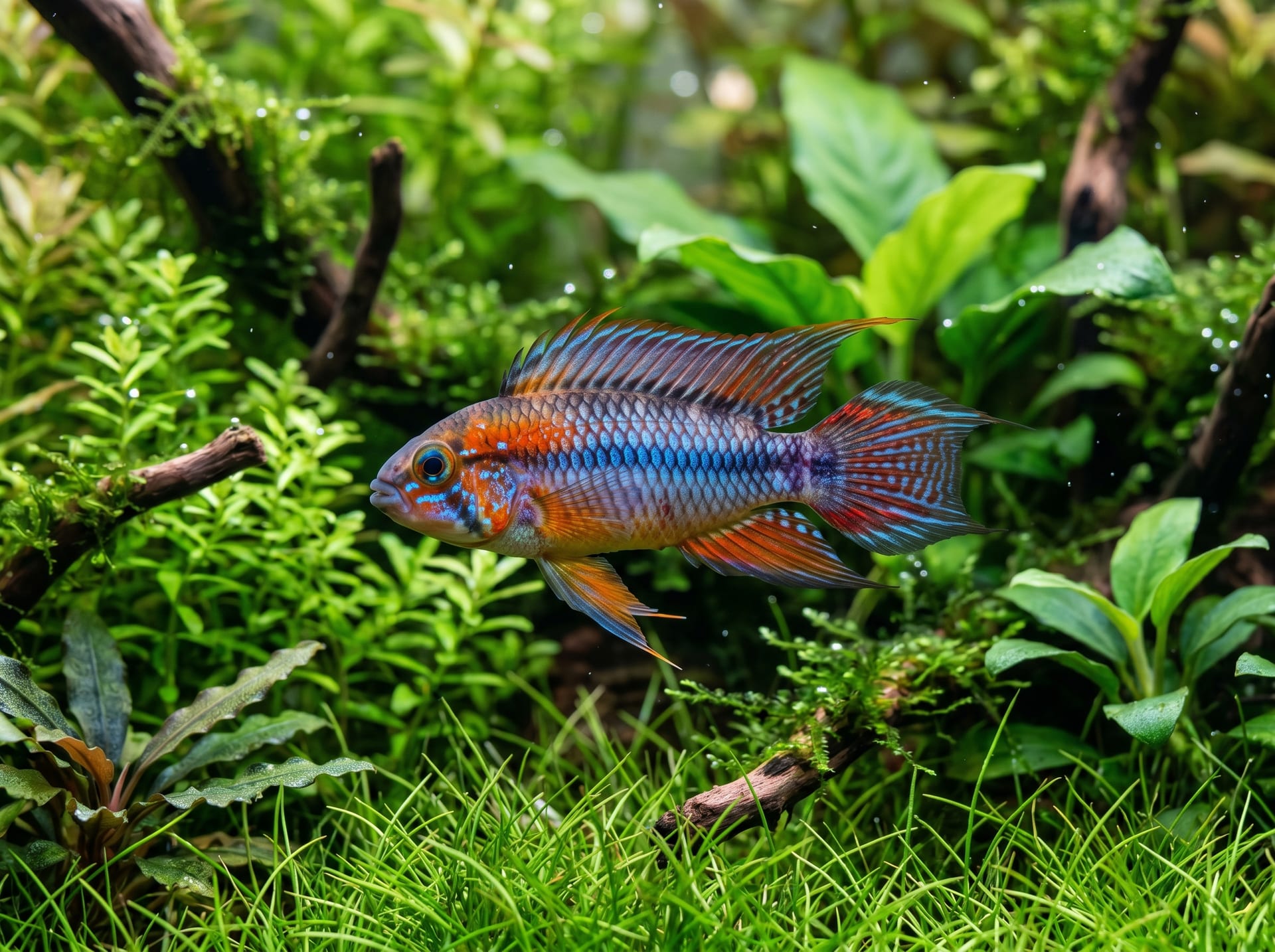
Killifish is a broad term encompassing approximately 1,270 species of egg-laying cyprinodontiform fish found across Africa, South America, Southeast Asia, and North America. In the aquarium hobby, the most celebrated group is the annual killifish — genera such as Nothobranchius (Africa) and Austrolebias (South America) — inhabiting temporary pools that dry up seasonally. These fish complete their entire life cycle within one rainy season, laying desiccation-resistant eggs in the substrate that survive the dry season and hatch with the return of rain. Most killifish are small (2–10 cm), and males display extraordinary jewel-like coloration in blues, reds, oranges, and yellows. Water requirements vary by species — from soft, acidic water to harder, neutral conditions — but most prefer moderate parameters with a lean toward slightly acidic.
Source: Wikipedia (CC BY-SA 4.0)
Lifespan of the Killifish
The Killifish lives 1-5 years (varies).
The short lifespan of annuals (1–2 years) is offset by their rapid breeding cycle and the unique 'dry storage' breeding method: eggs laid in peat moss are carefully dried and stored for weeks or months before being rehydrated to trigger hatching.
Size of the Killifish
The Killifish grows to 3-8cm.
Basic Info
Origin
freshwater habitats worldwide, including Africa, South America, and Southeast Asia
Lifespan
1-5 years (varies)
Size
References & Sources
Edited & verified by: BreederDirect editorial team
The taxonomic, regulatory, and husbandry data on this page are compiled and verified against the authoritative primary sources below.
Primary sources
Killifish Listings
Loading latest listingsFind listings for this species