Source: Wikimedia Commons
Satin Guinea Pig
IntermediateCavia porcellus
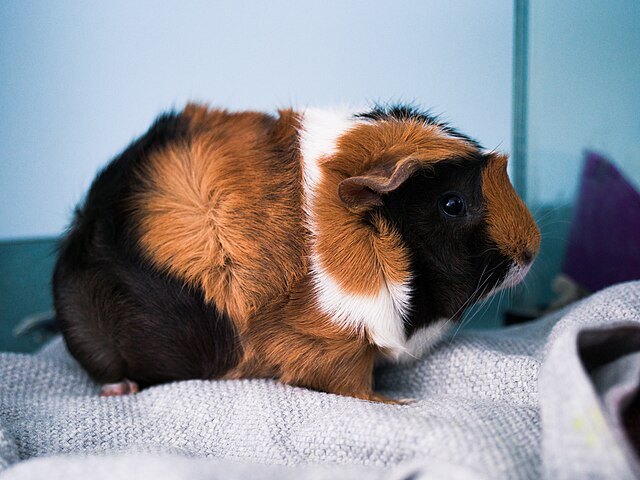
A coat-type group of guinea pigs whose thin, translucent hair shafts give a glassy sheen. ACBA recognizes satin varieties of five breeds, but the gene is linked to a bone disease known as satin syndrome, so breeding calls for caution.
Difficulty
Intermediate
Temperature
17〜20℃
Lifespan
5-6 years
Size
20-25cm / 700-1,200g
Humidity
40〜60%
Diet
Timothy hay, vitamin C-fortified pellets, vegetables
About
The Satin guinea pig (Cavia porcellus) is defined not by body type but by a recessively inherited coat trait: the hair shafts are thinner and more translucent than normal, reflecting light to give a sheen described as glassy or oily. The American Cavy Breeders Association recognizes satin varieties of five breeds, American, Abyssinian, Peruvian, Silkie and Teddy, each with its own standard. Size is the same as guinea pigs generally, 20-25 cm and 700-1,200 g. The concern is health: animals carrying the satin gene develop osteodystrophy, known as satin syndrome, an incurable metabolic bone disease. From around 12-18 months they show a wobbly gait, difficulty eating and breeding problems, progressing to weakness and paralysis, and registries in New Zealand, Sweden and Finland refuse to register satin cavies or those with a satin parent. Prospective owners should understand this and it is prudent not to breed them. Guinea pigs cannot synthesize vitamin C and need a daily supply, and should be kept in pairs rather than alone.
Source: Wikipedia (CC BY-SA 4.0)
Lifespan of the Satin Guinea Pig
The Satin Guinea Pig lives 5-6 years.
Lifespan is 5-6 years; the ideal range is 17-20°C, with heatstroke risk above 26°C.
Size of the Satin Guinea Pig
The Satin Guinea Pig grows to 20-25cm / 700-1,200g.
Temperature & humidity for the Satin Guinea Pig
The ideal temperature for the Satin Guinea Pig is 17〜20℃.
Basic Info
Origin
Care Specifications
References & Sources
Edited & verified by: BreederDirect editorial team
The taxonomic, regulatory, and husbandry data on this page are compiled and verified against the authoritative primary sources below.
Taxonomy & Authority
Accepted name: Cavia porcellus (Linnaeus, 1758)
Authority databases: GBIF
Nomenclature follows global taxonomic authority databases.
Regulations & Conservation Status
Not CITES-listed
Sources: CITES Appendices (not listed) / Ministry of the Environment Specified Alien Species List
Regulations may change. Always verify the latest information with the relevant authorities.
Satin Guinea Pig Listings
Loading latest listingsFind listings for this species