Guinea Pig Multi-Housing & Compatibility Guide | Cage Layout, Fighting Prevention, and Socializing Methods
This guide explains compatible pairings, gradual introduction methods, cage layout strategies, and fighting warning signs for successful multi-housing of guinea pigs. We introduce breeding methods that leverage their natural social behaviors as social animals.

Key Takeaways
This guide explains compatible pairings, gradual introduction methods, cage layout strategies, and fighting warning signs for successful multi-housing of guinea pigs. We introduce breeding methods that leverage their natural social behaviors as social animals.
Related Species
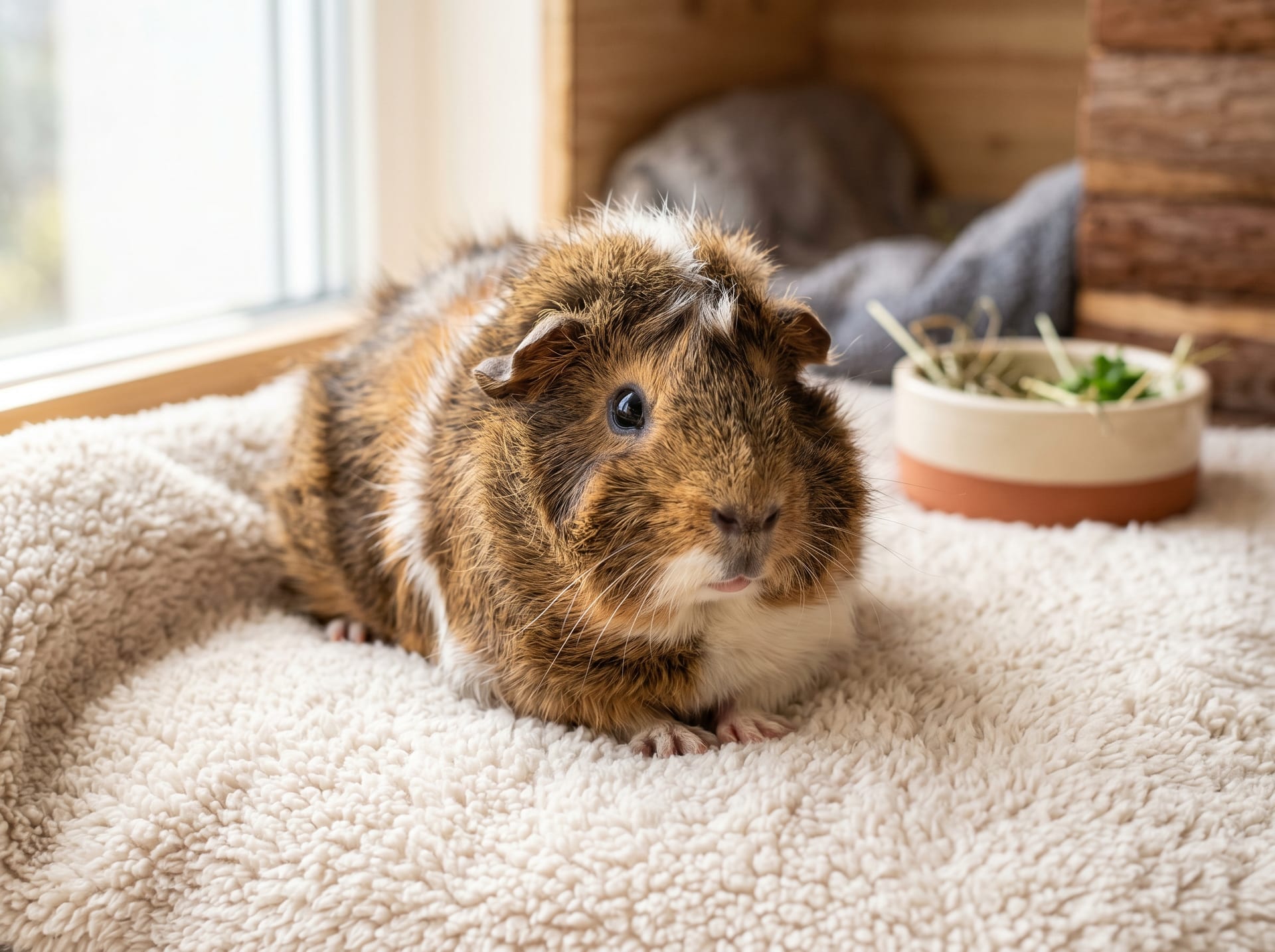
Guinea pigs are naturally social animals that live in groups. While housing two or more together is said to promote mental stability compared to single housing, incompatible pairings can result in serious fighting. This article provides a detailed explanation of guinea pig social behavior, compatible pairings, cage layout strategies for successful cohabitation, and key points for preventing fights.
Guinea Pig Sociality: Herd-Living Animals
Herd Behavior in the Wild
Guinea pigs' ancestors (Cavia porcellus) lived in herds of 10-20 individuals across South American grasslands. Within these groups, a social hierarchy exists, with dominant males protecting multiple females.
Even in captivity, guinea pigs have similar social needs, and it is known that singly-housed guinea pigs may experience health issues from stress and loneliness. In particular, in Europe (Switzerland, Germany, etc.), some countries have banned single housing of guinea pigs under animal welfare laws.
Benefits of Multi-Housing
- Mental Stability: Companionship reduces anxiety
- Behavioral Enrichment: Chase play and mutual grooming with companions relieves stress
- Increased Appetite: Appetite is stimulated by watching companions eat
- Extended Lifespan: Mental stability supports immune function
Compatible Pairings
Gender Combinations
| Pairing | Compatibility | Notes |
|---|---|---|
| Female × Female | Best | Least troublesome. Same age or small age gap is more stable |
| Neutered Male × Female(s) | Good | Neutering is essential to prevent breeding. Suitable for mild-tempered males |
| Female × Neutered Male (single) | Good | Same as above |
| Male × Male | Caution Required | Problematic except for littermates or bonded pairs from young age |
| Intact Male × Female | Not Recommended | Breeding cannot be controlled; excessive mating behavior and stress |
The safest pairing is "two or more females." If space and budget allow, groups of 3-4 females are also highly stable.
Impact of Age Differences
Large age gaps can lead to differences in energy levels and appetite.
- Ideal: Same-age individuals 2-4 months old
- Acceptable Range: Age difference of less than 1 year
- Use Caution: Age difference of 2+ years (large energy disparity; younger animals may become exhausted)
When introducing a younger individual to an older one, gradual introduction (discussed below) is especially important.
First Cohabitation: Introduction Steps
Step 1: Separate Housing to Acclimate to Each Other's Presence (1-2 weeks)
When bringing home a new guinea pig, first place the cages side by side to allow them to acclimate to each other's scent and presence. Do not allow direct contact at this stage.
- Approaching noses through the cage bars to investigate is normal behavior
- Strong chewing or aggressive charging is a sign of stress
Step 2: Neutral-Space Introduction (30-60 minutes)
Arrange their first meeting in a neutral space unfamiliar to both (an unused floor area or separate room).
Observation Points:
- Smelling each other → Normal greeting behavior
- One pushing or mounting the other → Dominance confirmation (not a problem)
- Chase play → Normal if mild
- Biting/hair loss → Separate immediately
Repeat neutral-space sessions several times. If no issues arise, proceed to full cohabitation in the shared cage.
Step 3: Transition to Shared Cage
Prepare a new cage or one thoroughly cleaned that neither guinea pig has used before. Introducing a new individual into a previously-used cage triggers territorial behavior and increases conflict risk.
Cage Layout for Fighting Prevention
Space Requirements
For multi-housing, the cage must always be larger than for single housing.
| Number of Guinea Pigs | Minimum Area | Recommended Area |
|---|---|---|
| 2 | 0.7m² | 1.0m² or more |
| 3 | 1.0m² | 1.5m² or more |
| 4 | 1.5m² | 2.0m² or more |
Multi-housing in tight spaces causes stress and fighting.
Set Up Multiple Food Bowls and Water Bottles
Sharing a single bowl among multiple guinea pigs may prevent lower-ranking individuals from eating enough.
- Number of Bowls: Number of guinea pigs + 1 (4 bowls for 3 guinea pigs)
- Number of Water Bottles: Minimum 2
- Placement: Distribute across the cage diagonally or in separated locations
Multiple Hiding Spots and Rest Areas
Guinea pigs experience reduced stress when each has their own space.
- Hideouts/Tunnels: Provide at least as many as the number of guinea pigs (all can hide simultaneously in separate places)
- Hideout Entrances: Choose hideouts with 2+ entrances (single-entrance ones encourage monopolization)
- Rest Areas: Place blankets and fleece in multiple locations
Use Sight-Blocking Items
Continuous eye contact increases tension. It's important to block sight lines using ramps, hay bundles, or boards to create escape areas.
Fighting Warning Signs and How to Handle Them
Dangerous Fighting Signs
Immediately separate if you observe any of the following behaviors:
- Biting: Separate immediately if bleeding occurs
- Hair loss/Skin wounds: Evidence of successful attacks
- One guinea pig losing appetite and becoming thin: Sign of mental/physical exhaustion
- Specific individual constantly unable to leave hideout: Severe stress state
Minor Hierarchy Confirmation Behavior (Not a Problem)
- Mounting behavior: Occurs between same-sex individuals too. Normal hierarchy confirmation
- Chase play: Fine if the other is not extremely fearful
- Teeth chattering: A warning sign. Monitor if it escalates
When Compatibility Problems Persist
If repeated gradual introductions don't improve compatibility, "side-by-side housing (adjacent separate cages)" is a more practical solution than forcing cohabitation. Some individuals benefit mentally from adjacent housing where they can see each other, rather than complete separation.
Summary
With proper pairings and environmental setup, multi-housing provides a richer life for guinea pigs than single housing. The three most important factors are "adequate space," "multiple food bowls and hideouts," and "gradual introduction." Female-to-female pairings are the most stable and recommended for first-time multi-housing. Don't miss fighting warning signs, avoid forcing incompatible pairings, and prioritize individual health and mental stability. Adopting littermates from a breeder is also an effective way to ensure compatibility from the start.