Peruvian Guinea Pig Complete Care Guide | Long-haired Breed Characteristics, Lifespan, and Coat Maintenance
Complete guide to Peruvian guinea pig lifespan, long-haired breed-specific care environments, brushing 2-3 times per week, trimming, and diet management. We provide detailed information on care points specific to long-haired breeds and skin problem prevention.
Key Takeaways
Complete guide to Peruvian guinea pig lifespan, long-haired breed-specific care environments, brushing 2-3 times per week, trimming, and diet management. We provide detailed information on care points specific to long-haired breeds and skin problem prevention.
Related Species
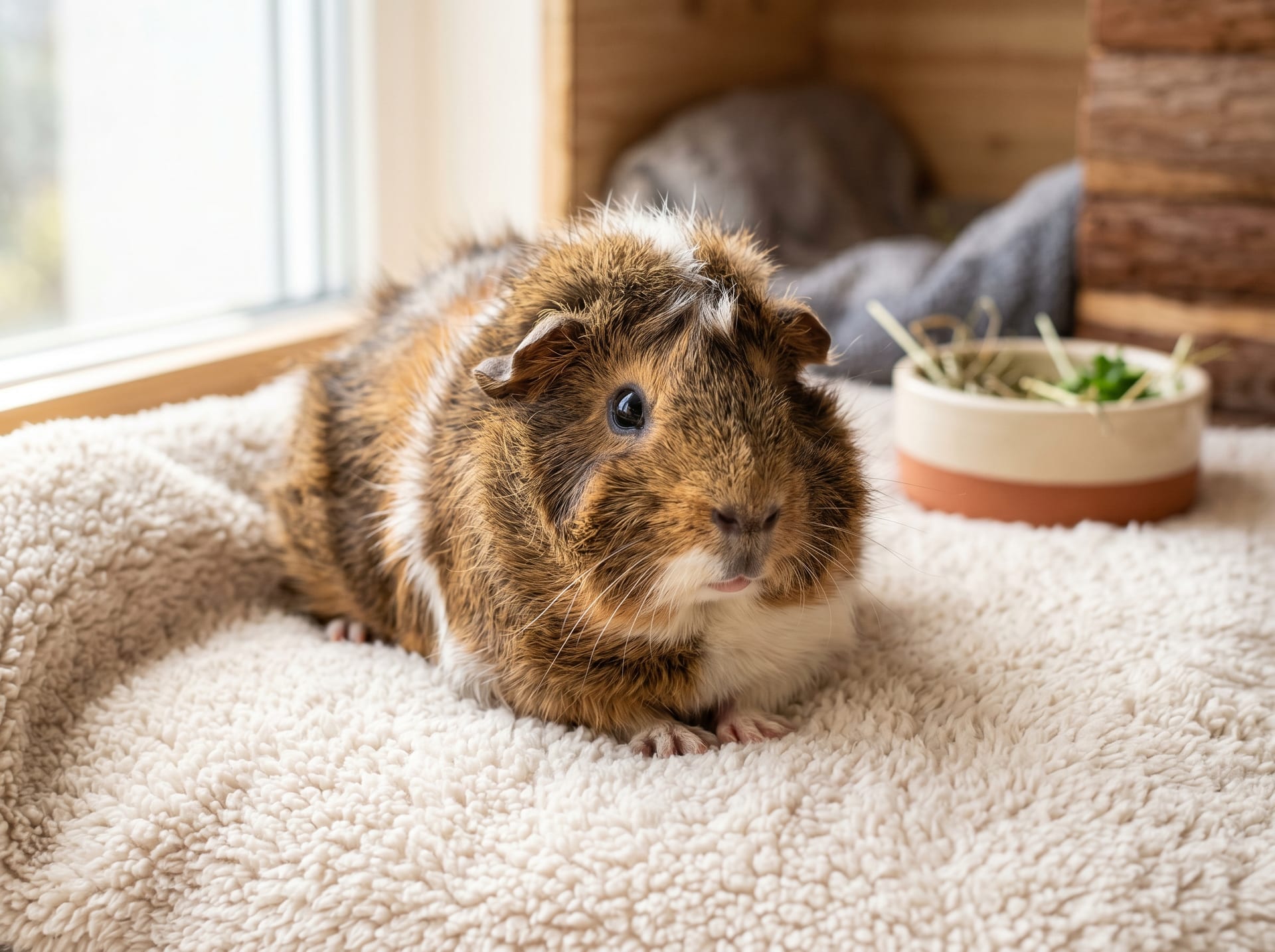
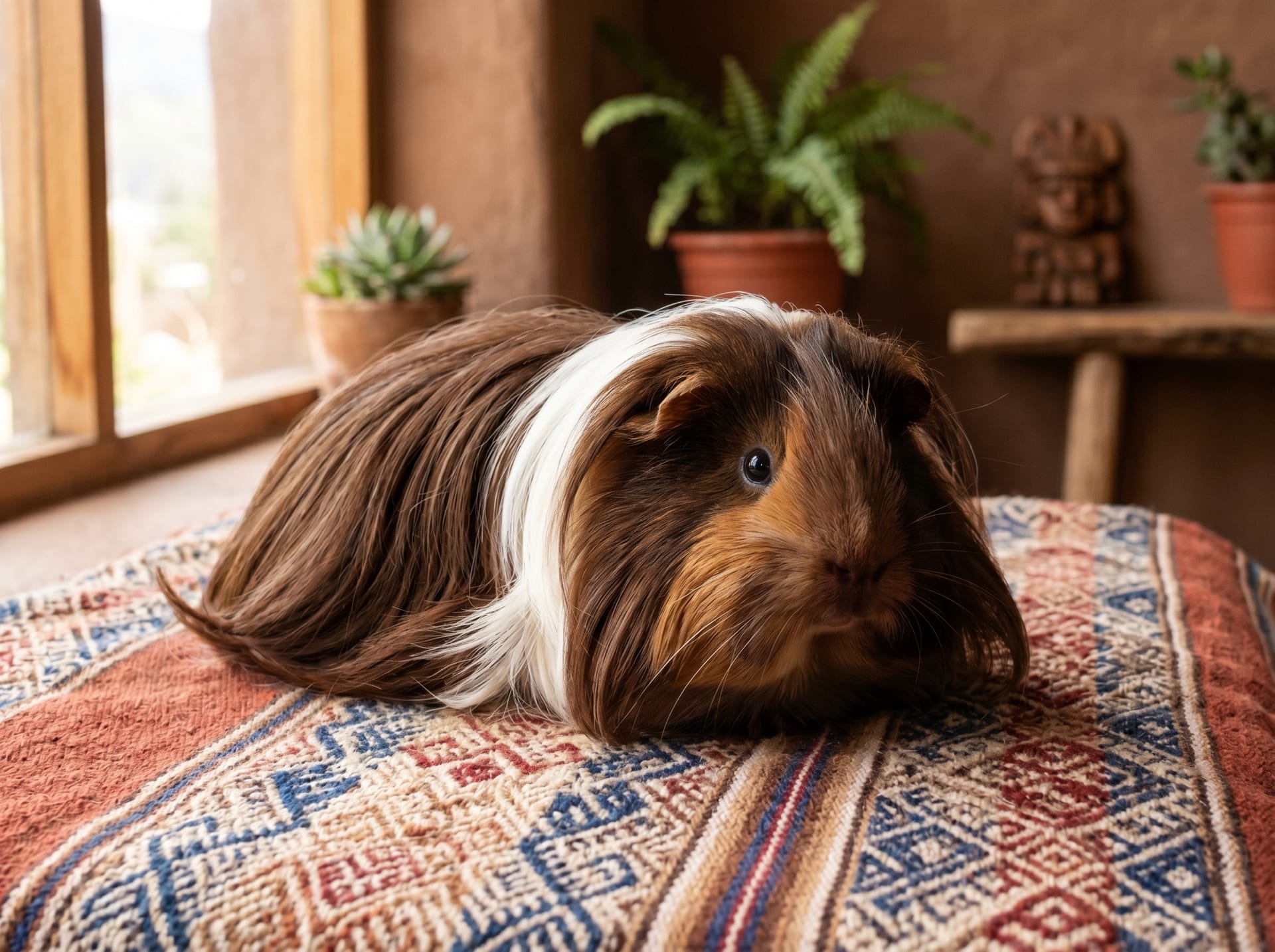
Peruvian guinea pigs are characterized by their long, flowing coats that can reach the floor. Due to their beautiful appearance, they are also called "the aristocrats of guinea pigs" and are highly valued in shows. However, their long coats require special care different from standard guinea pigs. This article explains in detail the lifespan of Peruvian guinea pigs, care points specific to long-haired breeds, and coat maintenance management.
Basic Information and Lifespan of Peruvian Guinea Pigs
Breed Characteristics
The Peruvian Guinea Pig originates from Peru in South America and is a long-haired variety of guinea pig. The coat covering their entire body can grow to 30-50cm or longer in adults, and without proper care, it can lead to matting and skin problems.
The coat has a characteristic "rosette" structure with hair growing in two directions, creating a beautiful flow from the head down the back. Color variations are abundant, including solid colors, bicolors, and tricolors, offering diverse coat colors.
Average Lifespan
Peruvian guinea pigs have an average lifespan of 5-7 years, and with proper care, some individuals can live 8 years or longer. Their lifespan is roughly the same as standard Abyssinian or American guinea pigs, but skin problems and stress from matting caused by their long coats can affect longevity.
The key to extending their lifespan lies in "long coat management." Preventing tangled hair, matting, and skin moisture buildup is fundamental to maintaining a Peruvian guinea pig's health.
Care Environments Specific to Long-haired Breeds
Choosing a Cage
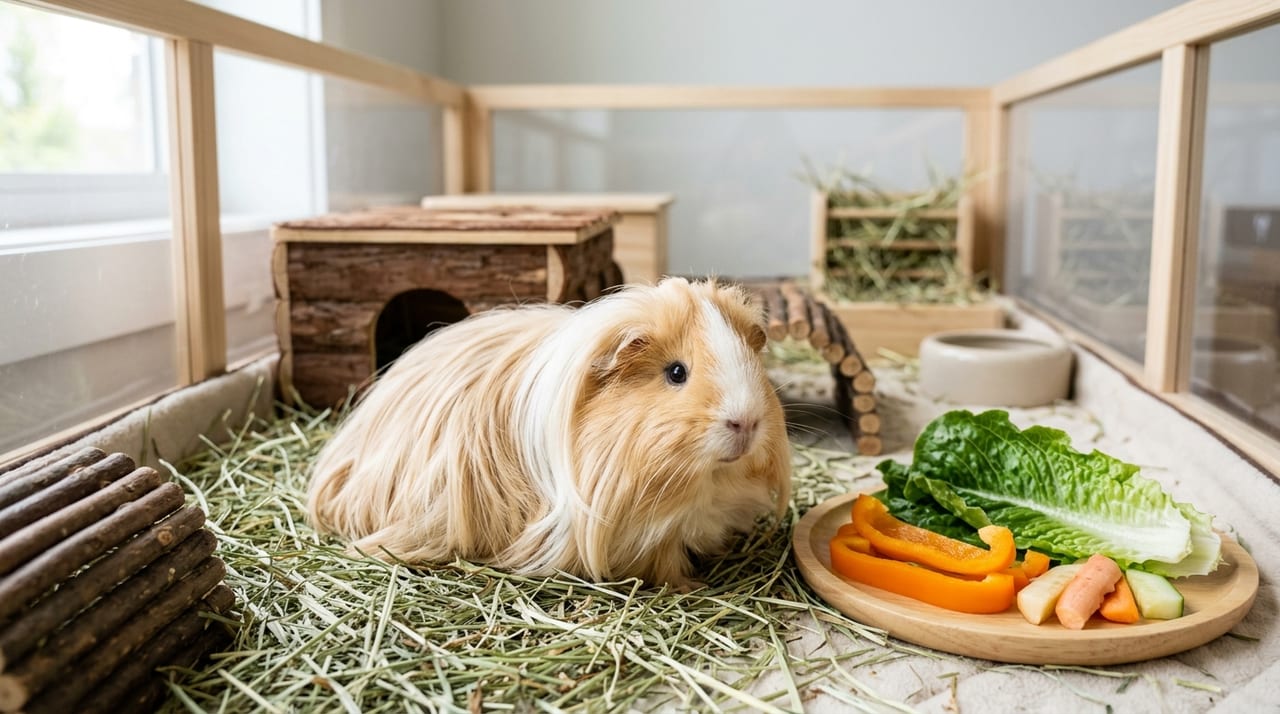
Peruvian guinea pigs require a cage with a minimum of 90cm width × 60cm depth. Considering the risk of long hair catching on cage bars or becoming tangled with bedding, cages with wider bar spacing or flat-bottomed designs are suitable.
Cage environments to avoid:
- Grid-patterned metal bottoms (hair gets caught)
- Complex structures with many corners (causes matting)
- Enclosed designs that trap moisture
Recommended cage environments:
- Open-type with plastic trays on the bottom
- Simple, easy-to-clean structures
- Sufficient ventilation (important for preventing summer overheating)
Bedding Selection
It's important to choose bedding that doesn't tangle easily with their coat.
- Fleece or microfiber liners: Fibers don't tangle easily in hair and can be washed and reused. The most recommended bedding
- Hay (Timothy): Natural material but can easily tangle in long hair, so use sparingly or place in a separate area
- Wood pellets: Highly absorbent and hygienic, but monitor for hair tangling
Things to avoid: Sawdust, cotton materials, sand-based bedding (can work into hair and cause dermatitis)
Coat Maintenance (Brushing)
Required Grooming Tools
Grooming a Peruvian guinea pig requires the following tools:
- Slicker brush: Best for detangling hair. Use daily
- Comb (fine-toothed): For carefully untangling knots
- Round-tipped scissors: For cutting matted hair and regular trimming
- Mat removal spray: For severe tangles (choose guinea pig-safe products)
Brushing Frequency and Procedure
Daily brushing is the foundation. Pay special attention to the back, belly area, and feet, as these areas are most prone to matting.
- Place the guinea pig on your lap or a flat surface and let them settle
- Gently spread the coat with your fingers and check for tangles
- Brush gently with a slicker brush from the hair roots to the tips
- For tangled areas, gently untangle with a comb (don't pull)
- For matted areas, carefully cut with scissors rather than pulling forcefully
Brushing time guideline: 10-15 minutes per session
Regular Trimming
If not showing, we recommend prioritizing ease of living through trimming.
- Belly hair: Cut to about 3-4cm as feces can easily accumulate
- Leg hair: Trim to avoid hindering movement
- Full body trim: Every 3-6 months, trim the overall coat to about 5-10cm
Consulting with a professional groomer experienced with small animals is also an option.
Diet and Nutrition Management
Basic Diet
Peruvian guinea pigs have the same basic dietary needs as other breeds.
- Timothy hay (first cutting): The main food, comprising about 80% of their weight. Always provide fresh hay
- Guinea pig pellets: About 3% of body weight daily (approximately 15g for a 500g guinea pig)
- Vegetables and fruits: 3-4 times per week. Bell pepper, komatsuna, cabbage, etc. (important for vitamin C supplementation)
Guinea pigs cannot synthesize vitamin C in their bodies, so vegetable supplementation is essential.
Long-haired Breed-Specific Considerations
Coat condition reflects nutritional status. If hair becomes dry or hair loss occurs, it's a sign of nutritional deficiency.
- Fatty acid supplementation (Omega 3 & 6): Add a small amount of flaxseed oil to pellets (1-2 times per week) for lustrous coat
- Protein: Review pellet quality. Aim for 14-18% crude protein
- Water: Provide fresh water at all times. Use a water bottle to prevent the coat from getting wet
Health Management and Disease Prevention
Common Health Problems in Long-haired Breeds
- Hairballs: Accumulated hair in the stomach causes digestive issues. Adequate timothy hay intake helps prevent this
- Dermatitis and fungal infections: Caused by poor ventilation due to long hair. Regularly check the skin under the hair
- Urine staining and fecal soiling: Dirty belly hair can lead to dermatitis. Regular trimming and cleanliness are essential
Regular Health Checks
Make it a habit to check the following weekly:
- Weight measurement (sudden changes can indicate illness)
- Discharge from eyes, nose, and ears
- Tooth length (overgrown teeth cause loss of appetite)
- Skin condition (check for redness or wounds under the hair)
- Fecal condition (shape, quantity, and color)
Summary
Peruvian guinea pigs' beautiful long coat is their greatest charm while also being the most labor-intensive aspect. Daily brushing, regular trimming, and maintaining a clean living environment support a healthy life for 5-7 years or longer. While they are labor-intensive for first-time owners, the beautiful coat and friendly personality will surely reward your efforts. Acquiring a healthy individual from a breeder is the best way to start a good relationship with a Peruvian guinea pig.