AI-generated image
Peruvian Guinea Pig
AdvancedCavia porcellus
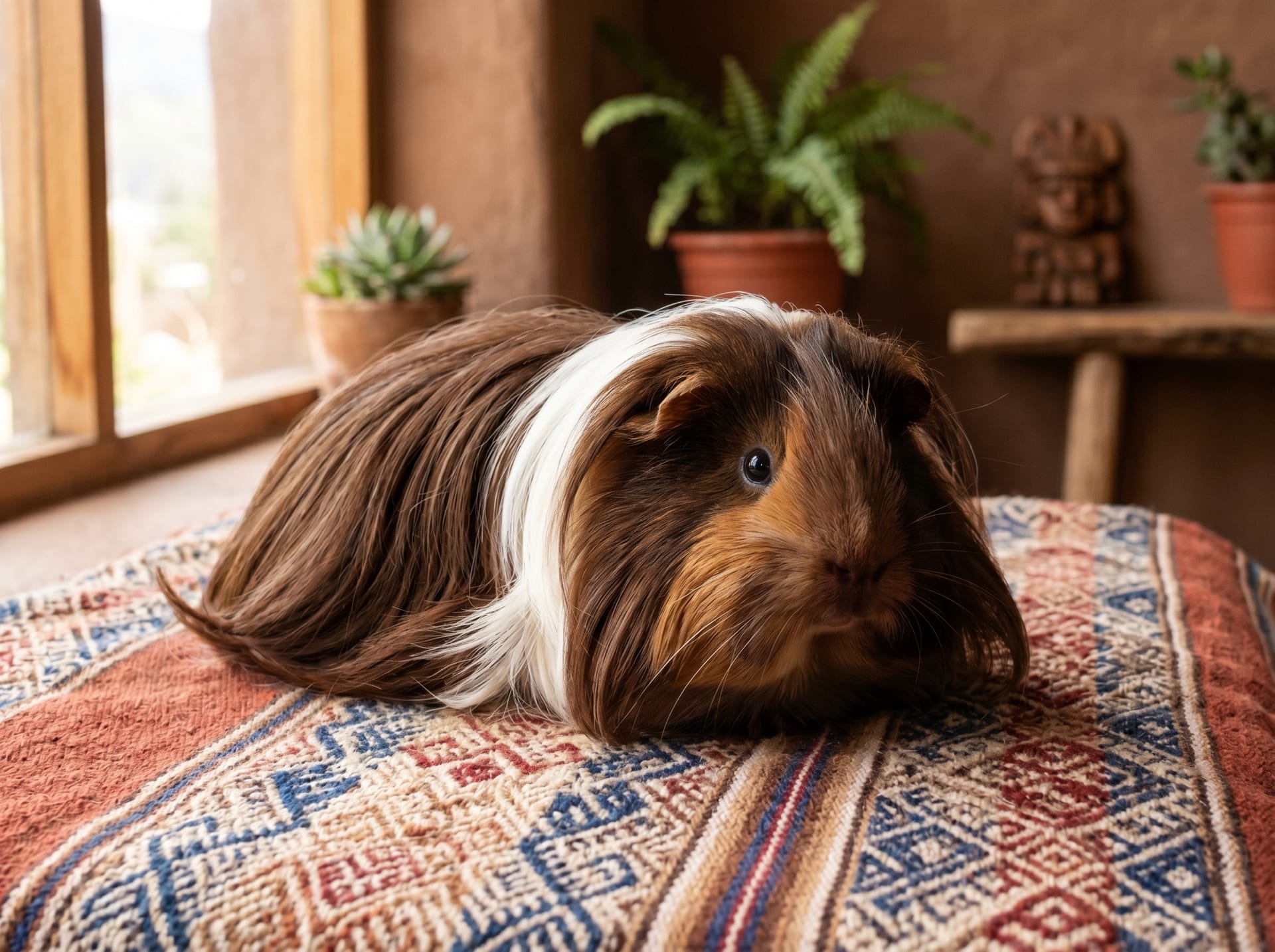
The oldest long-haired guinea pig breed. Coat grows 30cm+, daily brushing required, trimming every 3–4 months. 20–30cm, 5–7yr lifespan, 18–26°C. Gentle temperament; watch for fur impaction and vitamin C deficiency.
Difficulty
Advanced
Temperature
18〜26℃
Lifespan
5-7 years
Size
20-30cm / 900-1400g
Humidity
40〜60%
Diet
Timothy hay (staple), pellets, vitamin C-rich vegetables
About
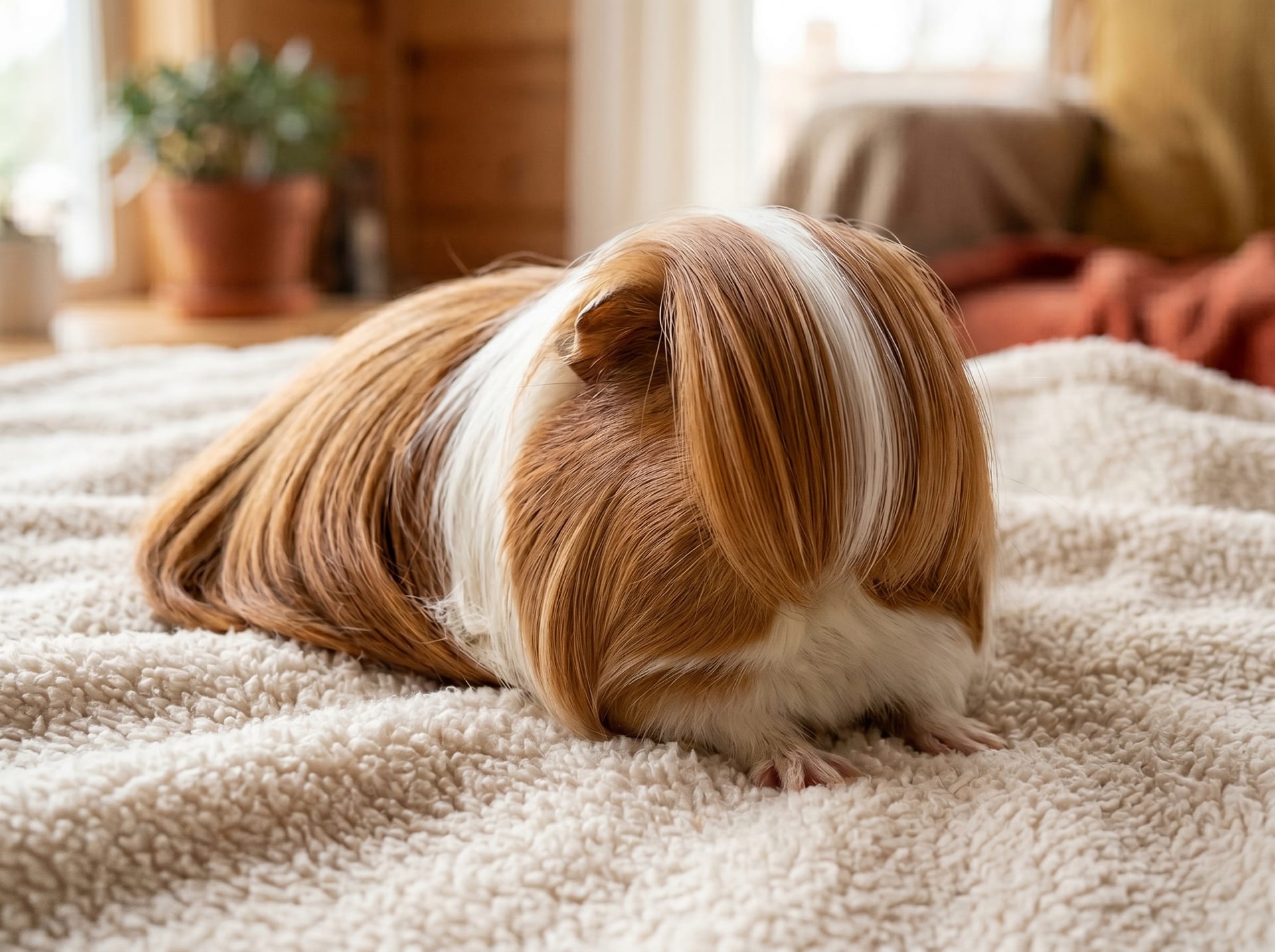
The Peruvian guinea pig is widely regarded as the oldest long-haired guinea pig breed, believed to have originated in Peru. Their coat is extraordinarily long—sometimes exceeding 30 cm—and grows forward over the head, giving the animal an appearance that is almost entirely hidden by flowing hair. Multiple color varieties exist, including solid, bicolor, and tricolor combinations. Despite their exotic appearance, Peruvians are known for their gentle, sociable temperament. However, their coat demands significant daily care: thorough brushing every day is required to prevent severe matting, and trimming every 3–4 months is strongly recommended. Like all guinea pigs, they require daily vitamin C supplementation. Common health issues include scurvy, fur impaction, dermatitis, and dental disease. Prices typically run 50,000-100,000 yen—higher than common short-haired guinea pigs (1,000-5,000 yen) because of the long coat. Availability is limited, and bloodlines with fine coat quality and color cost more from breeders. They are often compared with the Sheltie (Silkie): the Peruvian's coat sweeps forward over the head and hides the face, while the Sheltie's coat sweeps backward leaving the face visible. Grooming is far more demanding than for short-haired or curly breeds like the Teddy or Abyssinian, making them better suited to intermediate-to-advanced keepers. They are gentle and become well socialized through daily brushing, but since their vision is often obscured by coat, approaching slowly so as not to startle them is the key to taming.
Lifespan of the Peruvian Guinea Pig
The Peruvian Guinea Pig lives 5-7 years.
Lifespan is 5–7 years.
Size of the Peruvian Guinea Pig
The Peruvian Guinea Pig grows to 20-30cm / 900-1400g.
Adults measure 20–30 cm and weigh 900–1,400 g.
Basic Info
Origin
Care Specifications
Group
Sources: RWAF Guinea Pig companionship
References & Sources
Edited & verified by: BreederDirect editorial team
The taxonomic, regulatory, and husbandry data on this page are compiled and verified against the authoritative primary sources below.
Primary sources
Taxonomy & Authority
Accepted name: Cavia porcellus Linnaeus, 1758
Authority databases: GBIF
Nomenclature follows global taxonomic authority databases.
Regulations & Conservation Status
Not CITES-listed
Sources: CITES Appendices
Regulations may change. Always verify the latest information with the relevant authorities.
Peruvian Guinea Pig Listings
Loading latest listingsFind listings for this species