Source: Wikimedia Commons
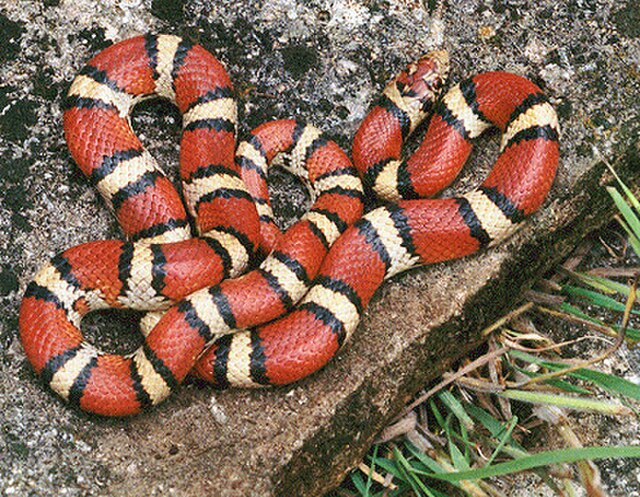
Milk Snake
BeginnerLampropeltis triangulum
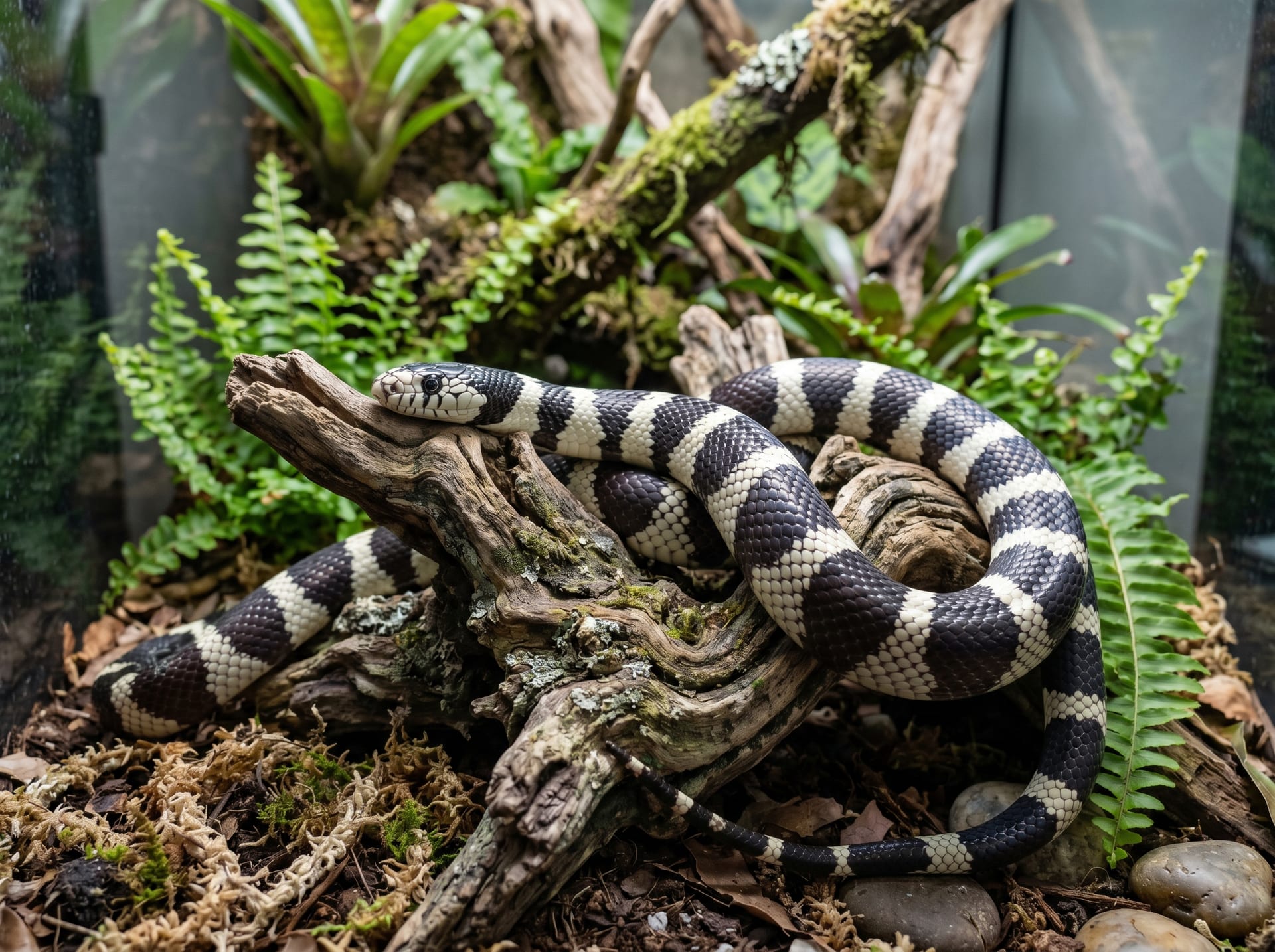
Beautiful snake with vivid red, black, and white/yellow banding. Related to kingsnakes, docile and easy to keep.
Difficulty
Beginner
Temperature
24〜28℃
Lifespan
12-20 years
Size
60-130cm
Humidity
40〜60%
Diet
Frozen mice
About
The milk snake or milksnake, is a species of kingsnake; there were once up to 24 subspecies recognized, however fewer are officially recognized today. Lampropeltis elapsoides, the scarlet kingsnake, was formerly classified as a 25th subspecies, but is now recognized as a distinct species. The previously delineated subspecies have strikingly different appearances, and many of them have their own common names. Morphological and genetic data suggest that this species could be split into several separate species, and it has been by several authorities. Lampropeltis gentilis, Lampropeltis annulata, Lampropeltis abnorma, Lampropeltis polyzona, and Lampropeltis micropholis have been elevated to the species level. Milksnakes are not venomous.
Source: Wikipedia (CC BY-SA 4.0)
Lifespan of the Milk Snake
The Milk Snake lives 12-20 years.
Size of the Milk Snake
The Milk Snake grows to 60-130cm.
Temperature & humidity for the Milk Snake
The ideal temperature for the Milk Snake is 24〜28℃. Ideal humidity is 40〜60%.
Basic Info
Origin
North America to Central America and northern South America
Lifespan
12-20 years
Size
60-130cm
Morphs (Varieties)
Milk Snake morphs (particularly Honduran) are centered around three recessive base genes—Albino, Anerythristic, and Hypo—with recessive combinations such as Snow (Albino + Anerythristic) and Ghost (Anerythristic + Hypo), as well as polygenic color-enhancement morphs like Tangerine Dream.
RecessiveVisual only with two copies; one copy = het (carrier).
Albino (Amelanistic)Albino TangerineAnerythristicHypomelanisticSnowGhostHybino
PolygenicContinuous trait from multiple genes; intensified by selective breeding.
Tangerine DreamStriped / Aberrant
Sources: Ultimate Exotics - Honduran Milk Snakes / Reptile Cymru - Honduran Milk Snake Care Guide
A curated selection of notable morphs. Inheritance modes are a breeding-planning guide; actual appearance varies with combos.
References & Sources
Edited & verified by: BreederDirect editorial team
The taxonomic, regulatory, and husbandry data on this page are compiled and verified against the authoritative primary sources below.
Taxonomy & Authority
Accepted name: Lampropeltis triangulum (Lacépède, 1789)
Synonyms: Coluber doliatus Linnaeus, 1766, Coluber eximius Harlan, 1827, Coluber triangulum Lacépède, 1789, Lampropeltis amaura Cope, Lampropeltis doliata (Linnaeus, 1766), Lampropeltis doliata syspila (Cope, 1889)
Authority databases: GBIF · Reptile Database
Nomenclature follows global taxonomic authority databases.
Regulations & Conservation Status
Not CITES-listedIUCN LC · Least Concern
Sources: CITES Checklist (not listed) / IUCN Red List
Regulations may change. Always verify the latest information with the relevant authorities.
Milk Snake Listings
Loading latest listingsFind listings for this species