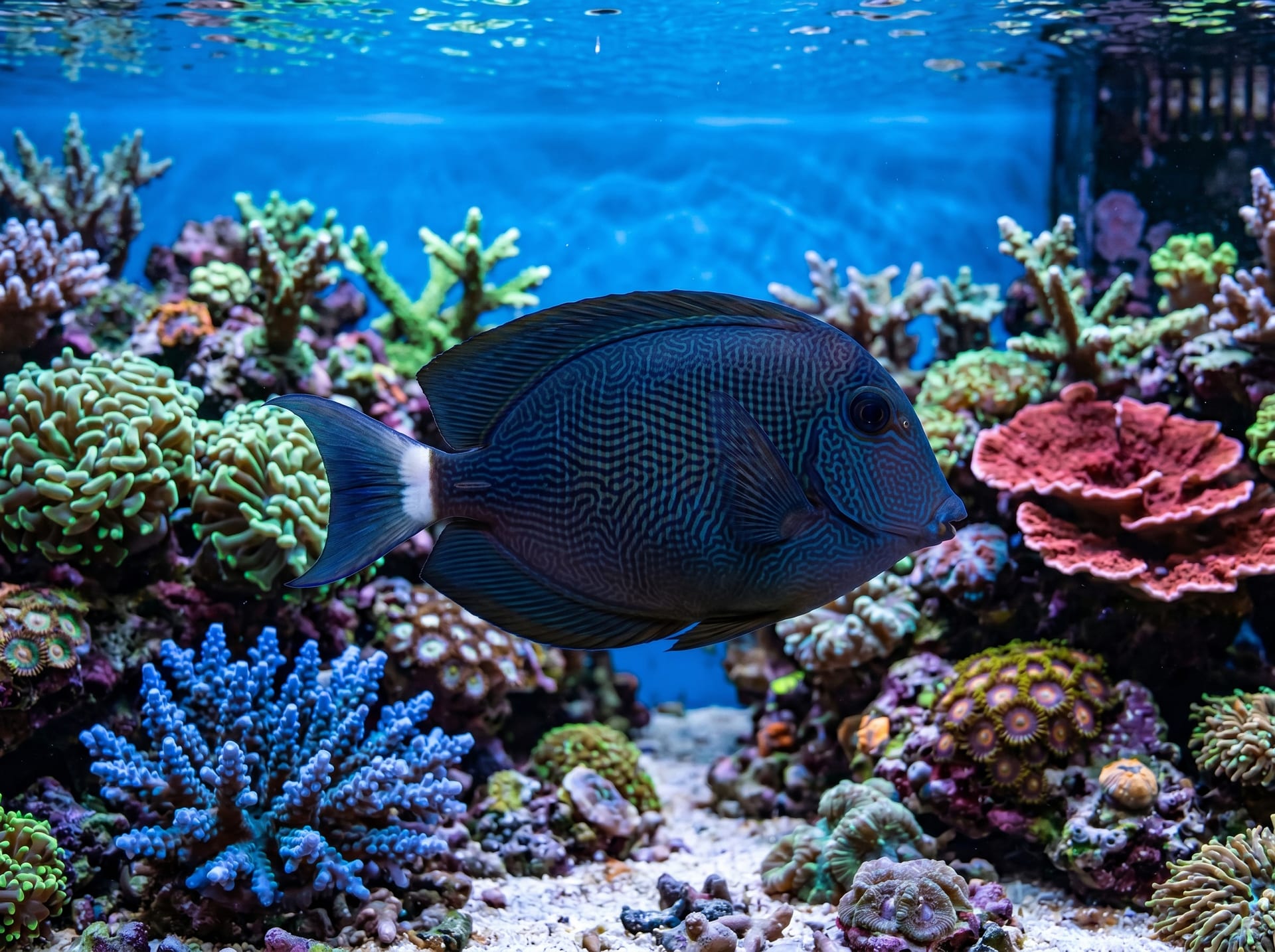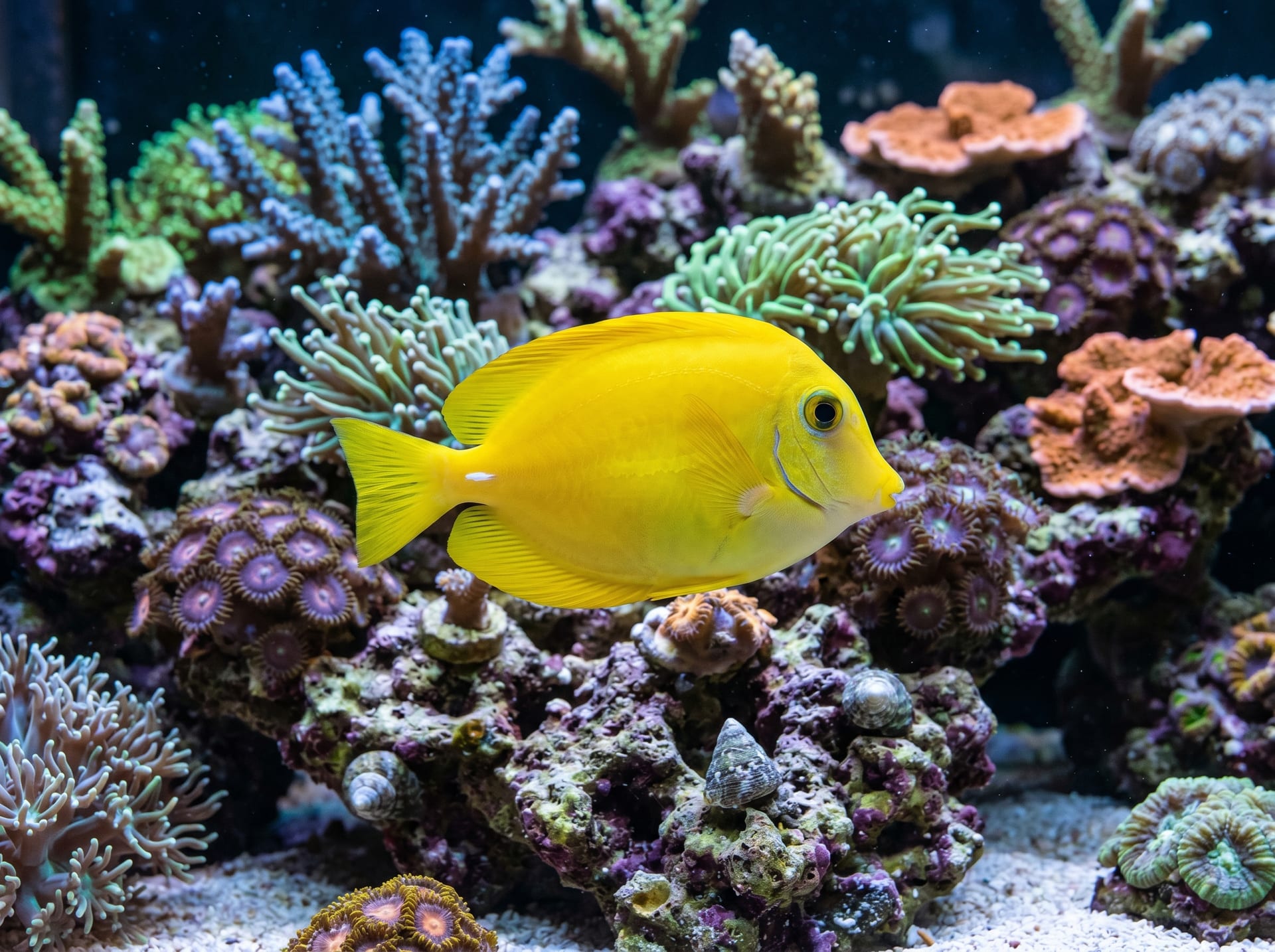
AI-generated image
Mimic Tang
BeginnerAcanthurus pyroferus
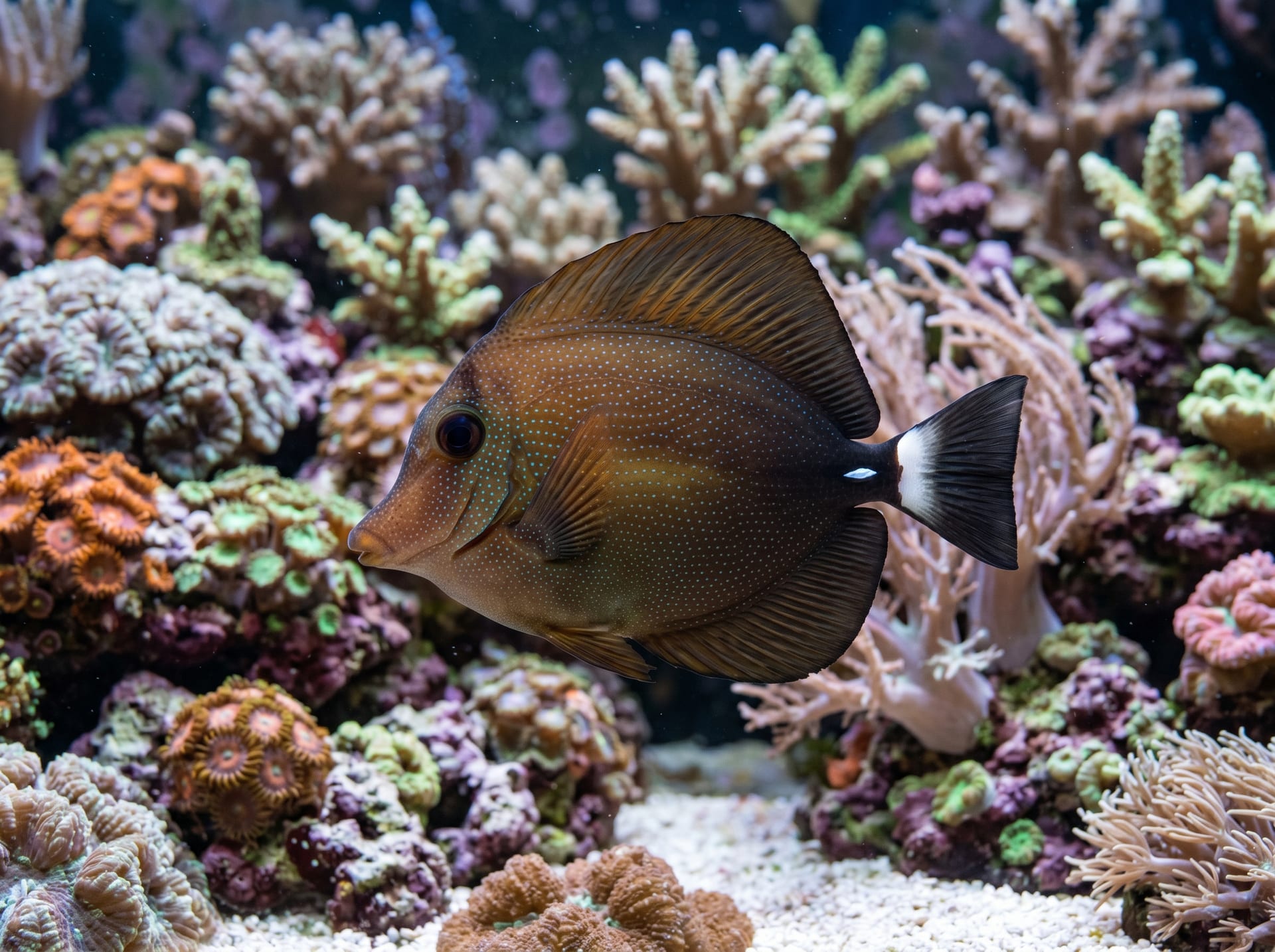
Fascinating tang that mimics angelfish (Lemonpeel, Eibl's) as juveniles. Adults turn olive-brown. Hardy and practical algae grazer.
Difficulty
Beginner
Temperature
24〜27℃
Lifespan
10-15 years
Size
18-25cm
Diet
Herbivorous omnivore (seaweed, algae, frozen food)
About
The mimic tang (Acanthurus pyroferus) is a surgeonfish of the family Acanthuridae found across the Indian and Pacific Oceans. It is known for mimicking pygmy angelfishes such as the lemonpeel and the half-black angelfish during its juvenile stage, an intriguing strategy to deceive predators that gives the species its name. As it matures it changes to a subdued olive, brownish, or grayish coloration. A largely herbivorous omnivore, it feeds mainly on algae growing on rock and live rock, making it a practical algae-grazer for the aquarium. Hardy and easy to keep, it nonetheless needs ample swimming space as an active swimmer and may quarrel over territory with congeners or similarly colored fish.
Source: Wikipedia (CC BY-SA 4.0)
Lifespan of the Mimic Tang
The Mimic Tang lives 10-15 years.
Size of the Mimic Tang
The Mimic Tang grows to 18-25cm.
Temperature & humidity for the Mimic Tang
The ideal temperature for the Mimic Tang is 24〜27℃.
Basic Info
Origin
Coral reefs of the Indian and Pacific Oceans
Lifespan
10-15 years
Size
18-25cm
Care Specifications
- pH
- 8.1–8.4
- Water Temp.
- 24–27℃
- Specific Gravity
- 1.02–1.025
- Salinity
- 33–35 ppt
- Min. Tank
- 473 L
Semi-aggressiveReef safe
Sources: LiveAquaria
References & Sources
Edited & verified by: BreederDirect editorial team
The taxonomic, regulatory, and husbandry data on this page are compiled and verified against the authoritative primary sources below.
Taxonomy & Authority
Regulations & Conservation Status
Not CITES-listed
Sources: CITES Appendices (species not listed) / Ministry of the Environment Specified Animal List / Ministry of the Environment: List of Designated Invasive Species
Regulations may change. Always verify the latest information with the relevant authorities.
Mimic Tang Listings
Loading latest listingsFind listings for this species