Source: Wikimedia Commons
Platyodon Stag Beetle
IntermediateAegus platyodon
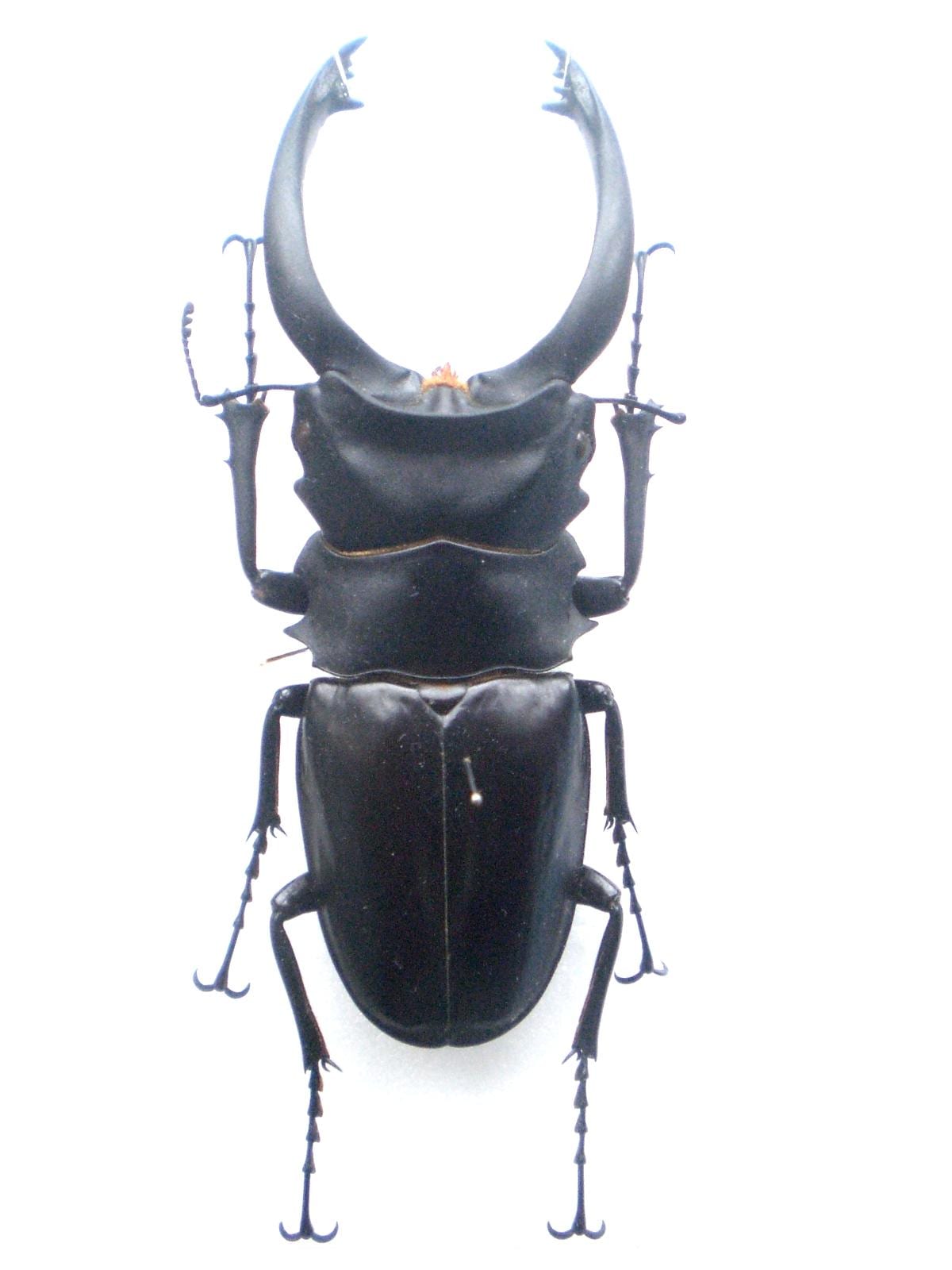
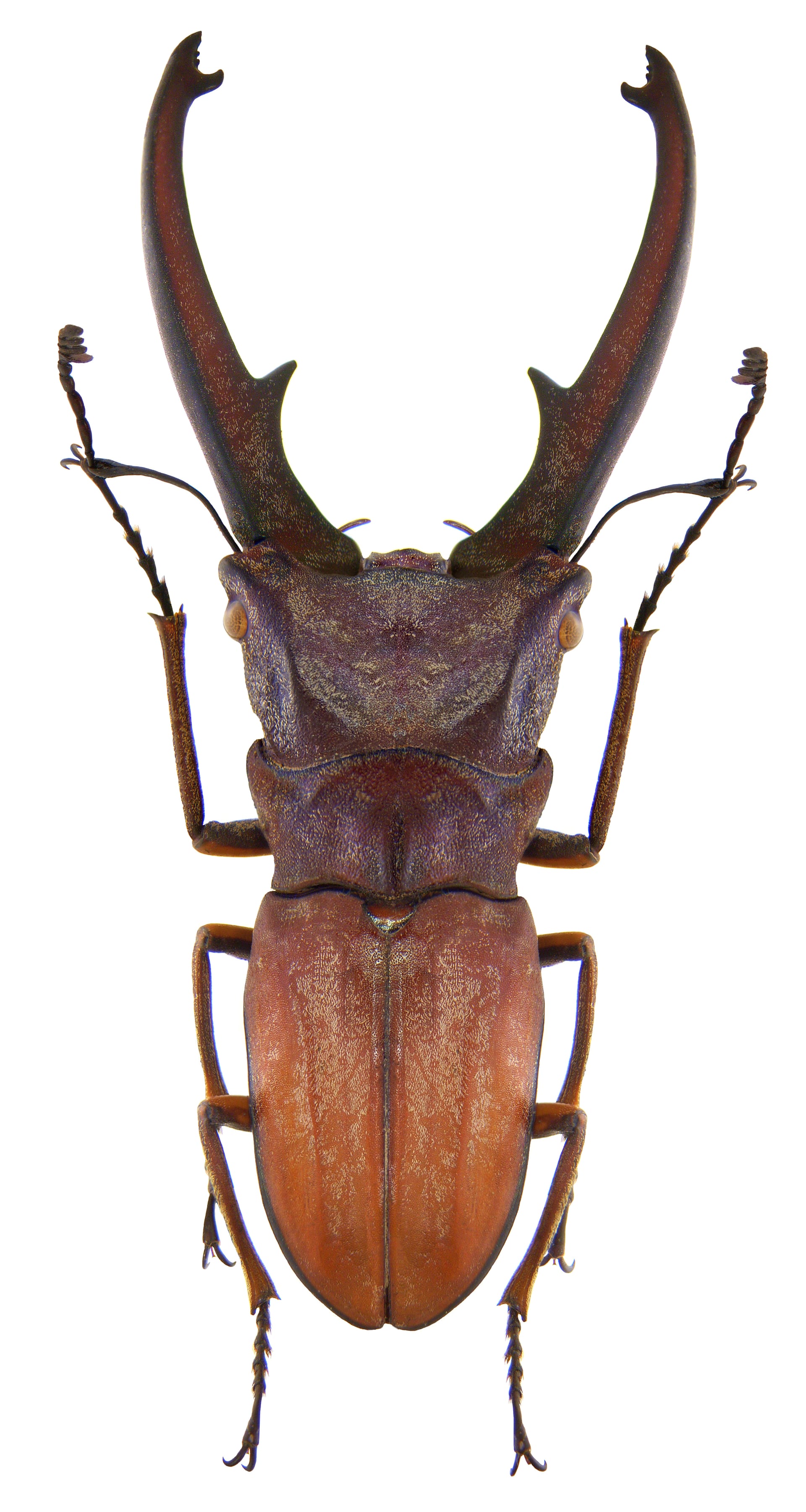
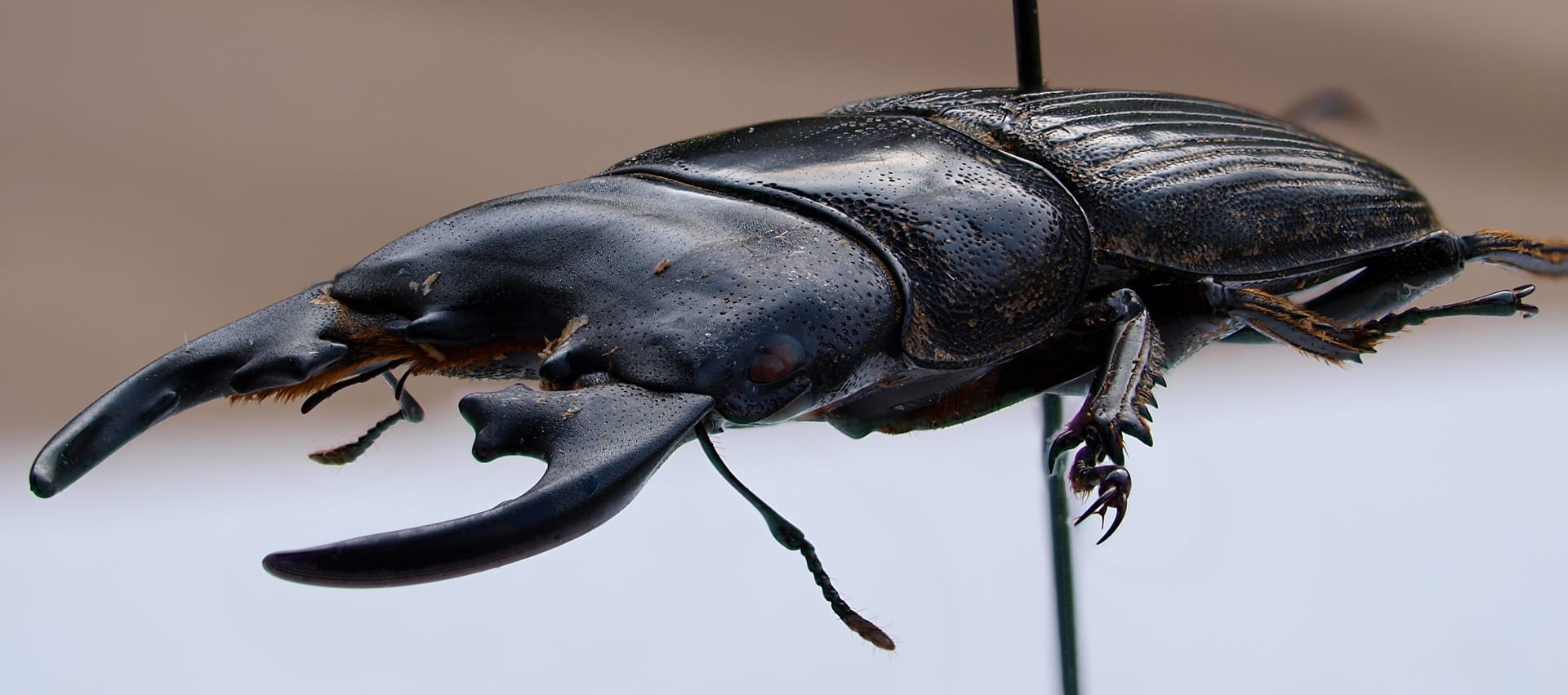
A large species of Aegus in which the male's mandibles carry a star-shaped inner tooth. It also shows the marks of the genus, thick longitudinal ridges on the elytra and a stout mandible base.
Difficulty
Intermediate
Temperature
20〜28℃
Lifespan
One to several months after leaving the wood
Size
Captive records 57.3mm for the nominate form and 56.8mm for leopoldi (wild records 51.2mm and 54.5mm)
Humidity
60〜80%
Diet
Adults take tree sap and beetle jelly; larvae eat the soil-like humus produced by termites
About
Aegus platyodon is a large member of Aegus found in the Moluccas, the Kai islands and New Guinea, distinguished by the star-shaped inner tooth on the male's mandibles. The genus is named for the thick longitudinal ridges on the elytra and the stout base of the mandibles. It ranges from Southeast Asia into East Asia and the Pacific islands, and among more than two hundred species, nearly all black and most only 10 to 20 mm long, this one counts as large. Ecologically the genus belongs to a lineage that evolved to feed its larvae on soil-like rotten wood, broken down by termites and enriched in nitrogen compounds. What the larvae eat is therefore less the wood itself than the earthy humus the termites leave behind, so the original tree species matters little. Because termite activity is essential, the beetles are fussy about which wood they will breed in and are said to be collectable only in particular places. Once the adults leave the wood they live only one to several months.
Source: Wikipedia (CC BY-SA 4.0)
Size of the Platyodon Stag Beetle
The Platyodon Stag Beetle grows to Captive records 57.3mm for the nominate form and 56.8mm for leopoldi (wild records 51.2mm and 54.5mm).
Basic Info
Origin
The Moluccas, the Kai islands and New Guinea
Lifespan
One to several months after leaving the wood
Size
Captive records 57.3mm for the nominate form and 56.8mm for leopoldi (wild records 51.2mm and 54.5mm)
Temperature
20〜28℃
Care Specifications
Breeding Records & Localities
Captive record (♂)
57.3 mm
Wild record (♂)
51.2 mm
Record source: BE-KUWA 2025 edition, captive records for imported stag beetles (platyodon nominate: captive 57.3 mm, Takeshi Hashimoto, registered 2011, wild 51.2 mm, expected maximum 62 mm; subspecies leopoldi: captive 56.8 mm, Takashi Hanafusa, registered 2021, wild 54.5 mm, expected maximum 62 mm)
Notable localities
MoluccasKai islandsNew Guinea
Regional subspecies
- Aegus platyodon platyodon(The nominate form of this entry) — Moluccas, Kai islands, New Guinea
- Aegus platyodon leopoldi — Moluccas; traded as a separate line
Generation codes
- WD
- Wild-caught
- WF1
- Offspring of a wild-caught female
- F1〜
- Captive generations (same locality)
- CBF1
- Cross-locality captive-bred (reset)
Sources:
References & Sources
Edited & verified by: BreederDirect editorial team
The taxonomic, regulatory, and husbandry data on this page are compiled and verified against the authoritative primary sources below.
Taxonomy & Authority
Accepted name: Aegus platyodon Parry, 1862
Synonyms: Aegus platyodon leopoldi
Authority databases: GBIF
Nomenclature follows global taxonomic authority databases.
Regulations & Conservation Status
Not CITES-listed
Plant Protection Act: When importing live specimens of Scarabaeoidea (including rhinoceros beetles, stag beetles, flower beetles, etc.), a species identification certificate issued by the exporting country government agency or equivalent must be attached in accordance with the Invasive Species Act (import ports are limited to Narita, Chubu, Kansai, Fukuoka, and Kagoshima airports). This species itself is not a designated invasive species, and import is possible upon submission of the certificate.
Sources: Ministry of the Environment, Invasive Species Act: "Guidance for Those Importing Live Insects in Scarabaeoidea" / CITES Appendix (checklist.cites.org)
Regulations may change. Always verify the latest information with the relevant authorities.
Platyodon Stag Beetle Listings
Loading latest listingsFind listings for this species