Source: Wikimedia Commons
Five-horned Beetle
IntermediateEupatorus gracilicornis
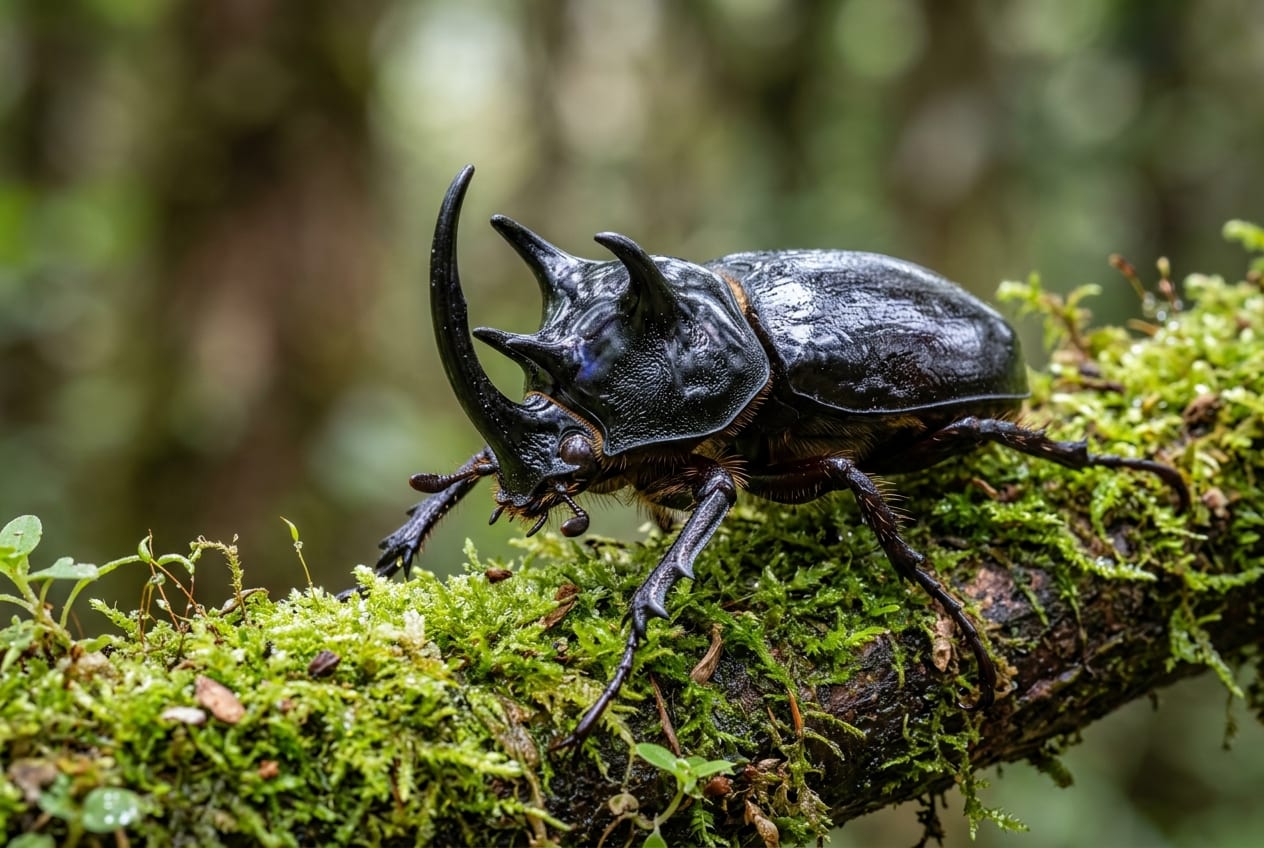
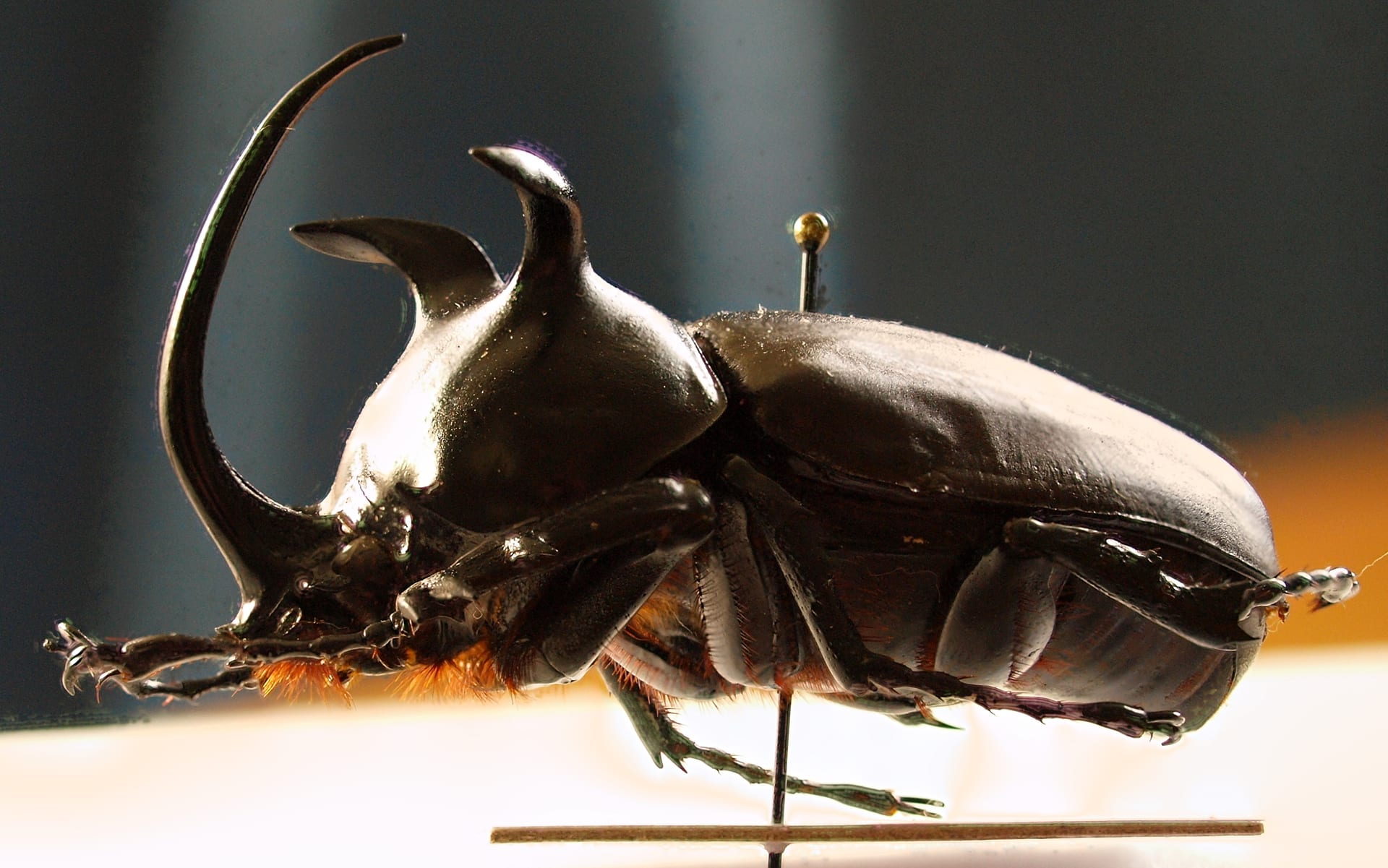
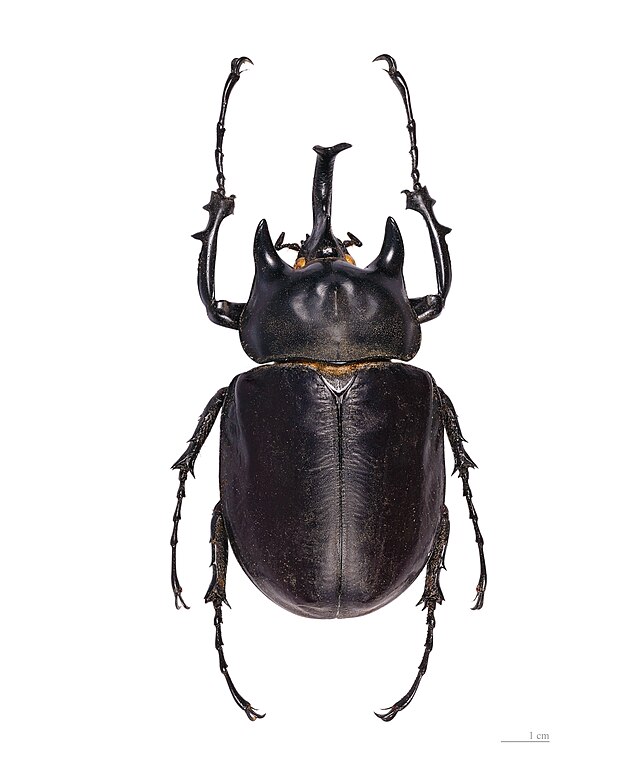
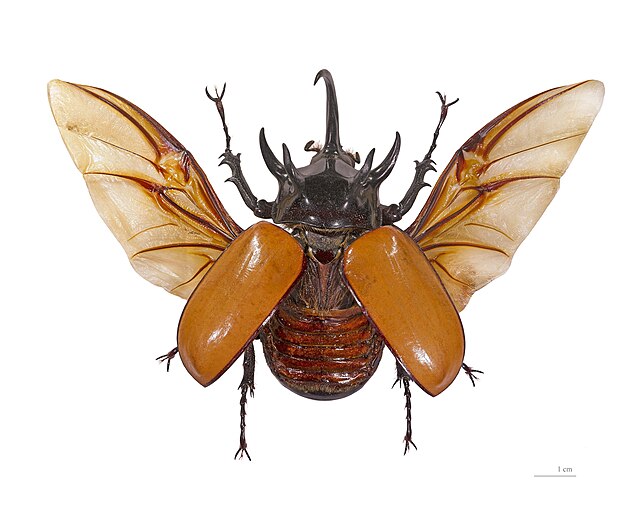
A rhinoceros beetle of mainland Southeast Asia with five horns: one long horn on the head and four on the pronotum. The elytra are cream to yellow. It is the largest member of its genus, with males exceeding 60 mm, and despite the impressive horns it is docile.
Difficulty
Intermediate
Temperature
22〜27℃
Lifespan
Adult 3-6 months, larva 6-10 months
Size
Male 60-96.5mm, female 35-55mm
Humidity
60〜80%
Diet
Beetle jelly (adult), fermented substrate (larva)
About
The five-horned rhinoceros beetle (Eupatorus gracilicornis) is a dynastine beetle ranging from Assam in northeast India through Indochina to southern China, described by Arrow in 1908. It has been recorded from China, India, Myanmar, Thailand, Cambodia, Laos, Vietnam and Malaysia. Males carry five horns, one long horn on the head and four on the pronotum, which give the species both its Japanese and English names. The body is glossy black and the elytra of both sexes are cream to yellow. It is the largest species in the genus Eupatorus, with males reported at 60-96.5 mm and females at 35-55 mm, and Thai specimens tend to be larger. It is common in bamboo groves, feeding on the sap of young bamboo shoots as well as tree sap and fruit, and adults appear in autumn (around September). Despite the impressive horns it is docile and not combative. Adults are short-lived, from a few months to about half a year. In captivity it breeds and its larvae can be reared in fermented substrate, and adults are fed beetle jelly.
Lifespan of the Five-horned Beetle
The Five-horned Beetle lives Adult 3-6 months, larva 6-10 months.
Size of the Five-horned Beetle
The Five-horned Beetle grows to Male 60-96.5mm, female 35-55mm.
Temperature & humidity for the Five-horned Beetle
The ideal temperature for the Five-horned Beetle is 22〜27℃.
Basic Info
Origin
Northeast India (Assam) through Indochina to southern China
Lifespan
Adult 3-6 months, larva 6-10 months
Breeding Records & Localities
Captive record (♂)
96.5 mm
Record source: BE-KUWA 2025 edition (Gohontsuno-Purandi captive 96.5 mm Ryo Miura 2021, total length = including horns)
Notable localities
ThailandMyanmarSouthern ChinaIndochina
Regional subspecies
- Eupatorus gracilicornis gracilicornis(nominate subspecies)
- Eupatorus gracilicornis prandii — (large subspecies)
Five-horned rhinoceros beetle (Eupatorus gracilicornis, not Golofa). Captive breeding records: Pluandi 96.5 / nominate subspecies 93.4 mm. Records measure total length including horns. Captive records are updated annually through the BE-KUWA (Mushi-sha) contest. Individual value varies significantly based on locality, generation (CBF/WF/WD), and size.
Generation codes
- WD
- Wild-caught
- WF1
- Offspring of a wild-caught female
- F1〜
- Captive generations (same locality)
- CBF1
- Cross-locality captive-bred (reset)
Sources:
References & Sources
Edited & verified by: BreederDirect editorial team
The taxonomic, regulatory, and husbandry data on this page are compiled and verified against the authoritative primary sources below.
Taxonomy & Authority
Accepted name: Eupatorus gracilicornis Arrow, 1908
Authority databases: GBIF
Nomenclature follows global taxonomic authority databases.
Regulations & Conservation Status
Not CITES-listed
Plant Protection Act: When importing live specimens of Scarabaeoidea (including rhinoceros beetles, stag beetles, flower beetles, etc.), a species identification certificate issued by the exporting country government agency or equivalent must be attached in accordance with the Invasive Species Act (import ports are limited to Narita, Chubu, Kansai, Fukuoka, and Kagoshima airports). This species itself is not a designated invasive species, and import is possible upon submission of the certificate.
Sources: Ministry of the Environment, Invasive Species Act: "Guidance for Those Importing Live Insects in Scarabaeoidea" / CITES Appendix (checklist.cites.org)
Regulations may change. Always verify the latest information with the relevant authorities.
Five-horned Beetle Listings
Loading latest listingsFind listings for this species