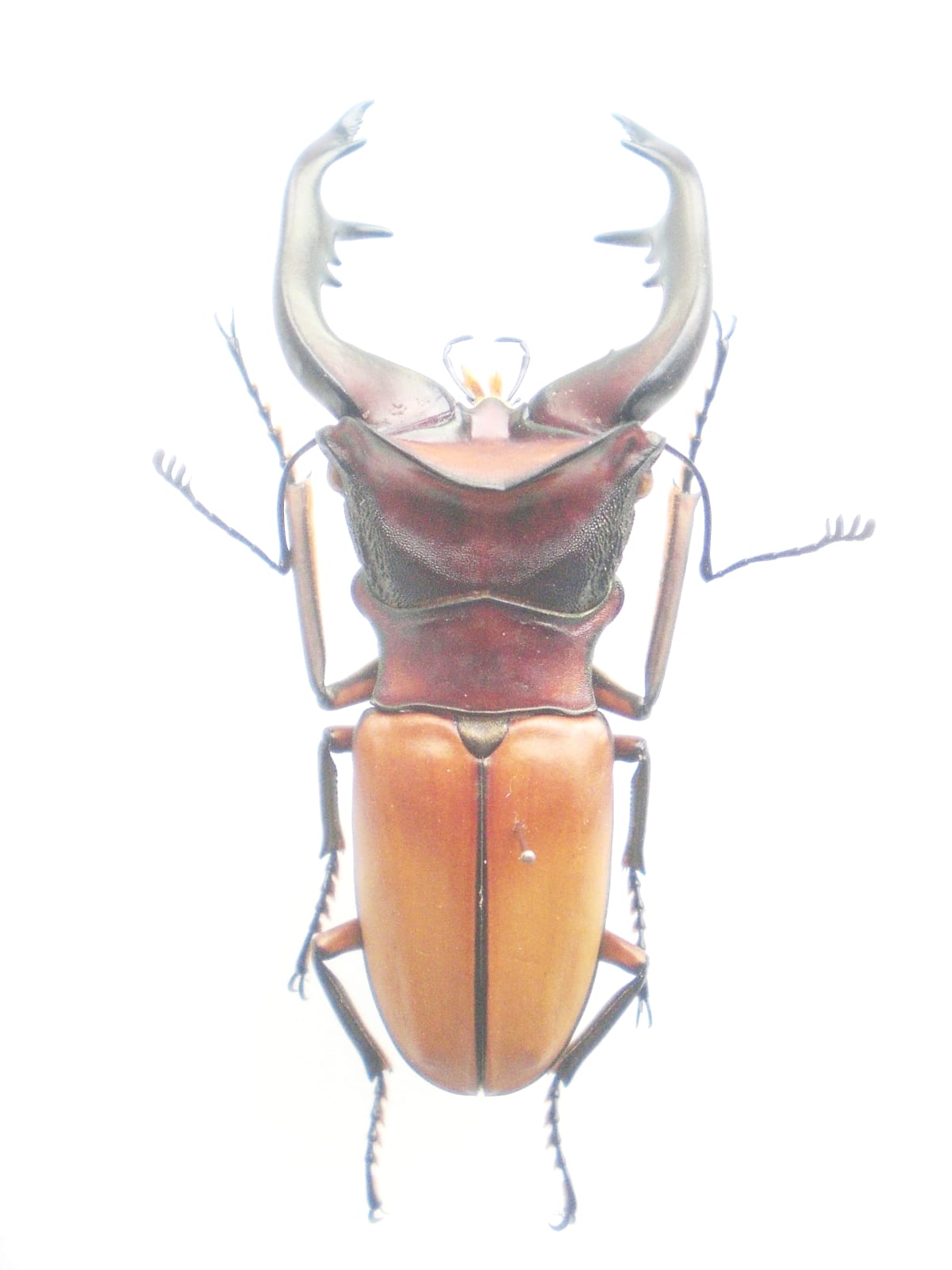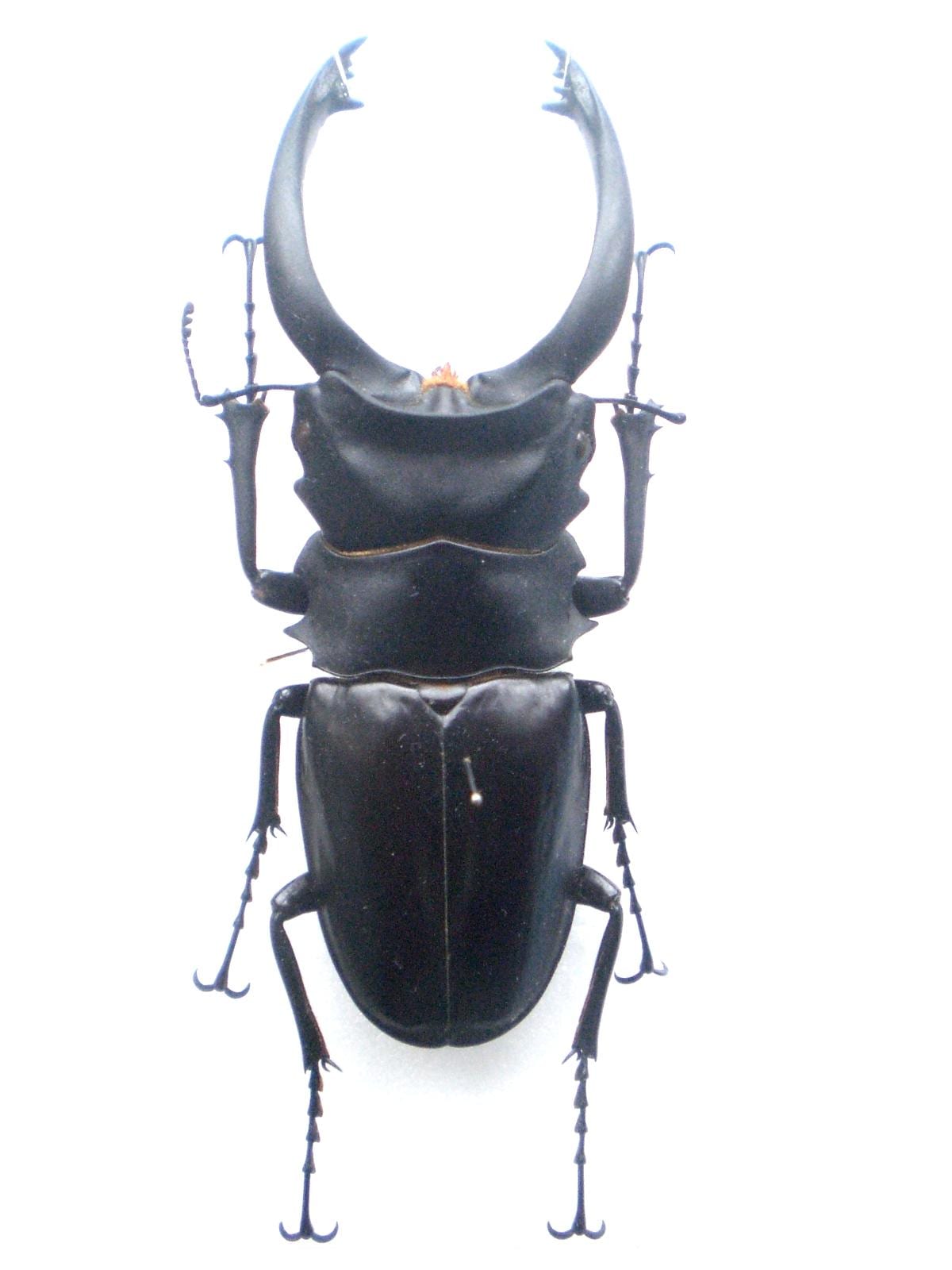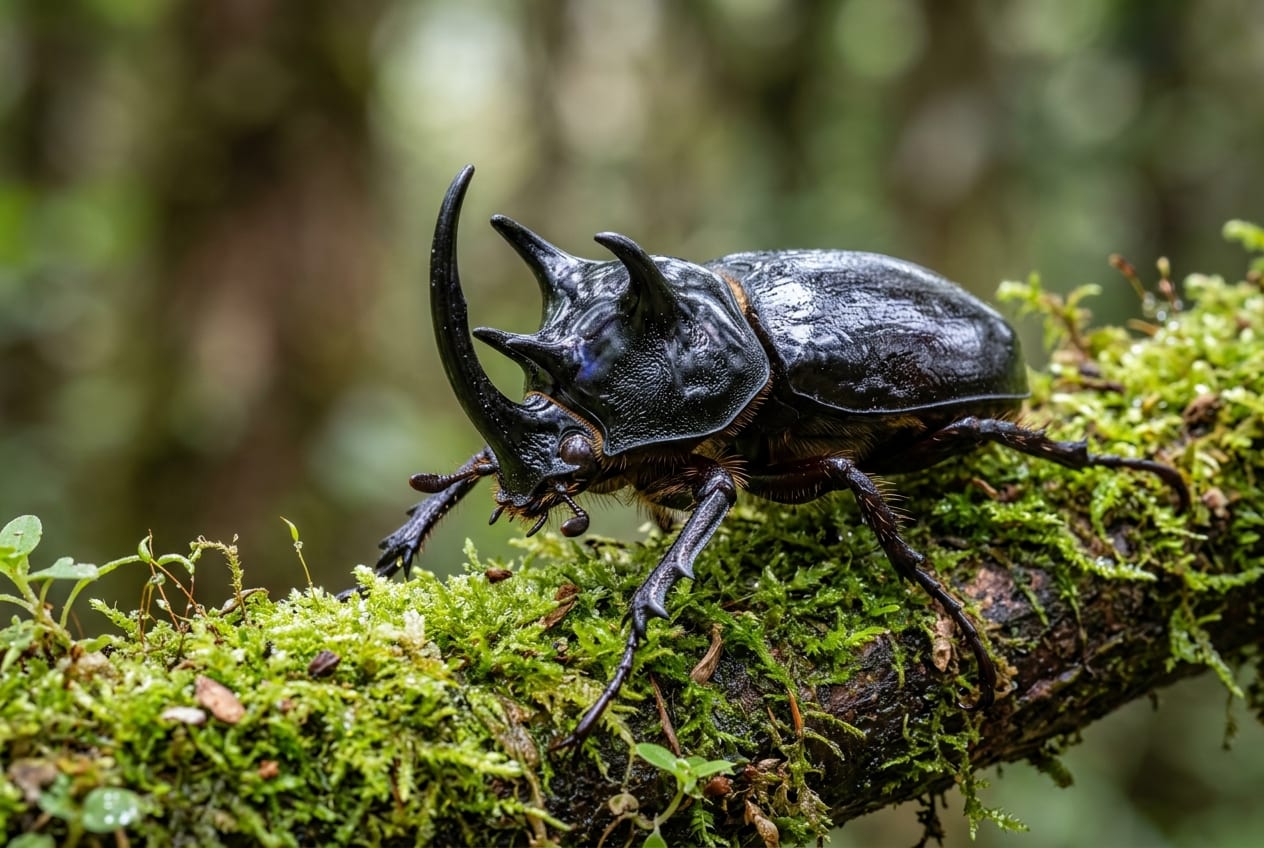
AI-generated image
Hardwicke's Five-horned Beetle
AdvancedEupatorus hardwickii
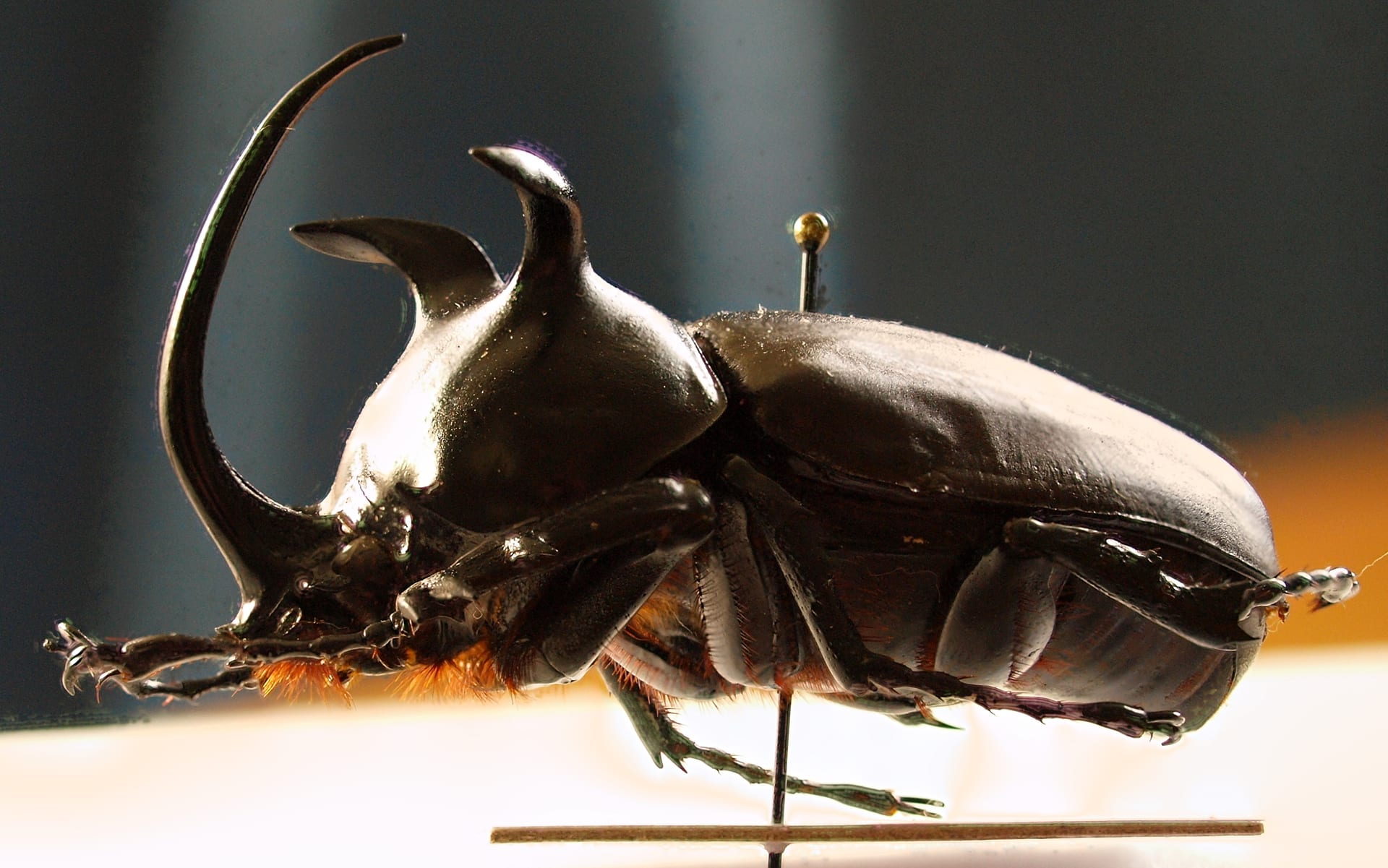
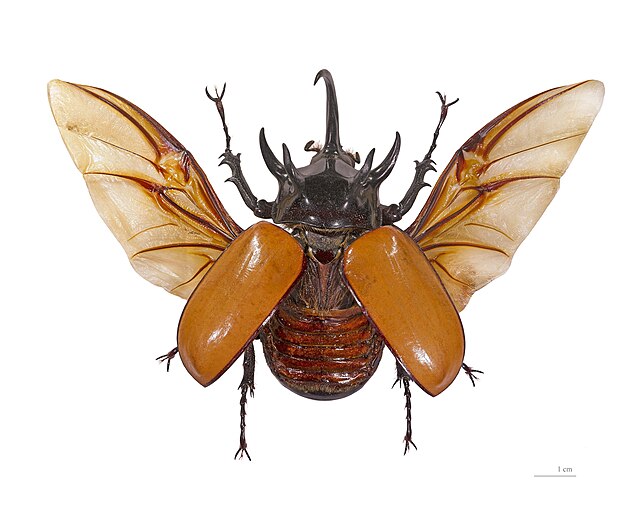
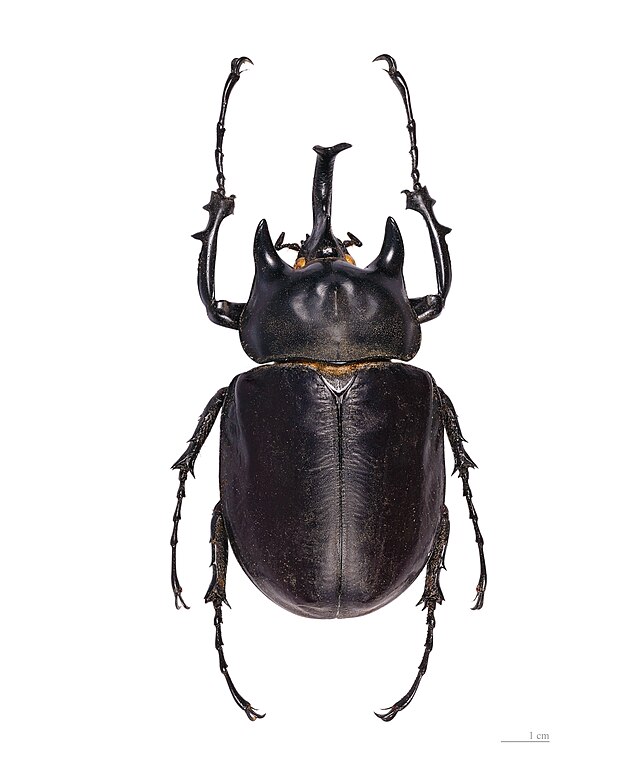
A small member of the five-horned beetle genus ranging from India along the southern Himalaya into south-western China. It carries the five horns of the genus. Freshly emerged adults are slow to become active, which makes it a hard beetle to breed on.
Difficulty
Advanced
Temperature
20〜28℃
Lifespan
Adults 3-5 months
Humidity
60〜80%
Diet
Sap of bamboo shoots, tree sap and fruit; beetle jelly
About
Eupatorus hardwickii was described by Hope in 1831; the Japanese Wikipedia calls it the small five-horned beetle. GBIF holds most records from India, followed by China, Bhutan and Nepal, while beetlebreeding.ch gives China and Myanmar. Like the rest of the genus it bears one horn on the head and four on the prothorax. Beetlebreeding.ch says it knows of no detailed breeding report and adds that the central problem with Eupatorus is obtaining an active F1: wild-caught females lay plenty of eggs and the larvae develop well over some eight months before pupating, but the beetles that emerge neither become active nor mate nor lay, instead entering a long dormancy. The species does not appear in the BE-KUWA certified records.
Source: Wikipedia (CC BY-SA 4.0)
Lifespan of the Hardwicke's Five-horned Beetle
The Hardwicke's Five-horned Beetle lives Adults 3-5 months.
Basic Info
Origin
South and East Asia (India, Nepal, Bhutan and south-western China, with records from Myanmar)
Lifespan
Adults 3-5 months
Temperature
20〜28℃
Humidity
60〜80%
Diet
Sap of bamboo shoots, tree sap and fruit; beetle jelly
Care Guide
Care Specifications
SolitaryBreeding: Very hard
Sources: Ben's Beetle Breeding Pages - Eupatorus hardwickei (range; the inactive-F1 problem; larval period) / GBIF species page for Eupatorus hardwickii (distribution and occurrence records by country) / Eupatorus - Wikipedia (JA; member species, Japanese names, bamboo-grove habits, horn arrangement) / Eupatorus - Wikipedia (EN; species list with authors and dates)
References & Sources
Edited & verified by: BreederDirect editorial team
The taxonomic, regulatory, and husbandry data on this page are compiled and verified against the authoritative primary sources below.
Primary sources
- Wikipedia
- Ministry of the Environment, Invasive Species Act: "Guidance for Those Importing Live Insects in Scarabaeoidea"
- CITES Appendix (checklist.cites.org)
- Ben's Beetle Breeding Pages - Eupatorus hardwickei (range; the inactive-F1 problem; larval period)
- GBIF species page for Eupatorus hardwickii (distribution and occurrence records by country)
- Eupatorus - Wikipedia (JA; member species, Japanese names, bamboo-grove habits, horn arrangement)
Taxonomy & Authority
Accepted name: Eupatorus hardwickii (Hope, 1831)
Synonyms: Eupatorus hardwickei (Hope, 1831)
Authority databases: GBIF
Nomenclature follows global taxonomic authority databases.
Regulations & Conservation Status
Not CITES-listed
Plant Protection Act: When importing live specimens of Scarabaeoidea (including rhinoceros beetles, stag beetles, flower beetles, etc.), a species identification certificate issued by the exporting country government agency or equivalent must be attached in accordance with the Invasive Species Act (import ports are limited to Narita, Chubu, Kansai, Fukuoka, and Kagoshima airports). This species itself is not a designated invasive species, and import is possible upon submission of the certificate.
Sources: Ministry of the Environment, Invasive Species Act: "Guidance for Those Importing Live Insects in Scarabaeoidea" / CITES Appendix (checklist.cites.org)
Regulations may change. Always verify the latest information with the relevant authorities.
Hardwicke's Five-horned Beetle Listings
Loading latest listingsFind listings for this species