Source: Wikimedia Commons
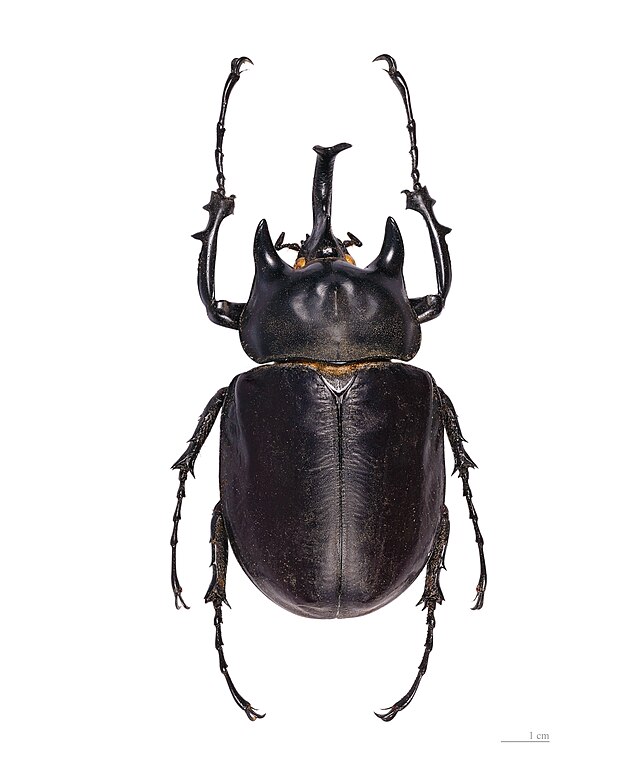
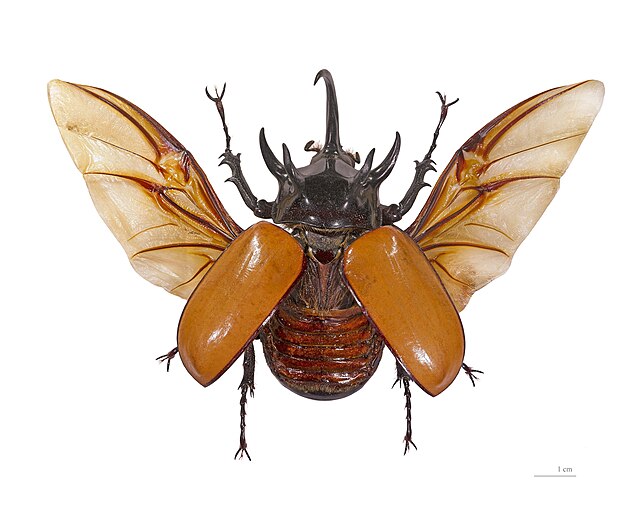
Five-horned Beetle
BeginnerEupatorus gracilicornis
Unique beetle with five horns on head and thorax. Southeast Asian origin. Relatively small and easy to keep.
Difficulty
Beginner
Temperature
22〜27℃
Lifespan
Adult 3-6 months, larva 6-10 months
Size
Up to 60mm
Humidity
60〜80%
Diet
Beetle jelly (adult), fermented substrate (larva)
About
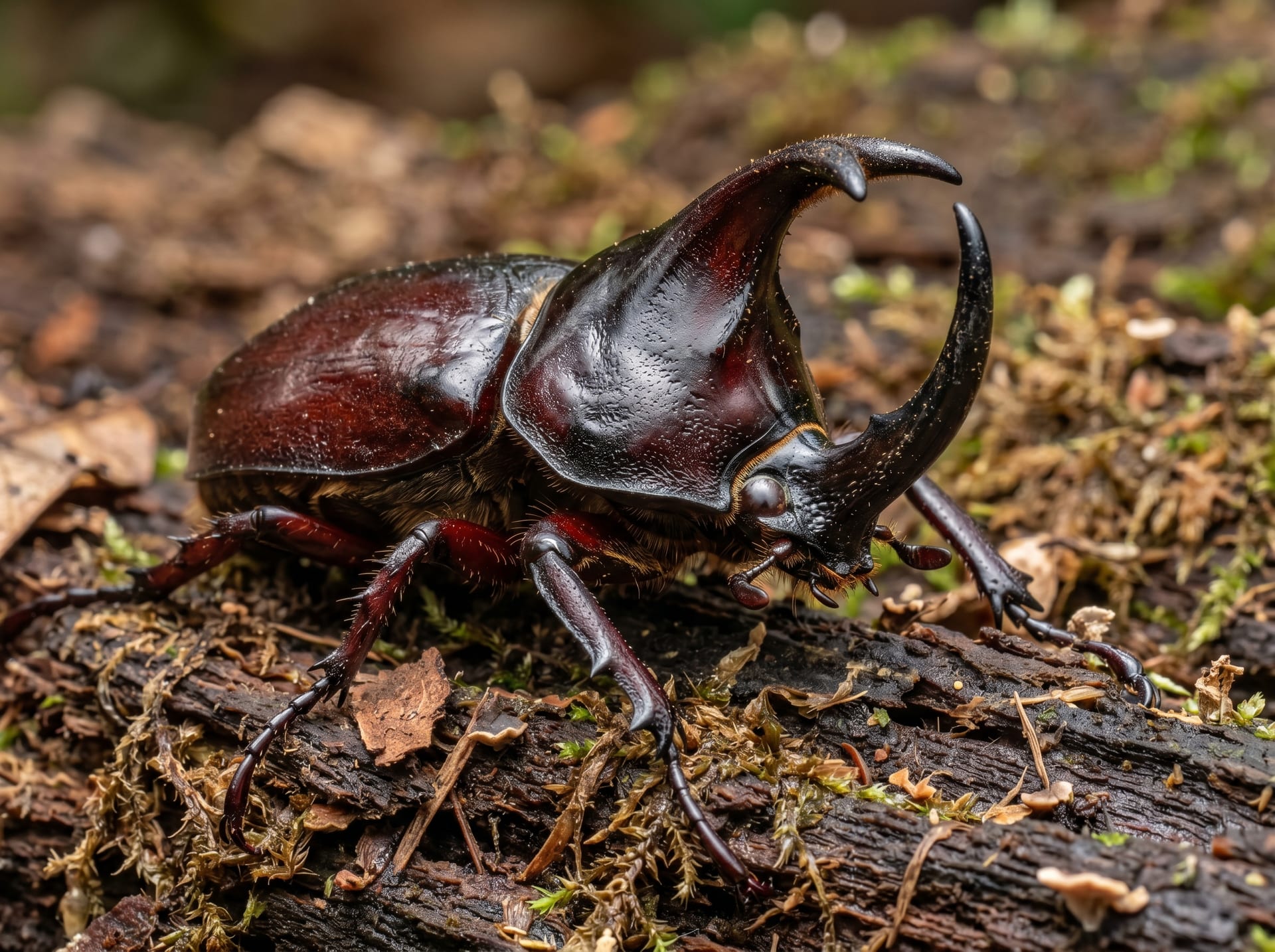
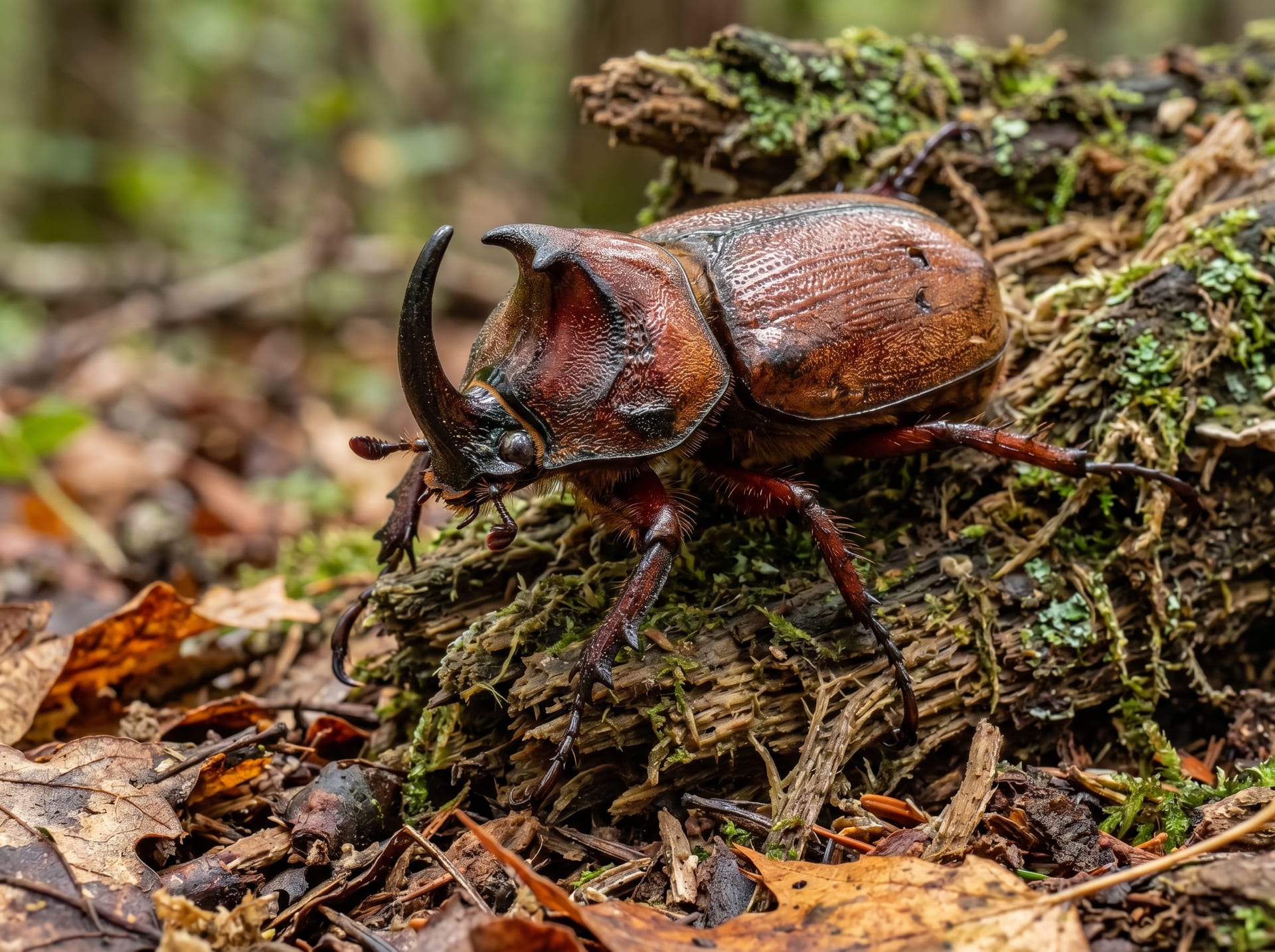
Beetles of the genus Golofa are mid-sized rhinoceros beetles native to the tropical rainforests of Central and South America. Males bear slender, elongated horns on both the head and thorax, giving them a distinctive silhouette unlike typical rhinoceros beetles. Golofa beetles are considered one of the more beginner-friendly exotic rhinoceros beetles, making them an excellent entry point into the hobby. Females lay eggs in fermented substrate; larvae develop over approximately 6–10 months. Adults eat beetle jelly and live 3–6 months. Their compact size, unusual horn shape, and straightforward care requirements make them popular among new beetle keepers.
Lifespan of the Five-horned Beetle
The Five-horned Beetle lives Adult 3-6 months, larva 6-10 months.
Size of the Five-horned Beetle
The Five-horned Beetle grows to Up to 60mm.
Body length reaches approximately 40–60 mm, and coloration is glossy black to dark brown.
Temperature & humidity for the Five-horned Beetle
The ideal temperature for the Five-horned Beetle is 22〜27℃.
Captive temperature of 22–27°C is appropriate, and a medium enclosure with fermented substrate is sufficient.
Basic Info
Origin
tropical rainforests of Central and South America
Lifespan
Adult 3-6 months, larva 6-10 months
Breeding Records & Localities
Captive record (♂)
96.5 mm
Record source: BE-KUWA 2025 edition (Gohontsuno-Purandi captive 96.5 mm Ryo Miura 2021, total length = including horns)
Notable localities
ThailandMyanmarSouthern ChinaIndochina
Regional subspecies
- Eupatorus gracilicornis gracilicornis(nominate subspecies)
- Eupatorus gracilicornis prandii — (large subspecies)
Five-horned rhinoceros beetle (Eupatorus gracilicornis, not Golofa). Captive breeding records: Pluandi 96.5 / nominate subspecies 93.4 mm. Records measure total length including horns. Captive records are updated annually through the BE-KUWA (Mushi-sha) contest. Individual value varies significantly based on locality, generation (CBF/WF/WD), and size.
Generation codes
- WD
- Wild-caught
- WF1
- Offspring of a wild-caught female
- F1〜
- Captive generations (same locality)
- CBF1
- Cross-locality captive-bred (reset)
Sources:
References & Sources
Edited & verified by: BreederDirect editorial team
The taxonomic, regulatory, and husbandry data on this page are compiled and verified against the authoritative primary sources below.
Taxonomy & Authority
Accepted name: Eupatorus gracilicornis Arrow, 1908
Authority databases: GBIF
Nomenclature follows global taxonomic authority databases.
Regulations & Conservation Status
Not CITES-listed
Plant Protection Act: When importing live specimens of Scarabaeoidea (including rhinoceros beetles, stag beetles, flower beetles, etc.), a species identification certificate issued by the exporting country government agency or equivalent must be attached in accordance with the Invasive Species Act (import ports are limited to Narita, Chubu, Kansai, Fukuoka, and Kagoshima airports). This species itself is not a designated invasive species, and import is possible upon submission of the certificate.
Sources: Ministry of the Environment, Invasive Species Act: "Guidance for Those Importing Live Insects in Scarabaeoidea" / CITES Appendix (checklist.cites.org)
Regulations may change. Always verify the latest information with the relevant authorities.
Five-horned Beetle Listings
Loading latest listingsFind listings for this species