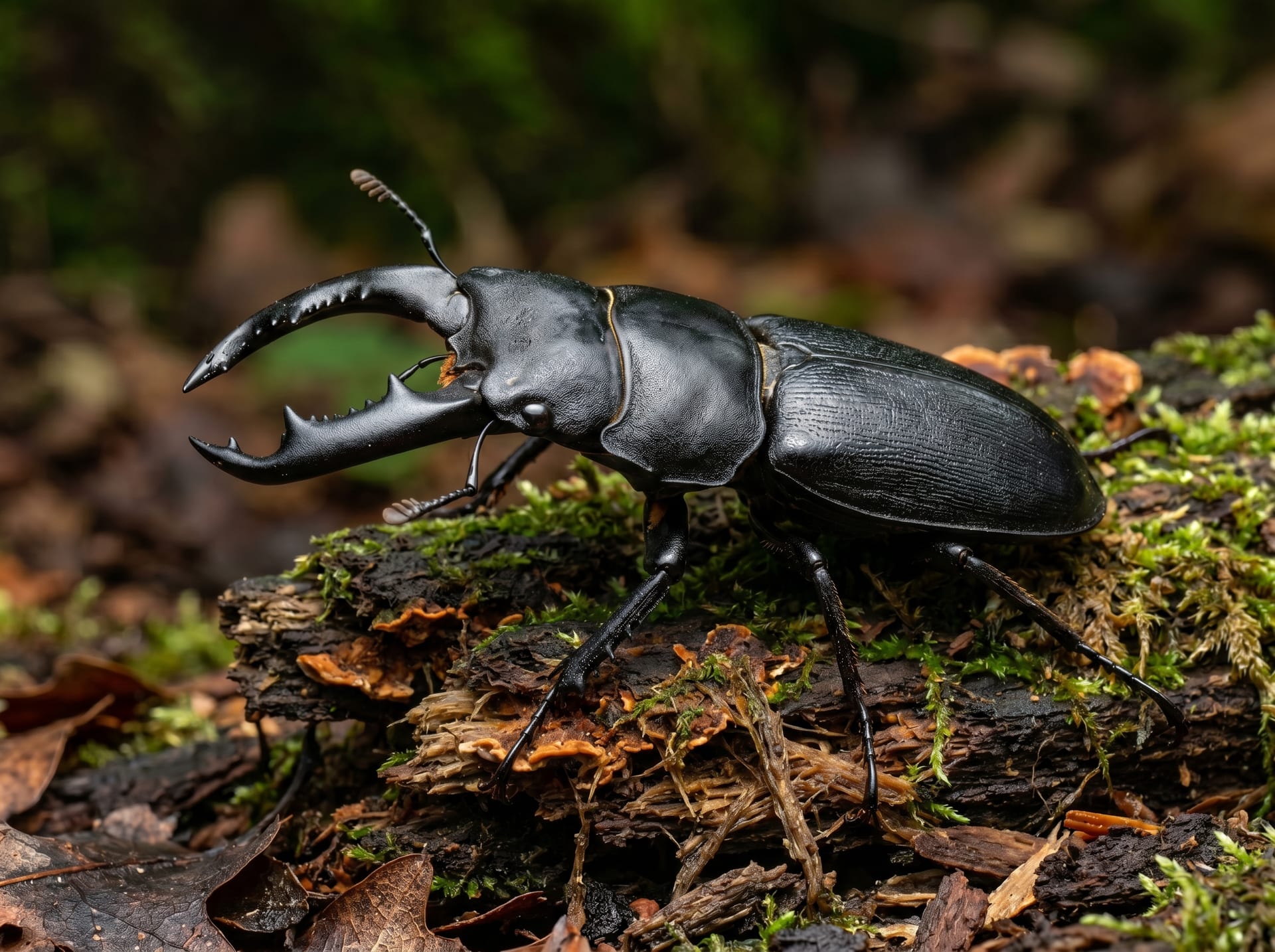
AI-generated image
Taiwanese Giant Stag Beetle
IntermediateDorcus grandis formosanus
A giant stag beetle endemic to Taiwan, treated as the Taiwanese subspecies of Dorcus grandis. Wild males measure about 38–78 mm, captive-reared males can exceed 80 mm, and it is kept in almost the same way as the Japanese giant stag beetle.
Difficulty
Intermediate
Temperature
18〜28℃
Lifespan
Adults 2–4 years
Size
Males 38–78 mm, females 35–48 mm
Humidity
60〜80%
Diet
Insect jelly
About
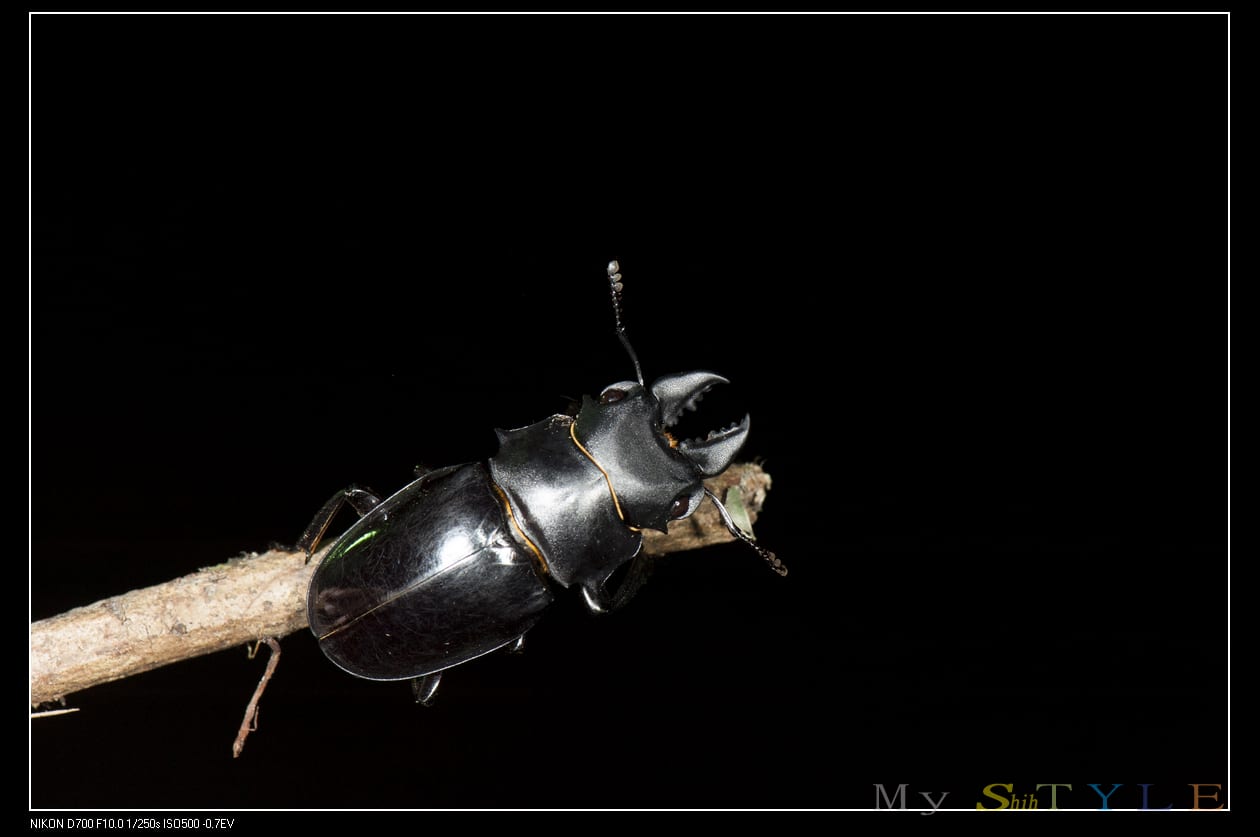
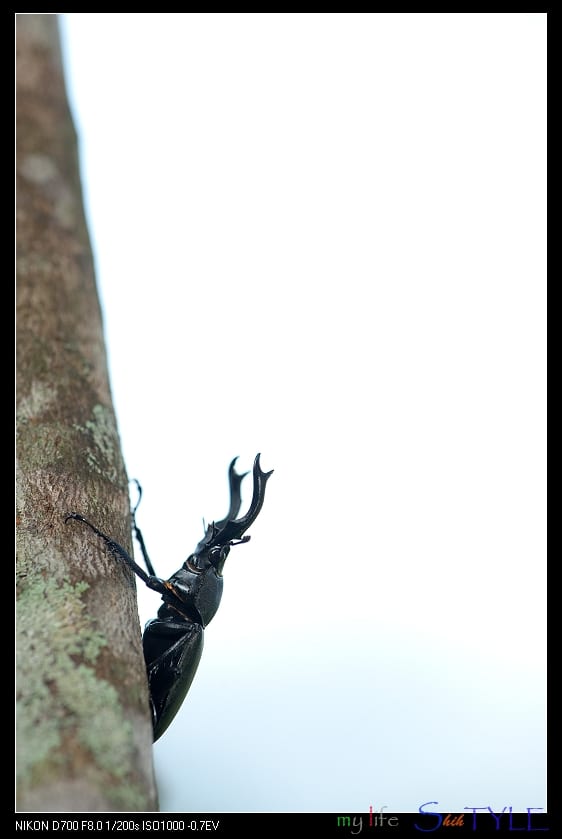
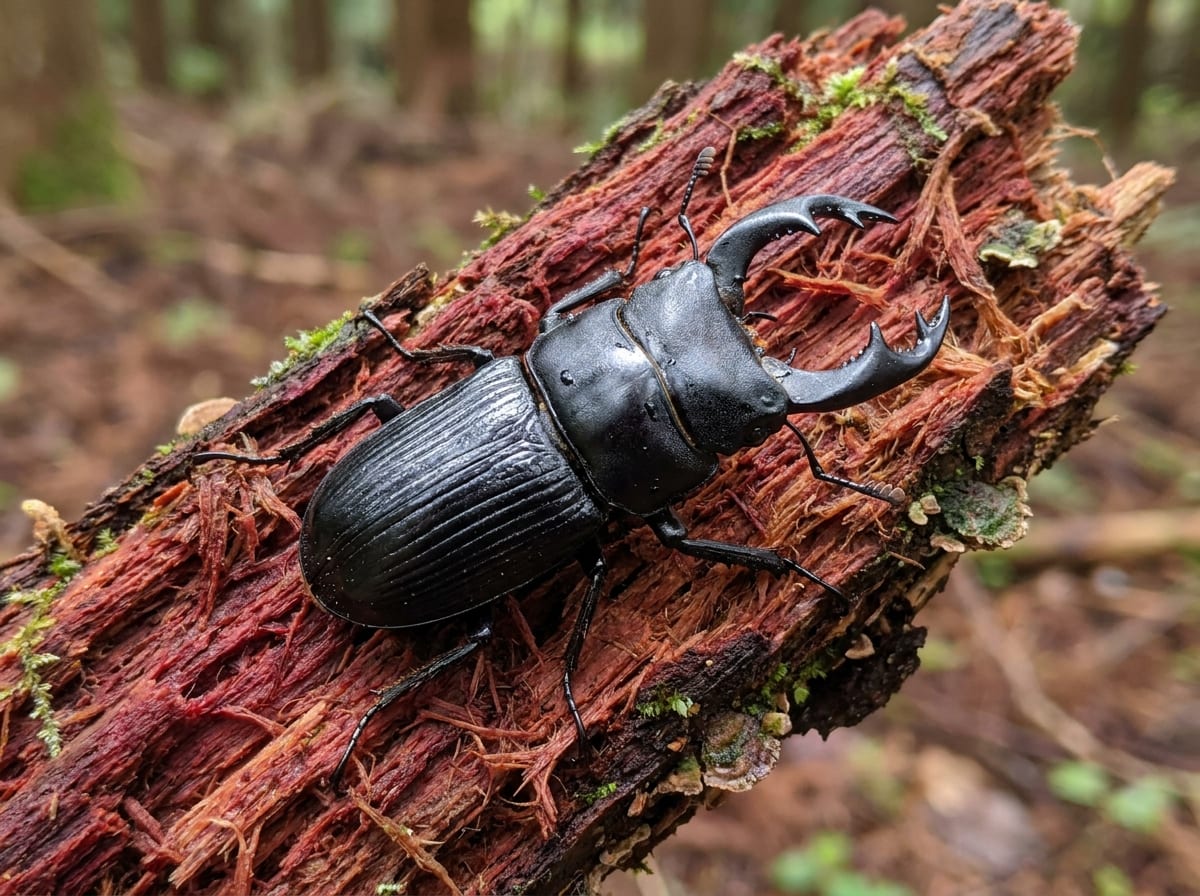
The Taiwanese giant stag beetle (Dorcus grandis formosanus) is a giant stag beetle endemic to Taiwan, described by Yushiro Miwa in 1929. It has long been treated as the Taiwanese subspecies of Dorcus grandis, although recent classifications place it as a subspecies of D. hopei. Wild males measure about 38–78 mm and females about 35–48 mm, and captive-reared males over 80 mm have been recorded. The body is glossy black all over; the inner tooth of the mandible sits slightly further forward in larger males, and pronotum shape varies between individuals. It inhabits broadleaf forest on the main island of Taiwan at roughly 200–2,000 m. Adults are active from April to September, are nocturnal, gather at sap flows on trees of the beech family (Fagaceae) and also come to lights. Larvae develop over 1–2 years in large, lightly decayed broadleaf logs. In Taiwan it is listed as protected wildlife under the Wildlife Conservation Act, and collecting in the wild is restricted. It has been kept in Japan for a long time; rearing and breeding are almost the same as for the Japanese giant stag beetle, and larvae do well in fungus (kinshi) bottles.
Lifespan of the Taiwanese Giant Stag Beetle
The Taiwanese Giant Stag Beetle lives Adults 2–4 years.
Size of the Taiwanese Giant Stag Beetle
The Taiwanese Giant Stag Beetle grows to Males 38–78 mm, females 35–48 mm.
Temperature & humidity for the Taiwanese Giant Stag Beetle
The ideal temperature for the Taiwanese Giant Stag Beetle is 18〜28℃.
Basic Info
Origin
Broadleaf forest at about 200–2,000 m on the main island of Taiwan (endemic subspecies)
Breeding Records & Localities
Captive record (♂)
84.3 mm
Wild record (♂)
78.3 mm
Record source: BE-KUWA 2025 edition (grandis Taiwan Large - captive 84.3 mm Mieda Takatoshi 2012 / wild 78.3 mm)
Notable localities
Taiwan
Taiwan large stag beetle (Dorcus grandis formosanus, Taiwan subspecies of grandis). Captive breeding records are updated annually through BE-KUWA (Mushi-sha) competitions. Individual value varies significantly depending on locality, generation (CBF/WF/WD), and size.
Generation codes
- WD
- Wild-caught
- WF1
- Offspring of a wild-caught female
- F1〜
- Captive generations (same locality)
- CBF1
- Cross-locality captive-bred (reset)
Sources: BE-KUWA Certified Breeding Records (Mushi-sha, FY2025 edition, JA)
References & Sources
Edited & verified by: BreederDirect editorial team
The taxonomic, regulatory, and husbandry data on this page are compiled and verified against the authoritative primary sources below.
Primary sources
- Ministry of the Environment, Invasive Species Act: "Guidance for Those Importing Live Insects in Scarabaeoidea"
- CITES Appendix (checklist.cites.org)
- Mushinavi: Taiwanese giant stag beetle
- Fujikon: How to keep the Taiwanese giant stag beetle
- Beetle Farm: Taiwanese giant stag beetle care and breeding
- Wikipedia (Japanese): Dorcus grandis
- Wikipedia (Chinese): Dorcus hopei formosanus
- Catalogue of Life in Taiwan (TaiCOL): Dorcus hopei formosanus
- Ookabuto no Heya: Taiwanese giant stag beetle rearing log
Taxonomy & Authority
Accepted name: Dorcus grandis formosanus Didier, 1926
Authority databases: GBIF
Nomenclature follows global taxonomic authority databases.
Regulations & Conservation Status
Not CITES-listed
Plant Protection Act: When importing live specimens of Scarabaeoidea (including rhinoceros beetles, stag beetles, flower beetles, etc.), a species identification certificate issued by the exporting country government agency or equivalent must be attached in accordance with the Invasive Species Act (import ports are limited to Narita, Chubu, Kansai, Fukuoka, and Kagoshima airports). This species itself is not a designated invasive species, and import is possible upon submission of the certificate.
Sources: Ministry of the Environment, Invasive Species Act: "Guidance for Those Importing Live Insects in Scarabaeoidea" / CITES Appendix (checklist.cites.org)
Regulations may change. Always verify the latest information with the relevant authorities.
Taiwanese Giant Stag Beetle Listings
Loading latest listingsFind listings for this species