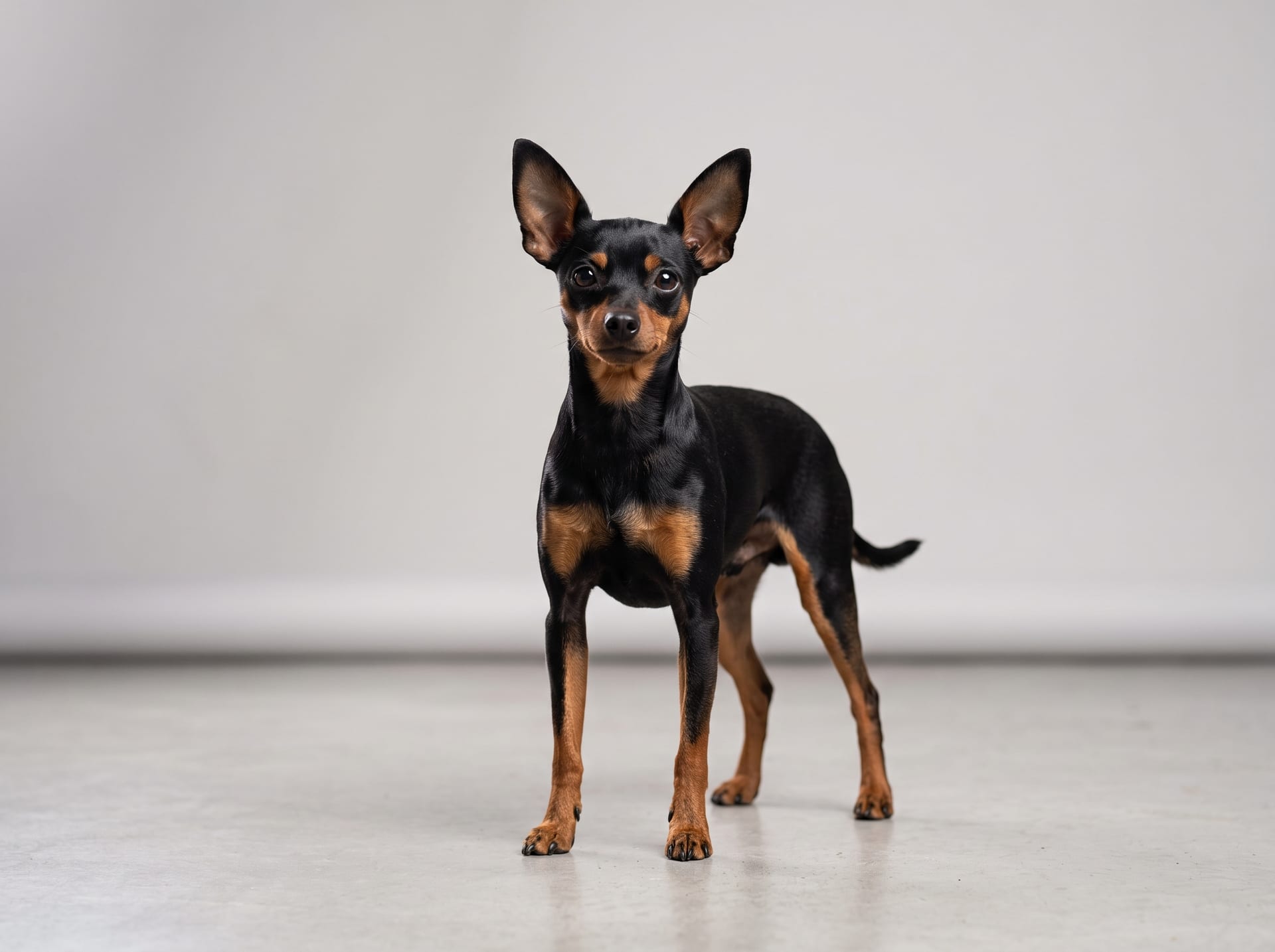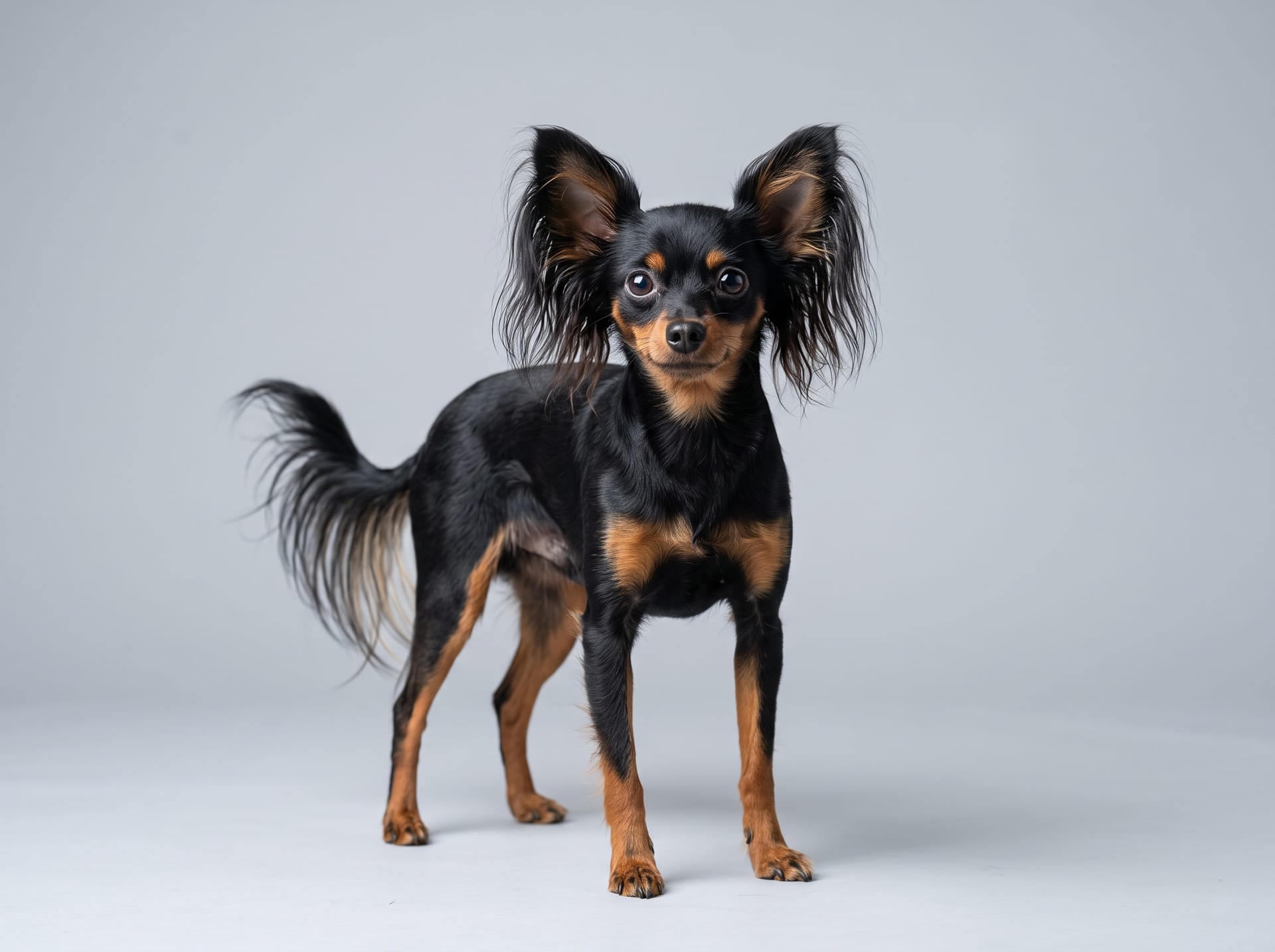
AI-generated image
Russian Toy
BeginnerOne of the world's smallest companions, developed independently in Russia. Active, remarkably cheerful and light on its long legs.
Difficulty
Beginner
Temperature
18〜26℃
Lifespan
12-14 years
Size
Height 20-28cm / Weight up to 3kg
Diet
High-quality toy-breed dog food. Feed 2-3 times daily.
About
The Russian Toy developed from the Toy Manchester Terriers popular in early 20th-century Russia, revived by Russian breeders from the mid-1950s along an independent path. The longhaired variety arose in 1958 from a male born with beautiful fringes on ears and legs. One of the world's smallest breeds at under 3kg, it is an elegant, long-legged dog that is active, cheerful and neither timid nor aggressive.
Lifespan of the Russian Toy
The Russian Toy lives 12-14 years.
Size of the Russian Toy
The Russian Toy grows to Height 20-28cm / Weight up to 3kg.
Basic Info
Origin
Russia
Lifespan
12-14 years
Size
Height 20-28cm / Weight up to 3kg
Temperature
18〜26℃
Diet
High-quality toy-breed dog food. Feed 2-3 times daily.
Care Guide
Temperament
Active and remarkably cheerful. Neither timid nor aggressive.
References & Sources
Edited & verified by: BreederDirect editorial team
The taxonomic, regulatory, and husbandry data on this page are compiled and verified against the authoritative primary sources below.
Primary sources
Taxonomy & Authority
Authority databases: JKC (Japan Kennel Club) breed profiles (JA)
Nomenclature follows global taxonomic authority databases.
Russian Toy Listings
Loading latest listingsFind listings for this species