Source: Wikimedia Commons
Galaxea Astreata
IntermediateGalaxea astreata
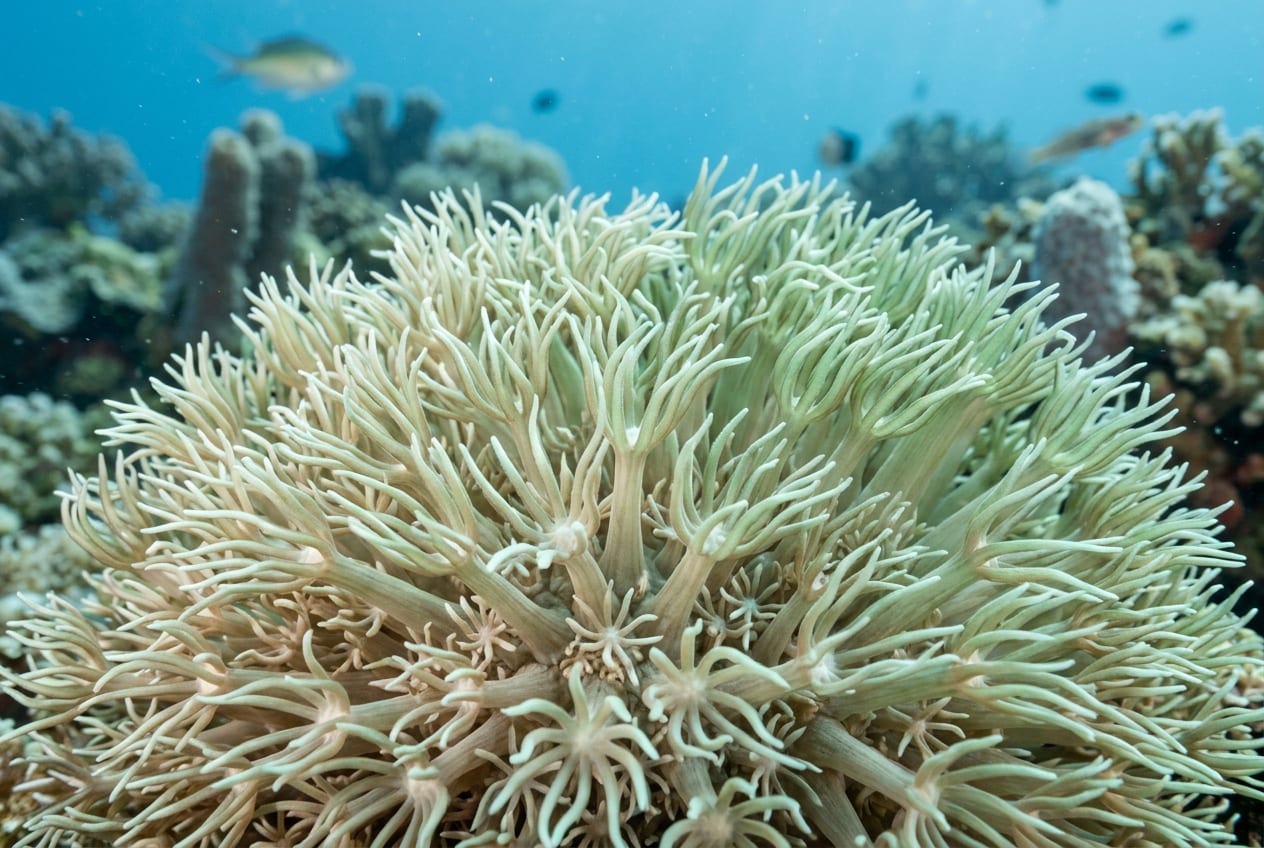
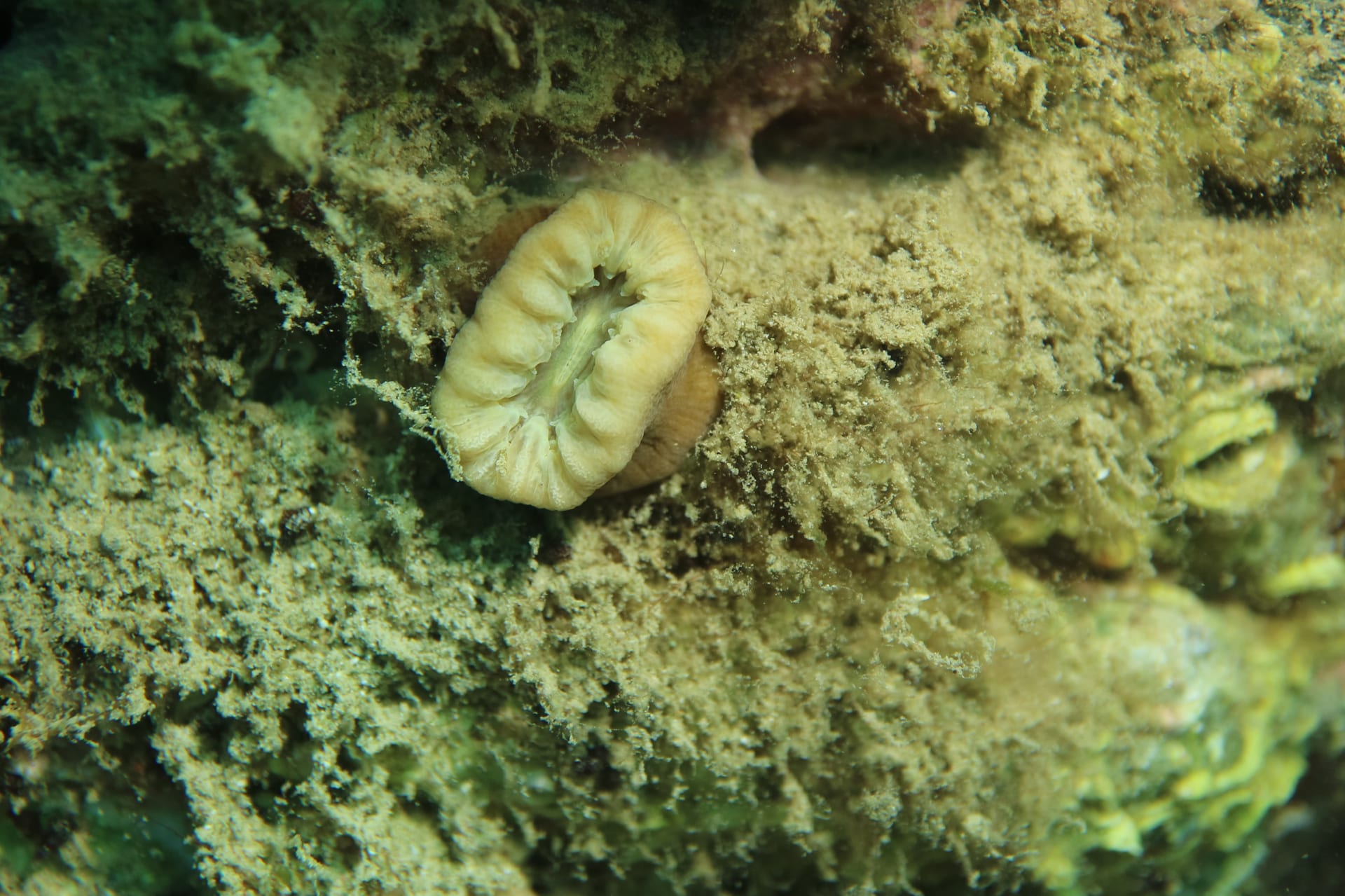
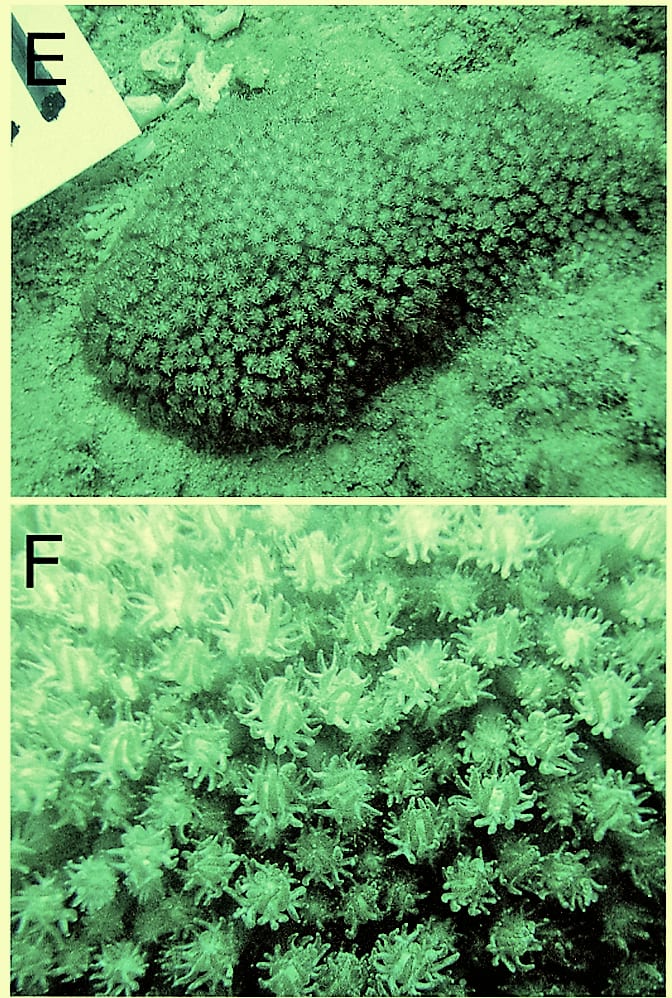
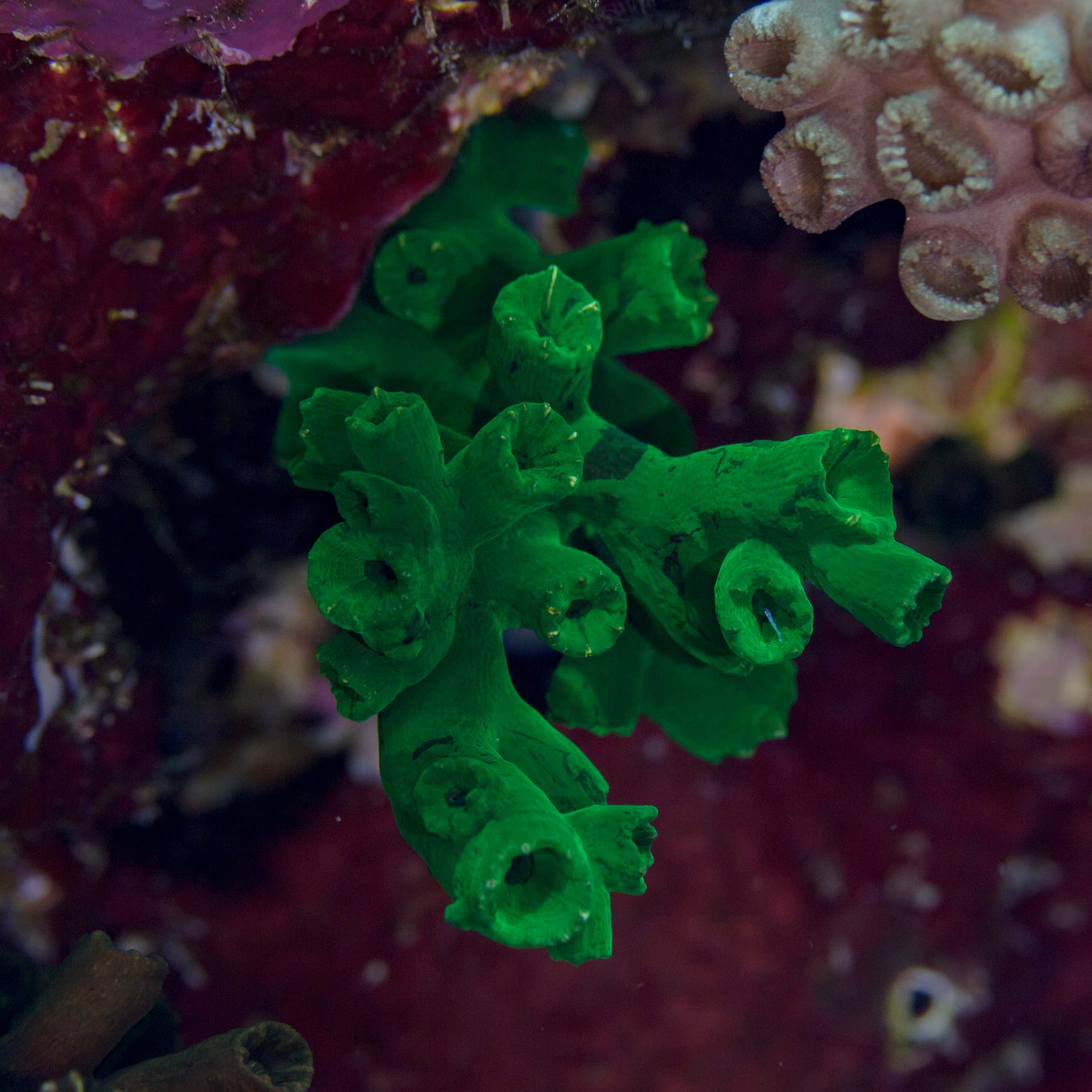
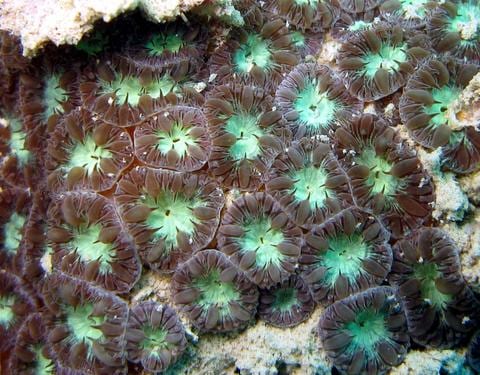
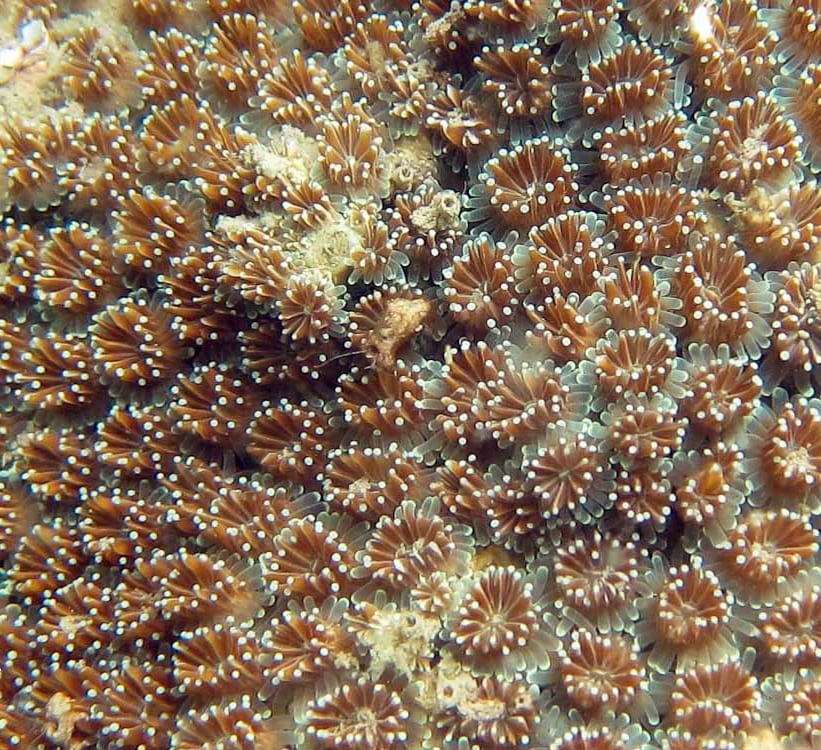
A stony coral whose well-spaced, plate-like corallites bear polyps that open in a star shape. Called the octopus or starburst coral in English, its colonies may be sub-massive, columnar or encrusting and can grow over two metres long.
Difficulty
Intermediate
Temperature
24〜26℃
Size
Colonies can exceed 2 m in length
Diet
Nutrition from symbiotic zooxanthellae, plus zooplankton and coral larvae caught by the polyps, which are expanded during the day.
About
Galaxea astreata is a common and cosmopolitan large-polyp scleractinian coral of the Indo-Pacific, for which WoRMS gives the Japanese name Ogasawara azami sango; in English it is the octopus, starburst or scalpel coral. It is the most abundant coral species in the Xuwen Coral Reef National Nature Reserve in China. Colonies may be sub-massive, columnar or encrusting, and large ones exceed two metres. The calcium carbonate skeleton is distinctive, with plate-like corallites set well apart from one another, and the polyps are pink, grey, green or brown. It occurs from 1 to 30 m, most commonly around 15 m, and prefers clear salt water to turbid brackish water. Unlike most corals, which feed at night, it expands its polyps by day to take zooplankton and coral larvae and contracts them at night. It is a broadcast spawner, and colonies may be hermaphroditic or gonochoric. As a scleractinian it is on CITES Appendix II.
Source: Wikipedia (CC BY-SA 4.0)
Size of the Galaxea Astreata
The Galaxea Astreata grows to Colonies can exceed 2 m in length.
Temperature & humidity for the Galaxea Astreata
The ideal temperature for the Galaxea Astreata is 24〜26℃.
Basic Info
Origin
Indo-Pacific; it is the most abundant coral species in the Xuwen Coral Reef National Nature Reserve in China
Size
Colonies can exceed 2 m in length
Temperature
24〜26℃
Care Specifications
- Carbonate (KH)
- 8–12 dKH
- Water Temp.
- 24–26℃
- Specific Gravity
- 1.023–1.025
- Salinity
- 33–35 ppt
- Calcium (Ca)
- 380–450 ppm
- Magnesium (Mg)
- 1200–1400 ppm
LPSLight: High (PAR>150)Flow: MediumPlacement: Middle
Sources: LiveAquaria / AlgaeBarn: Calcium Supplementation / WoRMS (World Register of Marine Species)
References & Sources
Edited & verified by: BreederDirect editorial team
The taxonomic, regulatory, and husbandry data on this page are compiled and verified against the authoritative primary sources below.
Taxonomy & Authority
Accepted name: Galaxea astreata (Lamarck, 1816)
Synonyms: Anthophyllum astraeatum (Lamarck, 1816), Anthophyllum clavus Dana, 1846
Authority databases: WoRMS
Nomenclature follows global taxonomic authority databases.
Regulations & Conservation Status
CITES Appendix II
Sources: CITES Appendix II (Scleractinia spp. listed as an order)
Regulations may change. Always verify the latest information with the relevant authorities.
Galaxea Astreata Listings
Loading latest listingsFind listings for this species