[2026 Edition] 15 Insects Recommended for Beginners | How to Choose & Care Tips | ブリちょく
Insects| ✍️ BreederDirect Editorial
[2026 Edition] 15 Insects Recommended for Beginners | How to Choose & Care Tips
15 carefully selected species perfect for starting insect keeping. Complete breakdown of difficulty, cost, and care methods for Japanese stag beetles, Hercules beetles, and more.
Key Takeaways
15 carefully selected species perfect for starting insect keeping. Complete breakdown of difficulty, cost, and care methods for Japanese stag beetles, Hercules beetles, and more.
Related Species
Rhinoceros beetles and stag beetles are popular pets enjoyed by children and adults alike. From breeding challenges to raising large specimens, this is a hobby with surprising depth. We've carefully selected 15 species perfect for beginners.
Key Points for Beginners When Choosing Insects
Temperature control: Can it be maintained at Japan's room temperature, or does air conditioning management become necessary?
Larval period: Duration from larva to adult (several months to 2+ years)
Food availability: Will standard insect jelly suffice, or do you need fungal substrate bottles?
Final size: Affects the size of the enclosure needed
Breeding difficulty: Can you enjoy multi-generational rearing?
15 Easy-to-Keep Insects Comparison Table
Below is a comparison of 15 popular species for both adults and children (temperature control: "Room temp" = generally manageable indoors in Japan, "Cooling required" = air conditioning needed during summer).
Species
Difficulty
Price Range
Body Length
Adult Lifespan
Temperature
Japanese stag beetle
★★
¥2,000–10,000
50–85mm
✍️
BreederDirect Editorial
The BreederDirect editorial team specializes in care information for animals, covering veterinary care and breeding to deliver beginner-friendly guides.
Find Insects on BreederDirect
Buy directly from verified breeders
Browse Related Listings
Find Insects listings related to this article on BreederDirect. Buy directly from verified breeders.
Related Tools
Related Articles
Browse by Category
🪸Coral
🐠Marine Fish
🐟Tropical Fish
🐡Goldfish
🐟Medaka
🦎Reptiles
Share
2–5 years
Room temp
Japanese rhinoceros beetle
★
¥300–1,000
40–85mm
2–3 months
Room temp
Rainbow stag beetle
★★
¥2,000–8,000
35–65mm
1–2 years
Room temp to warm
Hercules beetle
★★★
¥5,000–30,000
80–170mm
6–12 months
Cooling required
Dwarf stag beetle
★
¥300–1,000
20–50mm
1–3 years
Room temp
Giraffa stag beetle
★★
¥3,000–10,000
70–120mm
3–6 months
Warm
Papua jewel beetle
★
¥1,000–3,000
20–50mm
3–6 months
Room temp
Saw stag beetle
★
¥500–2,000
30–70mm
3–5 months
Room temp
Atlas beetle
★★
¥2,000–5,000
50–100mm
3–6 months
Room temp to warm
Flattened stag beetle
★★
¥1,000–5,000
30–75mm
1–3 years
Room temp
Miyama stag beetle
★★★
¥1,000–5,000
40–75mm
3–5 months
Cooling required
Caucasus beetle
★★★
¥3,000–10,000
60–130mm
3–6 months
Room temp to warm
Metallic narrow stag beetle
★★
¥2,000–5,000
30–90mm
3–6 months
Room temp to warm
Sumatra large stag beetle
★★★
¥3,000–15,000
50–100mm
1–2 years
Room temp
Neptune beetle
★★★★
¥10,000–50,000
80–160mm
6–12 months
Cooling required
For ease of keeping, Japanese rhinoceros beetles, dwarf stag beetles, and Papua jewel beetles are popular. For long-term companionship (adults), stag beetles and flattened stag beetles are favorites. For impressive size, Hercules and Caucasus beetles are top choices.
15 Recommended Insects
1. Japanese Stag Beetle
Difficulty: ★★☆☆☆ / Price: ¥2,000–10,000 per pair / Body Length: 50–85mm / Lifespan: 2–5 years as adult
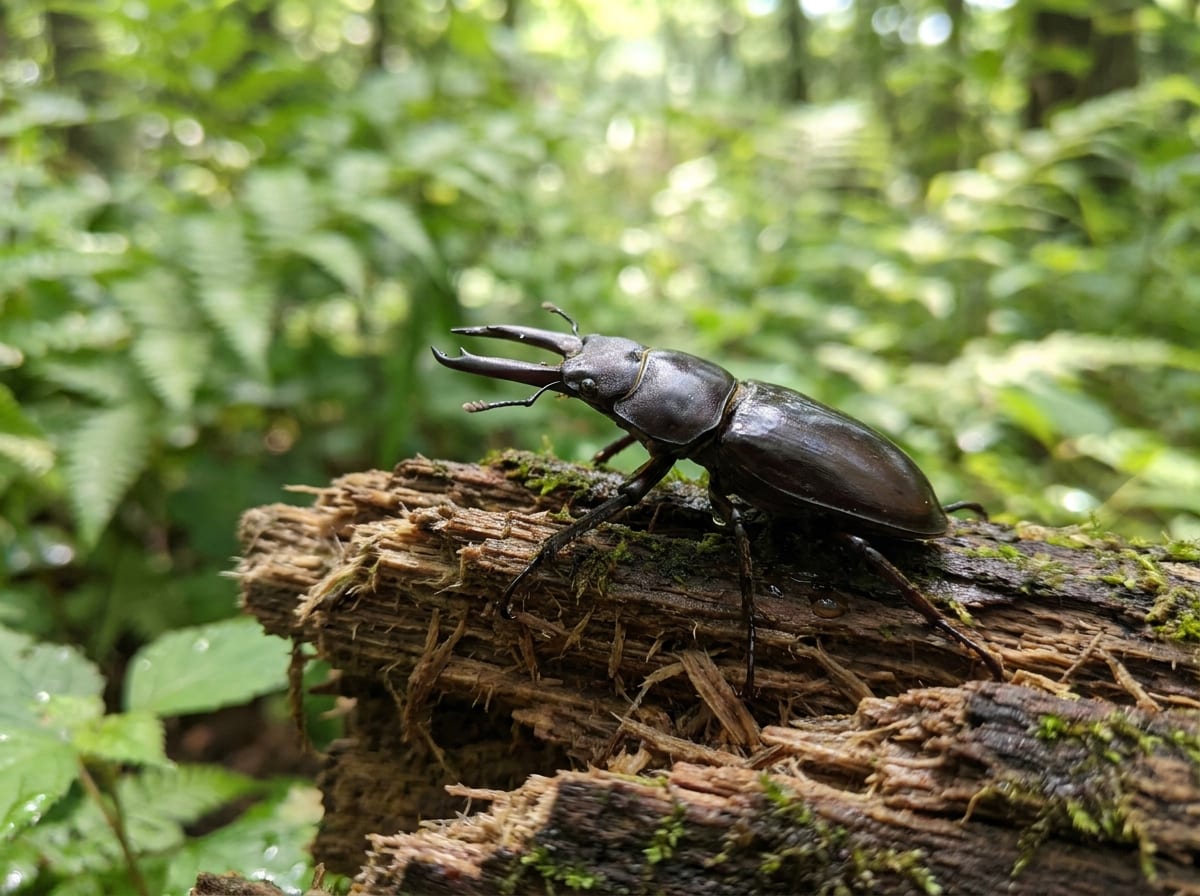
Pros: The gold standard of stag beetle keeping. Long adult lifespan means years of companionship. Breeding is straightforward, and you can raise large specimens using fungal substrate.
Cons: Wild-caught specimens command high prices. Raising large individuals requires some effort.
Care tips: Adults are maintained on insect jelly. Larvae thrive in fungal substrate bottles (oyster mushroom type) for size. Keep temperature around 23°C.
2. Japanese Rhinoceros Beetle
Difficulty: ★☆☆☆☆ / Price: ¥300–1,000 / Body Length: 40–85mm / Lifespan: 2–3 months as adult
Pros: The most accessible beetle. Affordable and easy to obtain. Breeding is extremely simple. Perfect for children's school projects.
Cons: Short adult lifespan (summer only). Odor can be somewhat strong.
Care tips: Keep larvae in leaf mulch (insect substrate). Adults require daily insect jelly replacement.
3. Rainbow Stag Beetle
Difficulty: ★★☆☆☆ / Price: ¥2,000–8,000 per pair / Body Length: 35–65mm / Lifespan: 1–2 years as adult
Pros: Beautiful iridescent coloring. Breeding is simple, beginner-friendly. Docile temperament with weak pinch force.
Cons: Egg-laying requires slightly higher temperatures (25°C+).
Care tips: Substrate-spawning species—just pack insect substrate firmly at the bottom. Can be raised in either fungal substrate or fermented substrate.
4. Hercules Beetle
Difficulty: ★★★☆☆ / Price: ¥5,000–30,000 per pair / Body Length: 80–170mm / Lifespan: 6–12 months as adult
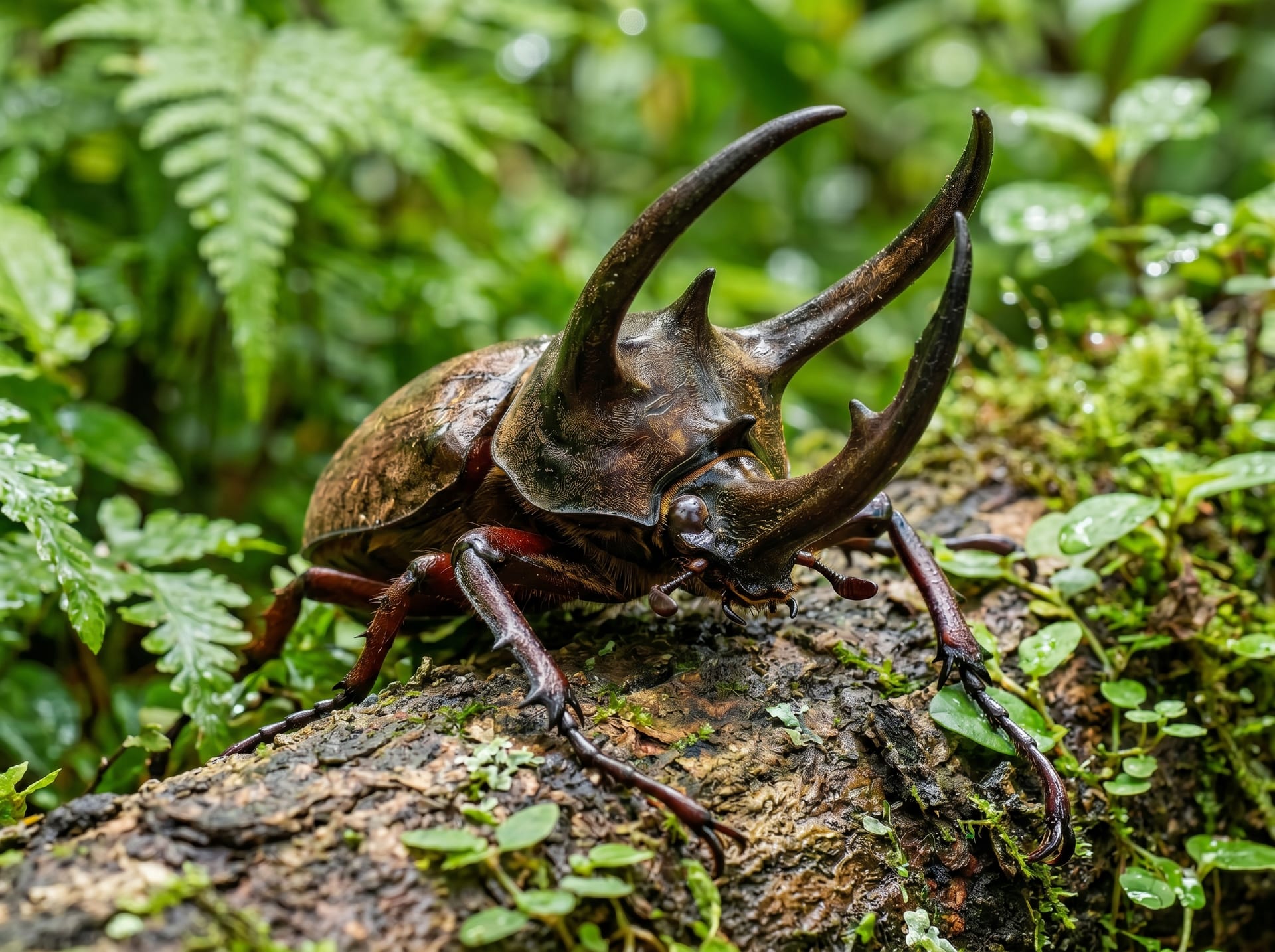
Pros: One of the world's largest beetles. Long horns are impressively impressive. A dream species for beetle enthusiasts.
Cons: Long larval period (1.5–2 years). Requires large amounts of substrate. Temperature control (20–25°C) is necessary.
Care tips: Larvae need large containers with plenty of beetle substrate. 23°C is optimal.
5. Dwarf Stag Beetle
Difficulty: ★☆☆☆☆ / Price: ¥300–1,000 / Body Length: 20–50mm / Lifespan: 1–3 years as adult
Pros: Collectable throughout Japan. Small size takes up minimal space. Hardy and can overwinter.
Cons: May seem plain to some.
Care tips: Adults are maintained on insect jelly. For overwintering, use extra substrate to prevent drying.
6. Giraffa Stag Beetle
Difficulty: ★★☆☆☆ / Price: ¥3,000–10,000 per pair / Body Length: 70–120mm / Lifespan: 3–6 months as adult
Pros: The world's longest stag beetle. Exceptionally long mandibles are incredibly striking. Breeding is relatively straightforward.
Cons: Shorter adult lifespan. Specimens decline within months of maturation.
Care tips: Prefers slightly warm conditions (around 25°C). Use both soft logs and substrate for spawning.
7. Papua Jewel Beetle
Difficulty: ★☆☆☆☆ / Price: ¥1,000–3,000 per pair / Body Length: 20–50mm / Lifespan: 3–6 months as adult
Pros: Small but shimmers with gold and green. Extremely easy to breed. Short larval period (3–4 months) for quick generational turnover.
Cons: Lacks imposing presence due to size. Short adult lifespan.
Care tips: Substrate-spawning is simple. Room temperature management is sufficient.
8. Japanese Saw Stag Beetle
Difficulty: ★☆☆☆☆ / Price: ¥500–2,000 / Body Length: 30–70mm / Lifespan: 3–5 months as adult
Pros: Beautiful curved mandibles. Can be collected in the wild. Breeding is easy.
Cons: Short adult lifespan.
Care tips: Substrate-spawning. Larvae are raised in fermented substrate.
9. Atlas Beetle
Difficulty: ★★☆☆☆ / Price: ¥2,000–5,000 per pair / Body Length: 50–100mm / Lifespan: 3–6 months as adult
Pros: Distinctive three-horned design. Affordable way to enjoy exotic beetles.
Cons: Aggressive temperament. Shorter adult lifespan.
Care tips: Larvae use beetle substrate. Temperature 23–25°C.
10. Japanese Flattened Stag Beetle
Difficulty: ★★☆☆☆ / Price: ¥1,000–5,000 / Body Length: 30–75mm / Lifespan: 1–3 years as adult
Pros: Sturdy build with powerful mandibles. Long adult lifespan with overwintering capability. Second only to Japanese stag beetles in popularity among domestic species.
Cons: Extremely powerful bite force—handle with care. Aggressive temperament.
Care tips: Use soft logs for spawning. Raise larvae in either fungal substrate or standard substrate.
11. Miyama Stag Beetle
Difficulty: ★★★☆☆ / Price: ¥1,000–5,000 / Body Length: 40–75mm / Lifespan: 3–5 months as adult
Pros: Striking crown-shaped head crest. Inhabits cool mountain regions, offering alpine character.
Cons: Weak in high temperatures (struggles above 25°C). Breeding in captivity is somewhat challenging.
Care tips: Cool environment (20–23°C) is essential. Air conditioning is recommended.
12. Caucasus Beetle
Difficulty: ★★★☆☆ / Price: ¥3,000–10,000 per pair / Body Length: 60–130mm / Lifespan: 3–6 months as adult
Pros: An upgraded version of the Atlas beetle. Longer, more impressive three horns. Southeast Asia's largest beetles.
Cons: Extremely aggressive and powerful bite. Long larval period.
Care tips: Larvae need large containers. Temperature 22–25°C. Wear gloves when handling adults.
13. Metallic Narrow Stag Beetle
Difficulty: ★★☆☆☆ / Price: ¥2,000–5,000 per pair / Body Length: 30–90mm / Lifespan: 3–6 months as adult
Pros: Exceptionally long mandibles (over half body length). Unique form is popular. Relatively easy breeding.
Cons: Short adult lifespan.
Care tips: Substrate-spawning. Raise larvae in fermented substrate. Temperature 23–25°C.
14. Sumatra Large Stag Beetle
Difficulty: ★★★☆☆ / Price: ¥3,000–15,000 per pair / Body Length: 50–100mm / Lifespan: 1–2 years as adult
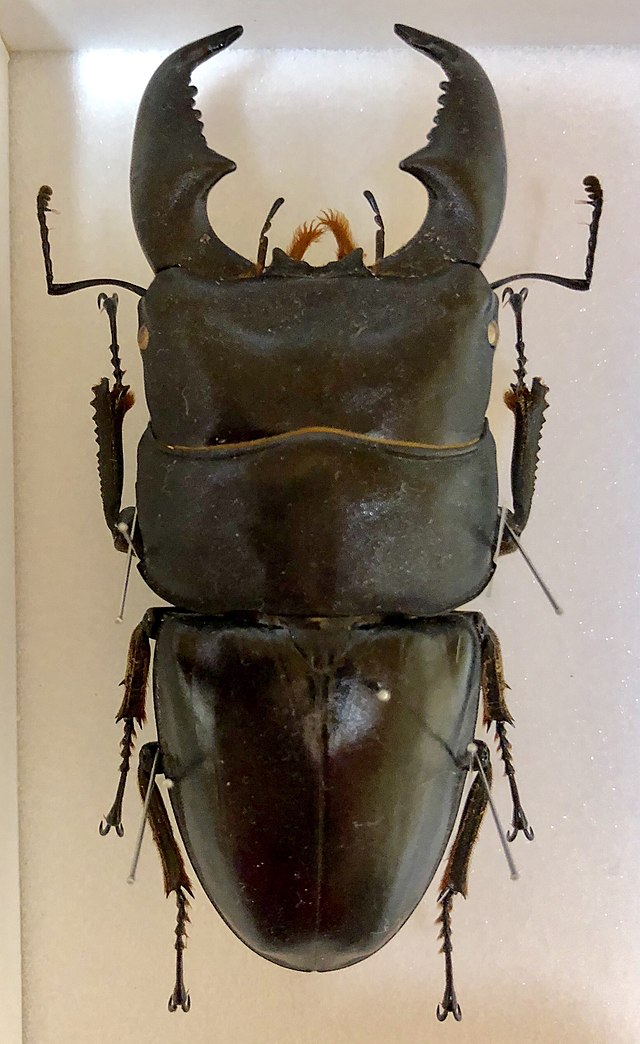
Pros: Robust build with powerful mandibles. One of the largest stag beetle species. Impressive presence.
Cons: Extremely powerful bite—dangerous. Aggressive temperament.
Care tips: Can achieve large specimens using fungal substrate. Temperature 23–25°C. Handle with caution.
15. Neptune Beetle
Difficulty: ★★★★☆ / Price: ¥10,000–50,000 / Body Length: 80–160mm / Lifespan: 6–12 months as adult
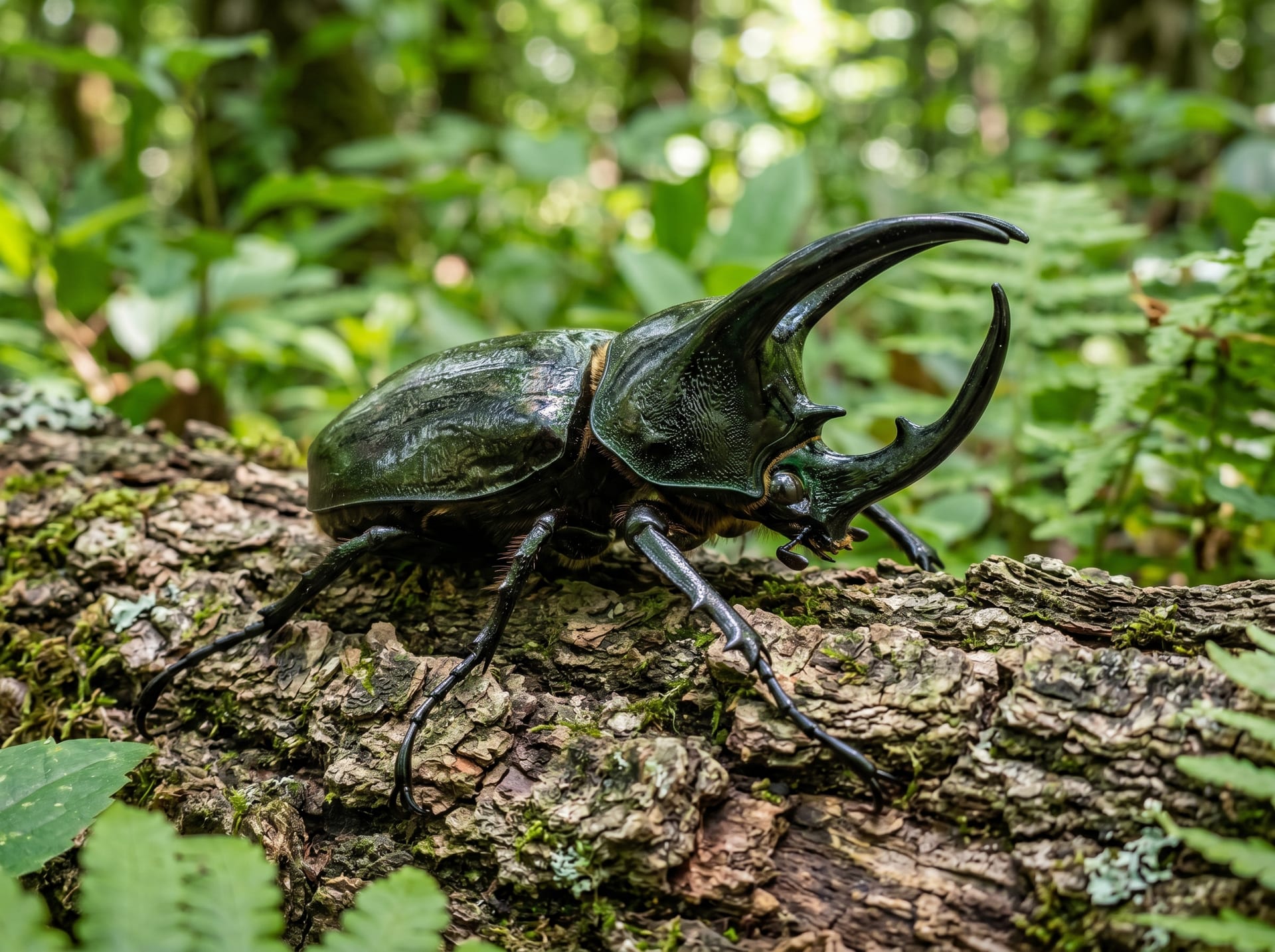
Pros: Rivals Hercules beetles in size. Sleek black body with long horns. A goal for advanced keepers.
Cons: Larval period exceeds 2 years. Requires low-temperature management (18–22°C). Expensive.
Care tips: Low-temperature management is essential. Advanced keeper territory, but included as a goal.
Beginner-Friendly Care Equipment
Adult Care
Equipment
Budget Guide
Notes
Enclosure (medium–large)
¥500–1,500
Insect substrate
¥300–500
Insect jelly
¥300–500/month
High-protein jelly recommended
Climbing/perch wood
¥200–500
Prevents tipping
Total
Around ¥1,300–3,000
Larval Care
Equipment
Budget Guide
Notes
Fungal substrate bottle (800cc)
¥300–600/bottle
For stag beetle larvae
Beetle substrate (10L)
¥500–1,000
For rhinoceros beetle larvae
Rearing container
¥100–500
Frequently Asked Questions (FAQ)
Q. Can rhinoceros beetles and stag beetles be kept together?
A. Generally no. They fight and their lifespans shorten. Keep them in separate enclosures.
Q. Is air conditioning essential for temperature control?
A. Not for Japanese species—room temperature is sufficient. Exotic species sensitive to heat (Miyama, Neptune, etc.) do require air conditioning.
Q. How do I start breeding?
A. Pair a male and female, then set up a spawning setup (substrate + spawning logs). Japanese rhinoceros beetles and rainbow stag beetles are especially easy.
Q. What's the difference between fungal substrate and regular substrate?
A. Fungal substrate is wood decomposed by mushroom fungi—higher nutrition for raising large specimens (ideal for stag beetles). Substrate is fermented wood chips (ideal for rhinoceros beetles).
![[2026 Edition] 15 Insects Recommended for Beginners | How to Choose & Care Tips](https://img.br-choku.com/column-images/_pool/hero-1778702938767-nvg8kh.jpg)