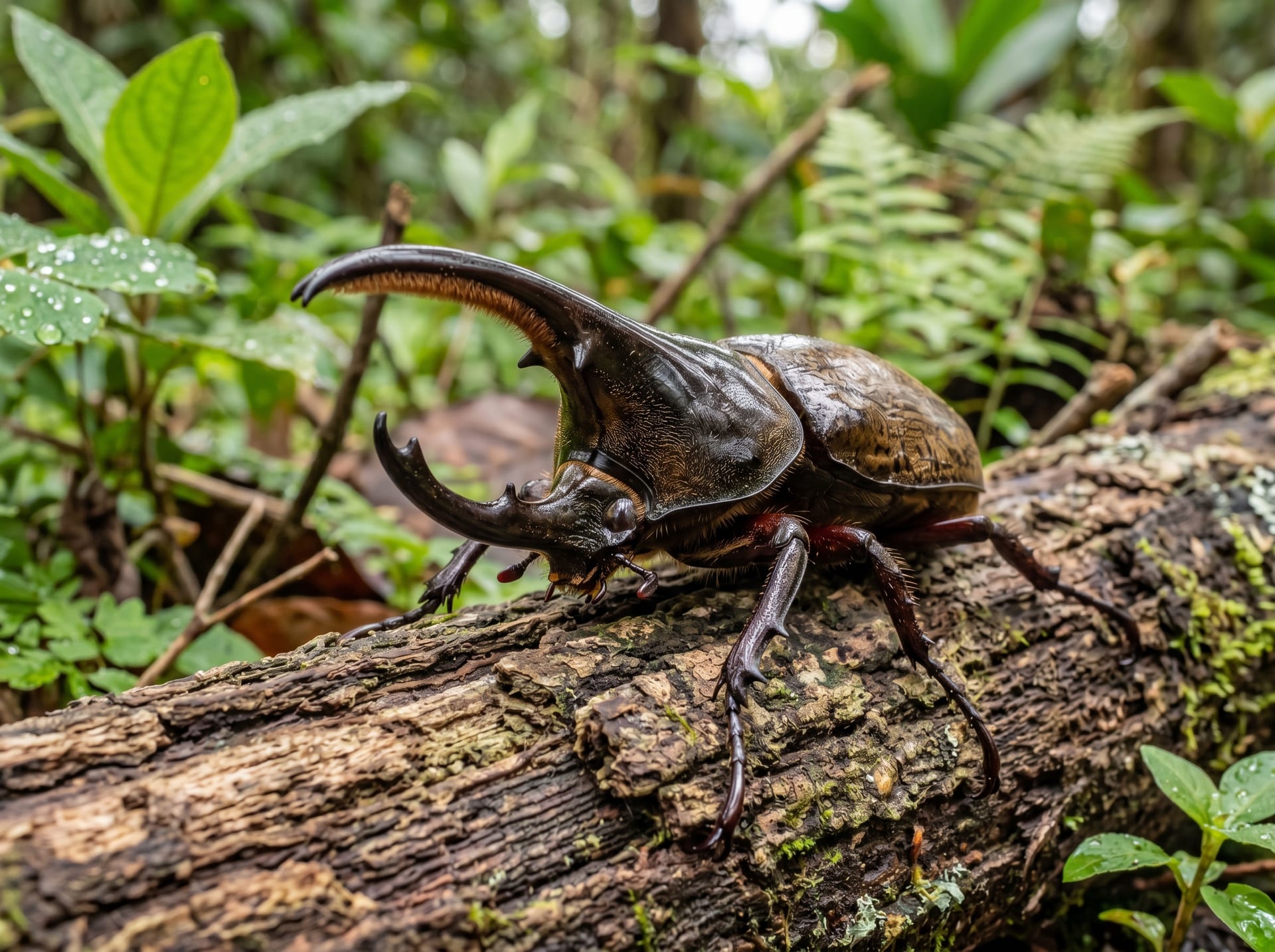
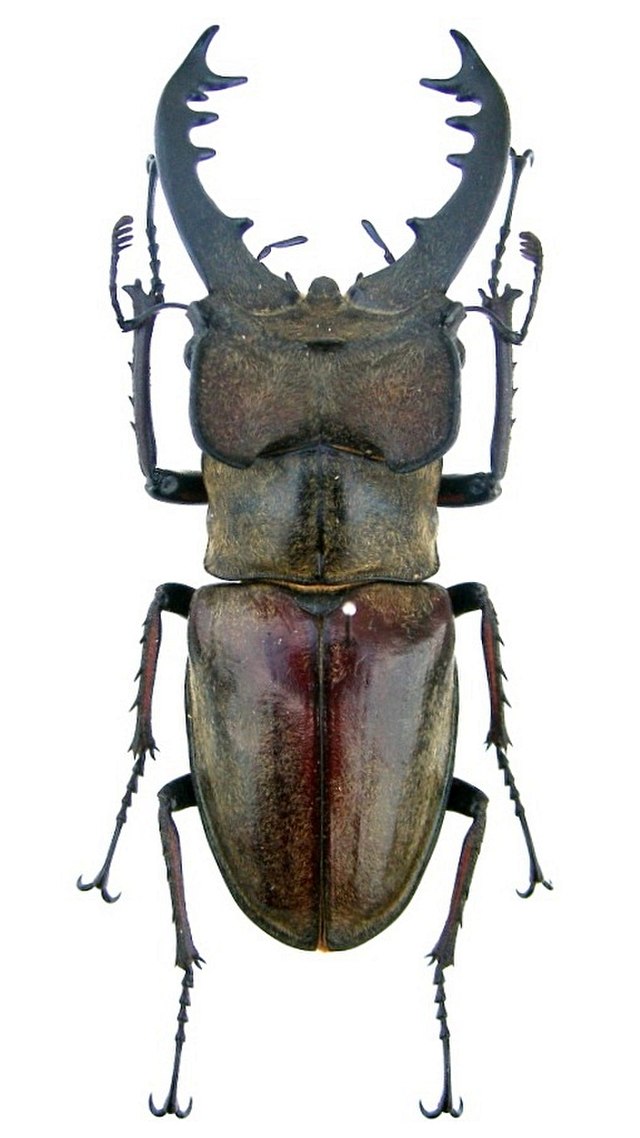
A comprehensive guide to breeding rhinoceros beetle and stag beetle larvae. We explain how to choose and replace breeding substrate, manage temperature, use fungal medium bottles, and identify pupation signs.
Key Takeaways
A comprehensive guide to breeding rhinoceros beetle and stag beetle larvae. We explain how to choose and replace breeding substrate, manage temperature, use fungal medium bottles, and identify pupation signs.
Related Species
When you want to raise rhinoceros beetles or stag beetles to large sizes, the key lies in larval stage management. While adult beetles have striking appearances, their final size and body shape are largely determined by the breeding environment during the larval period. With proper substrate selection, mat replacement, and temperature management, even beginners can successfully raise large individuals. This guide explains the fundamentals of larval breeding in detail, including species-specific differences. As of 2026, home breeding environments are becoming increasingly sophisticated, and specialized equipment is now easier to obtain.
Essential Gear for Larval Breeding
Before starting larval breeding, gather the necessary tools. Unlike adult beetle breeding, quality of contents matters more than space.
Breeding Containers
Rhinoceros Beetles: 1400–2000ml plastic bottles or containers. It's important to provide sufficient substrate volume per larva.
Stag Beetles: Choose bottle sizes ranging from 800–2000ml depending on species and instar. Small species use 800ml, while large species (Giant Stag Beetles, Flat-horned Stag Beetles) should use 1400ml or larger.
Fermented Substrate & Fungal Medium Bottles
Rhinoceros Beetle Substrate: High-fermented Quercus or Konara-type mat. The darker the color (brown to black), the more fermented it is and the easier it is for larvae to digest.
Stag Beetle Substrate: The appropriate fermentation level varies by species (see below).
Fungal Medium Bottles: Particularly effective for large stag beetles like Giant Stag Beetles. Those using King Oyster or Turkey Tail fungi are widely available.
Other Equipment
Thermometer (digital for better accuracy)
✍️
BreederDirect Editorial
The BreederDirect editorial team specializes in care information for animals, covering veterinary care and breeding to deliver beginner-friendly guides.
Find Insects on BreederDirect
Buy directly from verified breeders
Browse Related Listings
Find Insects listings related to this article on BreederDirect. Buy directly from verified breeders.
Choosing the Right Substrate|Understanding Species Differences
Substrate selection is fundamental to larval breeding. Buying generic "beetle substrate" can result in poor growth if it's not suited to your species.
Rhinoceros Beetles
Rhinoceros beetle larvae are strong detritivores and prefer well-fermented substrate rich in organic matter. You can't go wrong with commercially available "high-fermentation rhinoceros beetle substrate." White mold may appear on the surface, but it's usually beneficial fungi, so excessive worry isn't necessary. However, stop using the substrate if you notice blue mold or foul odors.
Stag Beetles (Domestic Species)
Giant Stag Beetles & Small Stag Beetles: Fungal medium bottles (King Oyster type) show the highest growth efficiency. High-quality fermented substrate also works if you prefer to avoid fungal medium.
Flat-horned Stag Beetles: Thrive in both fungal medium and substrate. When using substrate, medium to high fermentation is appropriate.
Saw Stag Beetles & Miyama Stag Beetles: Better suited to fermented substrate than fungal medium. Miyama in particular should use medium-fermentation substrate combined with low-temperature management.
Stag Beetles (Exotic Species)
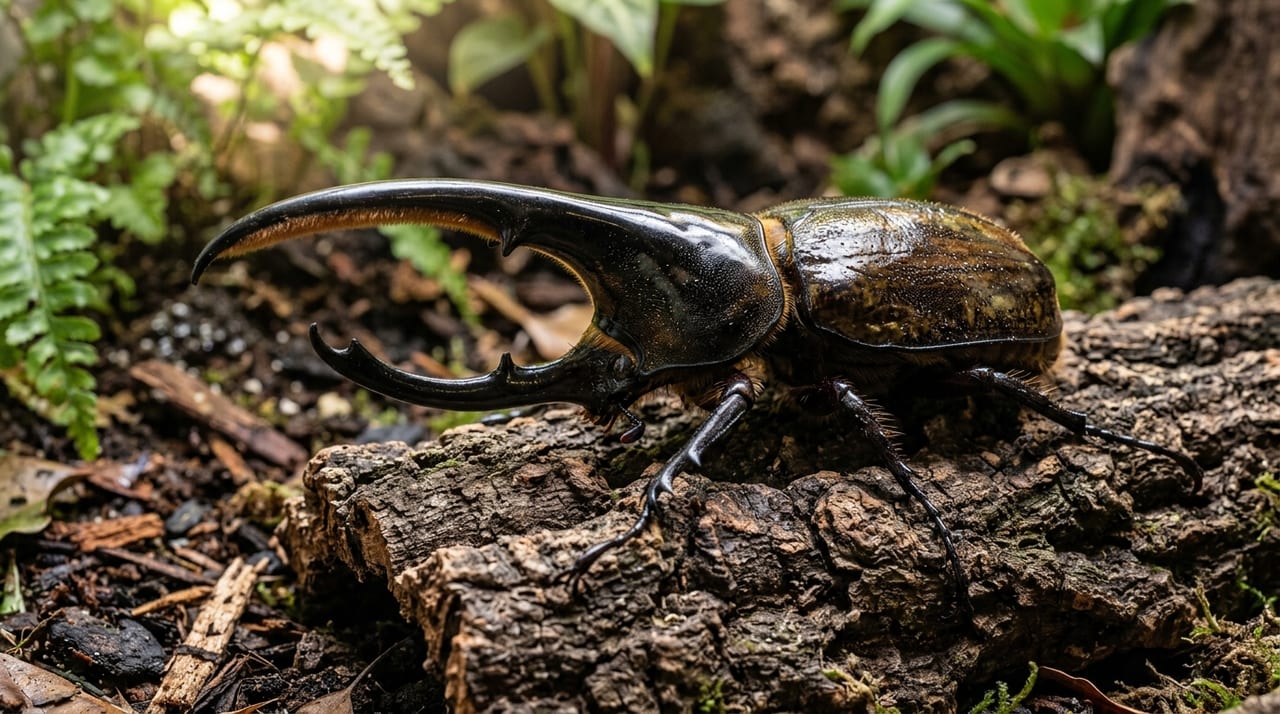
Hercules Beetles (Exotic Rhinoceros Beetles): The key is using high-quality fermented substrate in large quantities.
Tropical Lowland Species (e.g., Giraffa Saw Stag Beetles): Use high-fermentation substrate or fungal medium with high-temperature management (22–27℃).
Highland Species (Hercules, Grant's Rhinoceros Beetles, etc.): Management at lower temperatures (18–22℃) is key to growth.
Mat Replacement Timing and Procedure
Recognizing When to Replace
Mistiming substrate replacement can lead to food shortages or unnecessary disturbance before pupation. Watch for these signs:
Over 70% of substrate surface covered with frass
Frass visibly accumulated with reduced substrate volume on container sides
Substrate becomes waterlogged and muddy
Foul odors (sign of anaerobic fermentation)
Generally, replacement every 2–3 months is the standard, though winter activity slows, so less frequent replacement is fine. Conversely, summer consumption is faster, so check regularly and replace earlier if needed.
Replacement Steps
Prepare fresh substrate: Open the bag 1–2 days before use and allow it to off-gas. Remaining fermentation gases can harm larvae.
Adjust moisture: When squeezed by hand, substrate should crumble apart. Water oozing out means too much moisture.
Remove larva carefully: Use a spoon to gently dig it out. Avoid pinching the larva directly with your fingers.
Fill the container: Compress the bottom third firmly, then fill the top loosely.
Return the larva: Place it on the substrate surface and let it burrow naturally. Don't force it in.
Using Fungal Medium Bottles (Stag Beetle Guide)
Fungal medium bottles are a powerful tool for maximizing stag beetle larval size. Mastering their use can create size differences of several millimeters to centimeters within the same bloodline.
Bottle Size by Instar
Instar
Recommended Size
Early Instar / 1st Instar
500–800ml
2nd Instar
800–1400ml
3rd Instar
1400ml+
Fungal Medium Bottle Replacement Timing
When 50% or more of white fungal portion has been consumed
When deterioration (browning, foul odors) begins
Replace regularly every 3–4 months
At high temperatures (above 25℃), fungal deterioration accelerates rapidly, making summer temperature management especially critical. Deteriorated bottles sometimes have lower food value than substrate, so check condition regularly.
Temperature Management|Know the Ideal Temperature for Each Species
Temperature has the greatest impact on larval growth rate, weight, and final size. Deviating from optimal ranges increases risks of stunted growth, premature pupation, and death. Given recent trends of extreme summer heat, temperature control is now more essential than ever.
Species-Specific Temperature Guide
Species
Optimal Range
Notes
Domestic Rhinoceros Beetles
20–25℃
Above 30℃ is dangerous
Giant Stag Beetles
20–23℃
Lower temperatures tend to produce larger individuals
Flat-horned Stag Beetles
20–25℃
Relatively heat-tolerant
Miyama Stag Beetles
15–20℃
Summer heat is their greatest enemy
Hercules Beetles
20–25℃
Stable temperature is important
Giraffa Saw Stag Beetles
22–27℃
Tropical lowland species prefer higher temperatures
Management Location and Tips
A location without direct sunlight is essential. In summer, refrigerator-style insect cooling units provide stable management. In winter, simply placing containers in a foam box works well for insulation. Keep a thermometer to track daily temperature fluctuations.
Recognizing Pupation & Emergence and Important Notes
The ultimate goal of larval breeding is successful adult emergence. Recognizing pupation signs and managing correctly are essential.
Pre-Pupation to Pupation Signs
Larva's body turns yellowish
Movement becomes sluggish and feeding stops
Larva begins creating a pupal cell (elliptical cavity) in the substrate
At this stage, never replace the substrate. Damaging the pupal cell causes emergence deformities. While the urge to observe is understandable, quiet observation is best.
Post-Emergence Care
Newly emerged adults have soft bodies and hardening exoskeletons. Leave them undisturbed for 1–2 weeks and let them emerge on their own. Forcing removal risks leg and wing deformities. Even after removal, avoid pairing or excessive handling immediately. First priority is allowing the body to fully harden.
BreederDirect's Reliable System
On BreederDirect, you can purchase Rhinoceros Beetles and Stag Beetle larvae raised by experienced breeders. You'll find blood-managed individuals and larvae from proven large-size parents—unavailable in mass-market products.
Direct communication with breeders lets you ask about breeding methods and temperature management tips before and after purchase
View breeder profiles and transaction ratings for confidence, even on your first purchase
Detailed information on larval condition, instar level, and fungal medium history helps you select individuals suited to your setup
Larval breeding offers the deep satisfaction of patient, long-term care. The thrill of successfully raising large adults through your own management awaits. Find your ideal larva on BreederDirect.