Source: Wikimedia Commons
Miyama Stag Beetle
AdvancedLucanus maculifemoratus
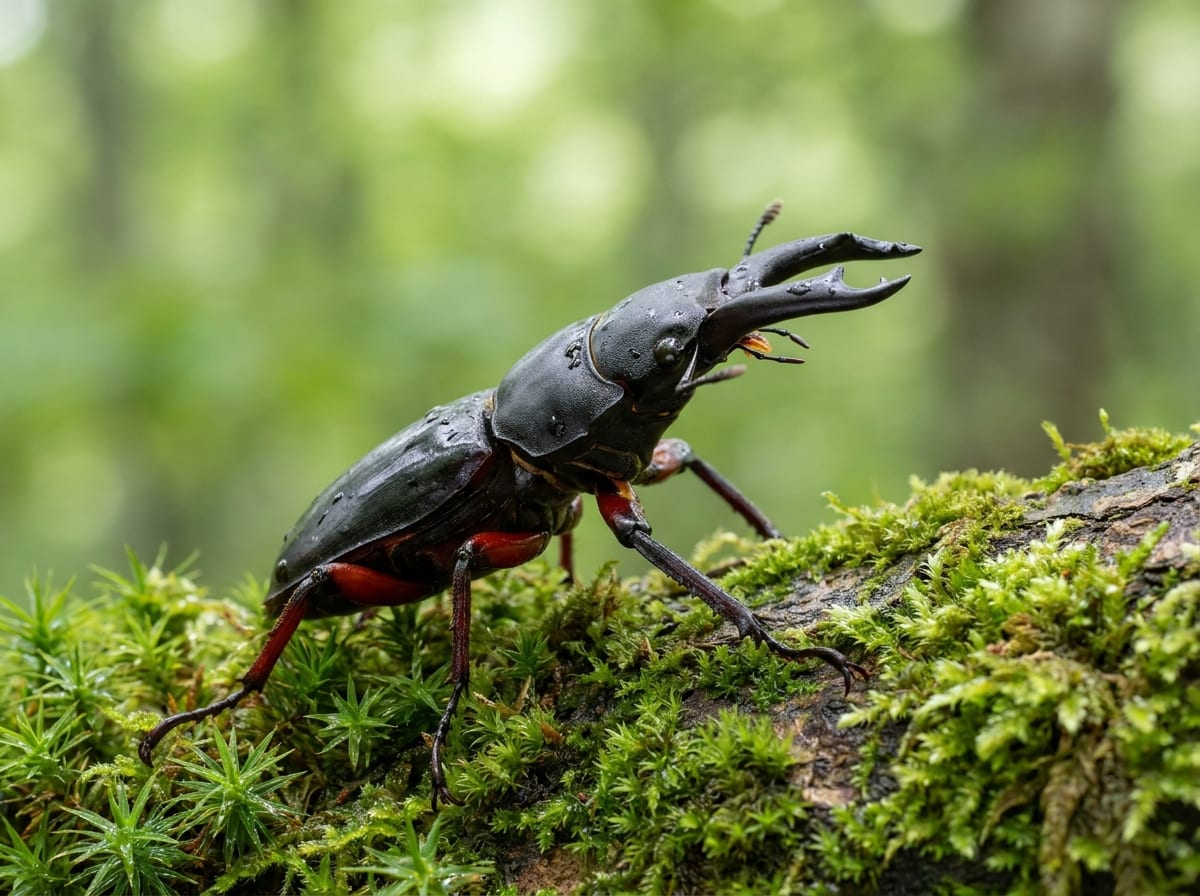
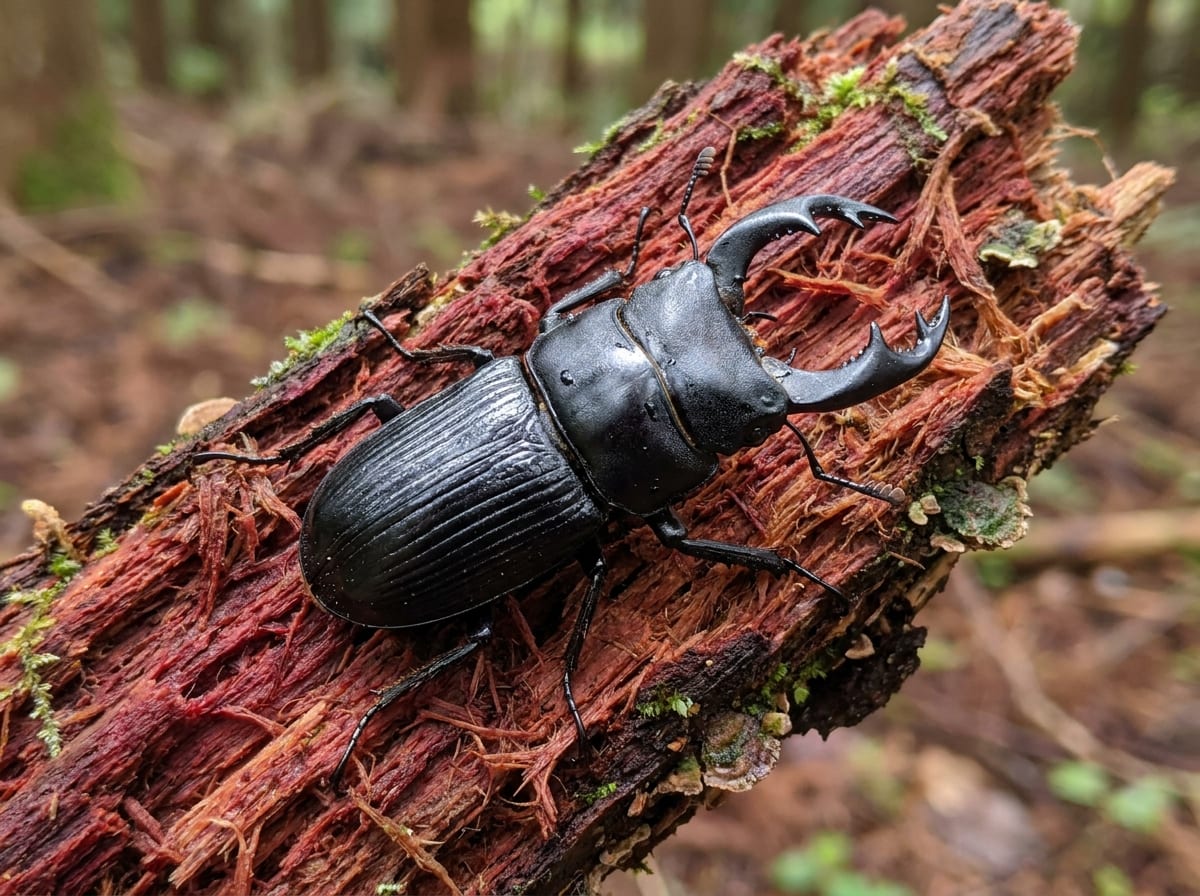
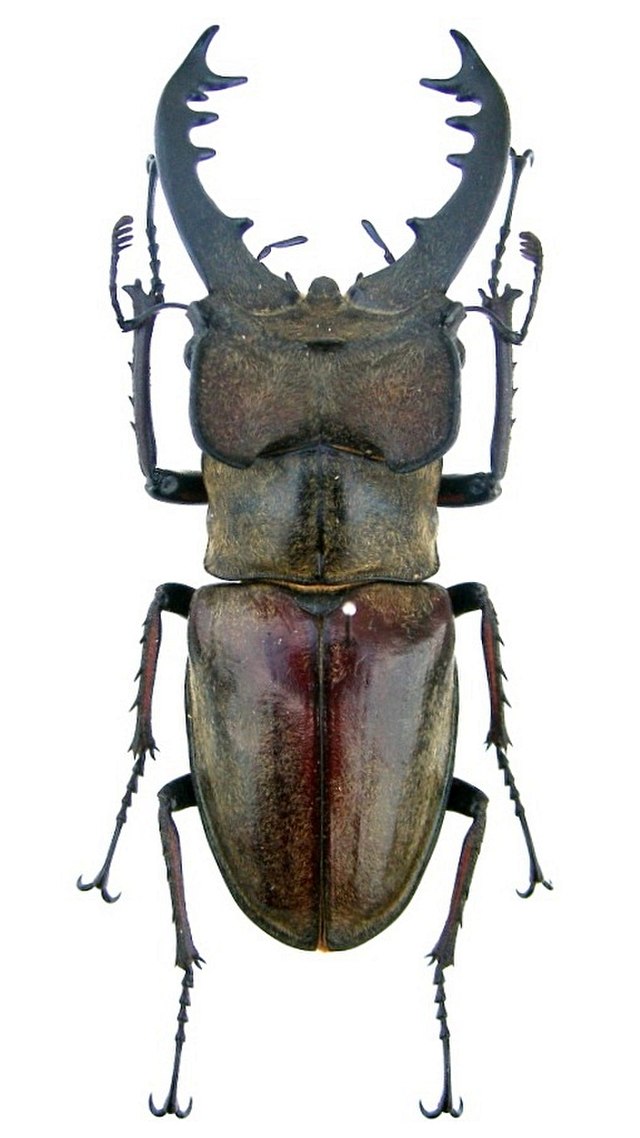
Beautiful stag beetle from Japanese mountains. Crown-like head protrusion is distinctive. Requires cool temperatures for keeping.
Difficulty
Advanced
Temperature
15〜22℃
Lifespan
Adult 2-3 months
Size
Up to 75mm
Humidity
60〜80%
Diet
Beetle jelly
About
Lucanus maculifemoratus, the miyama stag beetle, inhabits mountainous forests of Japan at elevations above approximately 400 meters, with a range extending from Hokkaido to Kyushu. It is distinguished by prominent ear-like projections on the head and highly variable mandible forms, classified into base-tooth, Fuji-mountain, and water-buffalo types. Adults reach 35–75 mm in length and display brownish to dark brown coloration with distinctive yellow hairs near the leg bases. Egg-laying occurs in hardwood logs or fermented substrate. Revered as a symbol of the Japanese summer mountains, the miyama stag beetle's unique head projections and imposing size make it a beloved and sought-after native species.
Lifespan of the Miyama Stag Beetle
The Miyama Stag Beetle lives Adult 2-3 months.
Adult lifespan is 2–3 months, which is brief even by stag beetle standards.
Size of the Miyama Stag Beetle
The Miyama Stag Beetle grows to Up to 75mm.
Temperature & humidity for the Miyama Stag Beetle
The ideal temperature for the Miyama Stag Beetle is 15〜22℃.
As an alpine species, it is extremely sensitive to high temperatures; captive husbandry requires strict temperature management at 15–22°C, typically necessitating a dedicated insect cooling unit.
Basic Info
Origin
mountainous regions of Japan, from Hokkaido to Kyushu
Lifespan
Adult 2-3 months
Care Specifications
AggressiveSolitaryBreeding: Hard
Sources: Wikipedia — Miyama Stag Beetle (JA)
Captive Breeding
Egg-laying
Breeding season: Early summer to summer (adult active season)
Breeding notes
Females lay eggs in fermented wood or substrate; hatched larvae are reared in fermented mat or fungal (mycelium) bottles. After eclosion, adults require several months of dormancy before they are ready to breed.
Breeding requires planning, proper husbandry, and responsibility. These figures are general guidelines.
Breeding Records & Localities
Captive record (♂)
80.8 mm
Wild record (♂)
78.6 mm
Record source: BE-KUWA 2025 edition (Miyama - Captive 80.8mm Akira Hatanaka 2023 / Wild 78.6mm)
Notable localities
HokkaidoHonshuShikokuKyushu
Japanese species. Characterized by crown-shaped head protrusions. Prefers cool-temperature captive care. Captive-breeding records are updated annually through BE-KUWA (Mushi-sha) contests. Individual value fluctuates significantly based on locality, generation (CBF/WF/WD), and size.
Generation codes
- WD
- Wild-caught
- WF1
- Offspring of a wild-caught female
- F1〜
- Captive generations (same locality)
- CBF1
- Cross-locality captive-bred (reset)
Sources: BE-KUWA Certified Breeding Records (Mushi-sha, FY2025 edition, JA)
References & Sources
Edited & verified by: BreederDirect editorial team
The taxonomic, regulatory, and husbandry data on this page are compiled and verified against the authoritative primary sources below.
Taxonomy & Authority
Accepted name: Lucanus maculifemoratus Motschulsky, 1861
Authority databases: GBIF
Nomenclature follows global taxonomic authority databases.
Regulations & Conservation Status
Not CITES-listed
Plant Protection Act: When importing live specimens of Scarabaeoidea (including rhinoceros beetles, stag beetles, flower beetles, etc.), a species identification certificate issued by the exporting country government agency or equivalent must be attached in accordance with the Invasive Species Act (import ports are limited to Narita, Chubu, Kansai, Fukuoka, and Kagoshima airports). This species itself is not a designated invasive species, and import is possible upon submission of the certificate.
Sources: Ministry of the Environment, Invasive Species Act: "Guidance for Those Importing Live Insects in Scarabaeoidea" / CITES Appendix (checklist.cites.org)
Regulations may change. Always verify the latest information with the relevant authorities.
Miyama Stag Beetle Listings
Loading latest listingsFind listings for this species