Tank Size Selection Determines Success or Failure in Goldfish Keeping
The first stumbling block when you start keeping goldfish is choosing the right tank size. You might think "won't a small container work fine?" but goldfish actually grow quite large. If you don't prepare a tank of the appropriate size, water quality will deteriorate rapidly, causing your goldfish to become sick or have shortened lifespans.
For goldfish to live healthily and long, tank selection that considers three points is essential: their size when fully grown, the swimming habits of the breed, and the number of fish. This guide explains specific recommended sizes by breed and number of fish in an easy-to-understand manner.
---
Basic Knowledge to Know When Choosing a Goldfish Tank
There are fundamental rules to keep in mind when considering tank size.
"10-20 liters per fish" is the guideline
The minimum water volume needed per goldfish is 10 liters, ideally 20 liters. However, this applies to small breeds. Larger breeds or active swimming breeds require even more space.
The more water volume, the more stable the water quality
Goldfish produce large amounts of waste and discharge large quantities of ammonia. With little water volume, the water becomes dirty very quickly. With more water volume, water quality changes more gradually, making it safer for goldfish.
Floor area is also important
Not just water depth, but floor area (the width of the bottom) is also important. Goldfish have a habit of pecking at the bottom while searching for food and need space to swim around. It's better to choose a tank that is wide rather than long and narrow.
---
Recommended Tank Sizes by Breed
Goldfish can be broadly categorized into two types: "elongated body type (Wakin type)" and "round body type (Ryukin type)," and each requires a different suitable tank.
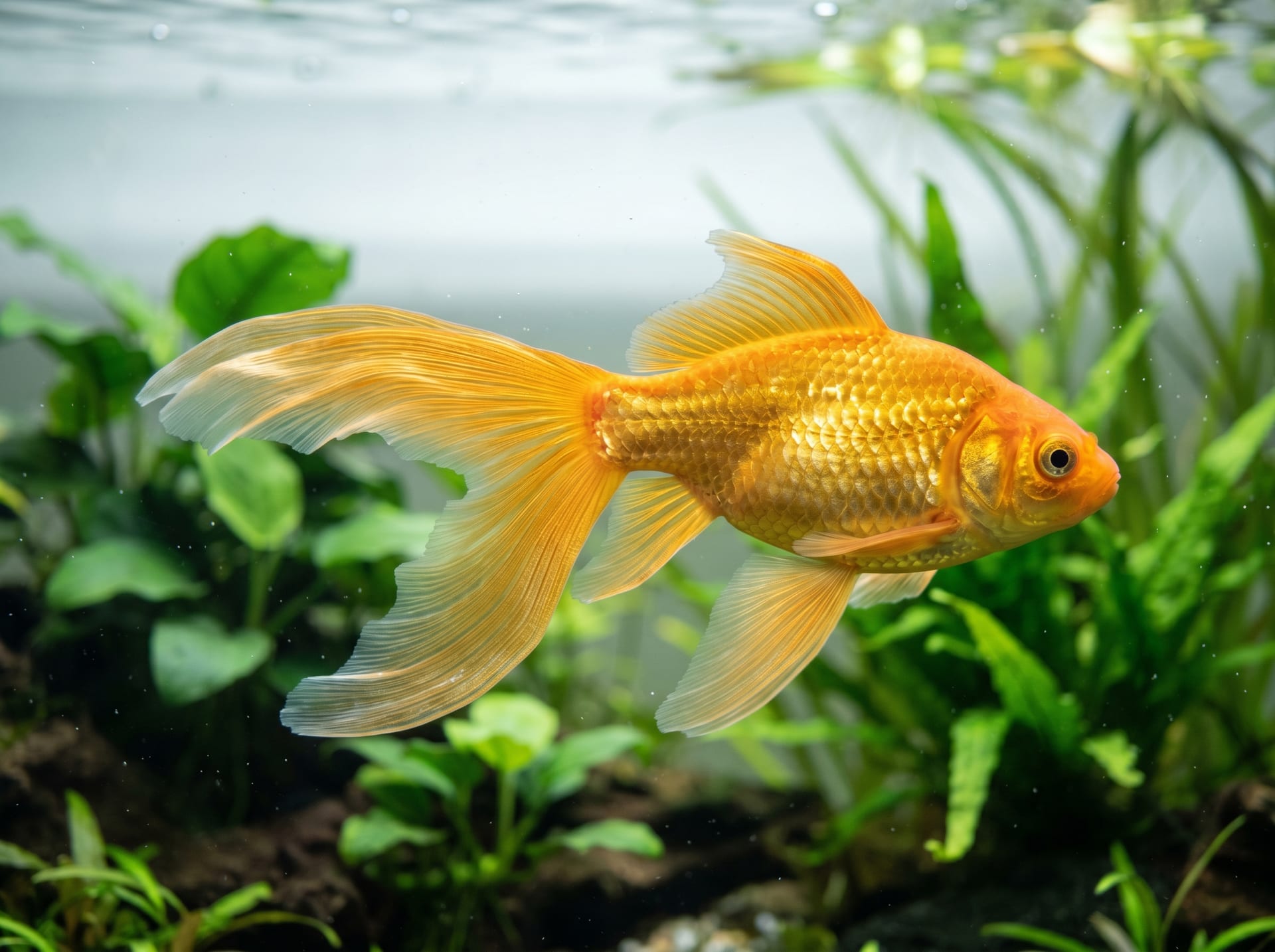
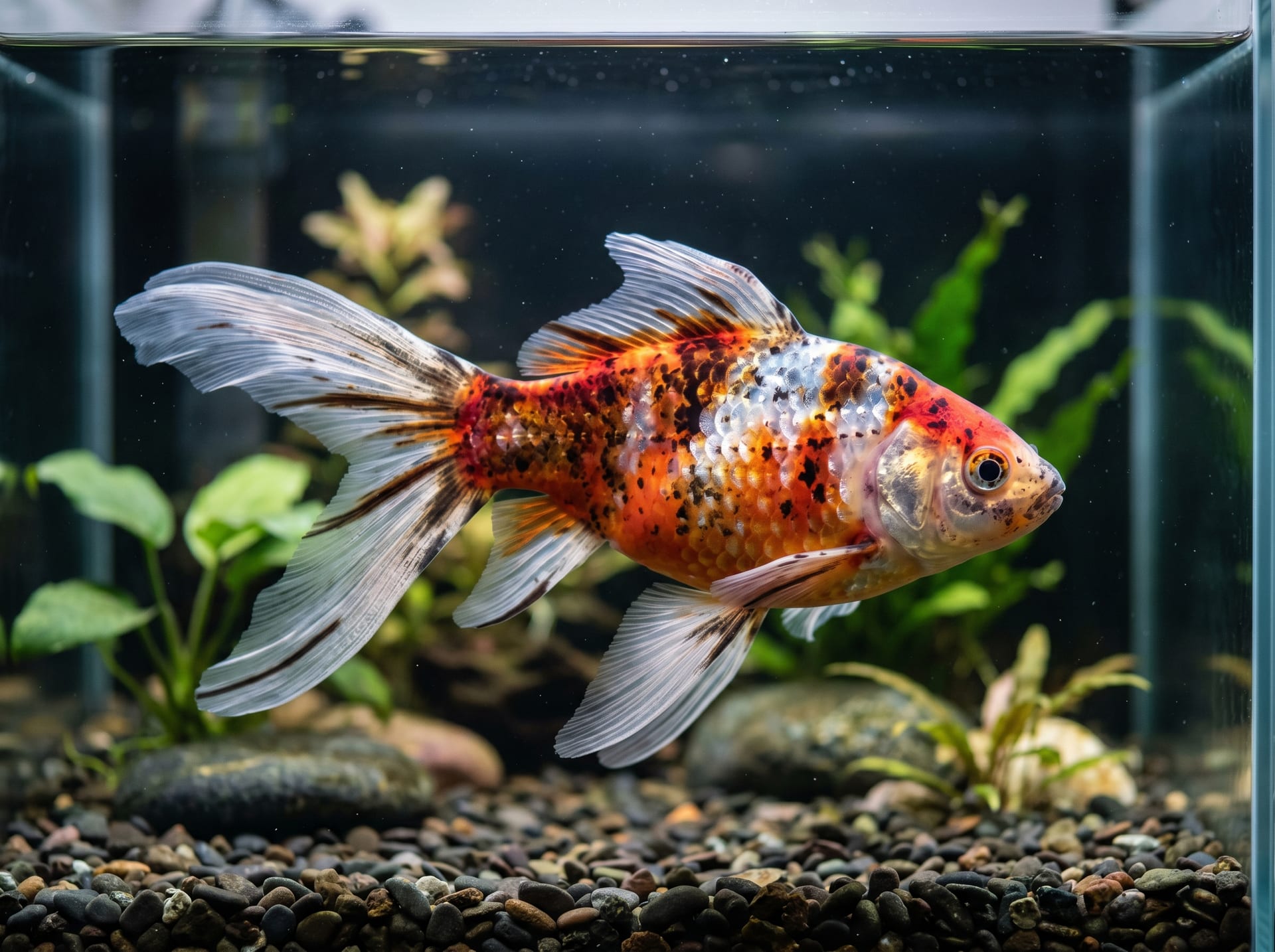
Wakin, Comet, and Shubukin (Elongated Type)
Wakin and Comet are the most actively swimming breeds. When fully grown, they can reach 20-30 cm or more, and due to their quick movements, ample space is essential.
- 1 fish: 60cm tank (approximately 57 liters) or larger
- 2-3 fish: 90cm tank (approximately 180 liters) or larger
- Ideal: Pond or large 90-120cm tank
Keeping Wakin in a tank 45 cm or smaller causes stress due to the confined space. Many people catch them at goldfish scooping games, but if you plan to keep them long-term, it's recommended to move them to a larger tank as soon as possible.
Ryukin, Orandas, and Tosakin (Round Type)
These are breeds with round bodies and slow, gentle swimming. They don't need as much space as Wakin, but they share the characteristic of fouling the water readily. They reach approximately 15-20 cm when fully grown.
- 1 fish: 45cm tank (approximately 30 liters) or larger
- 2-3 fish: 60cm tank (approximately 57 liters) or larger
- 4-5 fish: 90cm tank or larger
Ryukin-type fish are slow swimmers and dislike strong water currents. Make adjustments such as directing the filter outlet toward a wall to weaken the water flow.
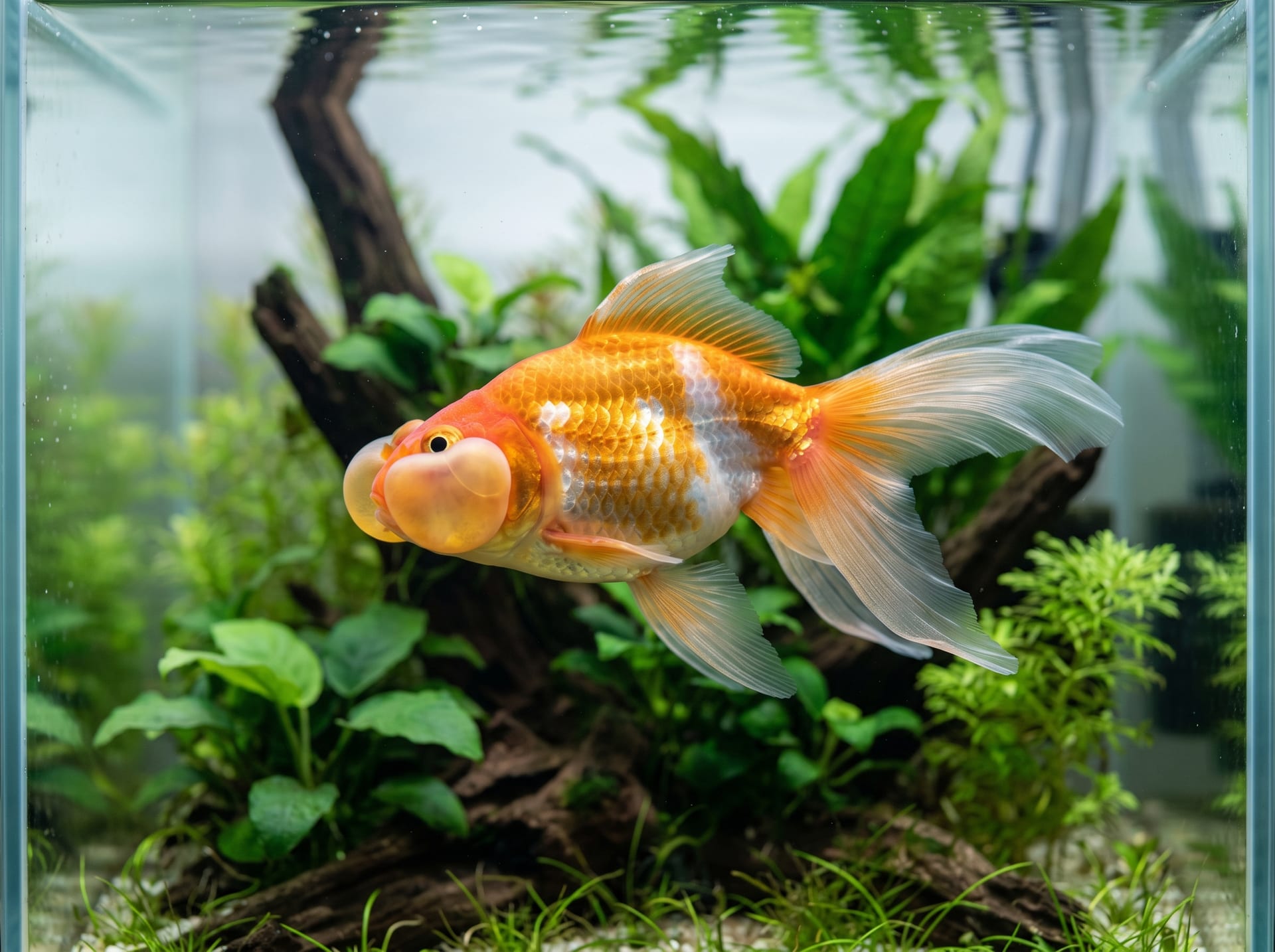
Demekin, Bubble-eye, and Celestial-eye (Delicate Breeds)
These are delicate breeds with protruding eyes or special body shapes. Because they have weak eyesight and poor swimming ability, sharp accessories and strong water currents are strictly forbidden. When choosing a tank, prioritize safety over size.
- 1 fish: 45cm tank or larger
- 2-3 fish: 60cm tank or larger
- Tank mates: Only the same breed or similarly slow-swimming breeds
Demekin often have their food taken by other goldfish, so be careful when feeding.
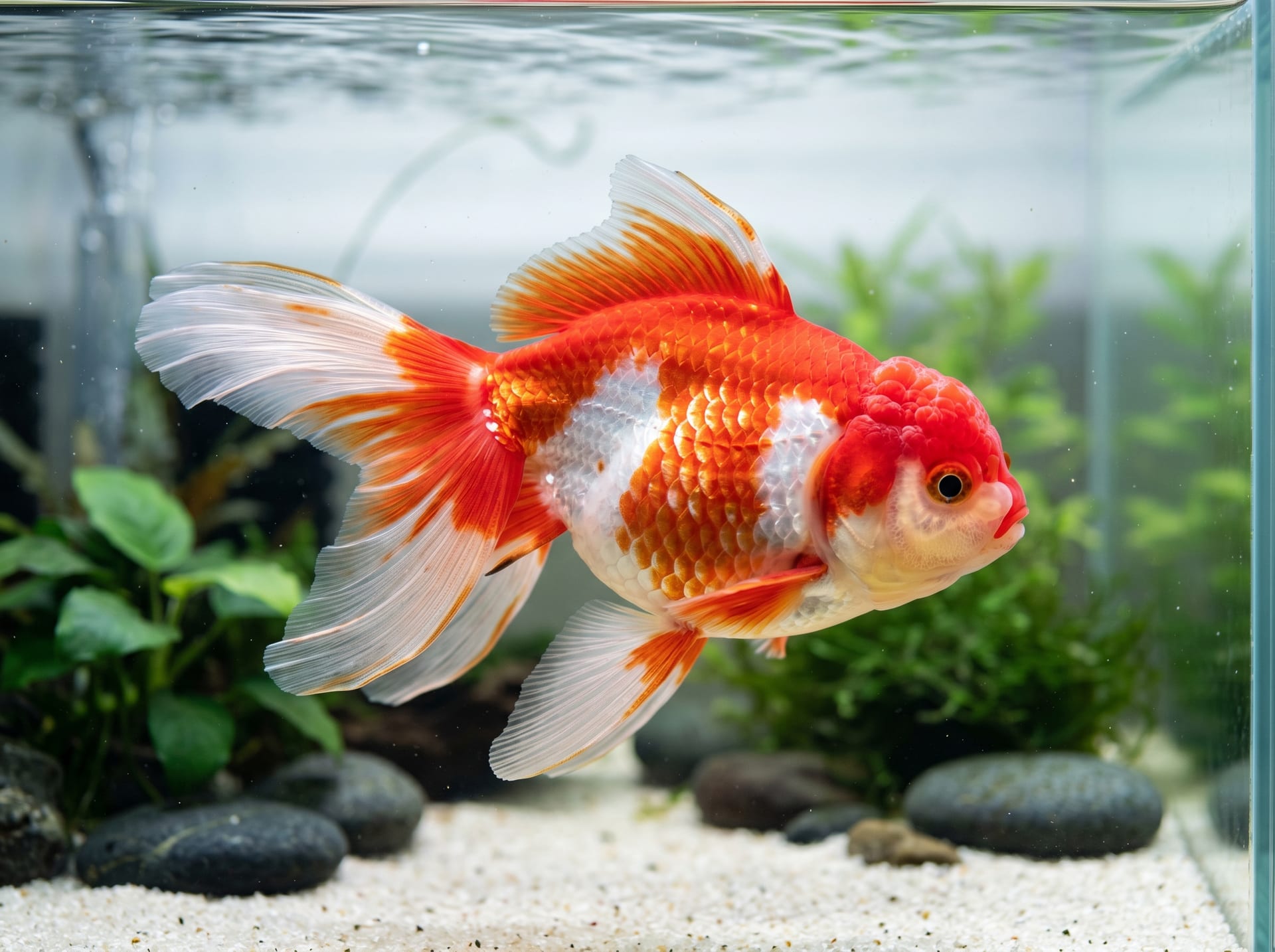
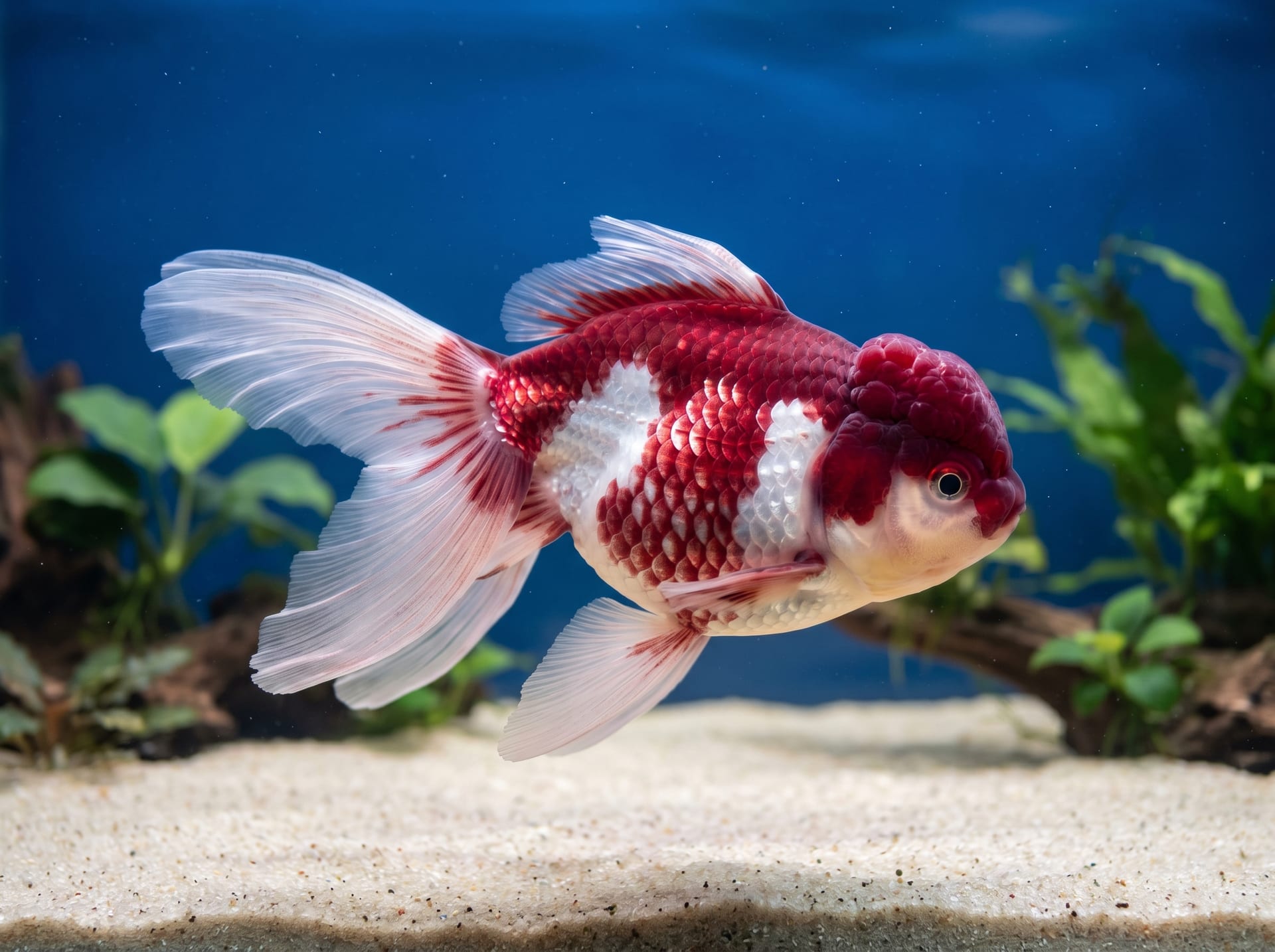
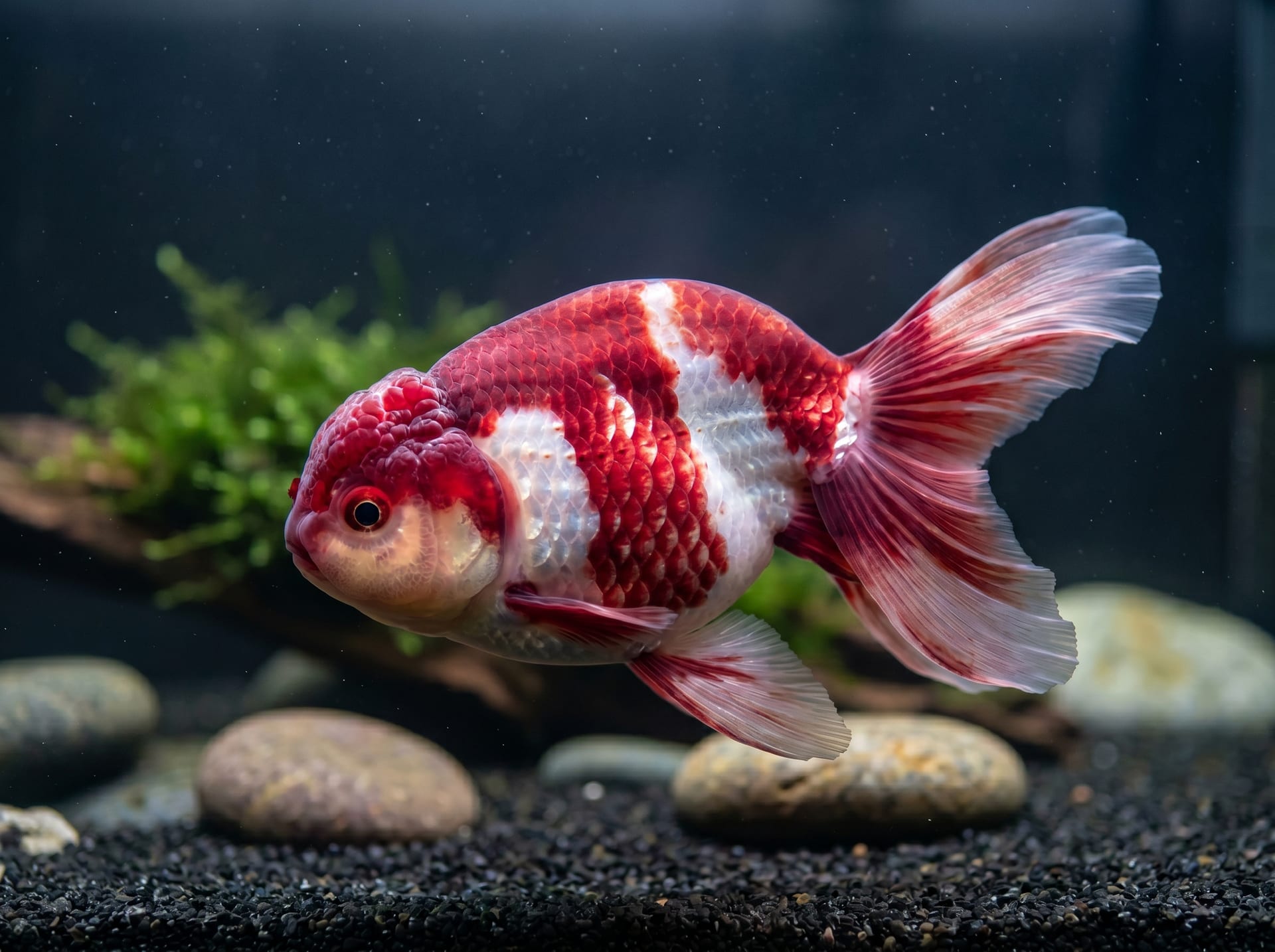
Ranchu and Edo-nishiki (Bottom-dwelling Type)
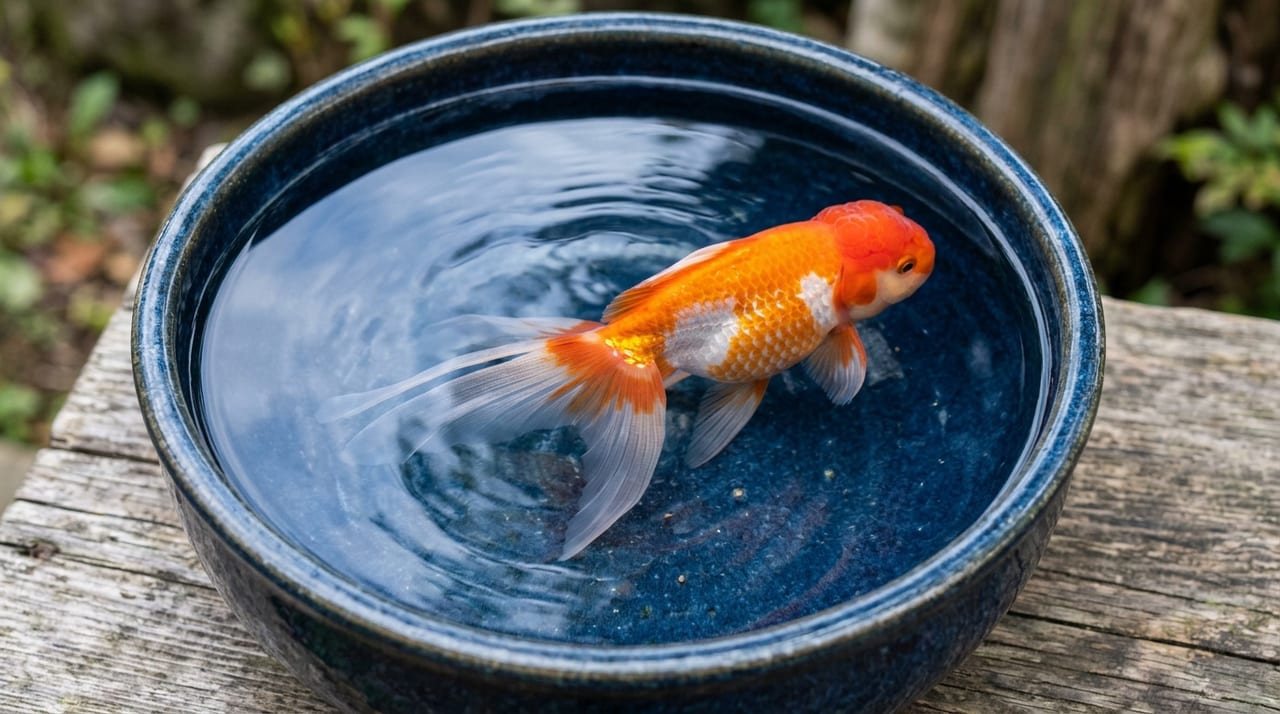
Ranchu have no dorsal fin and swim along the bottom. A "Ranchu tank" (specialized shallow tank) that prioritizes width over depth is appropriate.
- 1-2 fish: 60cm standard tank or Ranchu tank (approximately 60cm wide × 45cm deep)
- 3-5 fish: Ranchu tank 90cm or wider
The proper way to enjoy Ranchu is viewing from above, called "uwa-mi" (top view). Ideal conditions are a specialized shallow tank or a water lily pot in the garden.
---
How to Handle When the Number of Fish Increases
It's common to start with one fish only to find the number increases before you know it. Let's organize what to do when the number of fish increases.
Don't miss the signs of overcrowding
If you see the following signs, it's an alert for overcrowding:
- Water becomes cloudy and white in 2-3 days
- Goldfish gasp at the surface (oxygen depletion)
- Water smells the day after feeding
- White spots or red redness appear on goldfish bodies
The solution is to "get a larger tank" or "reduce the number of fish"
While upgrading the filter is an option, it's not a permanent solution. Increasing water volume is the most reliable measure. If replacing the tank is difficult, consider adding a satellite tank or finding another home for some fish—prioritize what's best for the goldfish.
---
Filtration Equipment and Water Change Guidelines Based on Tank Size
Once you've chosen a tank, selecting the right filtration filter is also important. Because goldfish produce large amounts of waste, they require filtration capacity one step above what's typical for tropical fish.
Filtration filter guidelines
| Tank Size | Recommended Filter |
|---|
| 30-45cm (approximately 12-30L) | Hang-on filter (M size or larger) |
| 60cm (approximately 57L) | External filter or top filter |
| 90cm or larger | Top filter + sub-filter, or large external filter |
External filters are quiet and excellent at filtration, but they are expensive. Top filters offer good value and are easy to maintain, making them recommended for beginners.
Water change frequency guidelines
Water changes are an important task that complements filtration.
- 30-45cm tank, 2-3 fish: Twice a week, 1/3 of the volume
- 60cm tank, 2-3 fish: Once a week, 1/3 to 1/2 of the volume
- 90cm or larger, 4-6 fish: Once to twice a week, 1/3 of the volume
If you change too much water at once, water quality will change abruptly. Use 1/2 or less per change as a guideline and use dechlorinated water.
---
Summary: Enjoy Long-term Goldfish Keeping by Choosing the Right Tank
Goldfish can live 10 years or more with proper conditions. Let's review the basics of choosing tank size:
- Active breeds like Wakin and Comet need at least a 60cm tank
- Round-bodied breeds like Ryukin and Demekin need 45cm or larger; for 2 fish, 60cm
- Ranchu prioritize floor area over depth
- Ensure a minimum of 10-20 liters of water per fish
- Choose filtration one step above the standard and make weekly or bi-weekly water changes a habit
There's hardly such a thing as a tank being too large. When in doubt, the golden rule of goldfish keeping is to choose a size one step larger. Set up a solid environment and enjoy your long relationship with your goldfish.