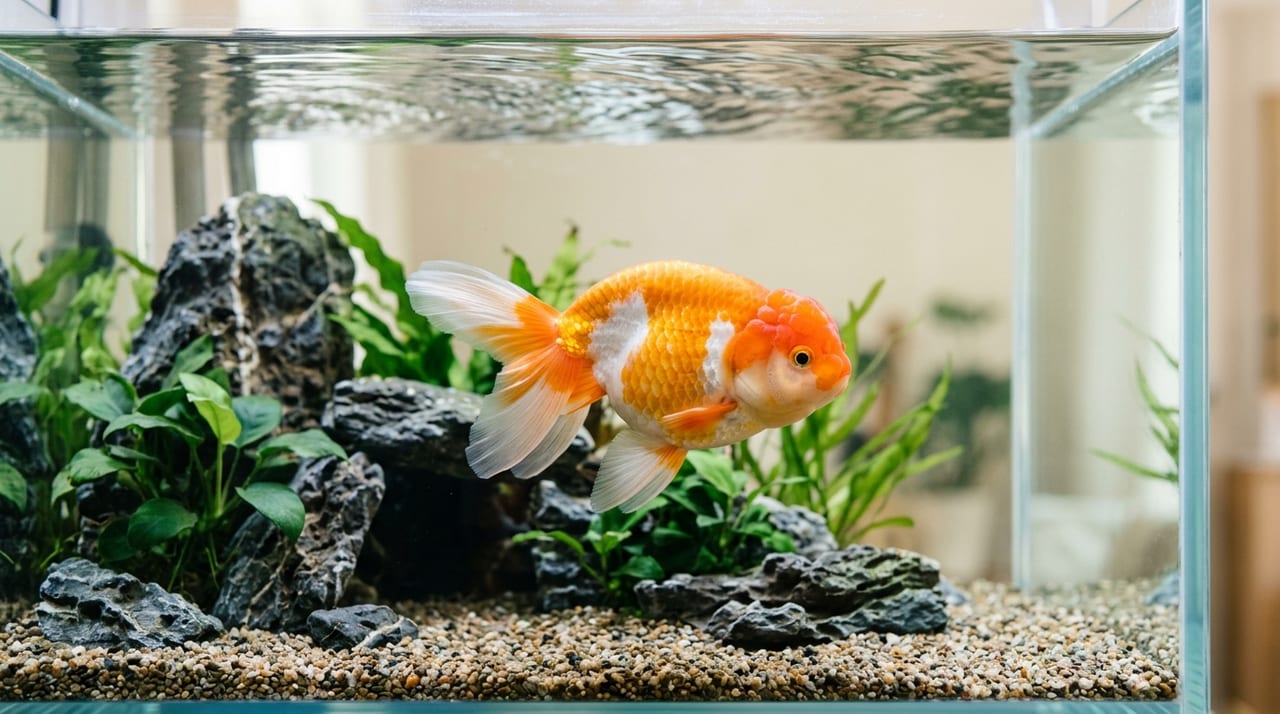
Daily Observation and Health Check Habit-Building Guide for Goldfish | 10 Checkpoints | ブリちょく
Goldfish| ✍️ BreederDirect Editorial
Daily Observation and Health Check Habit-Building Guide for Goldfish | 10 Checkpoints
Explains essential daily observation methods for early detection of goldfish diseases. Introduces 10 daily checkpoints including swimming, appetite, body color, scales, fins, eyes, and gills, plus response procedures when abnormalities are discovered.
Key Takeaways
Explains essential daily observation methods for early detection of goldfish diseases. Introduces 10 daily checkpoints including swimming, appetite, body color, scales, fins, eyes, and gills, plus response procedures when abnormalities are discovered.
Why Daily Observation of Goldfish Is Important
Goldfish cannot express their health condition through facial expressions or sounds. The only way for owners to detect diseases early and treat them quickly is through daily observation and noticing signs that say "something is different from usual." Many goldfish diseases have subtle appearance changes in their early stages and are easily missed, but many cases deteriorate rapidly within a few days.
✍️
BreederDirect Editorial
The BreederDirect editorial team specializes in care information for animals, covering veterinary care and breeding to deliver beginner-friendly guides.
Find Goldfish on BreederDirect
Buy directly from verified breeders
Browse Related Listings
Find Goldfish listings related to this article on BreederDirect. Buy directly from verified breeders.
Daily observation habits require only 5-10 minutes. By combining it with feeding time, you can maintain the practice without strain.
10 Daily Checkpoints
1. Swimming Behavior
Normal: Swimming actively and evenly throughout the water, able to move freely from surface to bottom.
Abnormal Signs:
- Mouth gaping at the water surface (→suspect oxygen deficiency or gill disease)
- Sinking to the bottom and not moving (→poor health condition or early-stage swim bladder disease)
- Swimming sideways or spinning (→swim bladder disease or bacterial infection)
- Swimming at an angle (→swim bladder disorder)
- Sudden rapid swimming or rubbing against objects (→parasites or skin irritation)
2. Appetite and Feeding Behavior
Normal: Actively swims toward food when offered and consumes all of it.
Abnormal Signs:
- Not responding to food or refusing to eat
- Spitting out food immediately after taking it
- Sudden increased appetite (→in cases of parasites or digestive diseases, abnormal appetite increase)
If loss of appetite continues for 2 days or more, conduct water quality testing and enhanced observation.
3. Body Color and Luster
Normal: Breed-specific coloration is vivid, scales are well-aligned with a bright luster.
Abnormal Signs:
- Body color suddenly faded or turned white (→pine cone disease or stress)
- Redness in parts (→congestion or ulcers from bacterial infection)
- Increased black spots (→black spot disease or recovery period from ammonia poisoning)
- Loss of metallic luster (→velvet disease or parasites like costia)
4. Condition of Scales
Normal: Scales are neatly arranged and close to the body surface.
Abnormal Signs:
- Scales standing on end (→typical symptom of pine cone disease. Immediate treatment is necessary)
- Partial scale loss (→injury, jumping out, or fighting)
- White powder on scales (→white spot disease or velvet disease)
5. Fin Shape
Normal: Fins are open and not ragged.
Abnormal Signs:
- Fin edges white and melting away (→fin rot disease or columnaris bacteria infection)
- Fins folded or closed (→general sign of poor health condition)
- White spots on fins (→white spot disease)
- Fins red and congested (→bacterial hemorrhagic disease)
6. Eyes
Normal: Eyes are clear and not protruding, symmetric on both sides.
Abnormal Signs:
- Eyes protruding (→pop-eye. Caused by bacterial infection or water quality deterioration)
- Eyes cloudy or white (→cataracts, infection, or injury)
- Eyes sunken in (→malnutrition or sign of serious disease)
7. Gill Movement
Normal: Both gills are moving regularly and slowly.
Abnormal Signs:
- Rapid gill movement or gasping (→oxygen deficiency or gill disease)
- Only one gill moving (→gill disease or parasites)
- Gills swollen or open (→gill disease or bacterial infection)
8. Foreign Objects or Injuries on Body Surface
Check for visible abnormalities.
White cotton-like growth (→water mold disease)
Sand-grain-like white spots (→white spot disease)
Red hemorrhage spots or ulcers (→bacterial hemorrhagic disease)
Protrusions or wart-like bumps (→viral disease or ciliates)
Parasites (anchor worms are white thread-like, 2-10mm long)
9. Excretion and Fecal Condition
Normal: Short brown to dark orange feces.
Abnormal Signs:
- Whitish or transparent feces (→digestive disorders or parasitic infection)
- Long thread-like feces hanging down (→overeating, indigestion, or in some cases internal parasites)
- No feces at all (→constipation or digestive tract obstruction)
10. Water Quality and Condition
Check not only the goldfish but also the condition of the aquarium water daily.
Water is cloudy white (→insufficient bacteria or sudden ammonia spike)
Bubbles remaining on the water surface without dissolving (→water quality deterioration or excess organic matter)
Water turning green (→algae bloom or algae proliferation)
Foul odor (→decomposition or water quality deterioration)
Weekly Detailed Checklist
In addition to daily simple observations, perform the following detailed checks once a week.
[ ] Check thermometer (appropriate temperature for the season)
[ ] Test ammonia and nitrite with test kits (especially during initial setup and after water changes)
[ ] Measure pH (6.8-7.5 is the target range)
[ ] Check for filter clogging
[ ] Water change (typically 20-30% once a week)
[ ] Check light duration
Benefits of Keeping Observation Records
We strongly recommend keeping observation records in a smartphone notes app or dedicated care journal.
Content to Record:
- Date, feeding amount, whether water change was performed
- Changes in health condition and points of concern
- Water quality data such as water temperature and pH
Benefits of Record-Keeping:
- Identify patterns of changes (such as health deterioration at the same time each year)
- Provide accurate information when visiting a veterinary clinic
- Serves as individual fish management record for breeders
Response Flow When Abnormalities Are Discovered
Minor Abnormalities (slight appetite decrease, slightly faded color, etc.)
Measure water quality and perform water change if abnormal
Fasting for 1-2 days (effective for digestive troubles)
Observe for 48-72 hours; if no improvement, proceed to next step
Moderate Abnormalities (fin rot, numerous white spots, early-stage pop-eye, etc.)
Move to isolation tank (sick fish tank)
Start salt bath with 0.5% salt water
Identify the causative disease and perform appropriate medicated bath
Severe Abnormalities (sideways rolling, full-body congestion, fins mostly melted away, etc.)
Seek veterinary care promptly (a veterinarian who can treat fish). Taking photos or videos to bring along will help with diagnosis.
Summary
The foundation of goldfish health management is daily observation. By making these 10 observation points a habit, you can detect diseases in their early stages. Cherish that sense of "something is not quite right." Early detection of abnormalities and appropriate treatment are the most important factors in keeping goldfish healthy and long-lived. By keeping observation records, you can objectively understand changes in your fish's health condition and achieve more precise care.