Source: Wikimedia Commons
Tinfoil Barb
IntermediateBarbonymus schwanefeldii
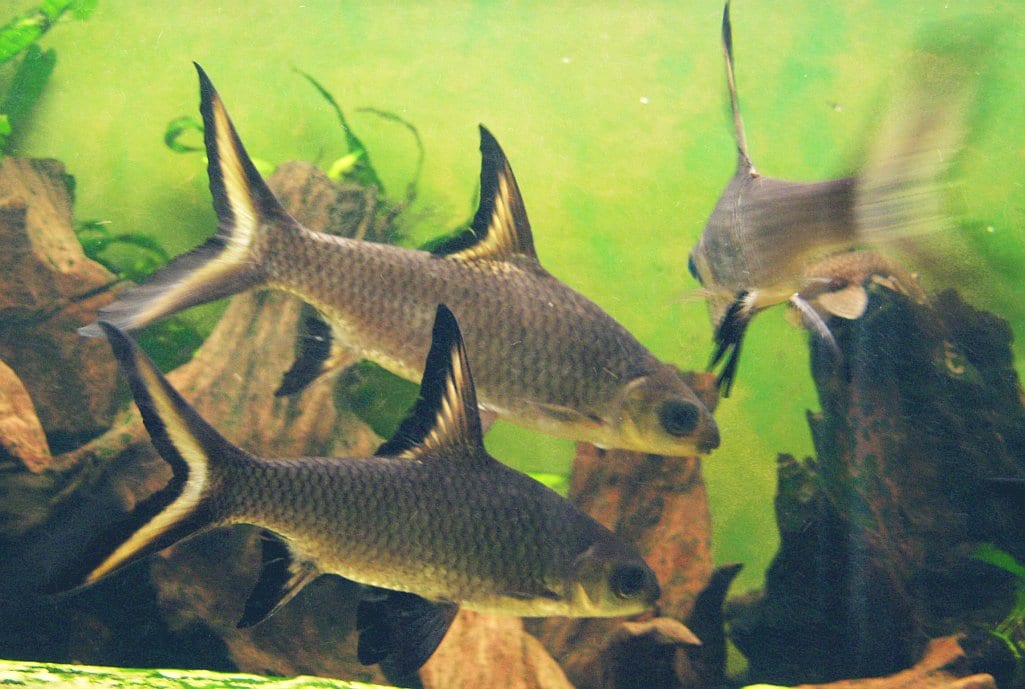
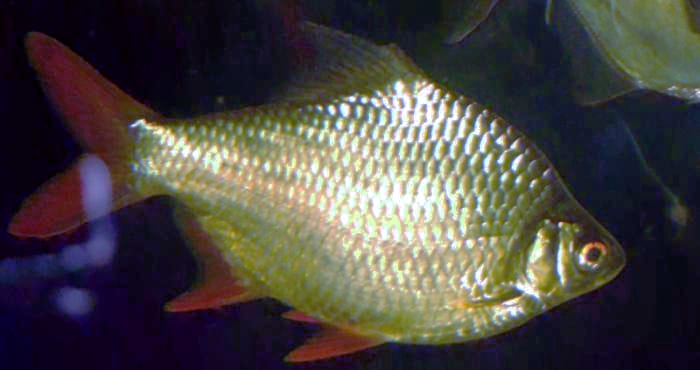
A large barb with a bright silver body and red fins. Sold cheaply as juveniles, it reaches 35cm and needs a tank of around 750 litres with powerful filtration. It swims hard and jumps, so a heavy lid is essential.
Difficulty
Intermediate
Temperature
20〜28℃
Lifespan
8-12 years
Size
Up to 35cm SL
Diet
Dried foods, vegetable matter and frozen foods
About
Barbonymus schwanefeldii ranges from the Mekong and Chao Phraya basins through the Malay Peninsula to Sumatra and Borneo. FishBase records a maximum of 35cm SL, a common length of 20cm, pH 6.5-7.0, up to 10 dH and 22-25C, and places it in rivers, streams and canals as a largely herbivorous omnivore living on aquatic plants and filamentous algae. In east Kalimantan it has been recorded across 20.4-33.7C. Seriously Fish gives 355mm SL, 20-28C, pH 6.0-8.0, 2-15 dGH and a 210 x 60cm base of about 756 litres. The body is silver with red fins and a black blotch in the dorsal. Juveniles of 5-7cm are sold cheaply, which makes this one of the species most often given up once it outgrows its tank. The IUCN rates it Least Concern and it is not listed by CITES.
Source: Wikipedia (CC BY-SA 4.0)
Lifespan of the Tinfoil Barb
The Tinfoil Barb lives 8-12 years.
Size of the Tinfoil Barb
The Tinfoil Barb grows to Up to 35cm SL.
Temperature & humidity for the Tinfoil Barb
The ideal temperature for the Tinfoil Barb is 20〜28℃.
Basic Info
Origin
Southeast Asia (Mekong and Chao Phraya basins, Malay Peninsula, Sumatra and Borneo)
Lifespan
8-12 years
Size
Care Specifications
- pH
- 6–8
- Hardness (GH)
- 2–15 dGH
- Water Temp.
- 20–28℃
- Min. Tank
- 756 L
Semi-aggressiveGroupBreeding: Hard
Sources: FishBase / Seriously Fish
References & Sources
Edited & verified by: BreederDirect editorial team
The taxonomic, regulatory, and husbandry data on this page are compiled and verified against the authoritative primary sources below.
Taxonomy & Authority
Regulations & Conservation Status
Not CITES-listedIUCN LC · Least Concern
Sources: CITES Appendices (species not listed) / IUCN Red List
Regulations may change. Always verify the latest information with the relevant authorities.
Tinfoil Barb Listings
Loading latest listingsFind listings for this species