Source: Wikimedia Commons
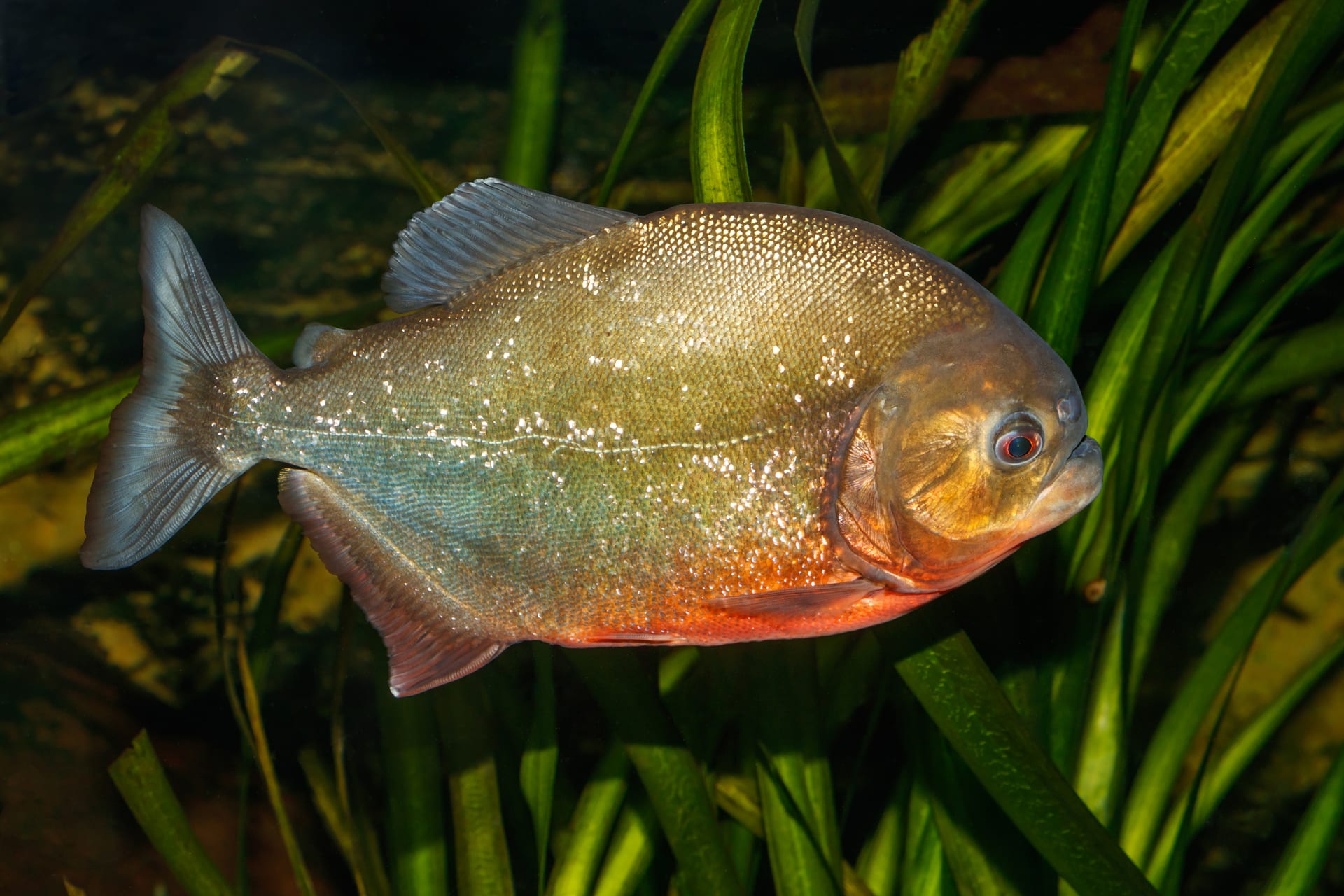
Red-bellied Piranha
AdvancedPygocentrus nattereri
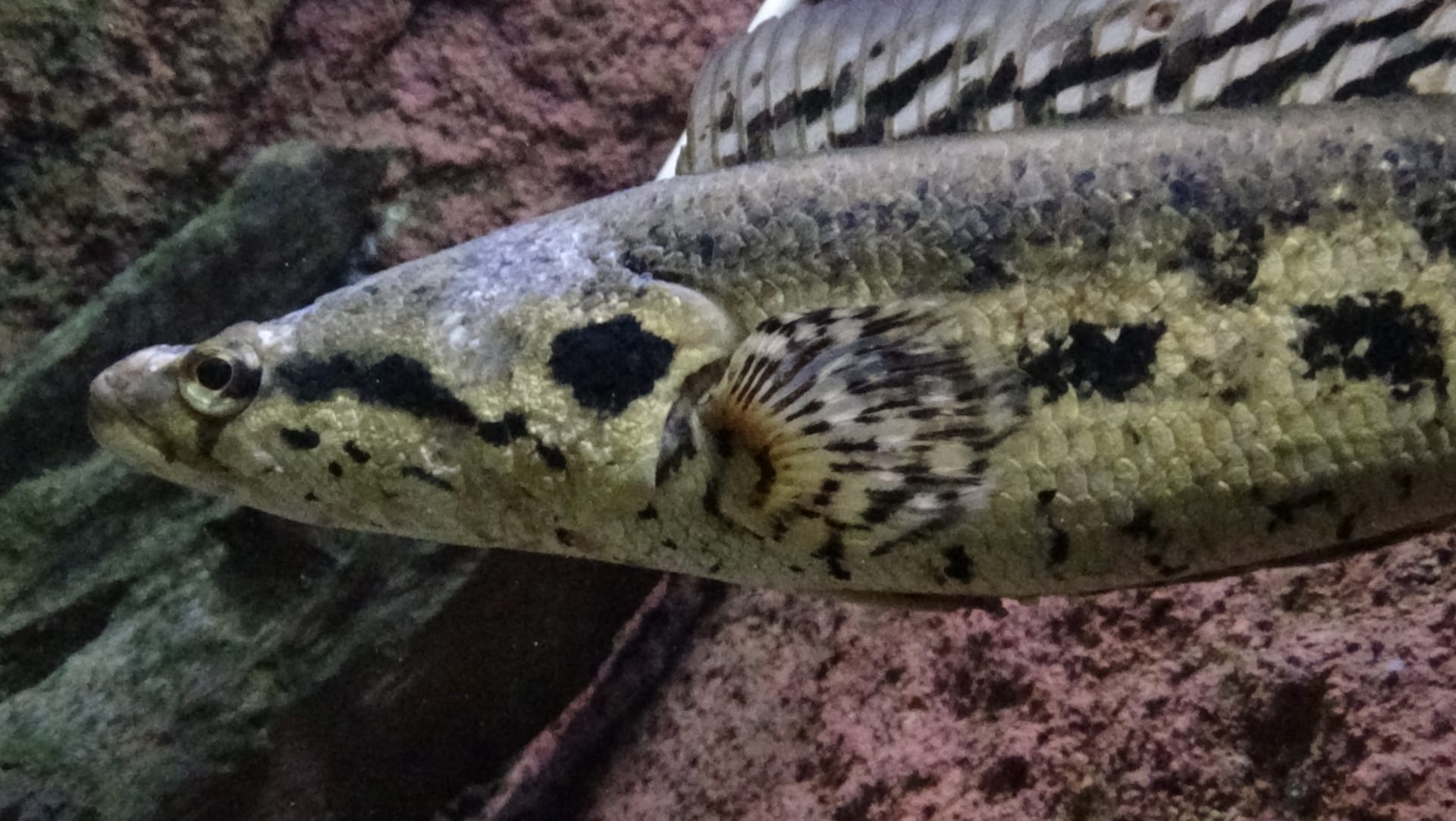
A large piranha, silver with a red belly and a single row of sharp triangular teeth in each jaw. Contrary to its reputation it is an opportunistic generalist, but keeping it calls for a very large tank, oversized filtration and great care in handling.
Difficulty
Advanced
Temperature
24〜28℃
Lifespan
15+ years
Size
About 35-50cm
Diet
Juveniles take bloodworm, small earthworms and chopped prawn; adults take strips of fish, whole prawns, mussels, river shrimp and larger earthworms
About
Pygocentrus nattereri is a large piranha found widely in South America and is among the most notorious of all freshwater fishes. FishBase records 50.0cm SL and 3.9kg, giving pH 5.5-7.5, hardness to 20 dH and 23-27C, while Seriously Fish gives 35.0cm SL, 24-28C, pH 5.5-7.5, 2-12 dGH and a base of at least 240 by 90cm. It occupies most habitat types across its range, from main channels and smaller tributaries to oxbows, floodplain lakes and reservoirs. Each jaw carries a single row of sharp triangular teeth used like blades to puncture, tear, chop and crush. It is not, however, an exclusive carnivore but an opportunistic generalist, taking live fishes along with aquatic invertebrates, insects, nuts, seeds and fruit. Attacks on live animals entering the water are very rare and mostly involve accidental bites or fish trapped in shrinking pools during the dry season.
Source: Wikipedia (CC BY-SA 4.0)
Lifespan of the Red-bellied Piranha
The Red-bellied Piranha lives 15+ years.
Size of the Red-bellied Piranha
The Red-bellied Piranha grows to About 35-50cm.
Temperature & humidity for the Red-bellied Piranha
The ideal temperature for the Red-bellied Piranha is 24〜28℃.
Basic Info
Origin
South America (the Amazon basin, plus Guyana and Venezuela, coastal drainages of northeastern Brazil and the Guianas, and south to the Plata system)
Lifespan
Care Specifications
- pH
- 5.5–7.5
- Hardness (GH)
- 2–12 dGH
- Water Temp.
- 24–28℃
- Min. Tank
- 648 L
AggressiveGroup
Sources: Seriously Fish / FishBase
References & Sources
Edited & verified by: BreederDirect editorial team
The taxonomic, regulatory, and husbandry data on this page are compiled and verified against the authoritative primary sources below.
Taxonomy & Authority
Regulations & Conservation Status
Not CITES-listedIUCN LC · Least Concern
Domestic law: It is not designated an invasive alien species in Japan. Even so, a fish that can no longer be kept must never be released or abandoned.
Sources: CITES Appendices (species not listed) / IUCN Red List / Ministry of the Environment, list of invasive alien species (Japan)
Regulations may change. Always verify the latest information with the relevant authorities.
Red-bellied Piranha Listings
Loading latest listingsFind listings for this species