Source: Wikimedia Commons
Moonlight Gourami
BeginnerTrichopodus microlepis
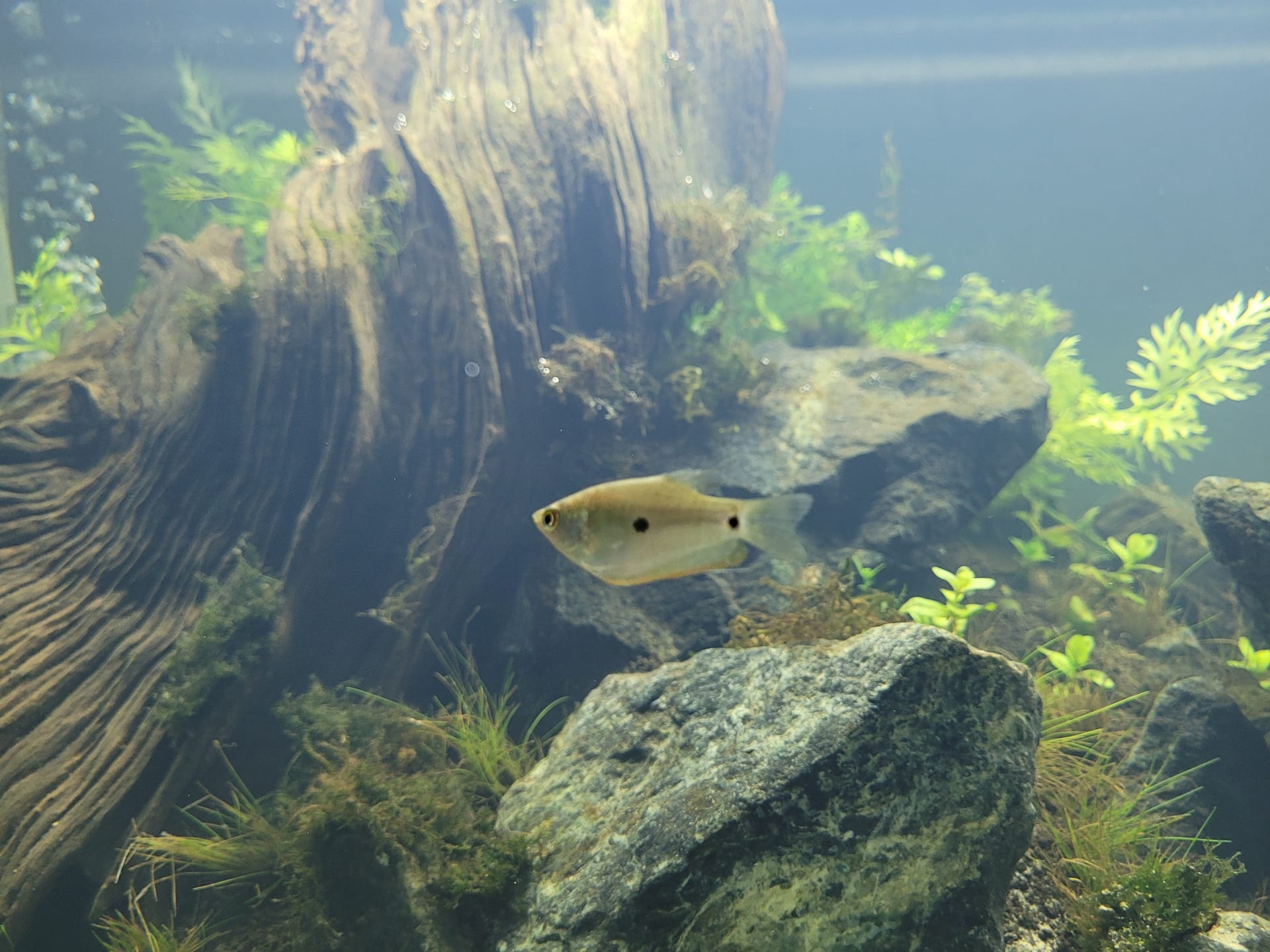
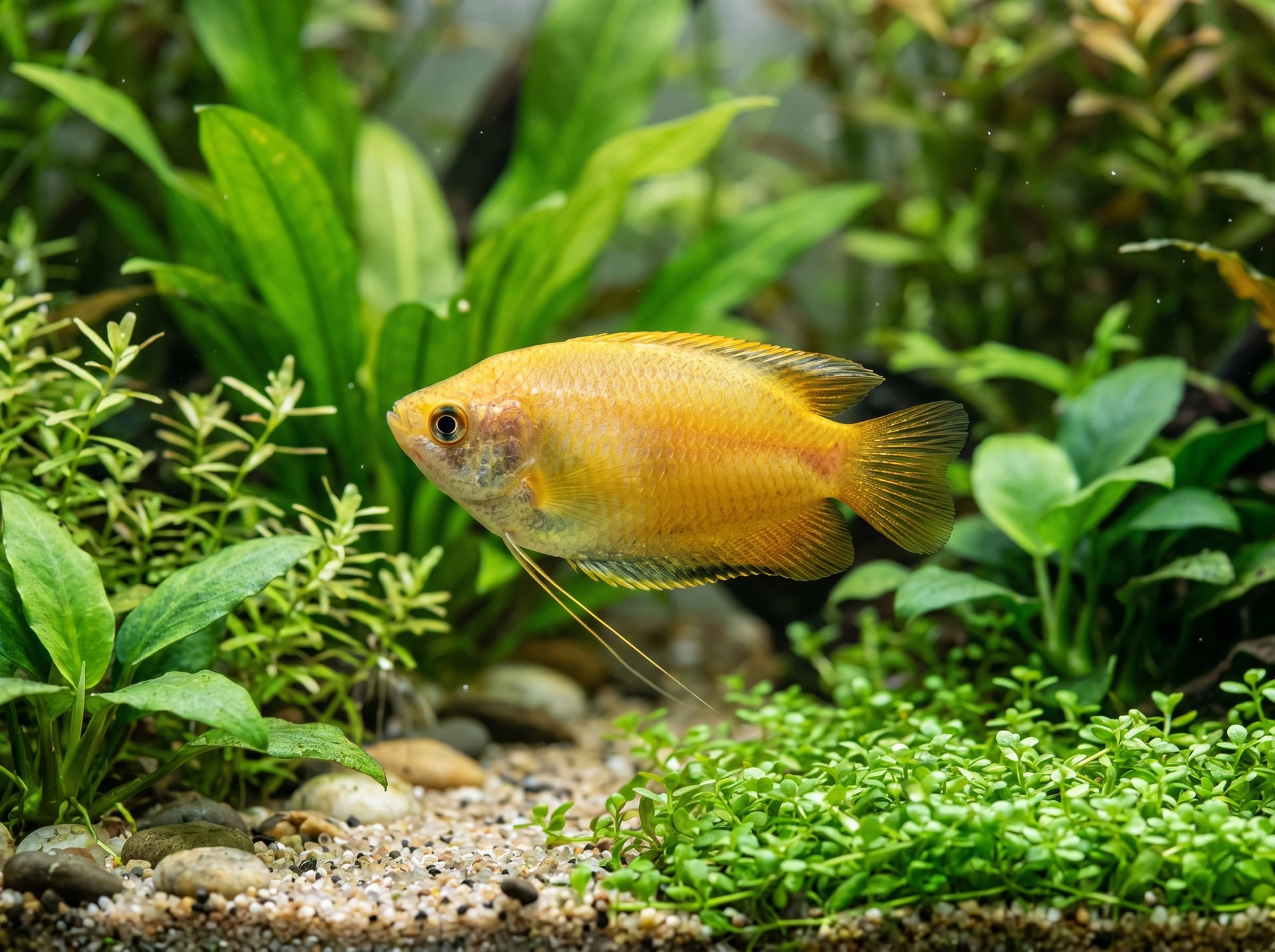
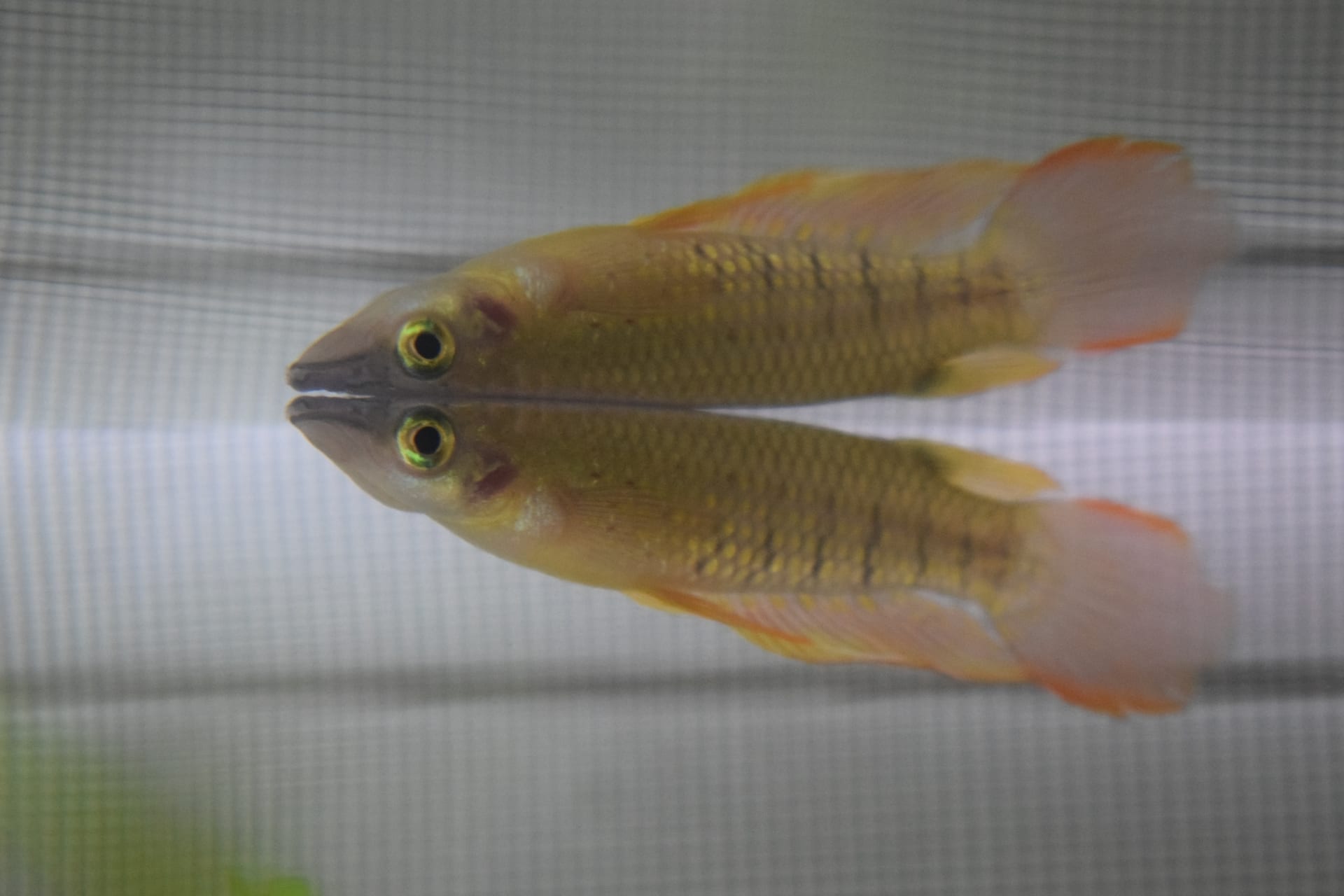
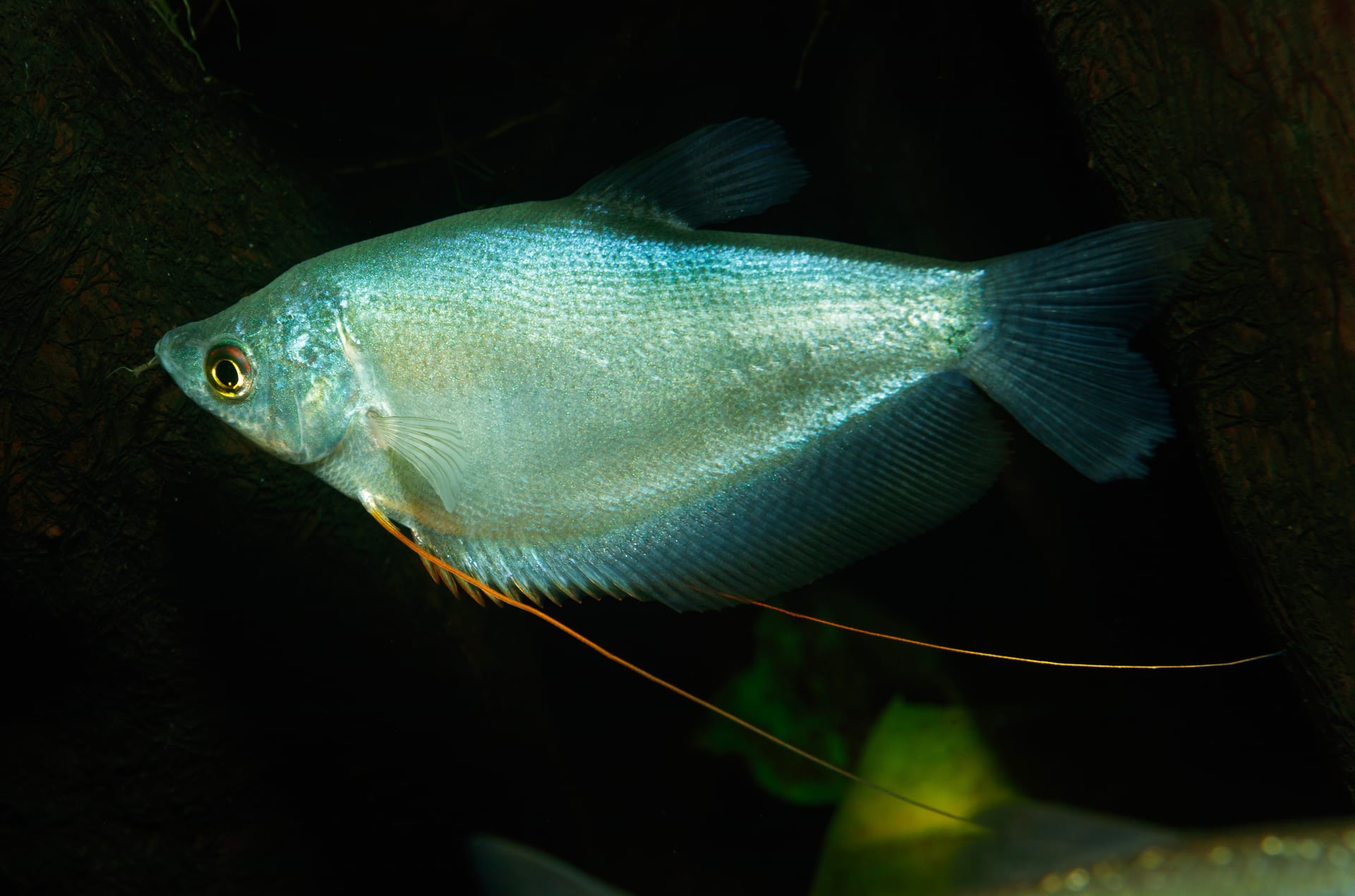
Silvery white, with thread-like ventral fins noticeably longer than those of other gouramis. It is peaceful but shy, and it eats fish small enough to swallow. Males colour their ventral fins orange to red.
Difficulty
Beginner
Temperature
25〜30℃
Lifespan
4-6 years
Size
14-15cm
Diet
Prepared foods, frozen bloodworm, Artemia, live foods
About
Trichopodus microlepis is an anabantoid of the lower Mekong floodplain and neighbouring waters. FishBase gives a total length of 14.0cm and Seriously Fish a standard length of 150mm. Fine scales give the body its silvery white sheen, the origin of the English name. The thread-like ventral fins are markedly longer than in other gouramis and are used to feel its surroundings. Males colour those fins orange to red while females keep them yellow, which makes sexing easy. It lives in shallow, still, heavily vegetated ponds and swamps, and has a labyrinth organ that makes it an obligate air-breather. FishBase records 26-30C, pH 6.0-7.0 and 2-25dH in the wild. Seriously Fish gives 25-30C, pH 6.0-7.5, 2-25dGH and a 90 x 30cm tank of about 81 litres. It is peaceful but shy and shrinks from boisterous tankmates, and it eats fish small enough to swallow, so small species should be avoided. It spawns under a bubble nest, with FishBase giving 500 to 1,000 eggs and Seriously Fish up to 2,000. IUCN status is Least Concern.
Source: Wikipedia (CC BY-SA 4.0)
Lifespan of the Moonlight Gourami
The Moonlight Gourami lives 4-6 years.
Size of the Moonlight Gourami
The Moonlight Gourami grows to 14-15cm.
Temperature & humidity for the Moonlight Gourami
The ideal temperature for the Moonlight Gourami is 25〜30℃.
Basic Info
Origin
Southeast Asia (lower Mekong floodplain, Thailand and Cambodia)
Care Specifications
- pH
- 6–7.5
- Hardness (GH)
- 2–25 dGH
- Water Temp.
- 25–30℃
- Min. Tank
- 81 L
PeacefulBreeding: Moderate
Sources: FishBase / Seriously Fish
References & Sources
Edited & verified by: BreederDirect editorial team
The taxonomic, regulatory, and husbandry data on this page are compiled and verified against the authoritative primary sources below.
Taxonomy & Authority
Accepted name: Trichopodus microlepis (Günther, 1861)
Synonyms: Trichogaster microlepis
Authority databases: FishBase
Nomenclature follows global taxonomic authority databases.
Regulations & Conservation Status
Not CITES-listedIUCN LC · Least Concern
Sources: CITES Appendices (species not listed) / IUCN Red List
Regulations may change. Always verify the latest information with the relevant authorities.
Moonlight Gourami Listings
Loading latest listingsFind listings for this species