Source: Wikimedia Commons
Bamboo Shrimp
IntermediateAtyopsis moluccensis
A large freshwater shrimp whose first two pairs of legs end in fan-like bristles, spread into the current to filter plankton. The feeding posture is distinctive, and strong flow is the key to keeping it.
Difficulty
Intermediate
Temperature
22〜28℃
Size
Up to 8.6cm
Diet
Suspended plankton, fine organic particles and powdered foods
About
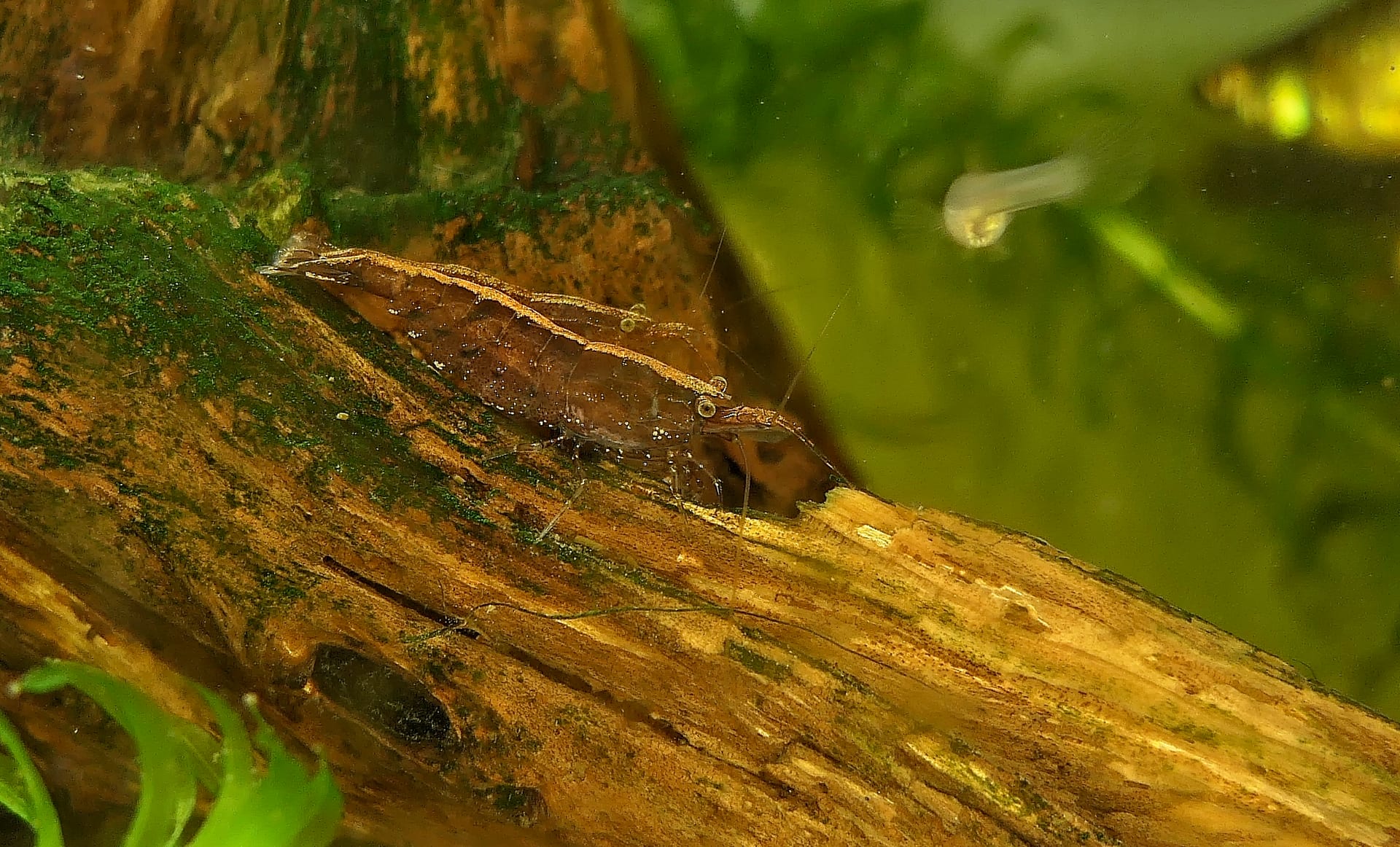
Atyopsis moluccensis is a large atyid freshwater shrimp ranging from India and Sri Lanka through Thailand, the Malay Peninsula and Indonesia to New Guinea. The genus Atyopsis was erected by Chace in 1983 for two species split from Atya, this one and A. spinipes, separated by the number of teeth beneath the rostrum: seven to sixteen here against two to six in A. spinipes. The German Wikipedia gives a maximum of 8.6cm and describes wide colour variation from light to dark brown, some individuals showing dark lateral stripes, broken patterning or a pale dorsal line. The first two pairs of legs end in fans of bristles that are spread into the current and closed at intervals to carry filtered plankton to the mouth. Adults favour strong flow while juveniles keep to calmer water, and a hungry shrimp will forage the substrate. It is vulnerable just after moulting, so caves and dense planting are needed as refuges.
Source: Wikipedia (CC BY-SA 4.0)
Size of the Bamboo Shrimp
The Bamboo Shrimp grows to Up to 8.6cm.
Basic Info
Origin
South and Southeast Asia (India, Sri Lanka, Thailand, the Malay Peninsula, Indonesia and New Guinea)
Size
Up to 8.6cm
Temperature
22〜28℃
Diet
Suspended plankton, fine organic particles and powdered foods
Care Guide
Care Specifications
PeacefulGroup
Sources: Wikipedia (Atyopsis) / Wikipedia (de: Molukken-Faechergarnele) / WoRMS
References & Sources
Edited & verified by: BreederDirect editorial team
The taxonomic, regulatory, and husbandry data on this page are compiled and verified against the authoritative primary sources below.
Taxonomy & Authority
Accepted name: Atyopsis moluccensis (De Haan, 1849)
Authority databases: GBIF
Nomenclature follows global taxonomic authority databases.
Regulations & Conservation Status
Not CITES-listed
Sources: CITES Appendices (species not listed) / IUCN Red List
Regulations may change. Always verify the latest information with the relevant authorities.
Bamboo Shrimp Listings
Loading latest listingsFind listings for this species