Source: Wikimedia Commons
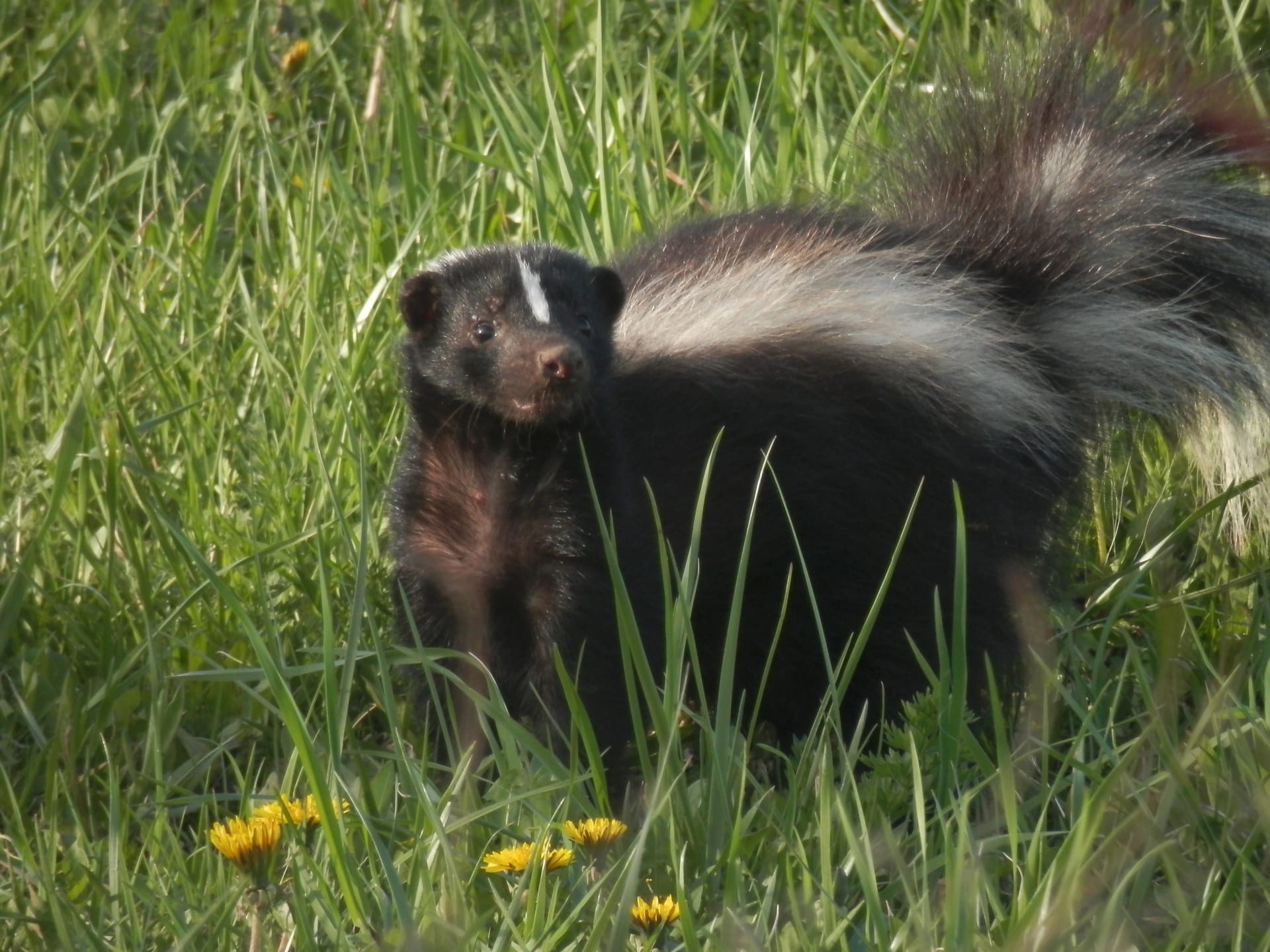
Striped Skunk
AdvancedMephitis mephitis
A North American skunk with white stripes on black. Sprays foul musk up to 6 m from its anal glands. Pets are mostly descented animals: playful but curious and destructive, a demanding species.
Difficulty
Advanced
Temperature
18〜26℃
Lifespan
Up to 7 years in the wild, up to 10 in captivity
Size
52-77cm total length (tail 17-40cm) / 1.8-4.5kg
Humidity
40〜60%
Diet
Insects, poultry and other animal protein, vegetables, fruit, a few nuts
About
The striped skunk (Mephitis mephitis) is the best-known skunk, ranging across North America from southern Canada through the United States to northern Mexico. The black body carries white stripes and a long, heavily furred tail. A pair of anal glands each holding about 15 ml of musk can spray up to 6 m in defence. Mostly nocturnal and solitary, it is omnivorous but 80-90 percent of its diet is animal matter: grasshoppers, beetles and larvae in summer, voles, ground-nesting birds' eggs and chicks, amphibians, carrion and fish in winter. Pet skunks have a history of taming and selective breeding, producing brown and grey coats besides black and white. In the US they are legal in 17 states and scent glands are commonly removed, while the UK's Animal Welfare Act 2006 banned descenting. They are playful and sociable but intensely curious, digging carpets, climbing furniture and stealing objects. In North America the species is a major rabies carrier. Imports into Japan are quarantined under the Rabies Prevention Act (dogs, cats, raccoons, foxes and skunks); it is not a Japanese specified animal. IUCN Least Concern, not CITES-listed.
Source: Wikipedia (CC BY-SA 4.0)
Lifespan of the Striped Skunk
The Striped Skunk lives Up to 7 years in the wild, up to 10 in captivity.
Wild lifespan is up to 7 years, captive up to 10.
Size of the Striped Skunk
The Striped Skunk grows to 52-77cm total length (tail 17-40cm) / 1.8-4.5kg.
Total length is 52-77 cm, tail 17-40 cm, weight usually 1.8-4.5 kg.
Basic Info
Origin
North America (southern Canada to northern Mexico)
Care Specifications
References & Sources
Edited & verified by: BreederDirect editorial team
The taxonomic, regulatory, and husbandry data on this page are compiled and verified against the authoritative primary sources below.
Primary sources
- Wikipedia
- CITES Appendices (species not listed)
- IUCN Red List Mephitis mephitis (LC)
- MHLW list of animals outside the notification system (Rabies Prevention Act / Livestock Act) and import-prohibited animals
- Ministry of the Environment Specified Animal List
- Animal Diversity Web Mephitis mephitis
- Wikipedia (en) Skunks as pets
- GBIF
Taxonomy & Authority
Accepted name: Mephitis mephitis (Schreber, 1776)
Authority databases: GBIF
Nomenclature follows global taxonomic authority databases.
Regulations & Conservation Status
Not CITES-listedIUCN LC · Least Concern
Domestic law: Skunks are subject to import quarantine under Japan's Rabies Prevention Act (dogs, cats, raccoons, foxes and skunks) at the Animal Quarantine Service.
Not a Japanese specified (dangerous) animal.
Sources: CITES Appendices (species not listed) / IUCN Red List Mephitis mephitis (LC) / MHLW list of animals outside the notification system (Rabies Prevention Act / Livestock Act) and import-prohibited animals / Ministry of the Environment Specified Animal List
Regulations may change. Always verify the latest information with the relevant authorities.
Striped Skunk Listings
Loading latest listingsFind listings for this species