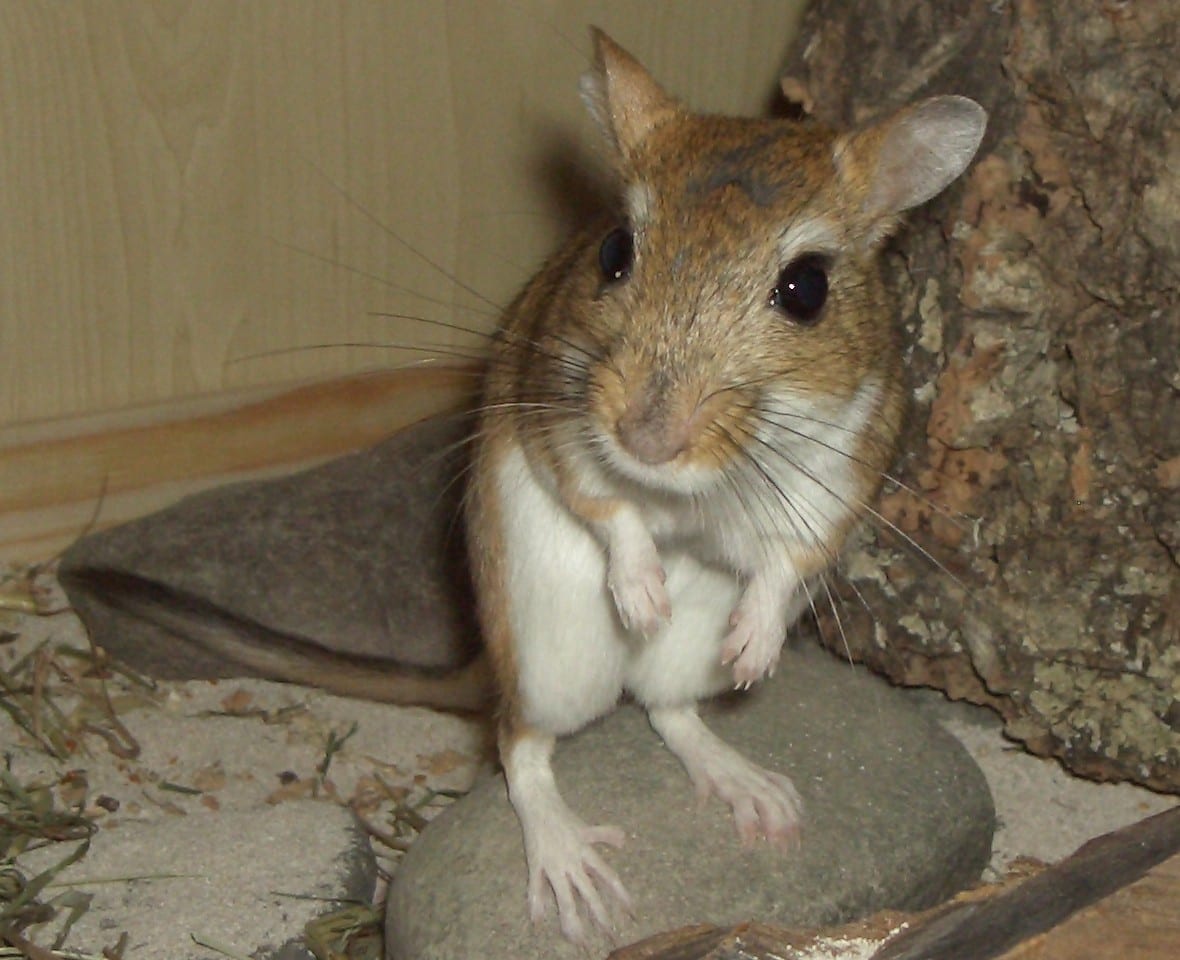
Source: Wikimedia Commons
Persian Jird
IntermediateMeriones persicus
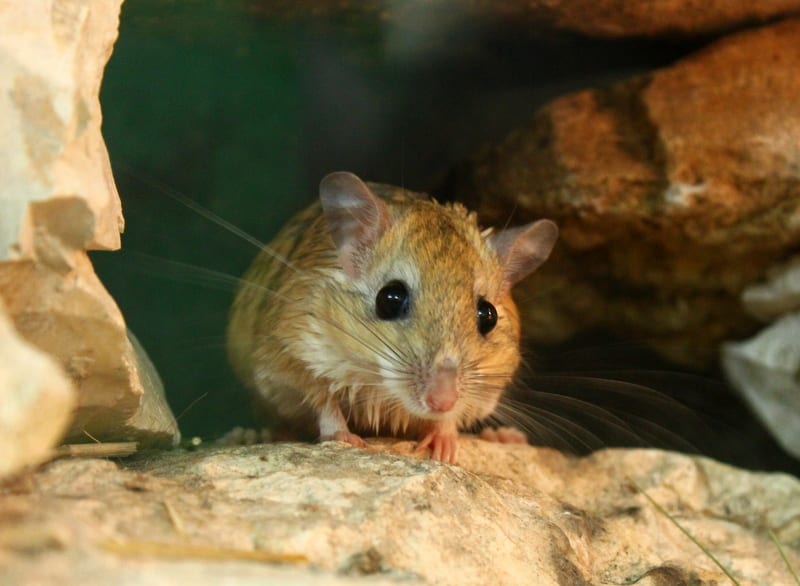
A large jird of rocky arid country from Iran to Pakistan. About 15cm long with a brush-tipped tail longer than the body, it loves to leap and climb.
Difficulty
Intermediate
Temperature
18〜26℃
Lifespan
6-7 years
Size
About 15cm (tail slightly longer than body)
Humidity
40〜60%
Diet
Dry plant matter and grains, a few insects
About
The Persian jird (Meriones persicus) is a gerbil of dry, rocky hillsides and semi-desert in Afghanistan, Armenia, Azerbaijan, Iran, Iraq, Pakistan, Turkey and Turkmenistan. It is about 15 cm long with a brush-tipped tail slightly longer than the body, brown above and white below. In the wild it shelters in small burrows or under overhanging rocks and sometimes lives near people, such as under walls. It eats dry plant material and grain with some small insects. There are usually two litters a year of around seven pups. It is assessed as Least Concern and is not CITES-listed. Some people keep it as a pet, and it can live six or seven years in captivity. It leaps and climbs vigorously and needs a tall, large cage; a standard gerbil setup is too small. Imports fall under the notification system of Japan's Infectious Diseases Control Act. In Japan it is only occasionally handled by exotic pet shops and supply is irregular. Both Persian jird and Persian sand rat are used as Japanese names.
Source: Wikipedia (CC BY-SA 4.0)
Lifespan of the Persian Jird
The Persian Jird lives 6-7 years.
Size of the Persian Jird
The Persian Jird grows to About 15cm (tail slightly longer than body).
Basic Info
Origin
West and South Asia (Iran, Afghanistan, Pakistan, Turkey, etc.)
Lifespan
6-7 years
Size
About 15cm (tail slightly longer than body)
References & Sources
Edited & verified by: BreederDirect editorial team
The taxonomic, regulatory, and husbandry data on this page are compiled and verified against the authoritative primary sources below.
Taxonomy & Authority
Accepted name: Meriones persicus (Blanford, 1875)
Authority databases: GBIF
Nomenclature follows global taxonomic authority databases.
Regulations & Conservation Status
Not CITES-listedIUCN LC · Least Concern
Domestic law: Subject to Japan's animal import notification system under the Infectious Diseases Control Act (exporting-government health certificate required).
Sources: CITES Appendices (not listed) / IUCN Red List Meriones persicus / MHLW Animal Import Notification System
Regulations may change. Always verify the latest information with the relevant authorities.
Persian Jird Listings
Loading latest listingsFind listings for this species