Source: Wikimedia Commons
Giant Angora Rabbit
AdvancedOryctolagus cuniculus
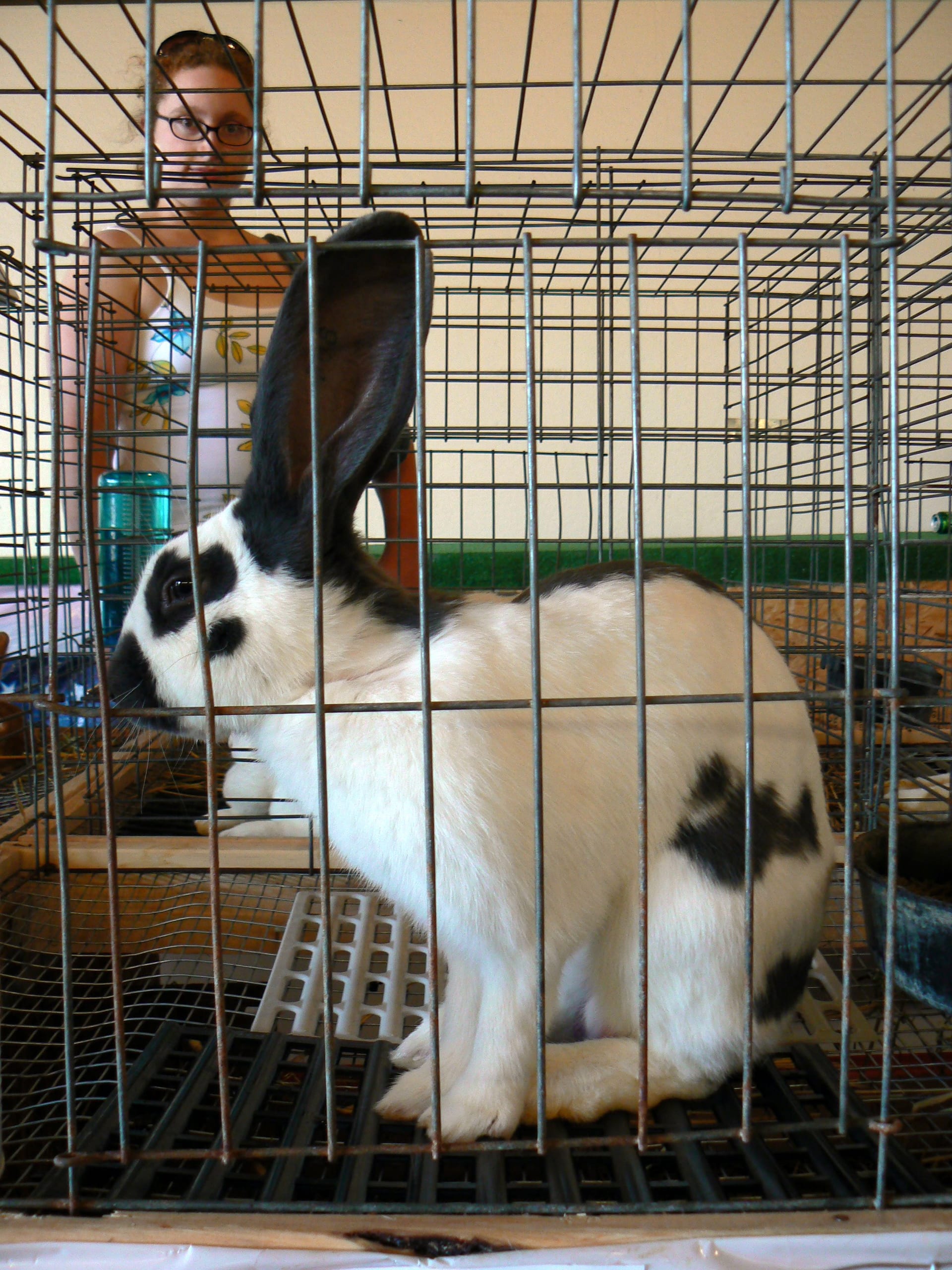
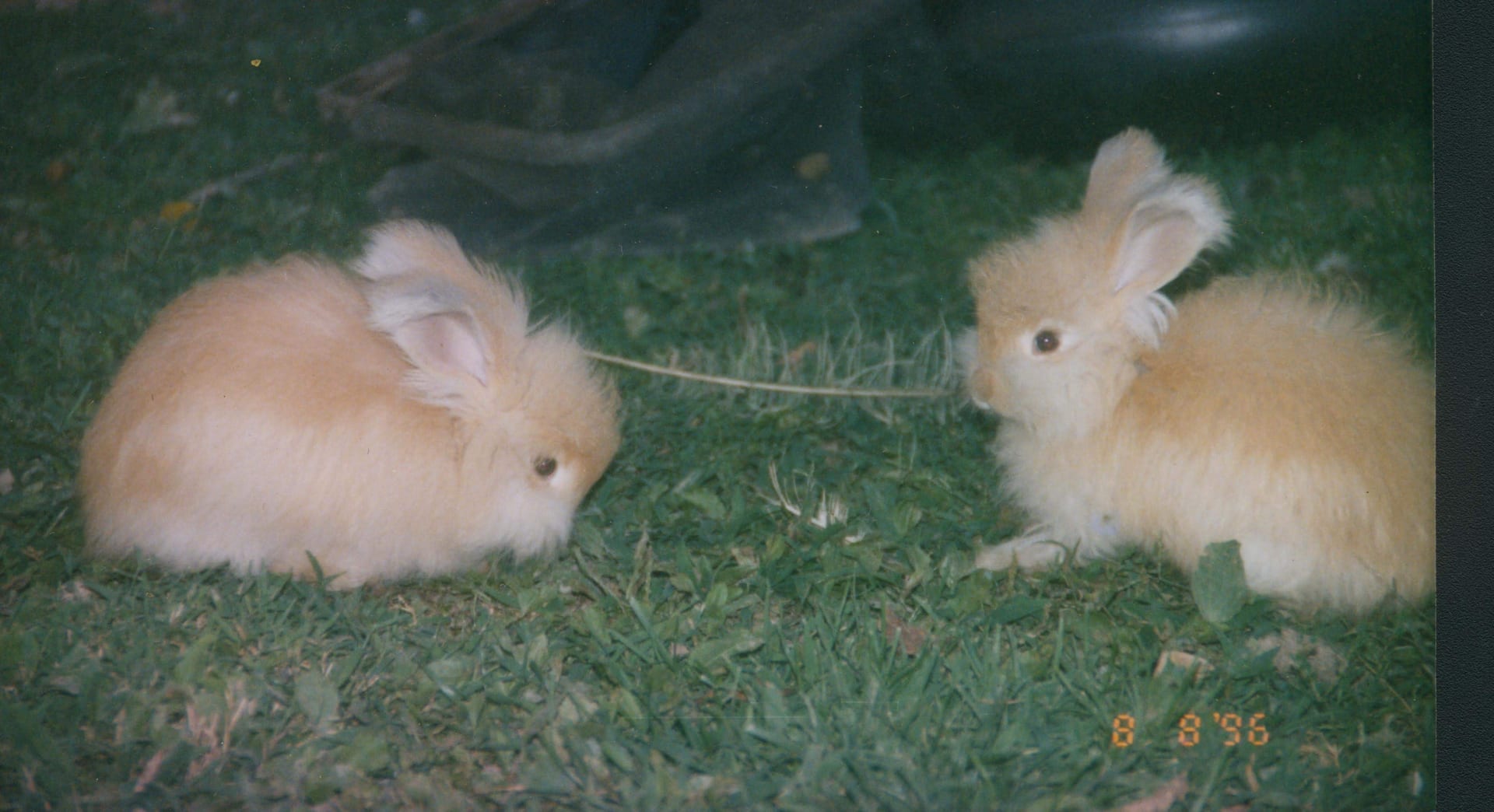
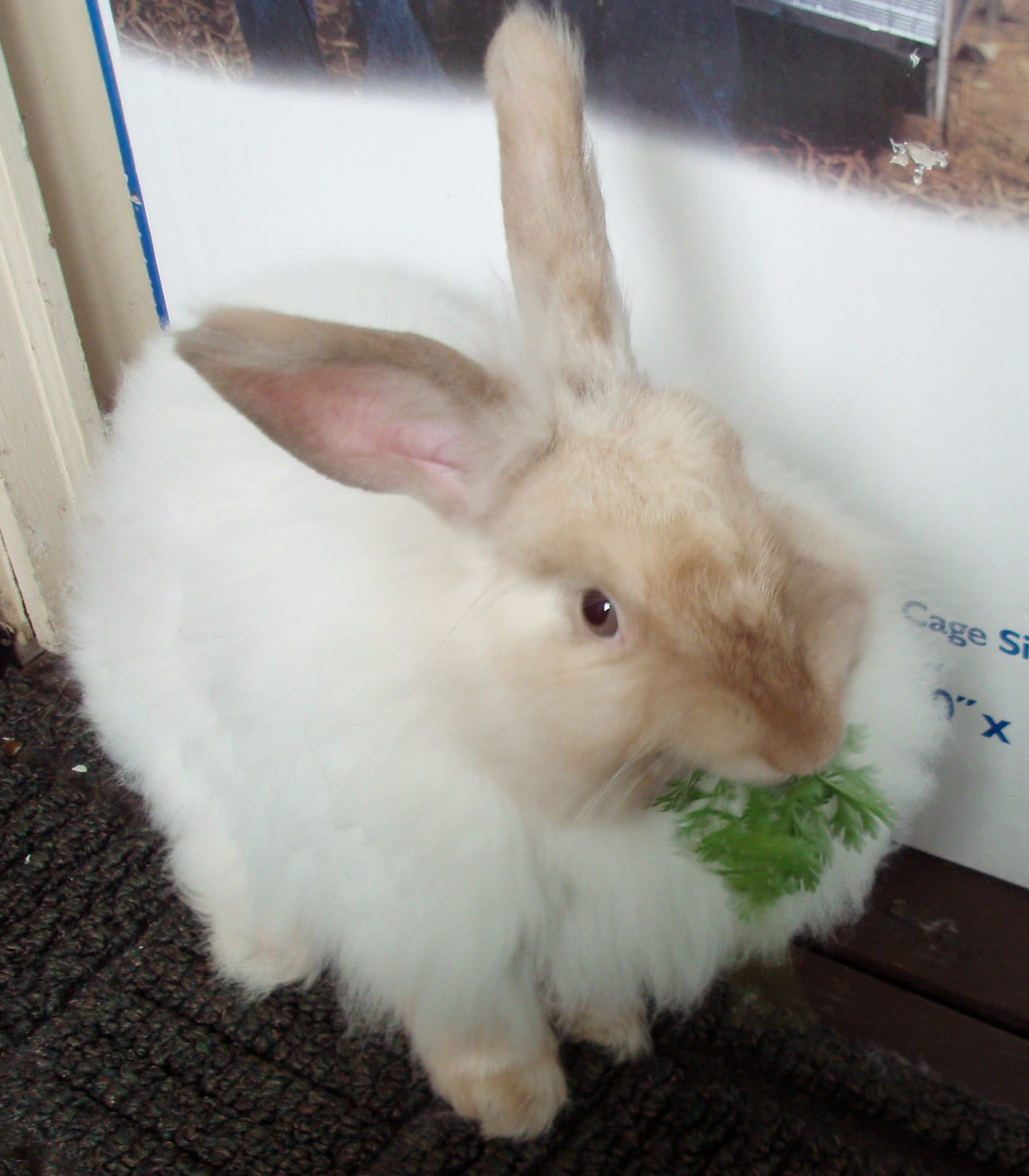
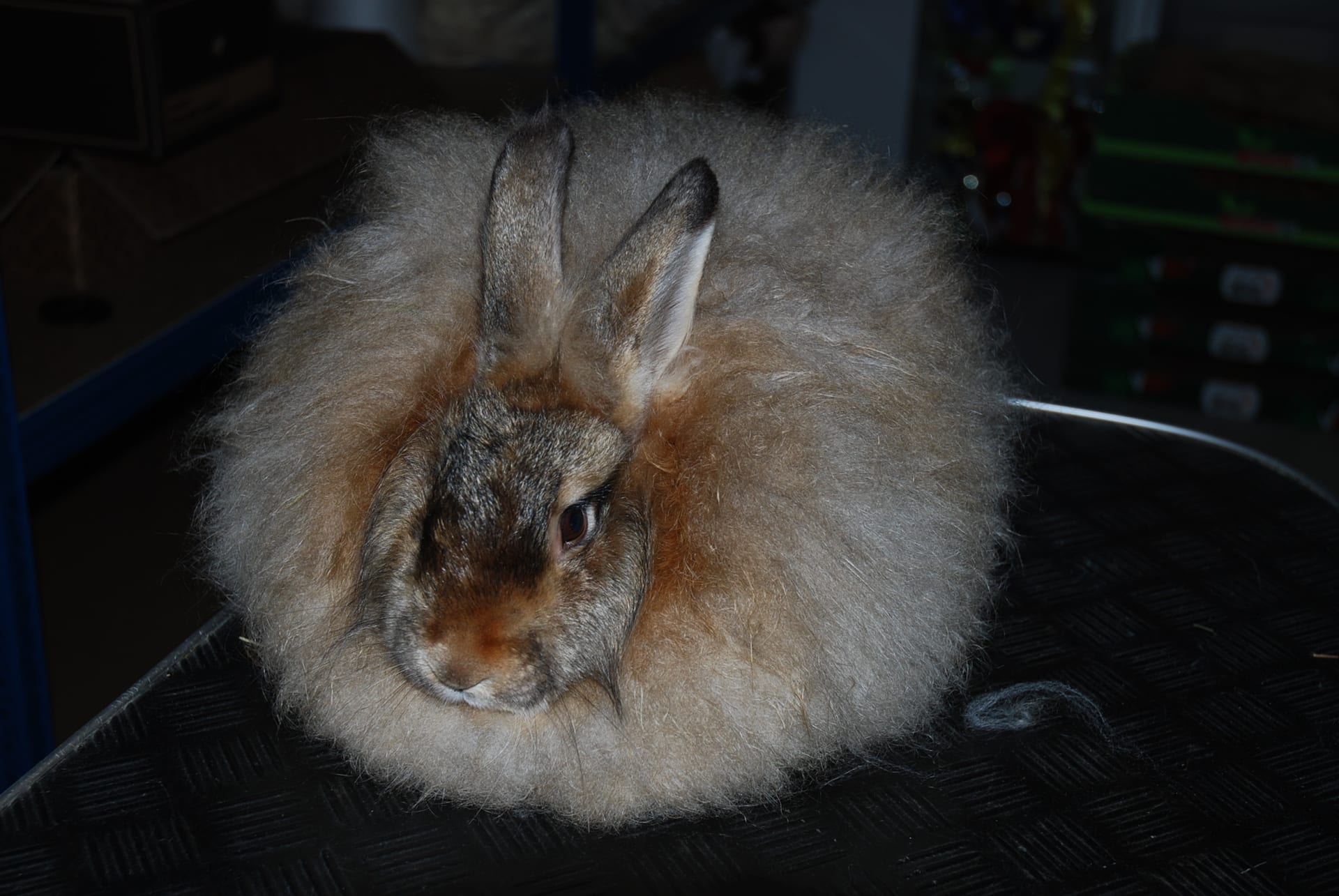
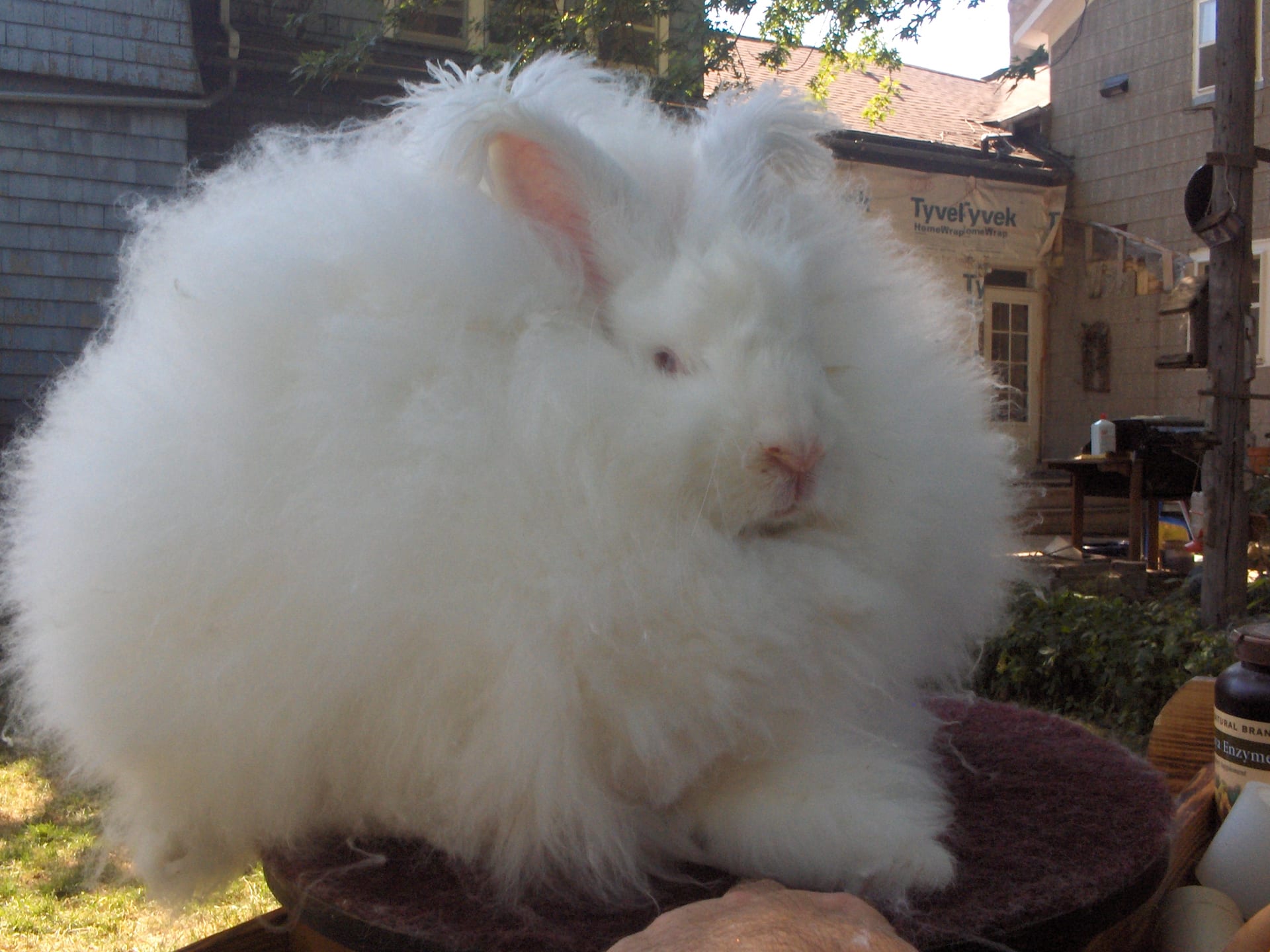
The largest of the four ARBA-recognised Angora breeds, accepted only in ruby-eyed white. Its dense coat mixes three fibre types and must be harvested every 90-120 days with daily grooming.
Difficulty
Advanced
Temperature
10〜20℃
Lifespan
7-12 years
Size
5.4kg minimum (ARBA standard)
Humidity
40〜60%
Diet
Timothy hay, pellets, small amounts of vegetables
About
The Giant Angora was developed by Louise Walsh of Taunton, Massachusetts, by crossing German Angoras with French Lops and Flemish Giants, and was recognised by the American Rabbit Breeders Association (ARBA) in 1988. The coat consists of three fibre types - soft underwool, awn fluff and awn hair (guard hair) - with underwool predominating. Wool is harvested every 90-120 days, yielding roughly 340-510 g per animal. Because the coat grows continuously, neglected animals readily develop mats and wool block from ingested fibre, so daily brushing is essential. Maturity is slow: does need over a year and bucks up to a year and a half. In Japan only a small number of specialist Angora breeders maintain the breed.
Source: Wikipedia (CC BY-SA 4.0)
Lifespan of the Giant Angora Rabbit
The Giant Angora Rabbit lives 7-12 years.
Size of the Giant Angora Rabbit
The Giant Angora Rabbit grows to 5.4kg minimum (ARBA standard).
It is the largest of the four ARBA Angora breeds (English, French, Satin and Giant), with a standard minimum weight of 5.4 kg, and is accepted only in ruby-eyed white.
Temperature & humidity for the Giant Angora Rabbit
The ideal temperature for the Giant Angora Rabbit is 10〜20℃.
Basic Info
Origin
United States (Massachusetts)
Lifespan
Care Specifications
Pair
Sources: ARBA Recognized Breeds / Wikipedia (Angora rabbit) / RSPCA Rabbit health / RSPCA Rabbits
References & Sources
Edited & verified by: BreederDirect editorial team
The taxonomic, regulatory, and husbandry data on this page are compiled and verified against the authoritative primary sources below.
Taxonomy & Authority
Accepted name: Oryctolagus cuniculus (Linnaeus, 1758)
Authority databases: GBIF
Nomenclature follows global taxonomic authority databases.
Regulations & Conservation Status
Not CITES-listed
Domestic law: 感染症法に基づく動物の輸入届出制度の対象(ウサギ目)。国内流通個体には届出は不要。
Sources: CITES Appendices (species not listed) / MHLW Animal Import Notification System
Regulations may change. Always verify the latest information with the relevant authorities.
Giant Angora Rabbit Listings
Loading latest listingsFind listings for this species