Source: Wikimedia Commons
Djungarian Hamster (Sapphire)
BeginnerPhodopus sungorus 'Sapphire'
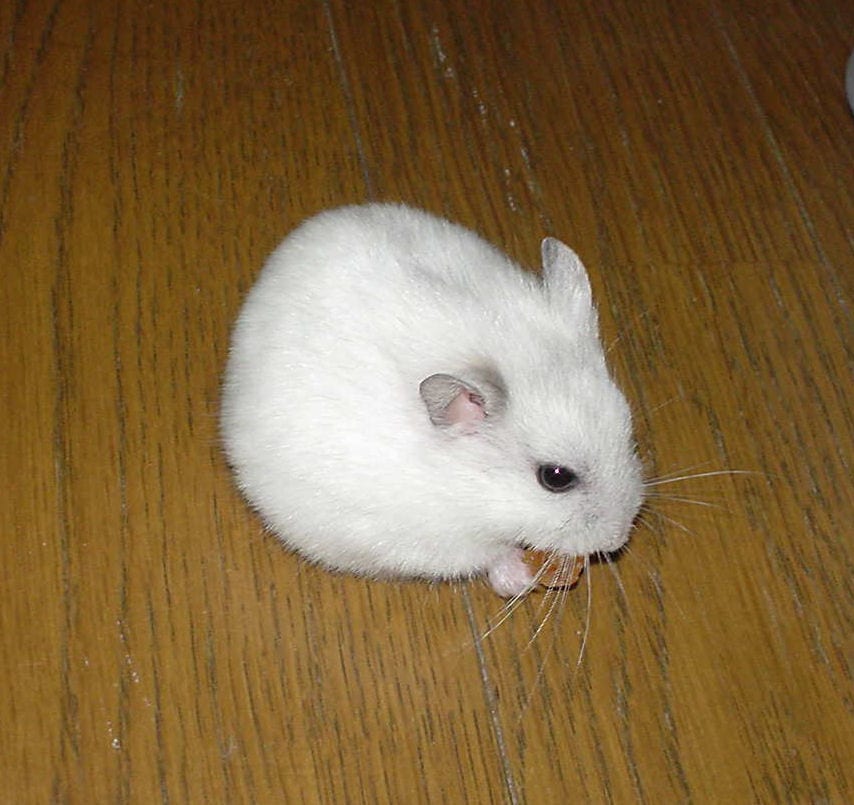
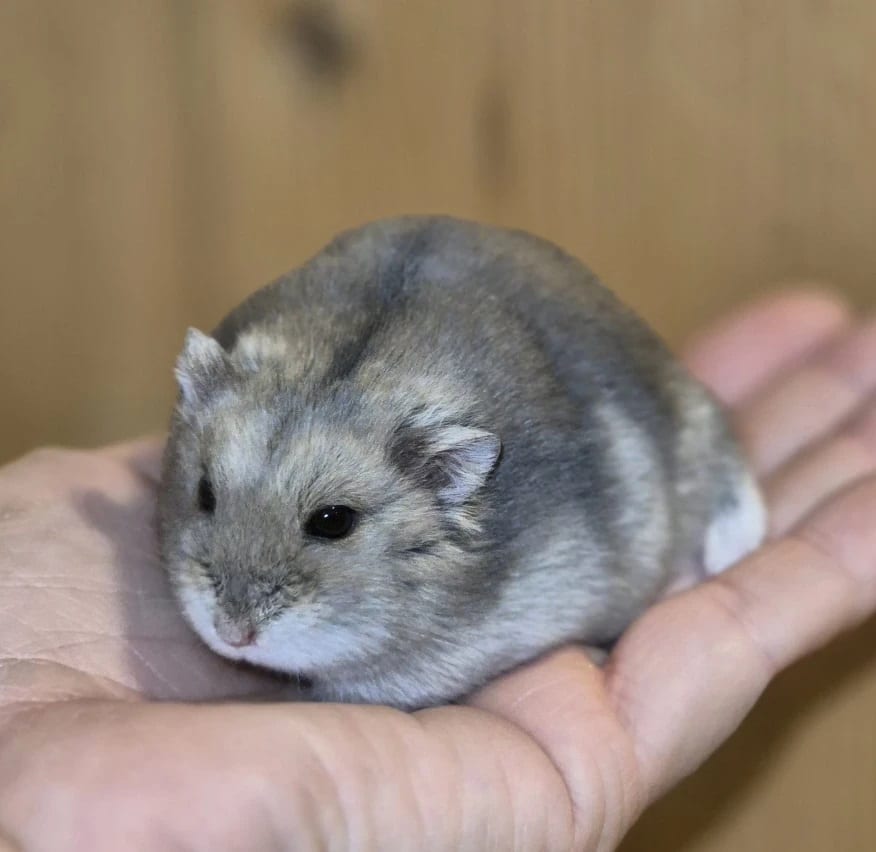
A Djungarian colour in which the whole coat, stripe included, turns a soft bluish grey. It is recessive, so it shows only when both parents pass on the gene, and it tends to whiten in winter.
Difficulty
Beginner
Temperature
18〜26℃
Lifespan
About 1–3 years in captivity, sometimes longer
Size
Head and body 7–9cm, tail 0.5–1.5cm; 19–45g (males), 19–36g (females)
Humidity
40〜60%
Diet
Omnivore; hamster pellets as the staple, with small amounts of vegetables and seeds
About
Sapphire (blue sapphire) is a Djungarian or winter white dwarf hamster (Phodopus sungorus) colour. Compared with normal, the whole coat including the dorsal stripe is paler and bluish grey; even lighter, creamy animals are sold as cream sapphire. English-language sources list it with normal and pearl as a true winter white colour. The gene is recessive, so only pups that receive one sapphire gene from each parent are sapphire. Sapphire × sapphire gives all sapphire; sapphire × a normal without the gene gives all normal-looking pups; and two normal-looking carriers produce sapphire pups about a quarter of the time. The sapphire gene tends to lighten the coat, so many animals whiten partly, sometimes almost completely, in winter and return to colour in spring. Combined with pearl it gives a near-white snow white. In Japan it is a standard colour alongside normal, pearl white and pudding and is widely sold.
Source: Wikipedia (CC BY-SA 4.0)
Lifespan of the Djungarian Hamster (Sapphire)
The Djungarian Hamster (Sapphire) lives About 1–3 years in captivity, sometimes longer.
Size of the Djungarian Hamster (Sapphire)
The Djungarian Hamster (Sapphire) grows to Head and body 7–9cm, tail 0.5–1.5cm; 19–45g (males), 19–36g (females).
Temperature & humidity for the Djungarian Hamster (Sapphire)
The ideal temperature for the Djungarian Hamster (Sapphire) is 18〜26℃. Ideal humidity is 40〜60%.
Basic Info
Origin
References & Sources
Edited & verified by: BreederDirect editorial team
The taxonomic, regulatory, and husbandry data on this page are compiled and verified against the authoritative primary sources below.
Taxonomy & Authority
Accepted name: Phodopus sungorus 'Sapphire' (Pallas, 1773)
Authority databases: GBIF · GBIF: Phodopus sungorus
Nomenclature follows global taxonomic authority databases.
Regulations & Conservation Status
Not CITES-listedIUCN LC · Least Concern
It is not regulated under CITES, the Invasive Alien Species Act or the specified-animal rules; animals on sale are bred in Japan. Never release captive animals into the wild.
Sources: Species+ CITES query (not listed) / Ministry of the Environment: Invasive Alien Species list, incl. species requiring a species-name certificate (JA)
Regulations may change. Always verify the latest information with the relevant authorities.
Djungarian Hamster (Sapphire) Listings
Loading latest listingsFind listings for this species