Source: Wikimedia Commons
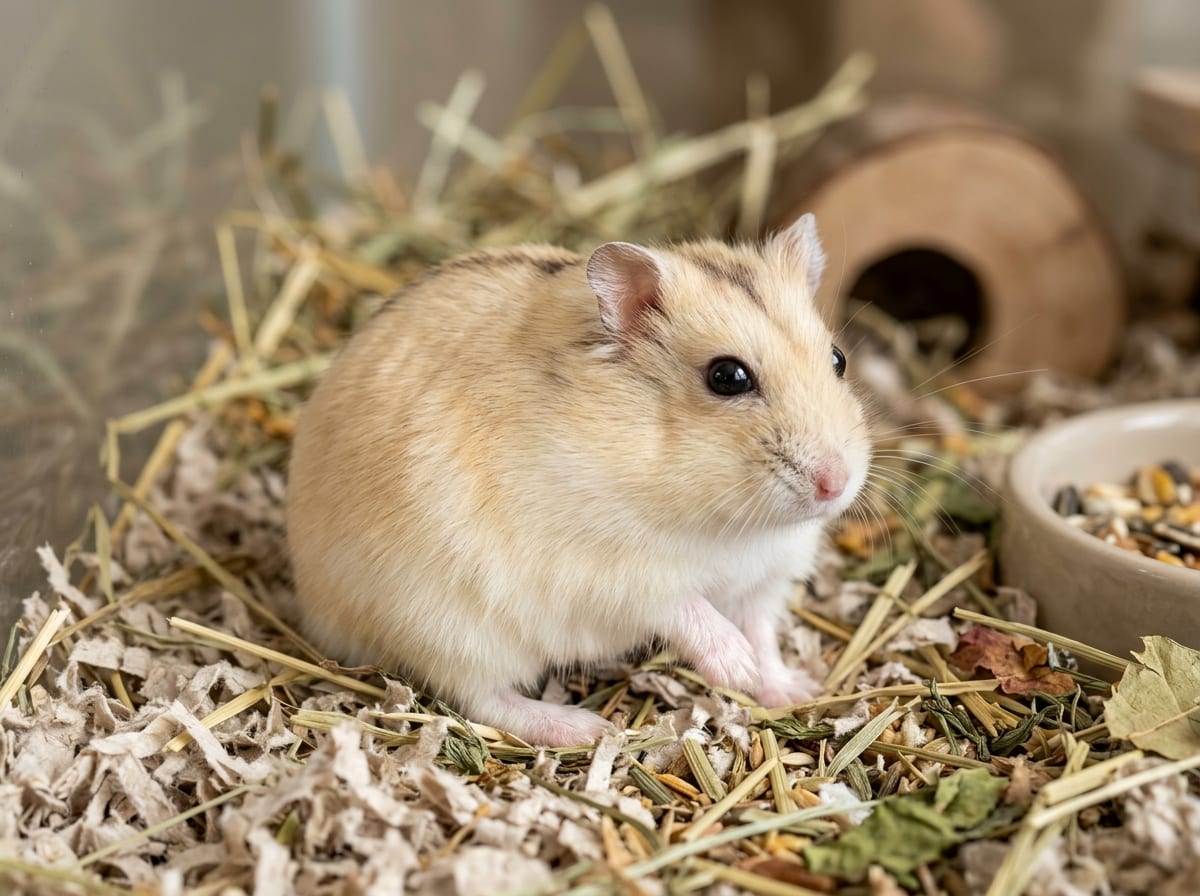
Djungarian Hamster (Pearl White)
BeginnerPhodopus sungorus 'Pearl'
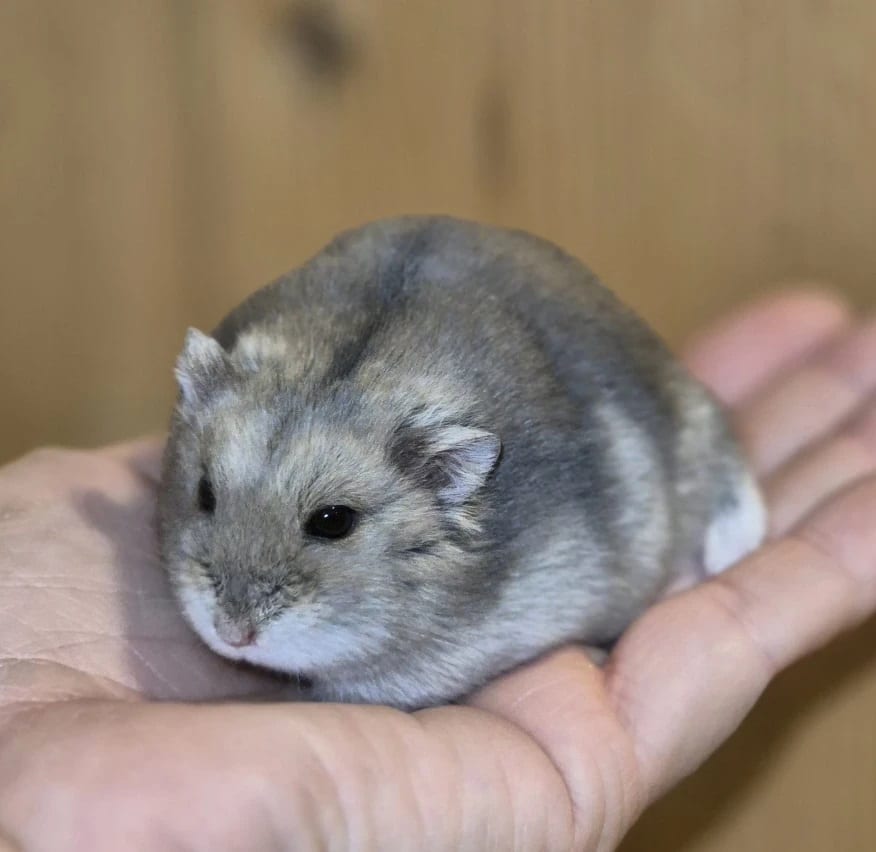
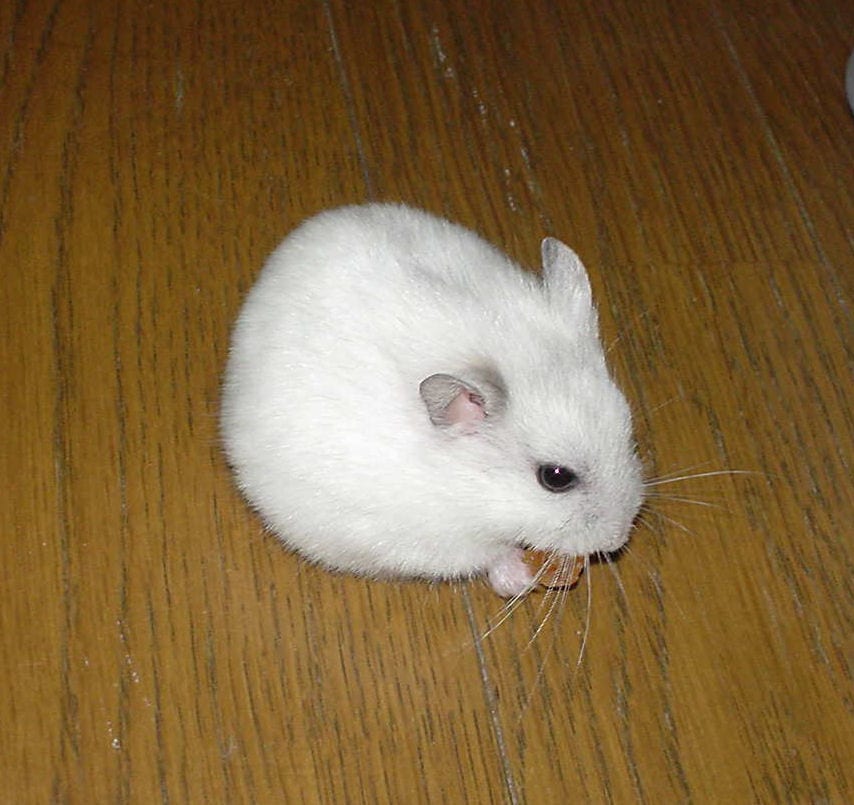
A Djungarian colour in which the fur is white from the root. It is caused by a dominant gene and keeps dark tips and a stripe; unlike the seasonal winter coat, it stays white all year.
Difficulty
Beginner
Temperature
18〜26℃
Lifespan
About 1–3 years in captivity, sometimes longer
Size
Head and body 7–9cm, tail 0.5–1.5cm; 19–45g (males), 19–36g (females)
Humidity
40〜60%
Diet
Omnivore; hamster pellets as the staple, with small amounts of vegetables and seeds
About
Pearl white (pearl) is a Djungarian or winter white dwarf hamster (Phodopus sungorus) colour caused by a mutation that makes the fur white from the root. The gene is dominant, so a single pearl parent can produce pearl pups. On a normal background the tips of the fur stay dark and the black dorsal stripe is clearly visible; combined with sapphire the tips fade and the animal looks almost pure white, sold as snow white or sapphire pearl. It is easily confused with the wild winter coat: as days shorten, wild animals moult into white fur, but pets living under indoor lighting usually do not, and any whitening reverses in spring. Pearl is genetic, so the animal is white in every season. Its black eyes also separate it from the red-eyed albino. Breeding pearl to pearl is to be avoided; pups are said to be unborn, stillborn or short-lived. In Japan it is a standard colour alongside normal, sapphire and pudding and is always available in pet stores.
Source: Wikipedia (CC BY-SA 4.0)
Lifespan of the Djungarian Hamster (Pearl White)
The Djungarian Hamster (Pearl White) lives About 1–3 years in captivity, sometimes longer.
Size of the Djungarian Hamster (Pearl White)
The Djungarian Hamster (Pearl White) grows to Head and body 7–9cm, tail 0.5–1.5cm; 19–45g (males), 19–36g (females).
Temperature & humidity for the Djungarian Hamster (Pearl White)
The ideal temperature for the Djungarian Hamster (Pearl White) is 18〜26℃. Ideal humidity is 40〜60%.
Basic Info
References & Sources
Edited & verified by: BreederDirect editorial team
The taxonomic, regulatory, and husbandry data on this page are compiled and verified against the authoritative primary sources below.
Taxonomy & Authority
Accepted name: Phodopus sungorus 'Pearl' (Pallas, 1773)
Authority databases: GBIF · GBIF: Phodopus sungorus
Nomenclature follows global taxonomic authority databases.
Regulations & Conservation Status
Not CITES-listedIUCN LC · Least Concern
It is not regulated under CITES, the Invasive Alien Species Act or the specified-animal rules; animals on sale are bred in Japan. Never release captive animals into the wild.
Sources: Species+ CITES query (not listed) / Ministry of the Environment: Invasive Alien Species list, incl. species requiring a species-name certificate (JA)
Regulations may change. Always verify the latest information with the relevant authorities.
Djungarian Hamster (Pearl White) Listings
Loading latest listingsFind listings for this species