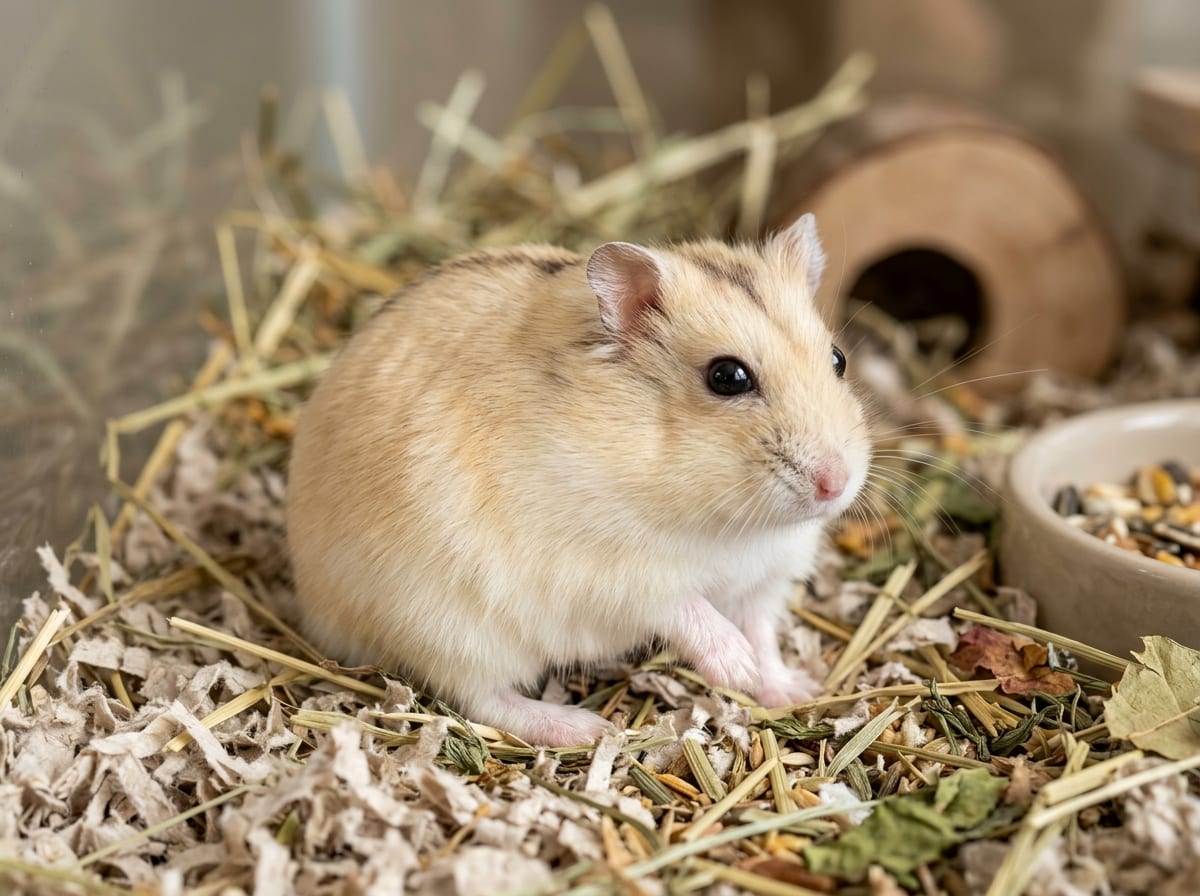
AI-generated image
Djungarian Hamster (Pudding)
BeginnerPhodopus sungorus 'Pudding'
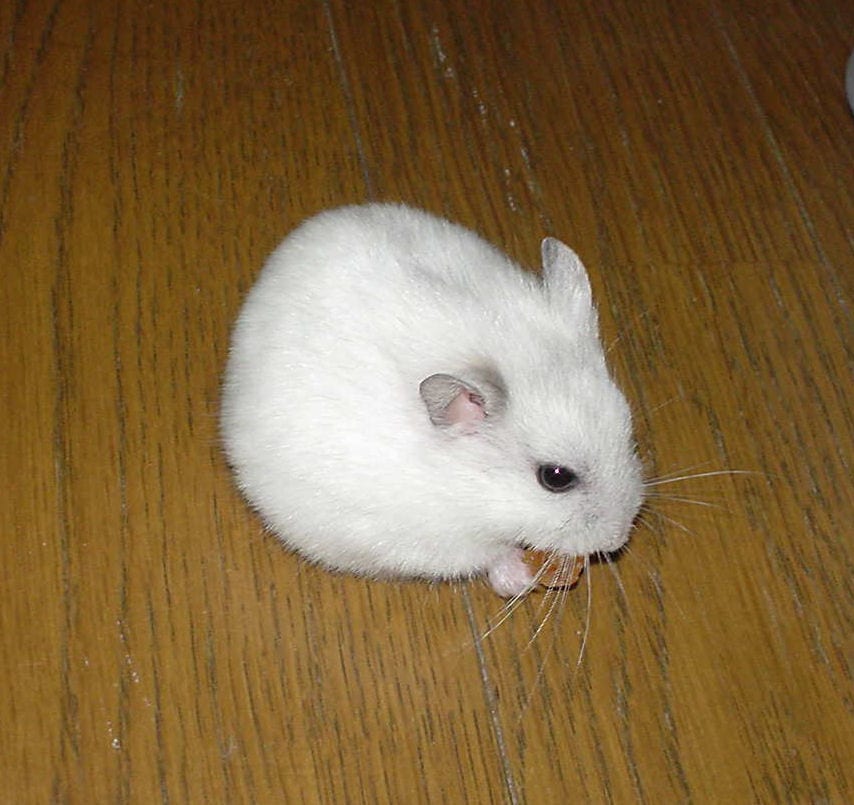
A Djungarian hamster colour in which the whole coat turns a pale custard-beige with a faint dorsal stripe. Yellow shades like this are suspected to trace back to crosses with Campbell's hamster.
Difficulty
Beginner
Temperature
18〜26℃
Lifespan
About 1–3 years in captivity, sometimes longer
Size
Head and body 7–9cm, tail 0.5–1.5cm; 19–45g (males), 19–36g (females)
Humidity
40〜60%
Diet
Omnivore; hamster pellets as the staple, with small amounts of vegetables and seeds
About
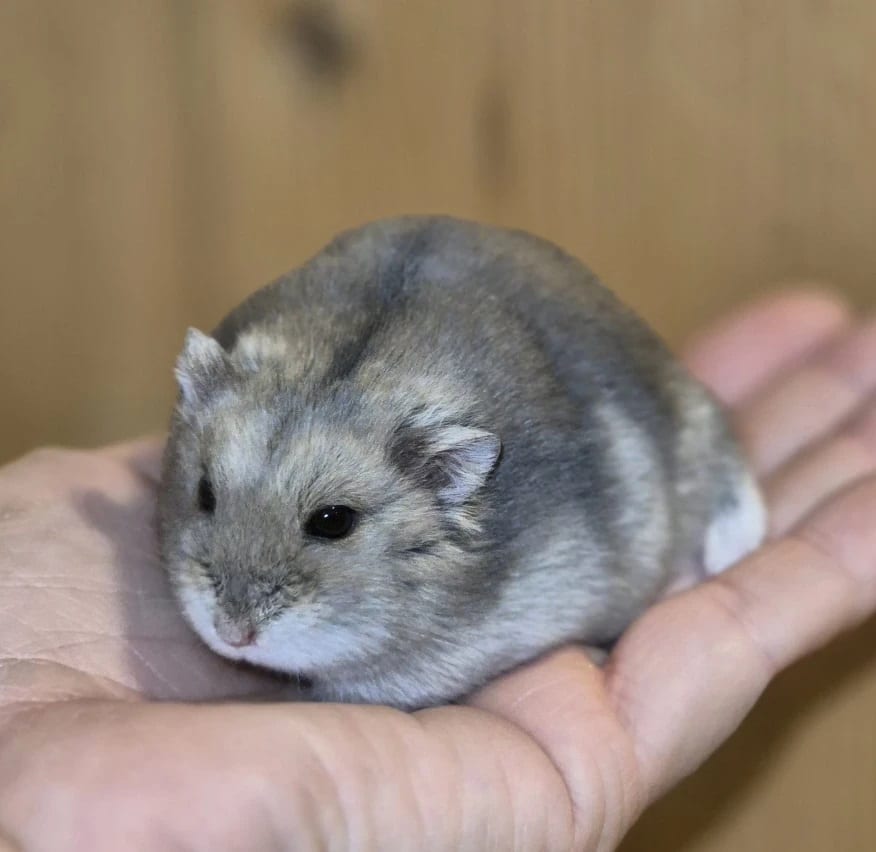
Pudding is one of the pet colours of the Djungarian or winter white dwarf hamster (Phodopus sungorus). The whole coat is a light custard-beige and the black dorsal stripe is fainter than in the normal colour; in Japan it is also sold as "yellow". It is easiest to recognise against the other three colours: normal has a dark grey-brown back with a black stripe, sapphire is bluish grey, and pearl white has fur that is white from the root. English-language sources count only normal, sapphire, pearl and their combinations as true winter white colours, and strongly suspect that yellow-to-orange shades such as mandarin appear only through crosses with Campbell's dwarf hamster. A hobbyist genetics guide describes mandarin as a dominant colour that starts orange-yellow and fades to pale yellow, says pups inheriting two copies die before birth, and notes it is common in Japan and other parts of Asia. It is not clear whether pudding is the same gene. Care is the same as for a normal Djungarian, and in Japan it is a standard colour widely sold in pet stores.
Source: Wikipedia (CC BY-SA 4.0)
Lifespan of the Djungarian Hamster (Pudding)
The Djungarian Hamster (Pudding) lives About 1–3 years in captivity, sometimes longer.
Size of the Djungarian Hamster (Pudding)
The Djungarian Hamster (Pudding) grows to Head and body 7–9cm, tail 0.5–1.5cm; 19–45g (males), 19–36g (females).
Temperature & humidity for the Djungarian Hamster (Pudding)
The ideal temperature for the Djungarian Hamster (Pudding) is 18〜26℃. Ideal humidity is 40〜60%.
Basic Info
References & Sources
Edited & verified by: BreederDirect editorial team
The taxonomic, regulatory, and husbandry data on this page are compiled and verified against the authoritative primary sources below.
Taxonomy & Authority
Accepted name: Phodopus sungorus 'Pudding' (Pallas, 1773)
Authority databases: GBIF · GBIF: Phodopus sungorus
Nomenclature follows global taxonomic authority databases.
Regulations & Conservation Status
Not CITES-listedIUCN LC · Least Concern
It is not regulated under CITES, the Invasive Alien Species Act or the specified-animal rules; animals on sale are bred in Japan. Never release captive animals into the wild.
Sources: Species+ CITES query (not listed) / Ministry of the Environment: Invasive Alien Species list, incl. species requiring a species-name certificate (JA)
Regulations may change. Always verify the latest information with the relevant authorities.
Djungarian Hamster (Pudding) Listings
Loading latest listingsFind listings for this species