Medaka Encyclopedia — 87 Species Directory
Encyclopedia of popular medaka varieties with traits, care guides, and pricing.
Featured Medaka
Showing 27 of 87 species(1–24)
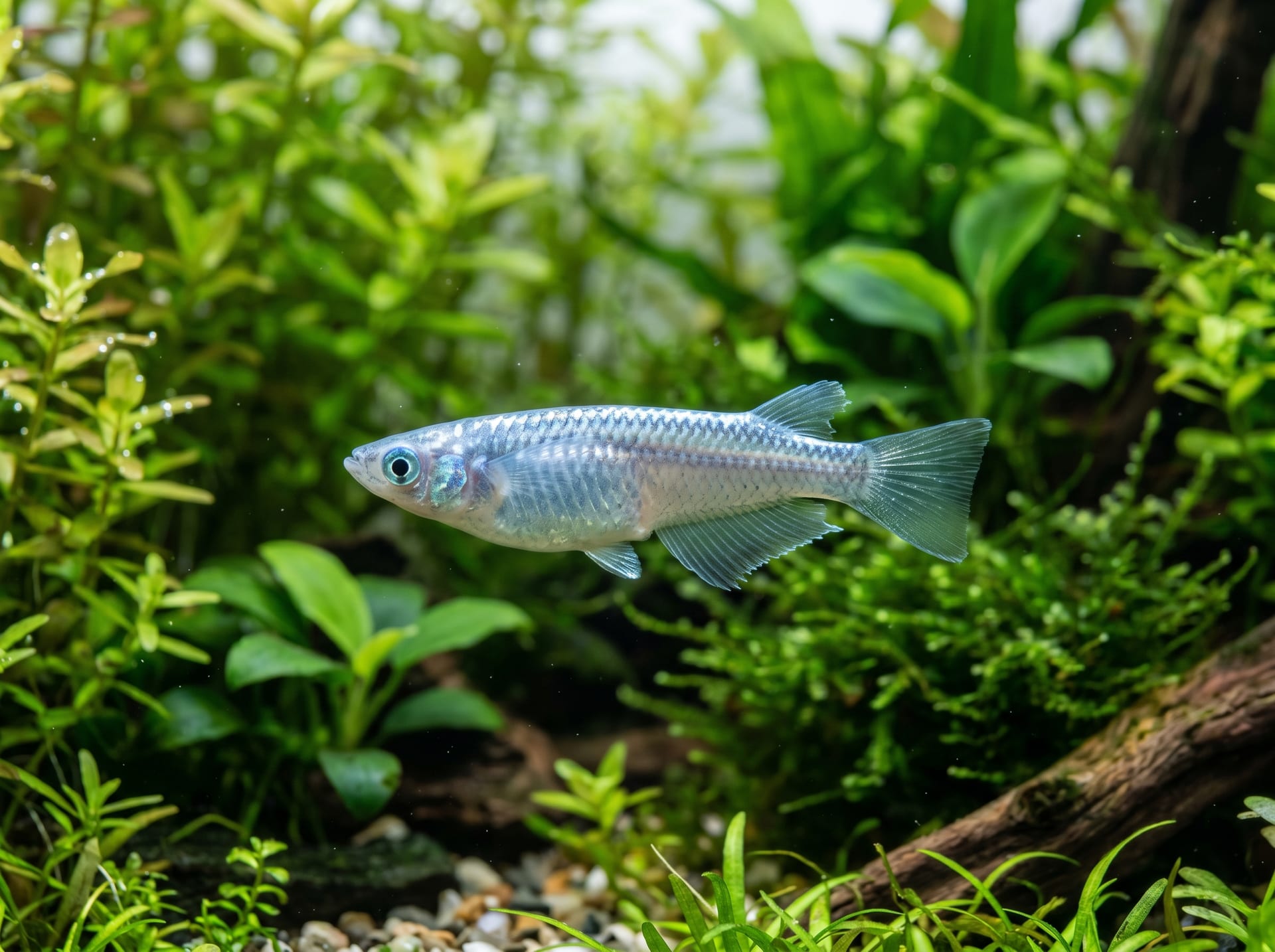
Ao Hikari Medaka
Oryzias latipes var.
Blue body color combined with hikari body type. Bluish body with silvery-blue external light creates cool and fantastical beauty. Especially beautiful in outdoor sunlight.
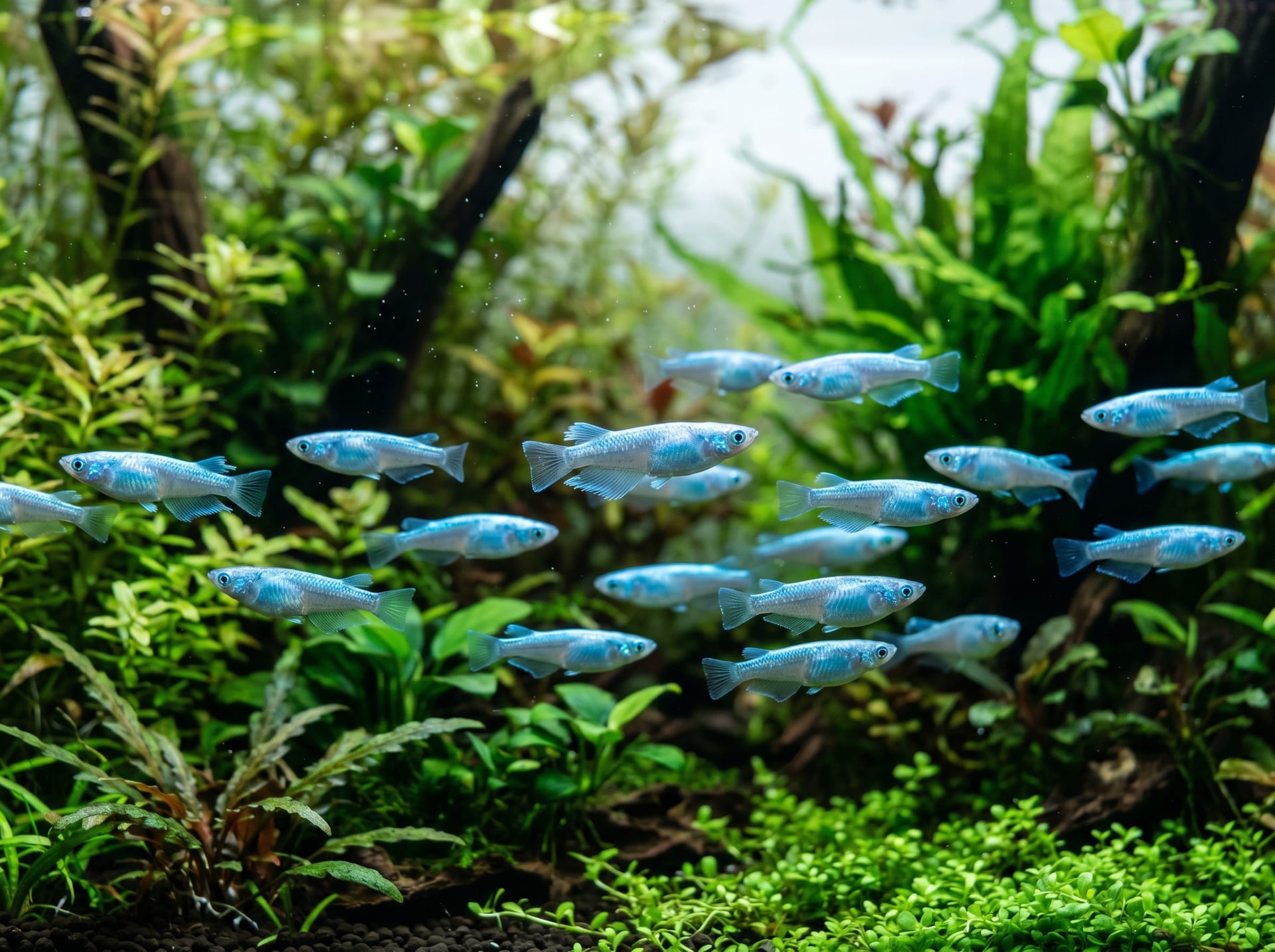
Blue / White Basic
Oryzias latipes
The most common medaka varieties. Blue medaka display deep indigo coloration; white medaka show cream tones. Foundation lines for selective breeding, with lowest husbandry demands—ideal for beginners.
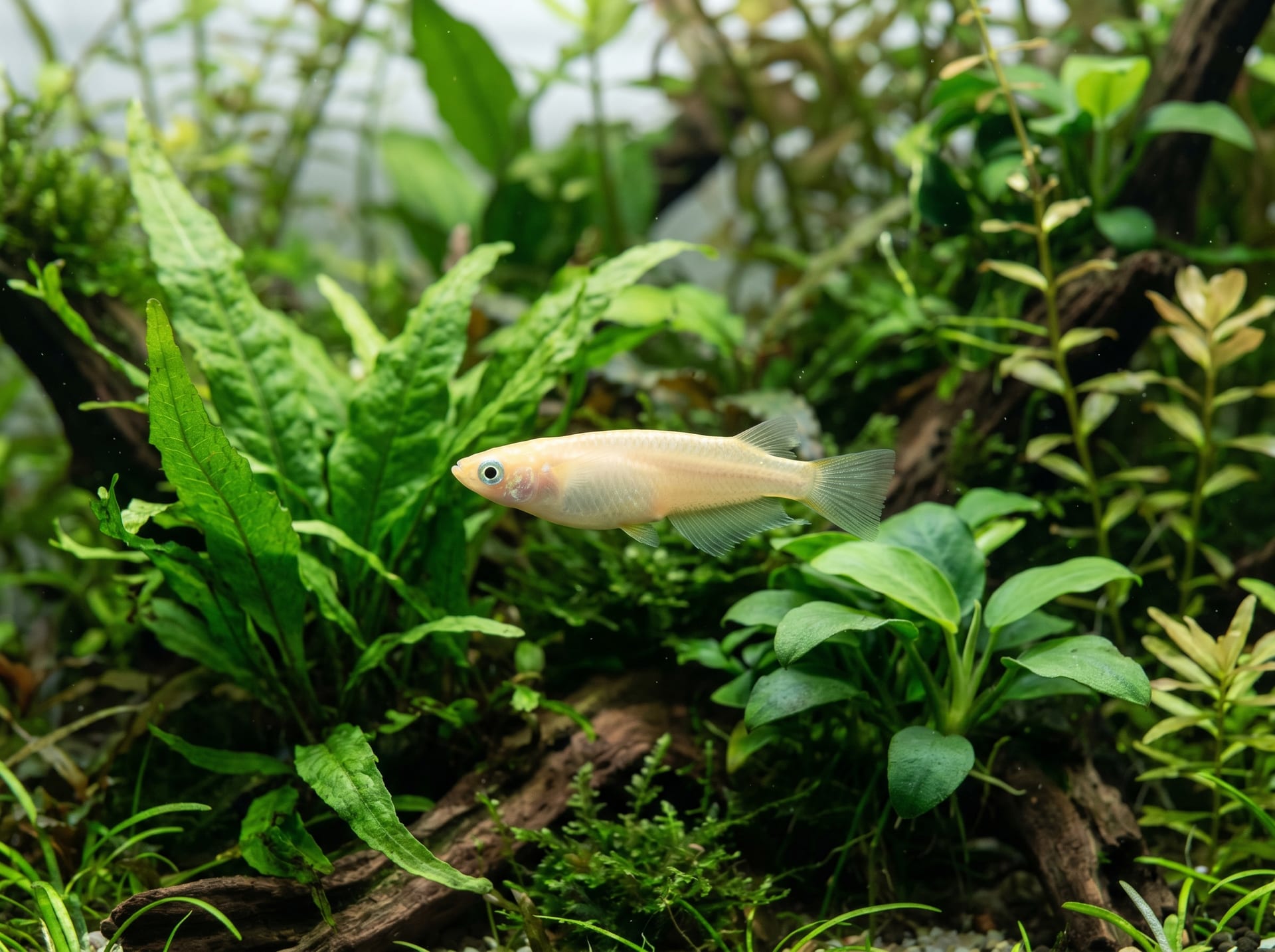
Cream Medaka
A medaka with gentle pale cream body color. Calm coloring that matches Japanese-style containers well.
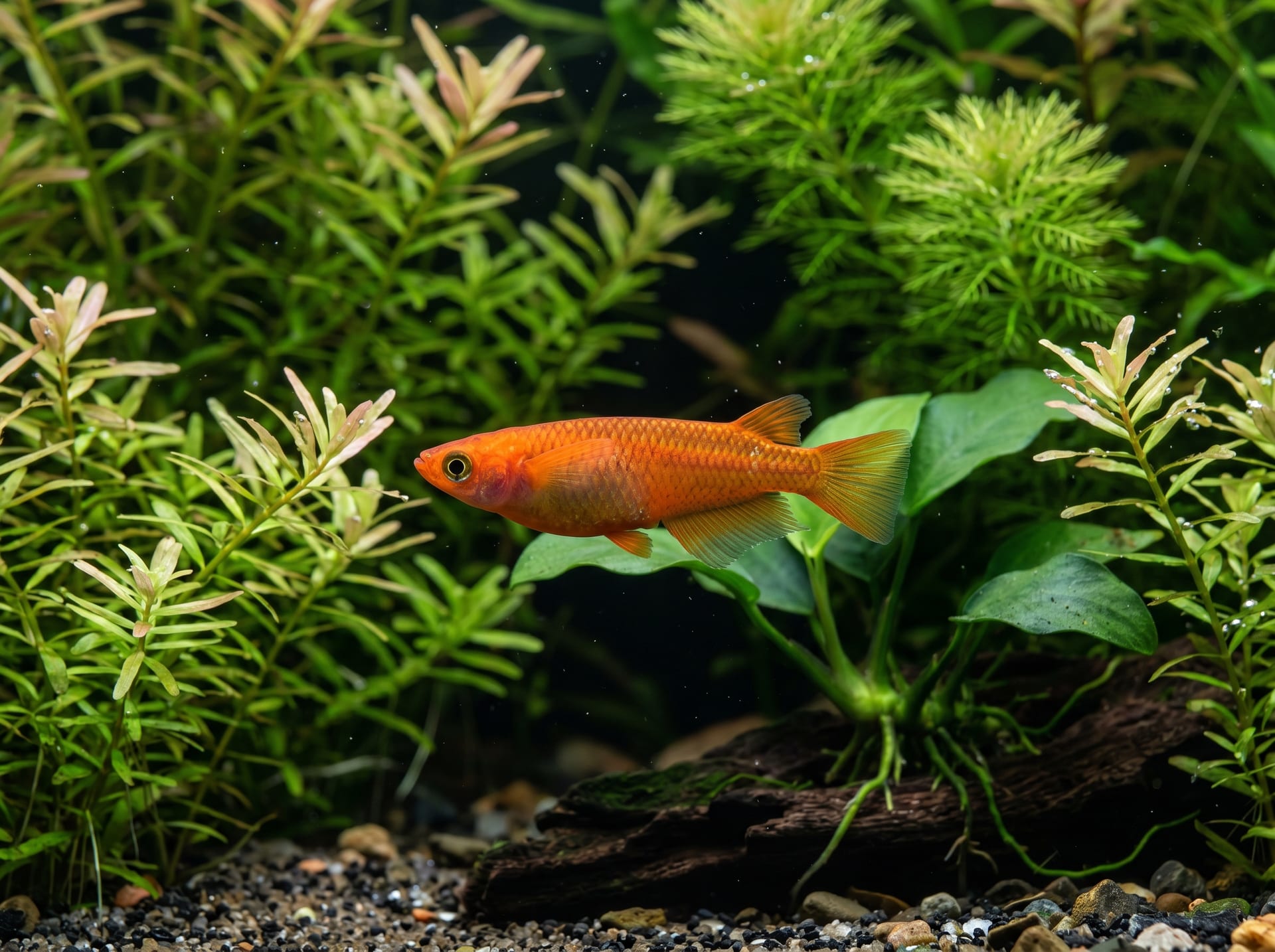
Evening Glow Medaka
A medaka with sunset-like orange-red gradient. Popular for warm color tones.
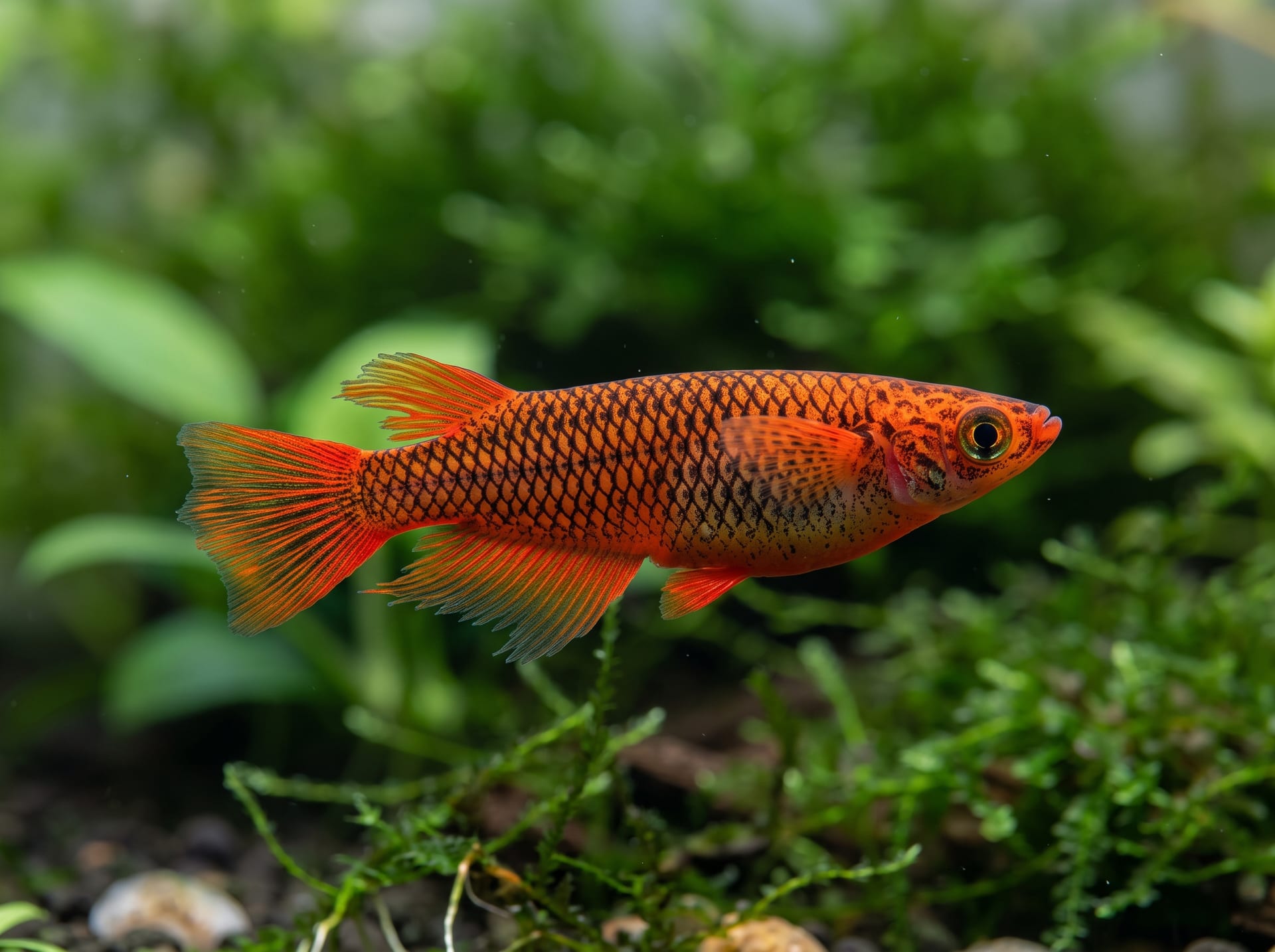
Goshiki Medaka
Oryzias latipes
A two-tone black-and-orange medaka whose scales are outlined by a striking 'black rim,' set against vivid scarlet in the fins and flanks. A bold, show-favorite strain.
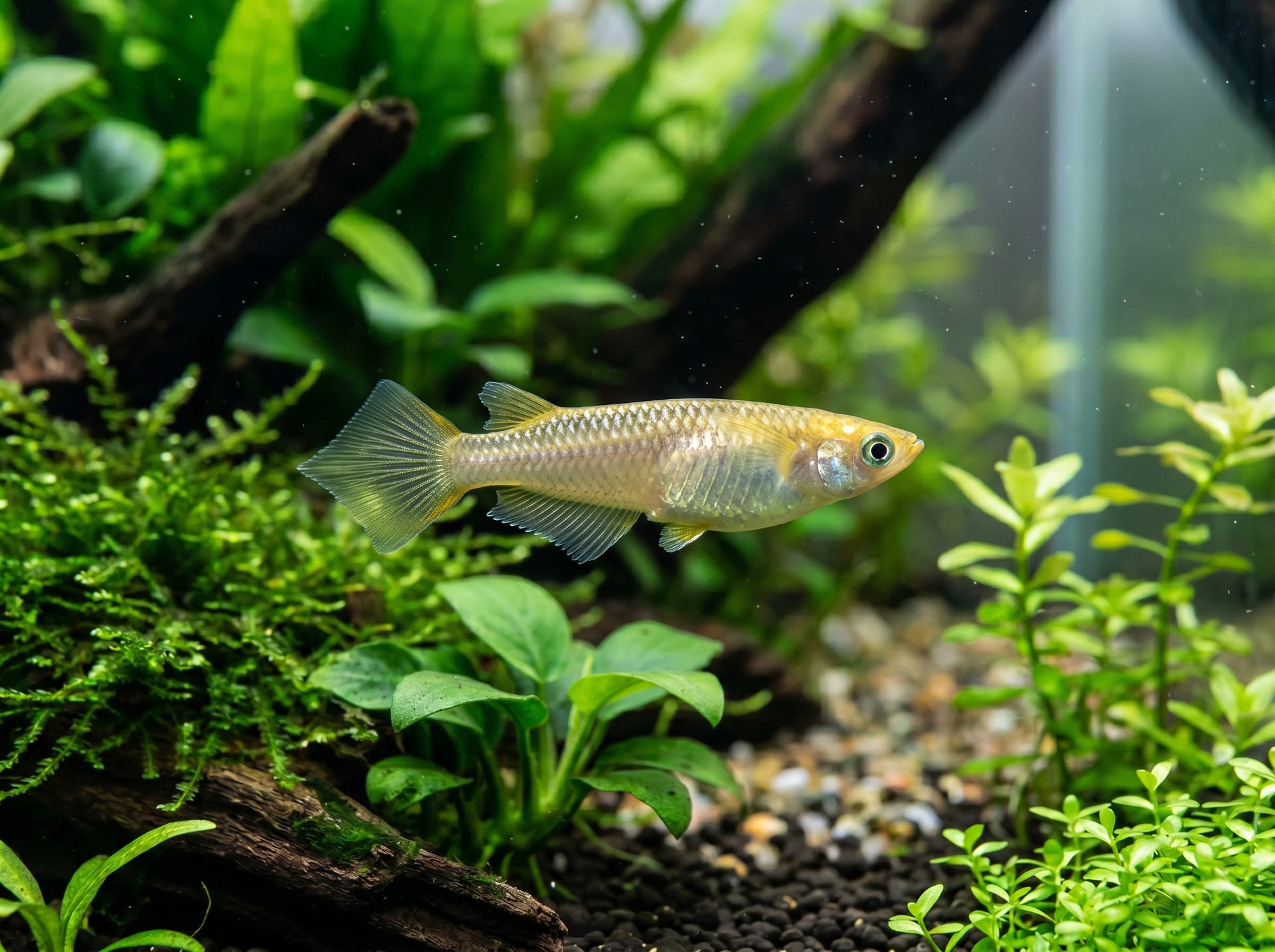
Hikari Medaka
General term for medaka with reflective scales on back. Scales shimmer beautifully in sunlight. Various crosses with Miyuki.
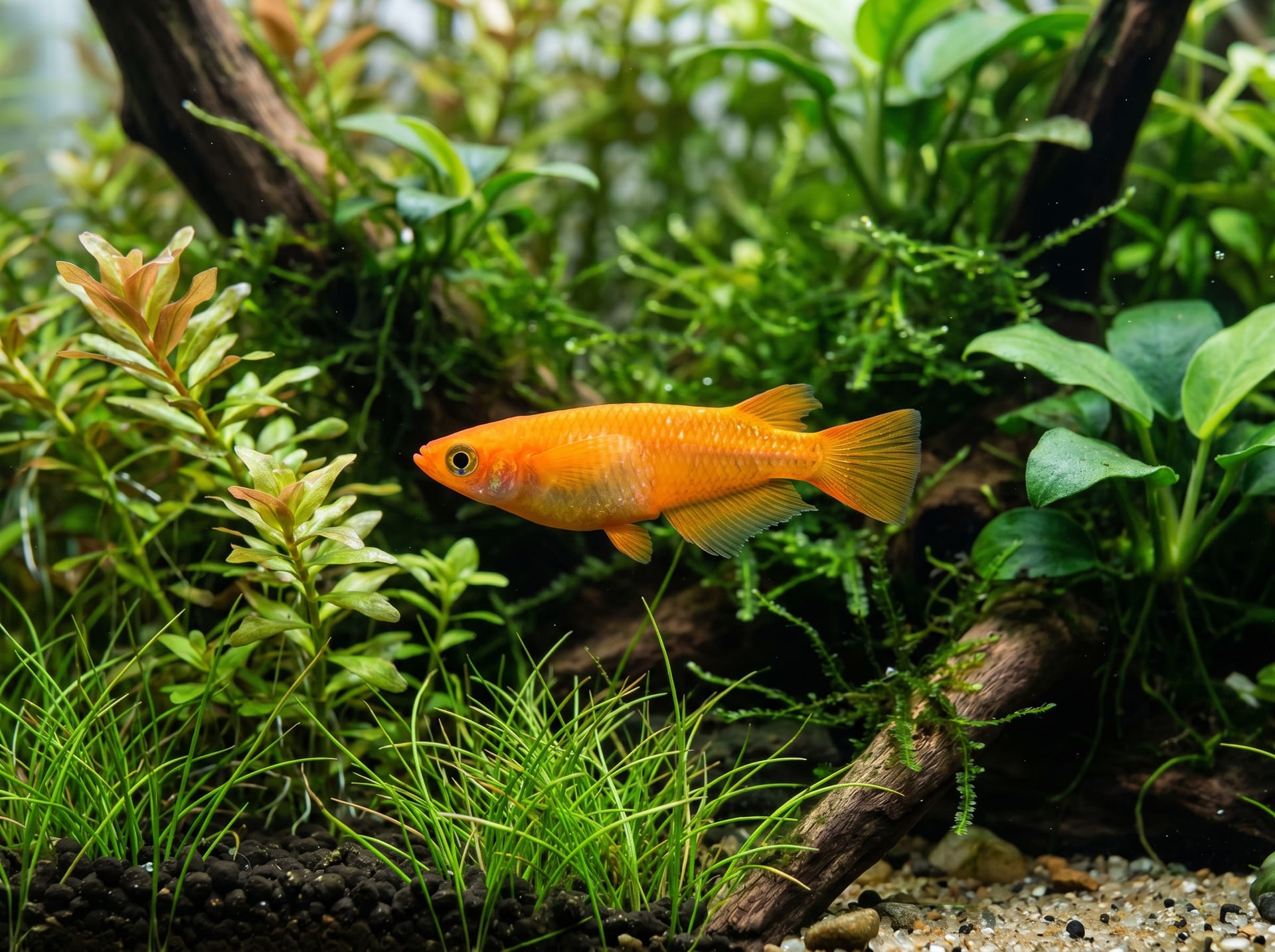
Himedaka
The oldest improved medaka variety, kept since the Edo period. Friendly orange-yellow color and extreme hardiness. Perfect for biotope beginners.
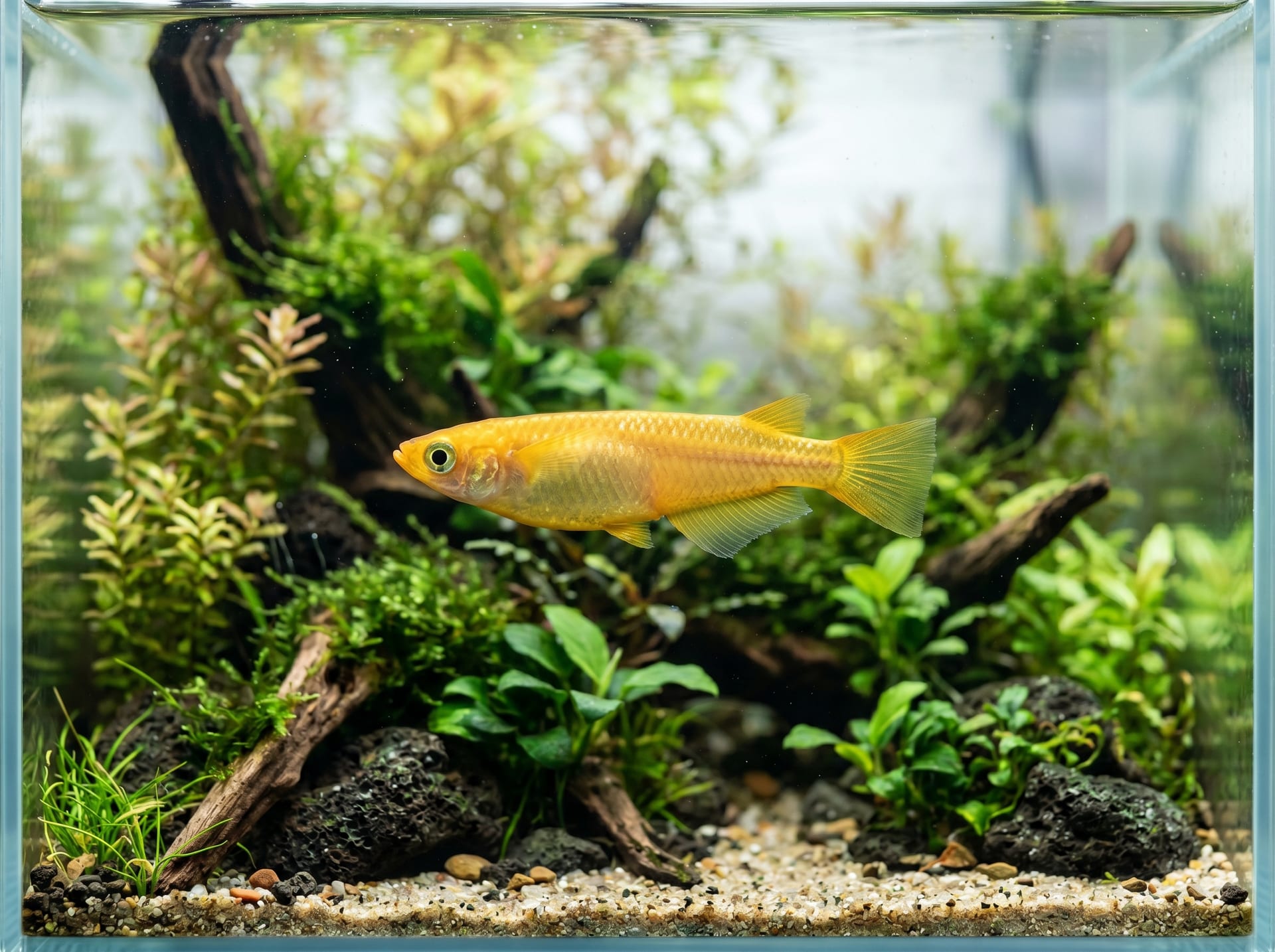
Kogane (Gold) Medaka
Improved medaka with beautiful golden body. Hikari body type with especially strong back shine. Gold gleam stands out viewed from above. Considered auspicious, popular as gifts.
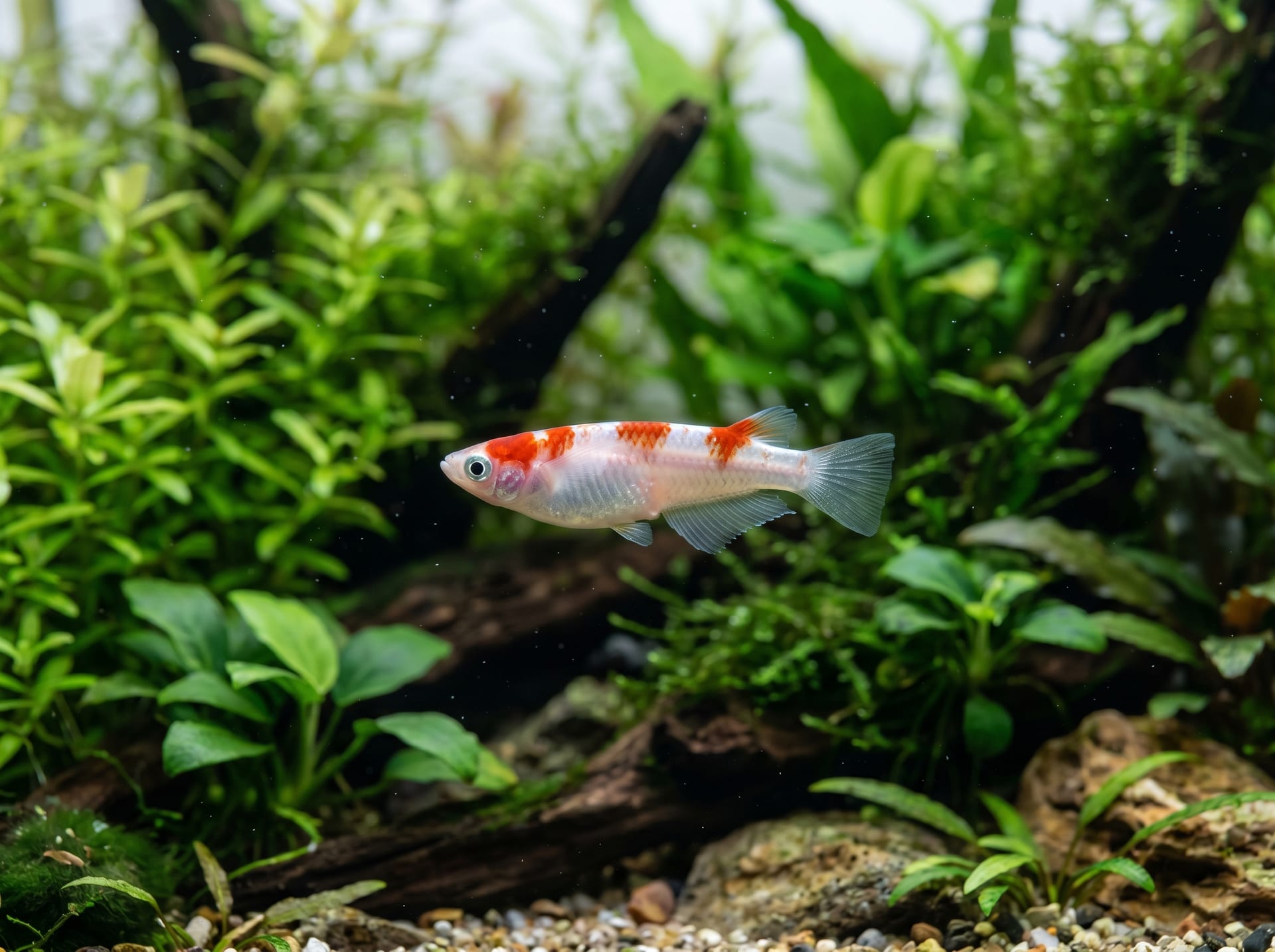
Kohaku (Amber) Medaka
Warm amber (tortoiseshell) body color. More subdued than Youkihi with refined, subtle beauty.
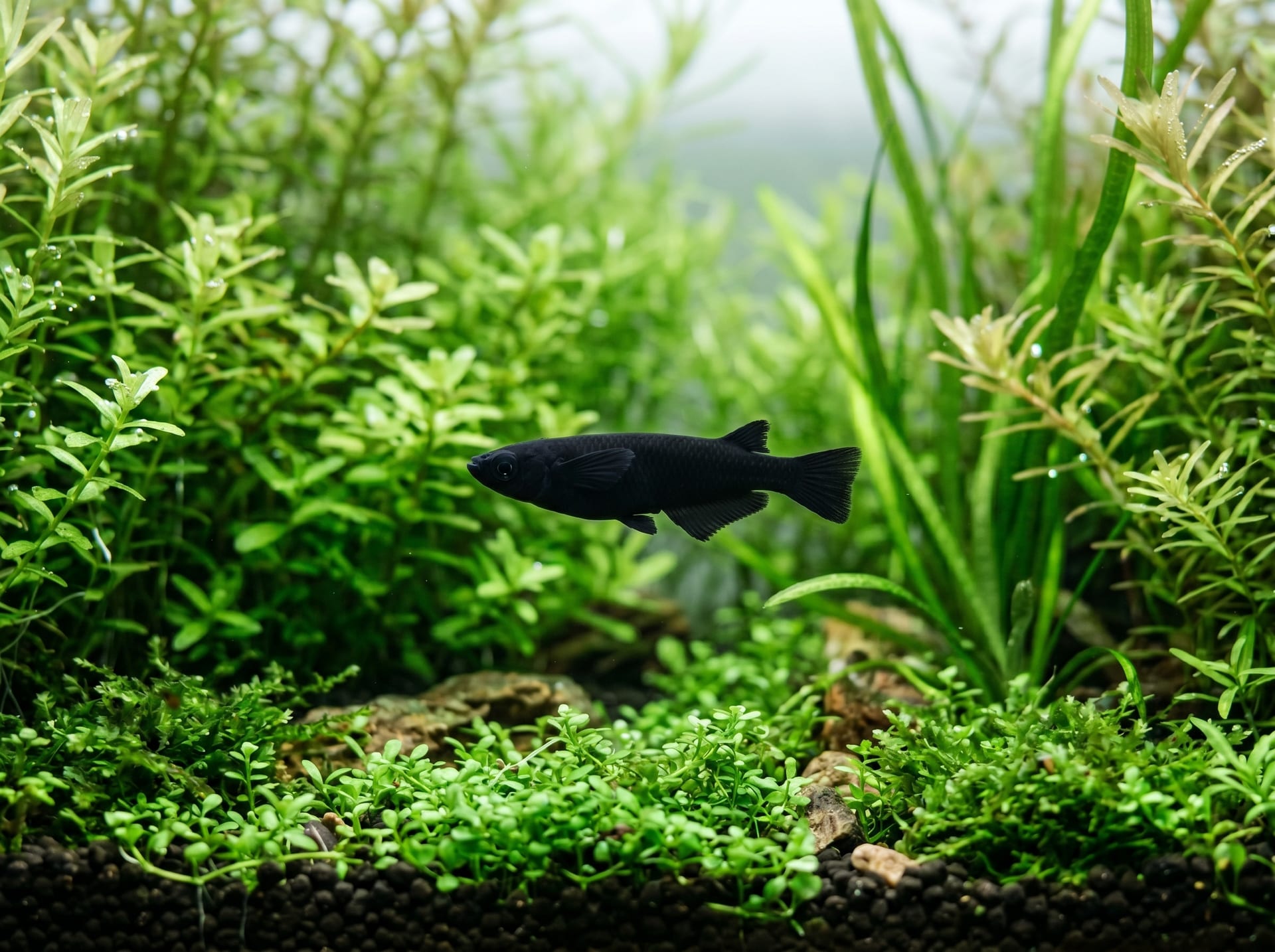
Maou Medaka
Oryzias latipes var.
Representative black-body improved medaka. Known for deep black body color with overwhelming presence from its jet-black Orochi lineage. Relatively easy to keep even for beginners.
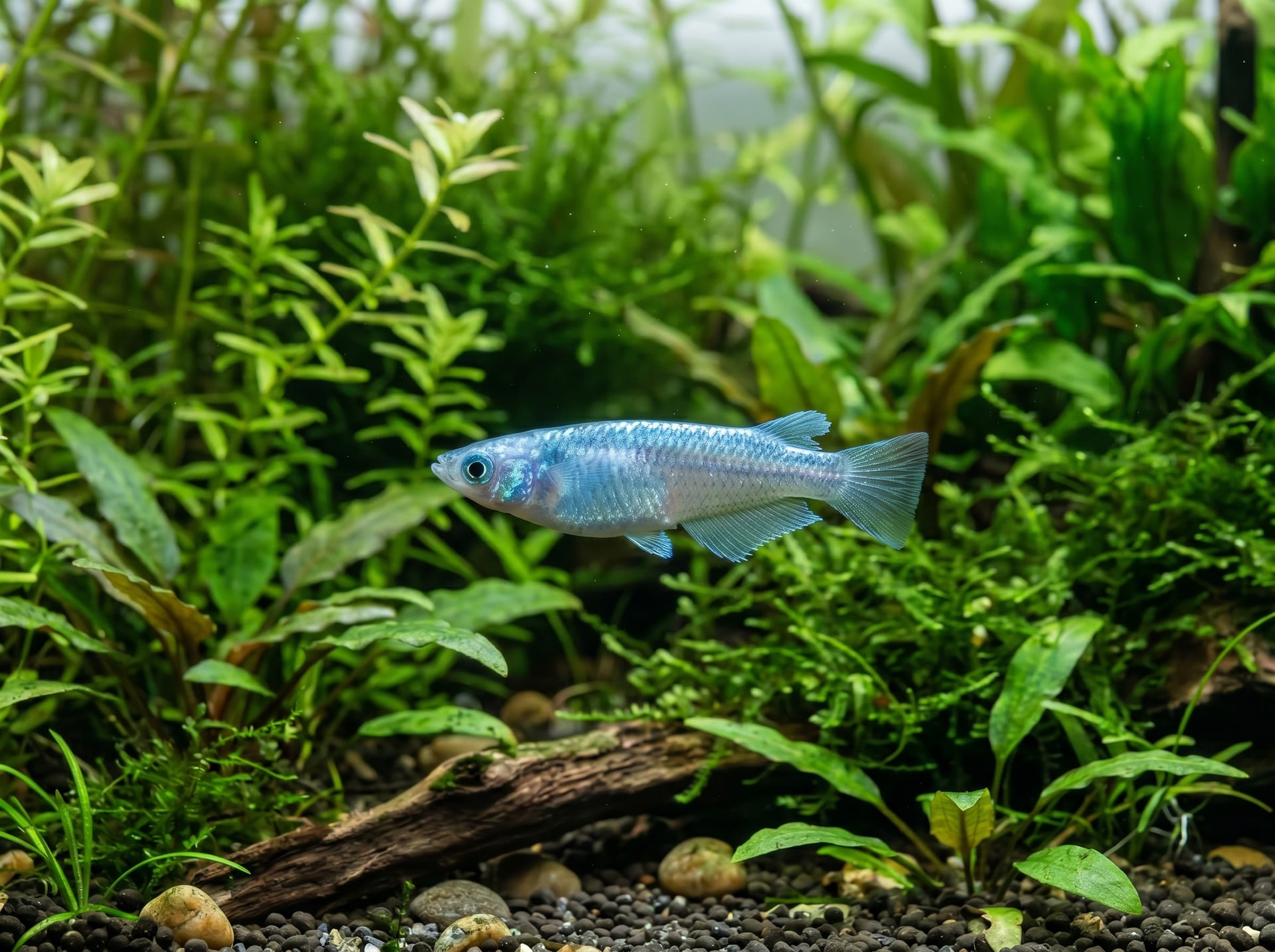
Marine Blue Medaka
Deep blue body color reminiscent of the sea. Representative blue medaka variety derived from Miyuki lineage.
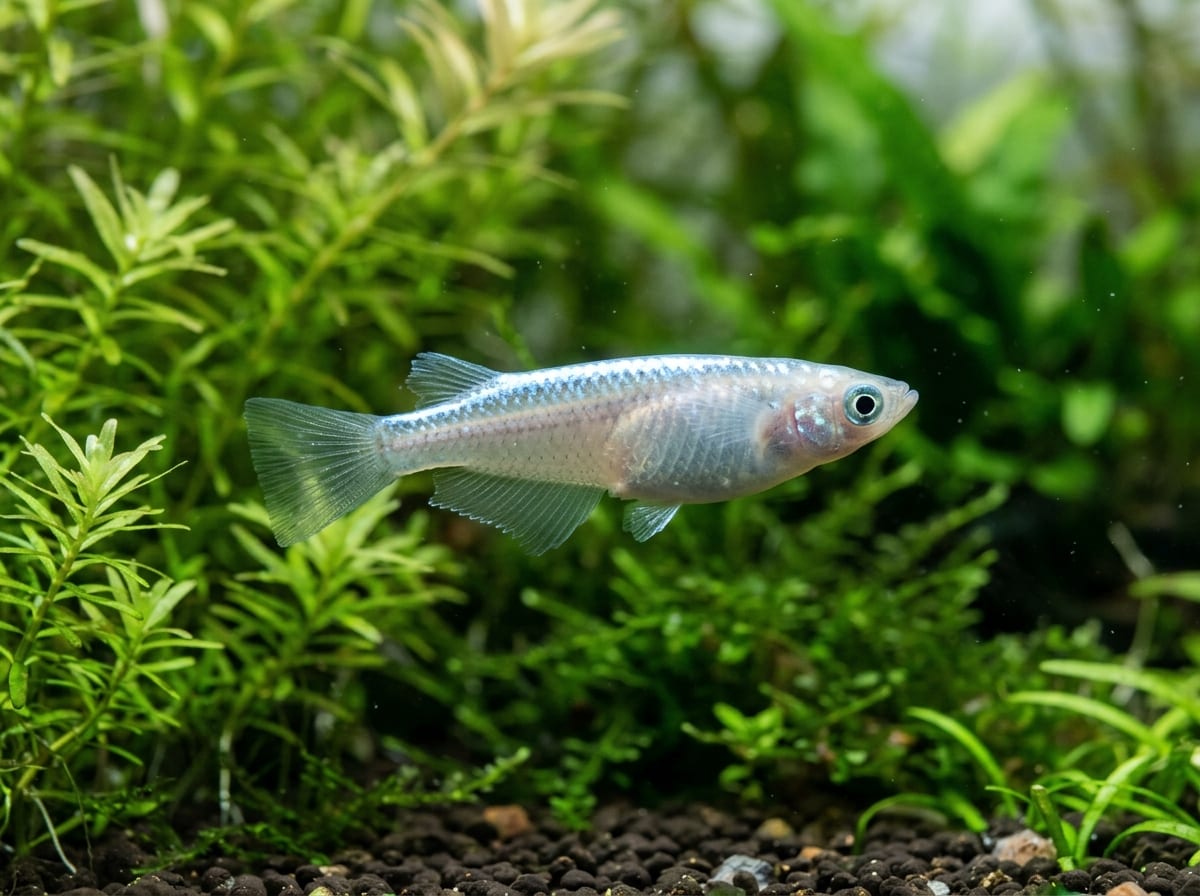
Miyuki Medaka
Characterized by a metallic sheen along the back. Graded from weak to full-body (Tetsukamen) based on light coverage.
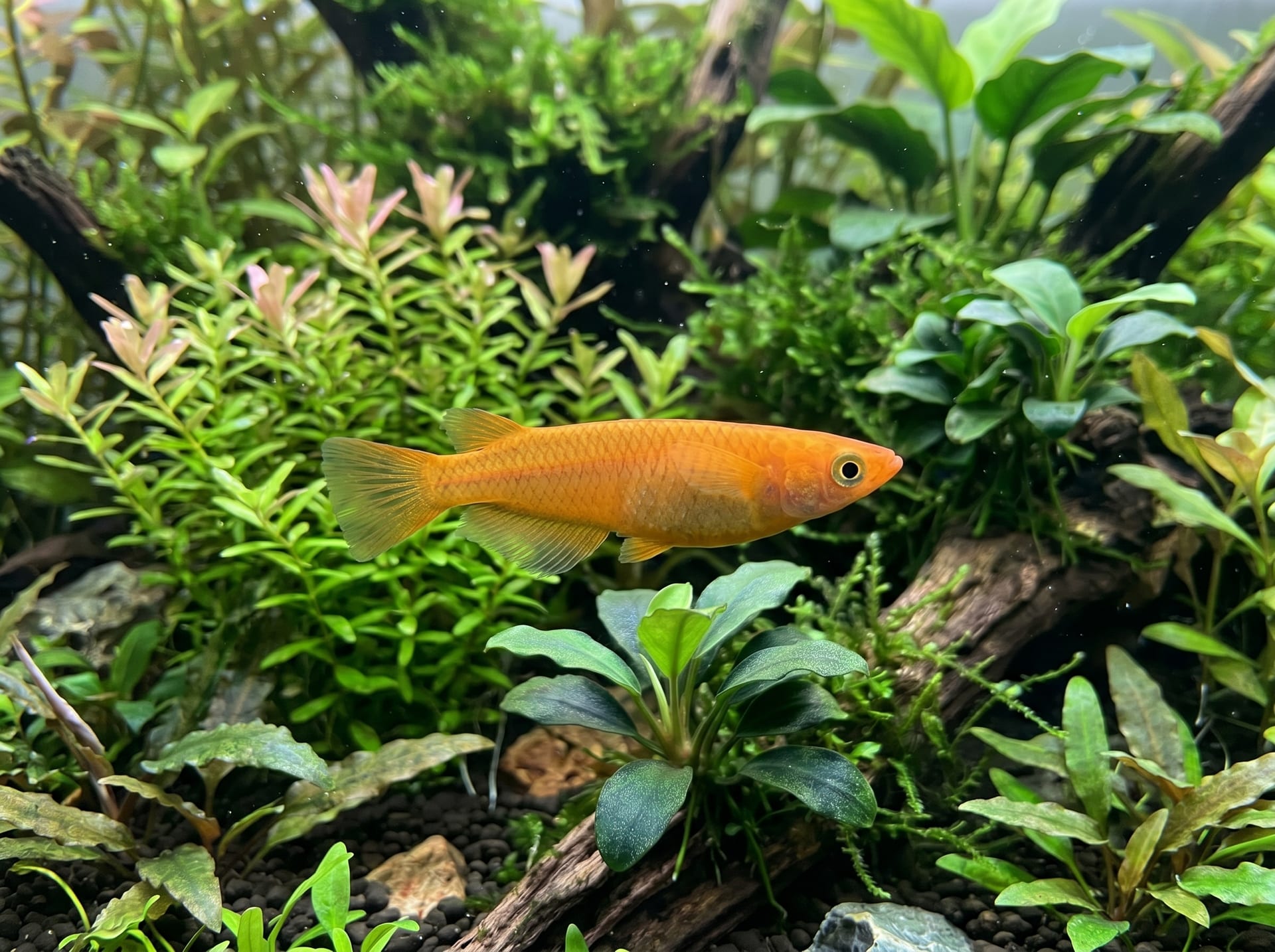
Orange Medaka
A popular variety featuring vivid orange color. Bred from Youkihi lineage with bright body coloration.
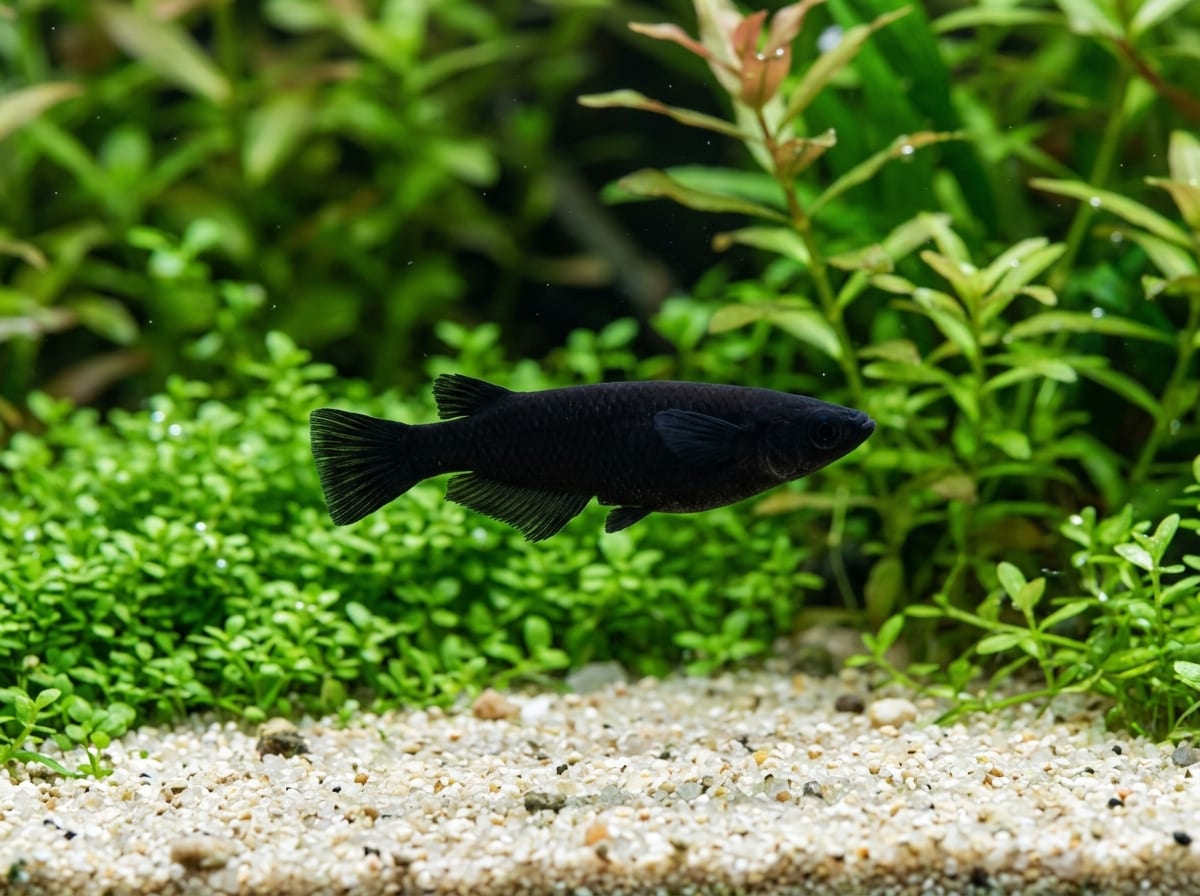
Orochi Medaka
Jet-black medaka with no color fading from background adaptation. A fixed variety where depth of black determines value.
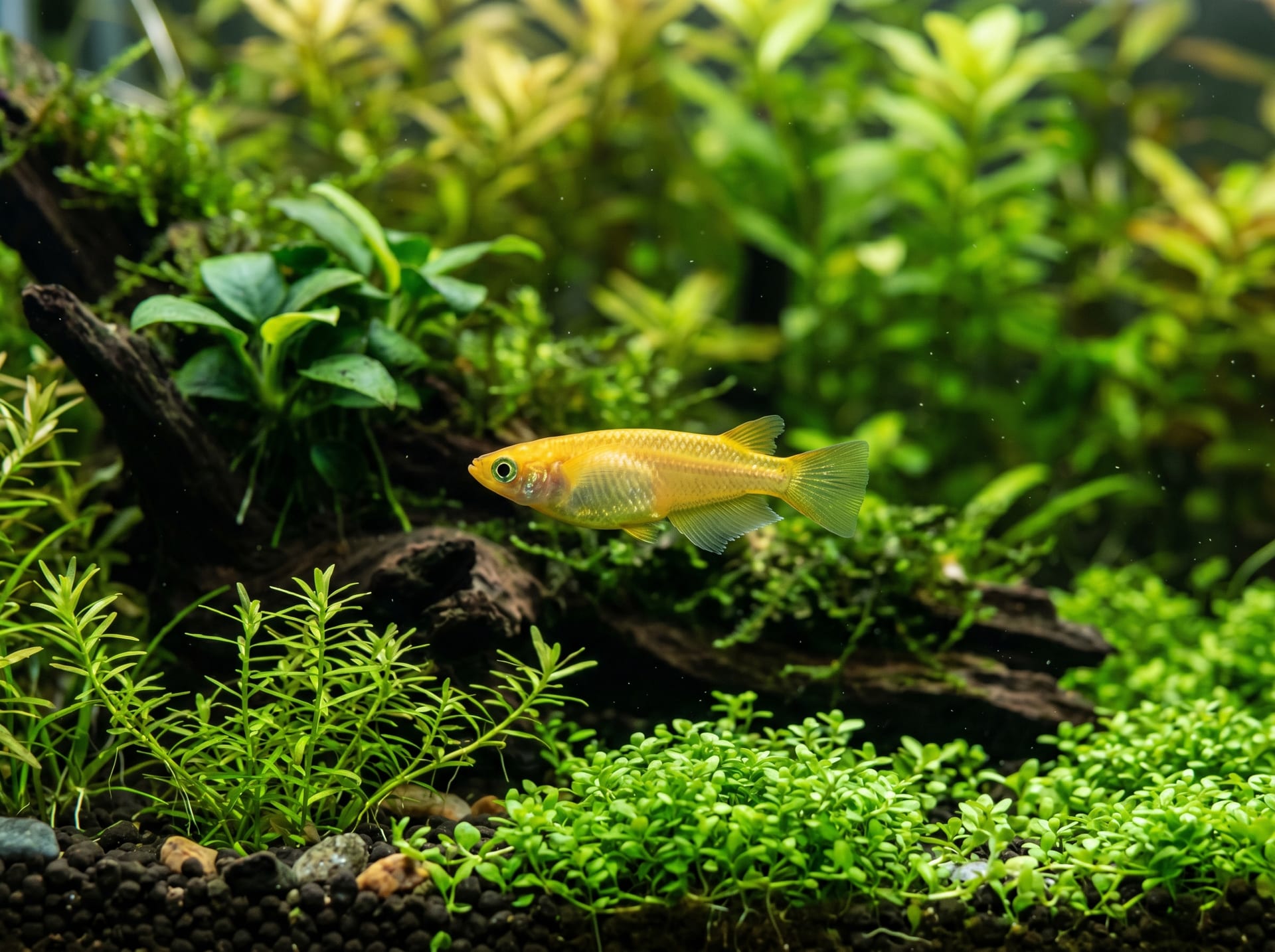
Ougon Medaka
Oryzias latipes var.
Classic improved medaka with beautiful golden-shining body color. Body sparkles in sunlight, beautiful in tanks and outdoor containers. Easy to keep and suitable for beginners.
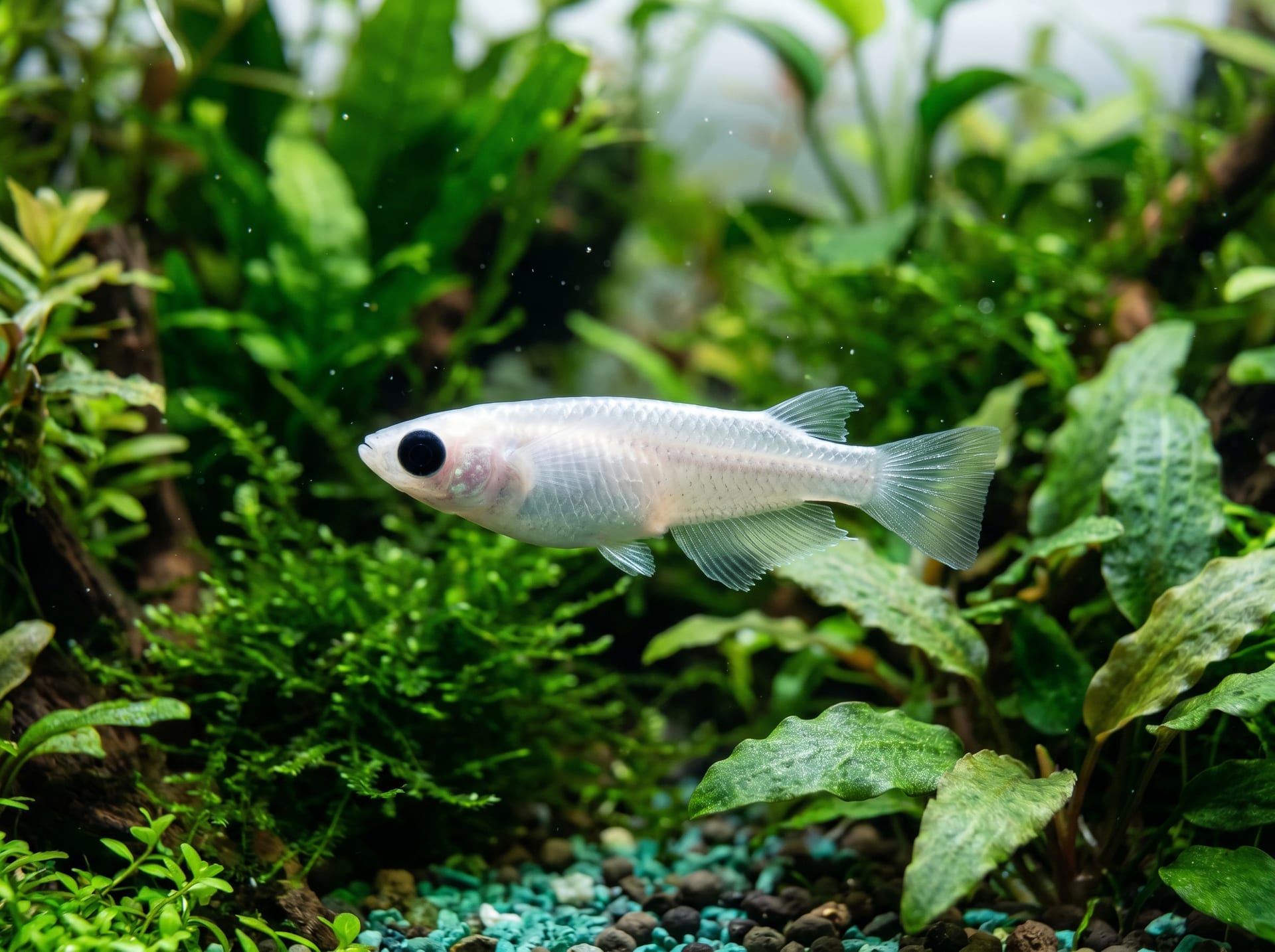
Panda Medaka
A medaka with transparent scales making eye area appear black like a panda. Popular for cute appearance.
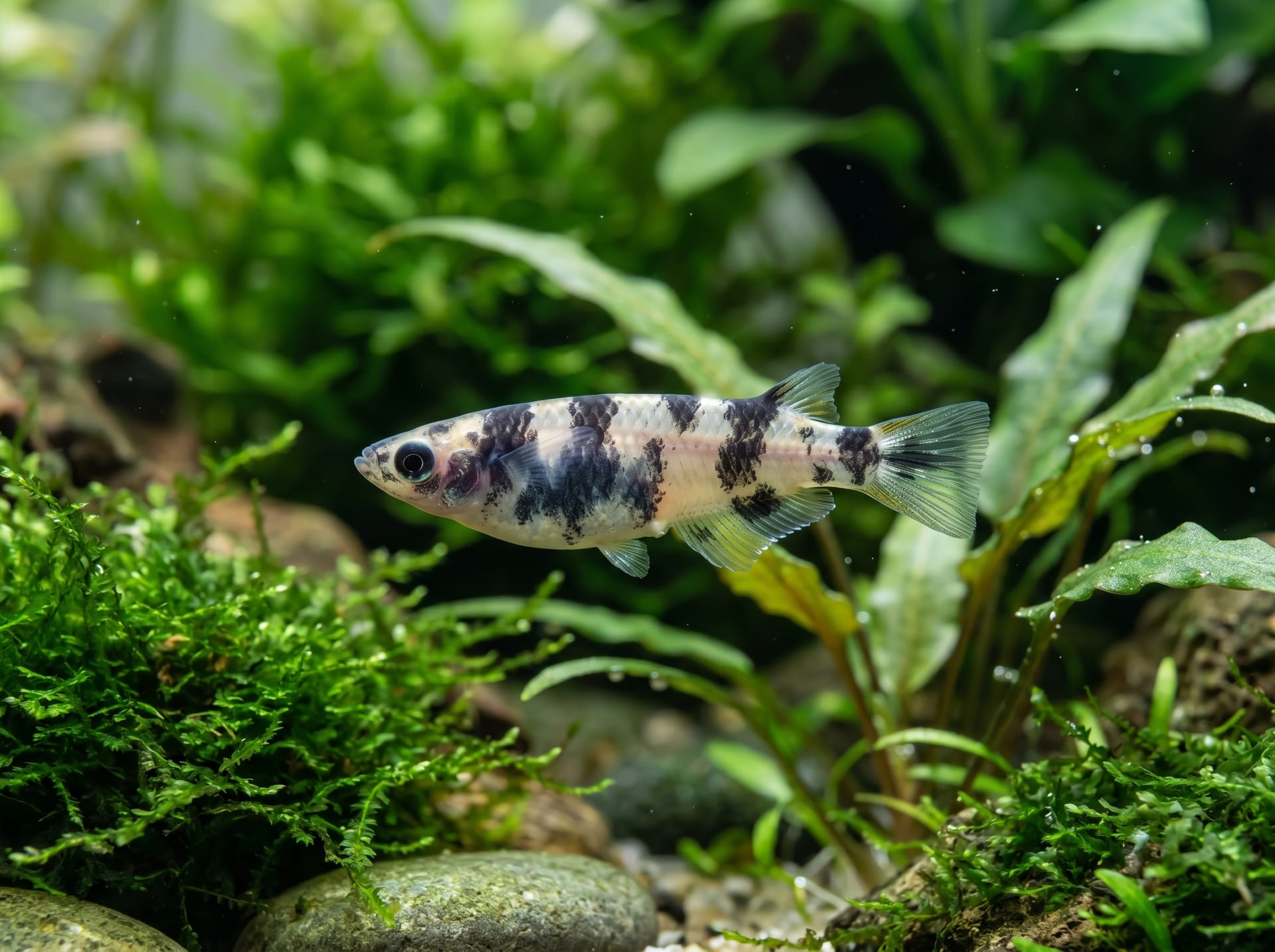
Piebald Medaka
A unique medaka with irregular spotted patterns. Charm lies in different patterns per individual.
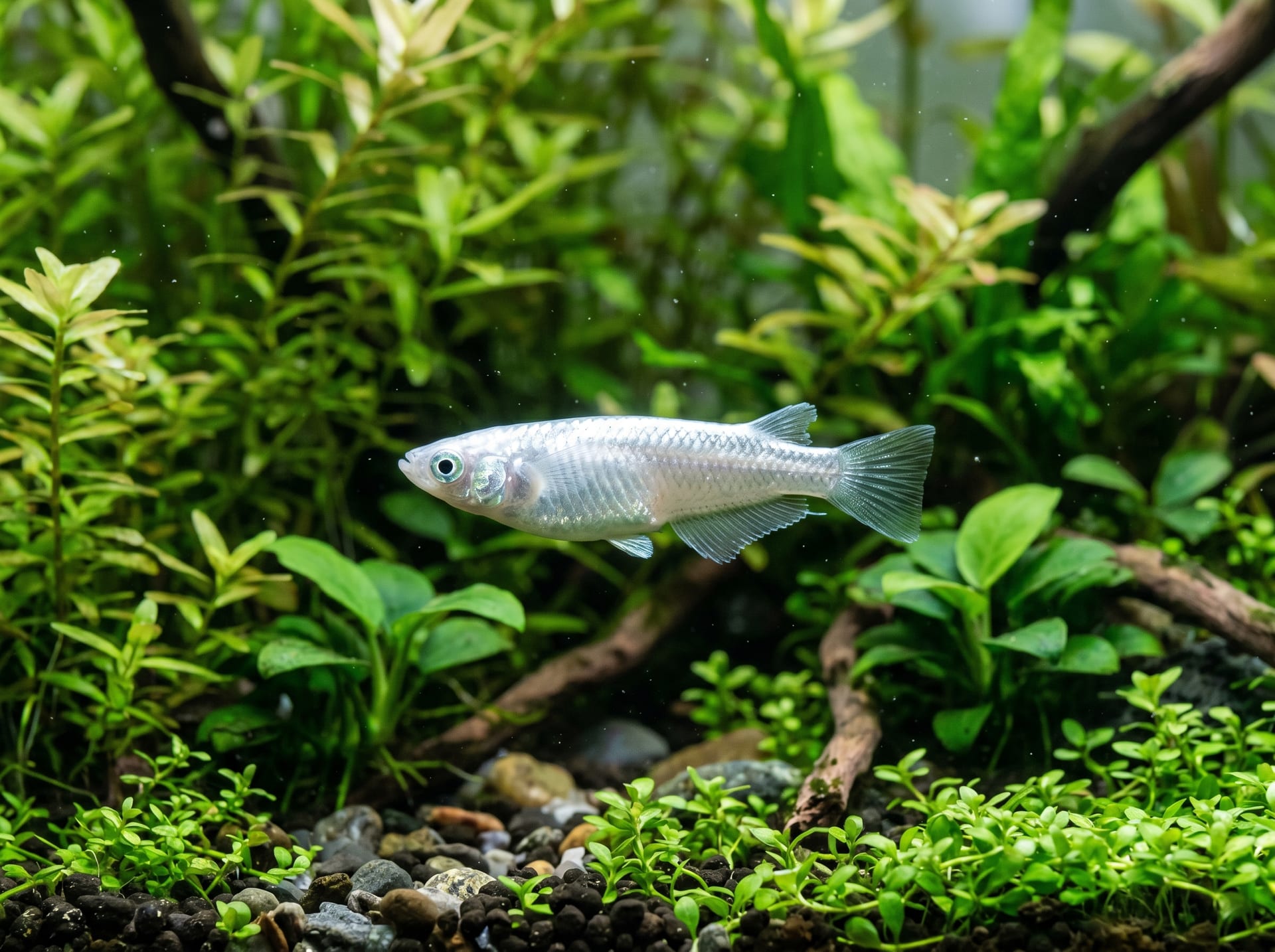
Platinum Medaka
A beautiful medaka with platinum silver shine across the entire body, appearing rainbow-colored under certain light.
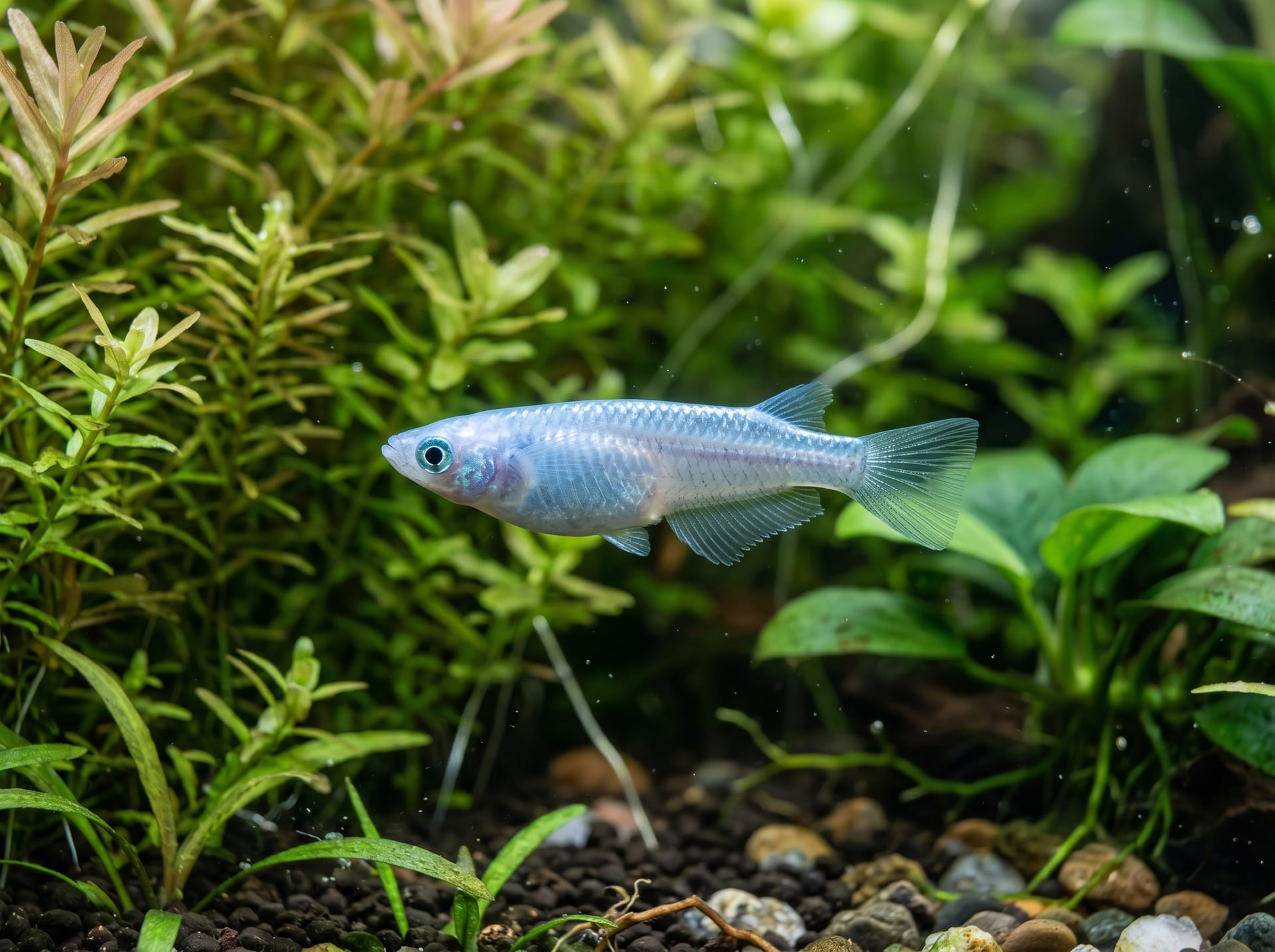
Ramune Medaka
Improved medaka with refreshing soda-blue body color. Translucent blue is cool and eye-catching in summer outdoor keeping. Derived from Miyuki lineage.
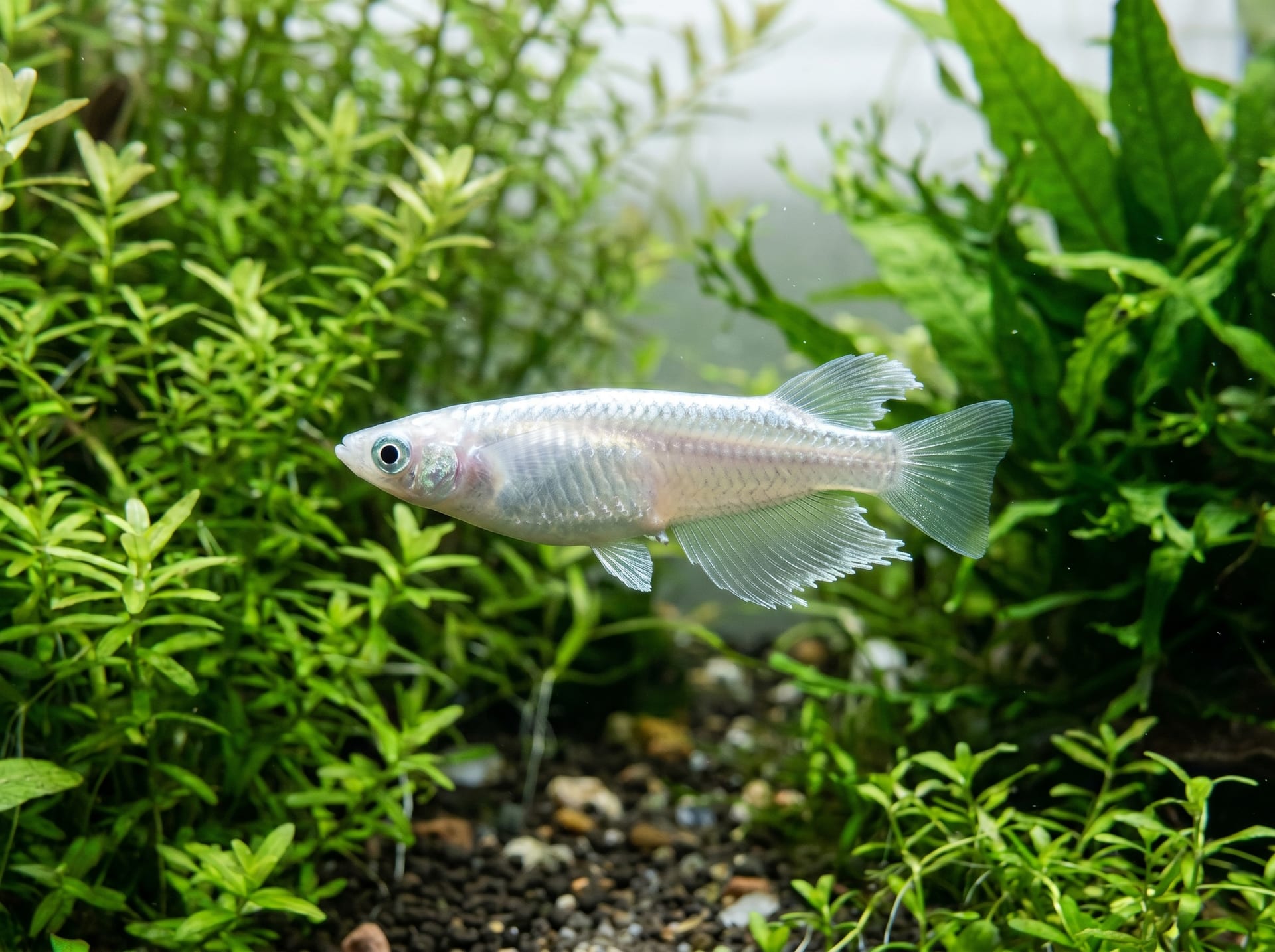
Shiro Hikari Medaka
Oryzias latipes var.
White body color combined with hikari body type. Pure white body glows with silvery external light. Hardy and easy to keep, suitable for beginners.
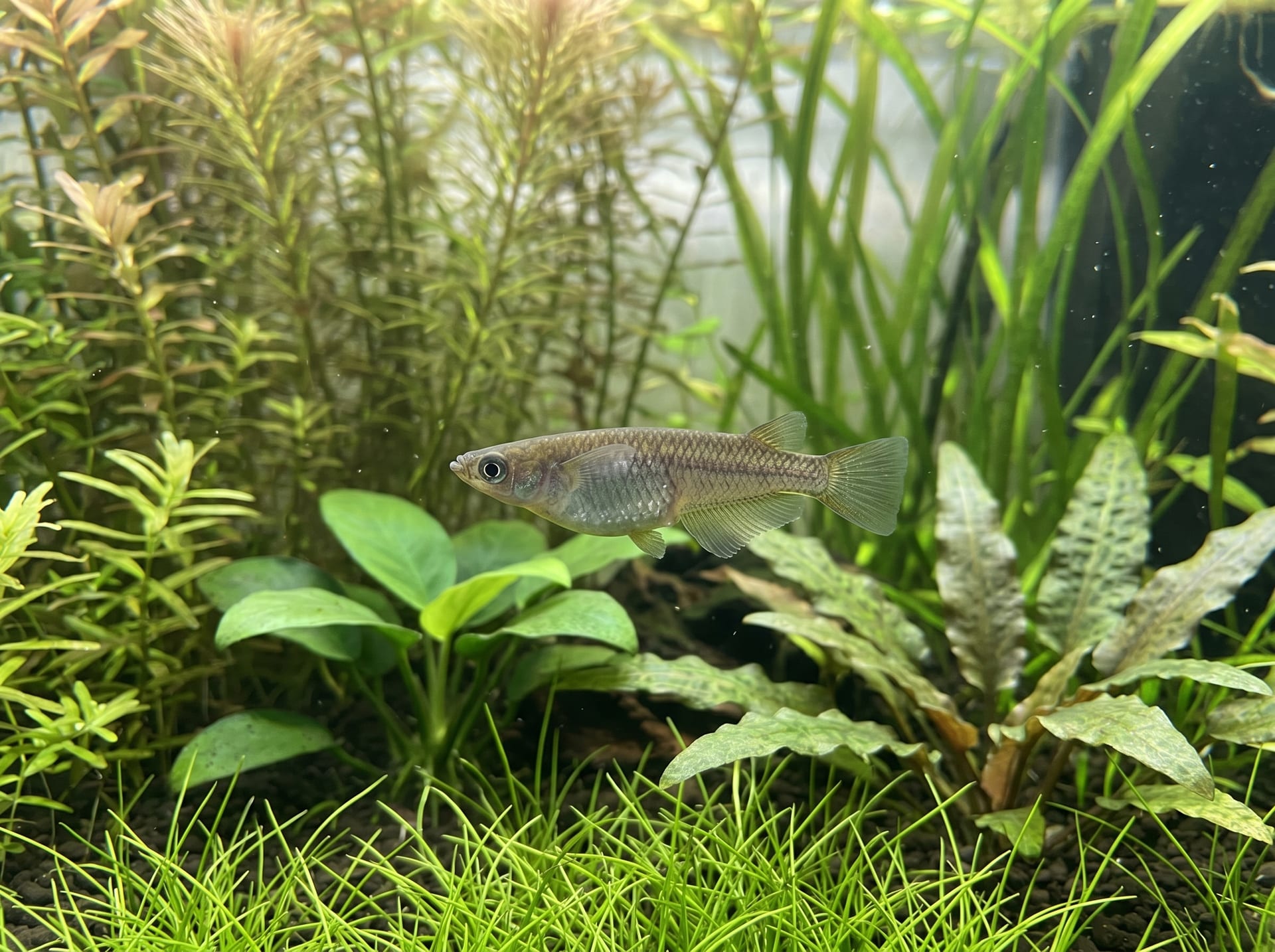
Southern Japanese Rice Fish (Wild Type)
Oryzias latipes
Wild-type medaka native to Japanese streams and rice paddies. Simple yellowish-brown coloring evokes Japan's original landscape. Listed on the Environment Ministry's Red List.
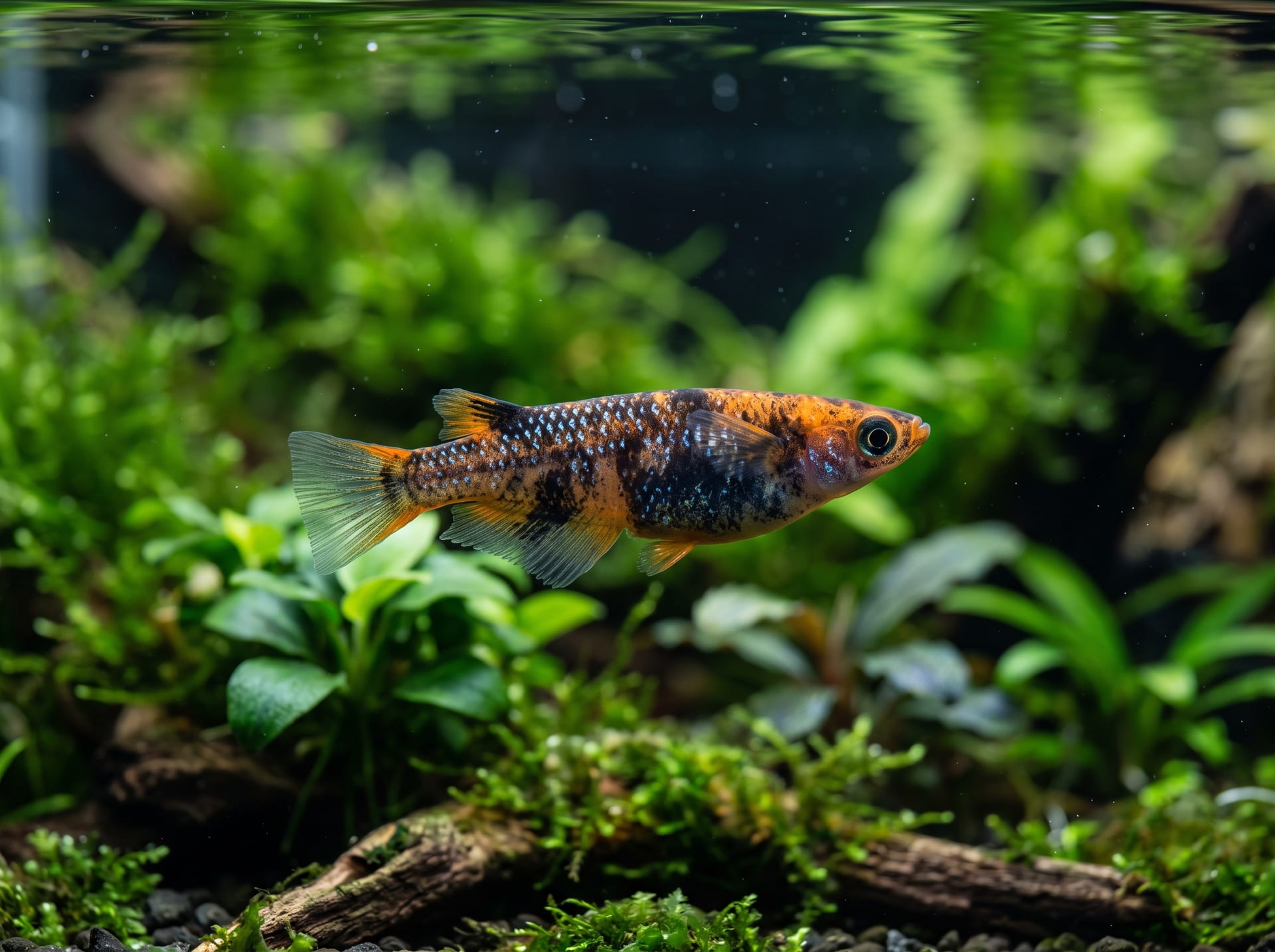
Ulysses Medaka
Oryzias latipes
A selectively bred medaka with a black-and-orange semi-transparent body dressed in fine, glittering blue lamé. The contrast of orange base color and blue sparkle shifts with the angle of light.
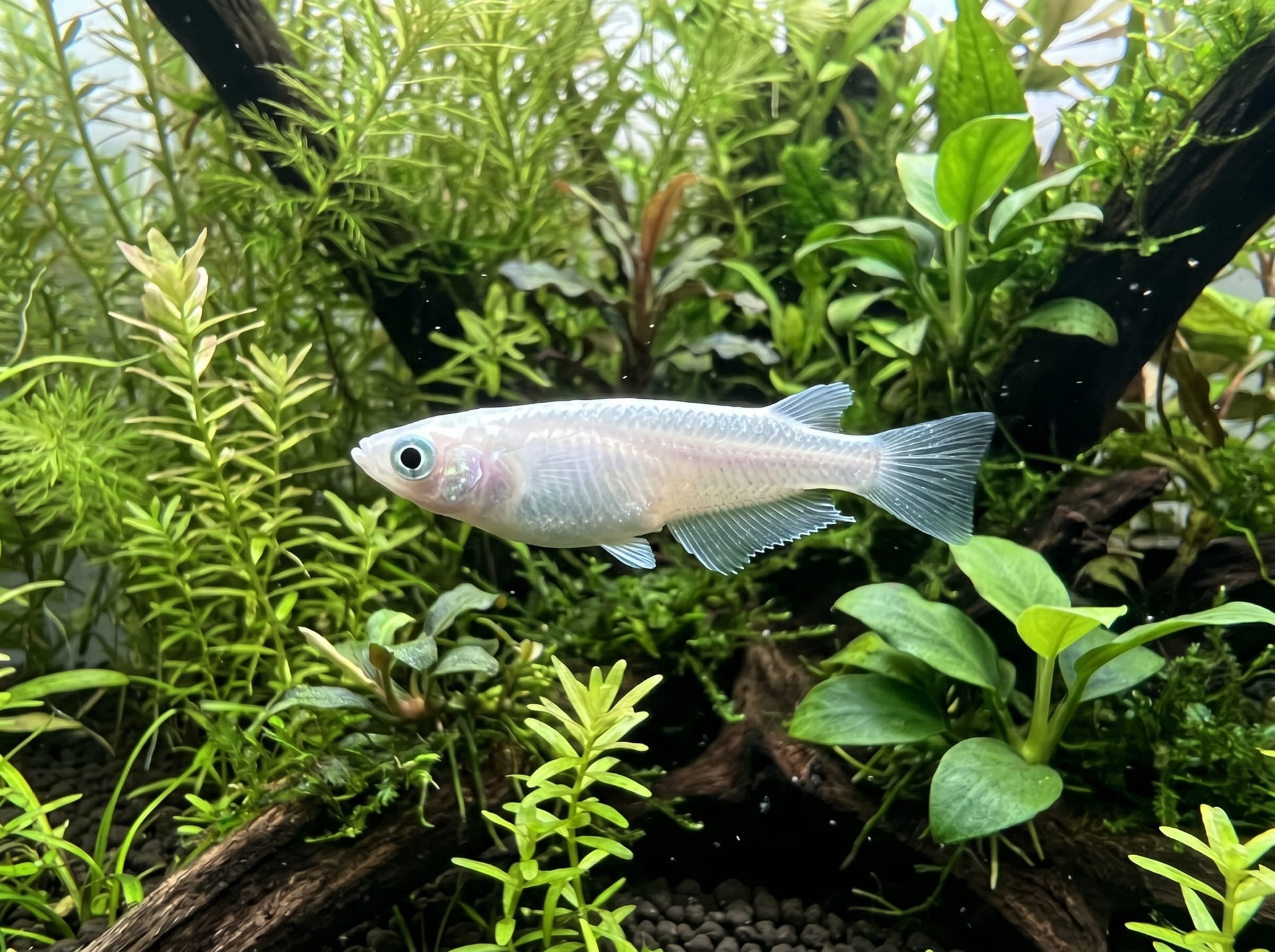
White Medaka
A medaka with pure white body giving a clean impression. One of the most widely distributed basic varieties.
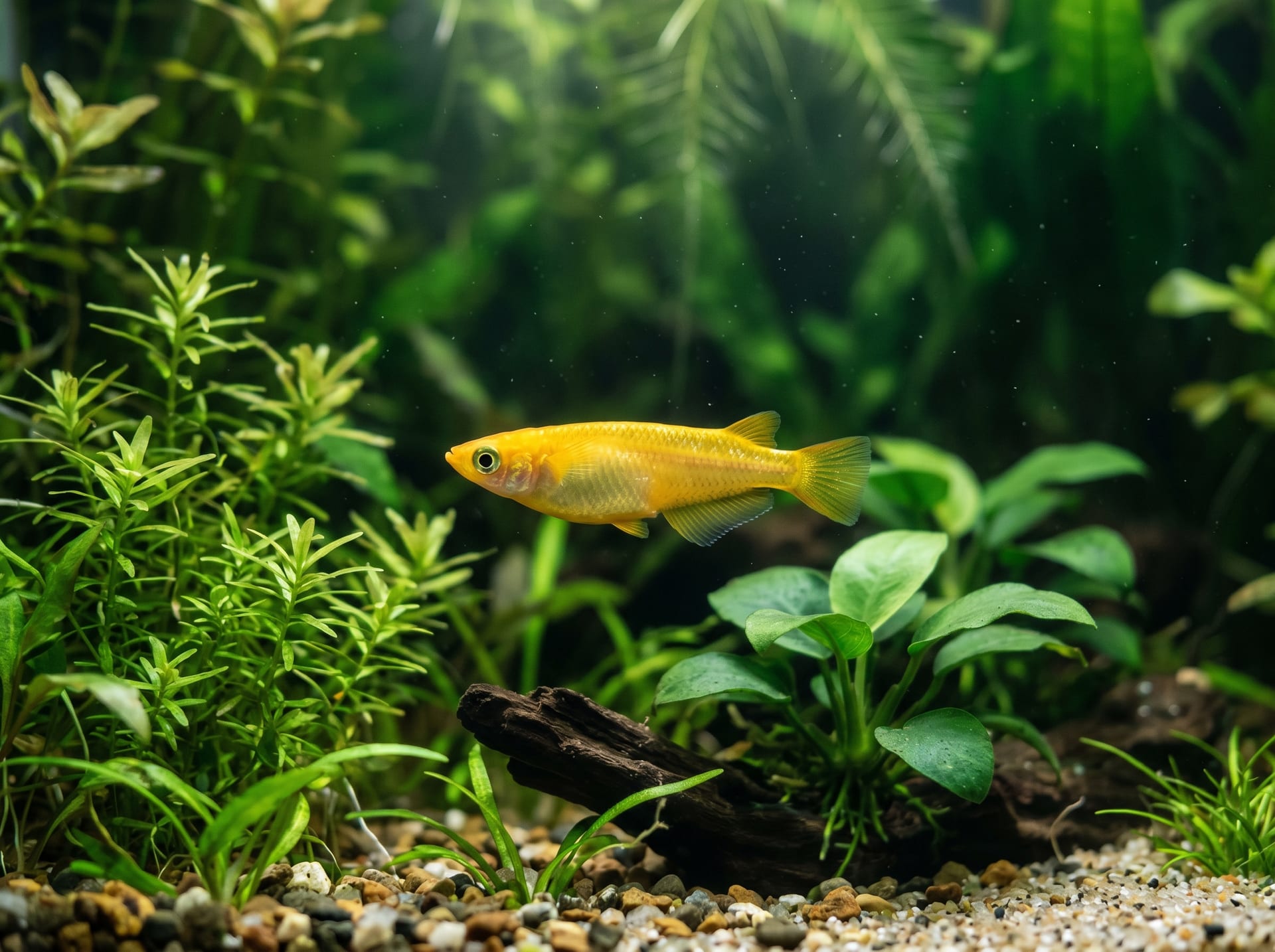
Yamabuki Medaka
A refreshing medaka with yamabuki (bright yellow) body color. Brighter than Youkihi, closer to lemon shade.
Related Content
Medaka FAQ
- How much do medaka cost?
- Common varieties cost 100-500 yen each, popular Youkihi and lame types 500-3,000 yen, and rare new varieties can reach 5,000-30,000+ yen per pair.
- Can beginners keep medaka?
- Medaka are adapted to Japanese climate and can even be kept in outdoor biotopes. They're hardy, tolerant of temperature changes, and one of the easiest ornamental fish for beginners.
- How long do medaka live?
- In the wild they live 1-2 years, but in captivity they can live 2-4 years. Proper water management and feeding help them thrive longer.
- What should I check when buying medaka?
- Check that they're swimming actively, not too thin, and free of injuries or disease signs. Choose specimens that clearly display their variety's characteristics.
- Is medaka breeding easy?
- Medaka breed relatively easily, spawning from spring to autumn when water temperature is above 20°C with 12+ hours of daylight. Moving eggs to a separate container improves hatch rates.